
 Worksheets
Cell Theory/Organelle Review
Total questions: 100
Worksheet time: 2hrs 49mins
cells with a nucleus and membrane bound organelles
eukaryotic
prokaryotic
cells without a nucleus and no membrane bound organelles
prokaryotic
eukaryotic
the control center of the cell; it stores the DNA
golgi body
endoplasmic reticulum
cytoplasm
nucleus
photosynthesis occurs here; this organelle stores energy
golgi body
chloroplast
mitochondria
endoplasmic reticulum
powerhouse of the cell; respiration occurs here
chlorophyll
golgi body
endoplasmic reticulum
mitochondria
makes proteins
ribosomes
mitochondria
endoplasmic reticulum
these package proteins to be shipped out of the cell
proteins
ribosomes
golgi bodies
endoplasmic reticulum
these store water, waste and food; they are very large in plant cells
lysosomes
ribosomes
cytoplasm
vacuoles
recycling organelles; they contain enzymes to break down wastes and old cell parts
cell wall
lysosomes
golgi bodies
cytoplasm
How are prokaryotic and eukaryotic cells similar?
both contain a nucleus
both contain ribosomes
both contain membrane-bound organelles
both contain cell walls
Which structure is NOT present in animal cells?
Cell Wall
Cell membrane
Nucleus
Mitochondrion
What is the definition of cytoplasm?
Gel-like fluid that organelles float in inside the cell
Stiff outer layer
Gives energy to the cell
Organisms that do not have a nucleus, such as Bacteria and Archea are called?
Prokaryotes
Eukaryotes

Looking in a microscope, you see cells that have rectangular shapes and a green color. What type of cells are you probably viewing?
plant cells
animals cells
muscle cells
blood cells


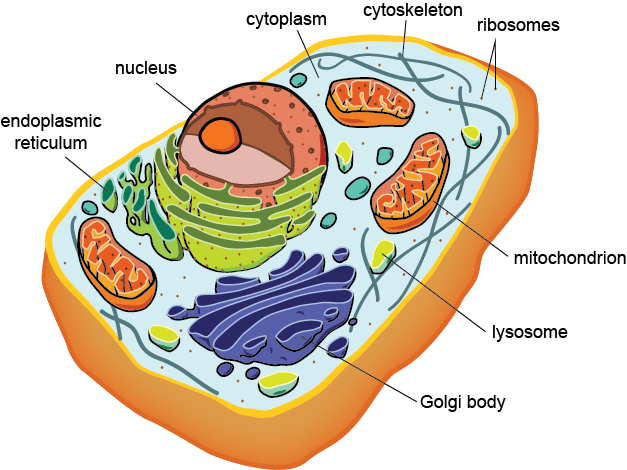
Mitochondria
Which scientist was the first to discover and name cells?
Anton Von Leewenhoek
Theodore Schwann
Robert Hooke
Matthias Schleiden
Rudolf Virchow
Which organelle produces ribosomes?
Rough ER
Nucleus
Nucleolus
Smooth ER
Golgi Apparatus
Which organelle produces phospholipids to maintain the cell membrane and helps detox the cell?
Rough ER
Golgi Apparatus
Lysosomes
Nucleolus
Smooth ER
Which organelle accepts, modifies and packages proteins?
Rough ER
Golgi Apparatus
Smooth ER
Ribosomes
Mitochondria
Which organelle breaks down foreign substances and dead and dying organelles?
Vesicles
Mitochondria
Smooth ER
Peroxisomes
Lysosomes
Which organelle forms the mitotic spindle fibers during cell division?
peroxisomes
golgi apparatus
flagella
centrioles
cilia

What structure is shown here?
nucleus
nucleolus
chromatin
nuclear pore
nuclear envelope

What organelle is shown here? The whole thing...not just the dots.
ribosomes
smooth ER
rough ER
golgi apparatus
centrioles

What organelle is shown here?
mitochondria
peroxisome
lysosome
centrioles
golgi apparatus

Which organelle is shown here?
rough ER
smooth ER
golgi apparatus
mitochondria
peroxisome

What structure is shown here?
rough ER
smooth ER
centrioles
golgi apparatus
mitochondria
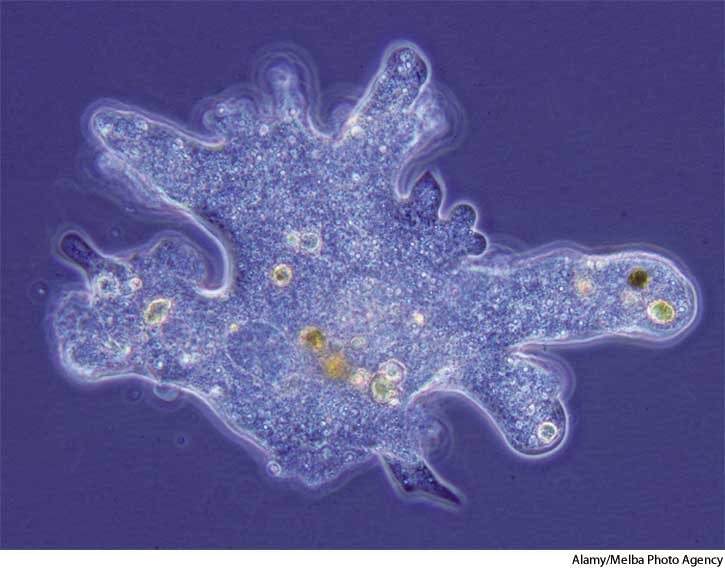

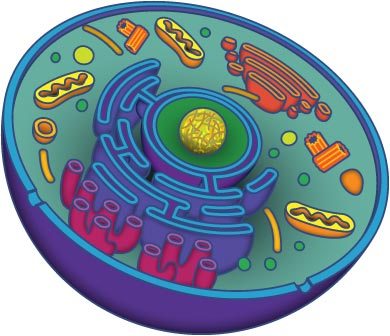
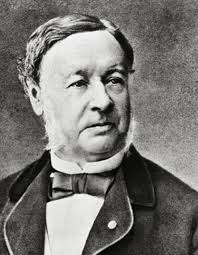


To enter a cell, substances must pass through the
mitochondrion
nucleus
plasma membrane
vacuole

#1 is referring to the largest organelle in a plant cell, which stores water and waste, as well as food and proteins.
mitochondria
chloroplast
nucleus
vacuole

#3 refers to
the nucleus, which stores DNA
the vacuole, which stores waste
the chloroplast, which carries out photosynthesis
the cell wall, which protects the cell's shape and structure
_________________ is the process by which cells maintain a constant internal balance.
natural selection
evolution
homeostasis
differentiation
Which of the following is present in a plant cell but NOT in an animal cell?
mitochondria
nucleus
cell membrane
cell wall
Which organelle receives information from DNA to assemble proteins for the cell?
nucleus
ribosome
mitochondria
plasma membrane
Which of the following is a major difference between plant and animals cells?
Plant cells have a cell wall and animal cells do not.
Animal cells have a cell membrane and plant cells do not.
Only animal cells have a nucleus.
Animal cells have much larger vacuoles than plant cells.
A city has many parts that work together, like a cell. The mayor controls the operations of the city, a fence protects it, grass and sidewalks flow throughout it, and an electrical company provides power for the city. If the fence of a city is like a cell membrane, controlling what enters and leaves the cell, what part of a cell is most like the mayor?
Chloroplast
Cytoplasm
Mitochondria
Nucleus
The nucleus is
a gel like substance that holds organelles in place
the "powerhouse" of the cell
an organelle that provides support for a plant cell
the organelle that controls all processes of a cell/ contains DNA
the site of photosynthesis/contains green pigment called chlorophyll
The cell wall is
a gel like substance that holds organelles in place
an organelle that controls all processes of a cell that contains DNA
the site of photosynthesis that contains green pigment called chlorophyll
the organelle that provides support for the plant cell
the "powerhouse" of the cell
Cytoplasm is
the site of photosynthesis/contains a green pigment called chlorophyll
the organelle that provides support for the plant cell
the "powerhouse" of the cell/ provides energy for the cell.
a gel like substance that holds organelles in place
the organelle that controls all processes of a cell/contains DNA

The diagram shows a living cell.
Which statement correctly identifies the cell type
This is an animal cell; the evidence is the mitochondria
This is a plant cell; the evidence is that there are all vacuoles
This is a plant cell; the evidence is the cell wall
This is an animal cell; the evidence is the cell membrane
In biology class, Zach observes plant and animal cells under a microscope. Each cell has a structure that separates the inside of the cell from the environment. If this structure is present in all the cells he views, which structure is Zach observing?
Cell wall
Mitochondria
Cell membrane
Chloroplast
A cell can be seen by looking through a microscope. Seeing which of these organelles would let you know that you are looking at a plant cell?
cell membrane
small vacuole
cell wall
nucleus

What cell organelle is represented by the red arrow in the picture?
Cell Membrane
Cytoplasm
Nucleus
Mitochondrion
Cell Wall

What cell organelle is represented in the picture?
Cell Membrane
Cytoplasm
Nucleus
Mitochondrion
Cell Wall

What cell organelle is represented by the picture?
Cell Membrane
Cytoplasm
Nucleus
Mitochondrion
Cell Wall

What cell organelle is represented by the picture?
Cell Membrane
Cytoplasm
Nucleus
Mitochondrion
Cell Wall

What cell organelle is represented by the red arrow in the picture?
Many Small Vacuoles
Large Central Vacuole
Chloroplast
Mitochondrion
Cell Wall

What cell organelle is represented by the red arrow in the picture?
Many Small Vacuoles
Large Central Vacuole
Chloroplast
Mitochondrion
Cell Wall

What cell organelle is represented by the red arrow in the picture?
Cell Membrane
Cytoplasm
Nucleus
Mitochondrion
Cell Wall

What cell organelle is represented by the red arrow in the picture?
Many Small Vacuoles
Large Central Vacuole
Chloroplast
Mitochondrion
Cell Wall
Flexible double-layered sheet that makes up the cell membrane and forms a barrier between the cell and its surroundings
Lipid bilayer
Endoplasmic reticulum
Cell Wall
Centriole
Organelle in cells that modifies, sorts, and packages proteins and other materials from the endoplasmic reticulum for storage in the cell or release outside the cell
Golgi apparatus
Ribosome
Vacuole
Lysosome
Structure in an animal cell that helps to organize cell division
Nucleus
Nucleolus
Endoplasmic reticulum
Centriole
Cell organelle that breaks down lipids, carbohydrates, and proteins into small molecules that can be used by the rest of the cell
Vacuole
Chloroplast
Lysosome
Golgi apparatus
Cell organelle that stores materials such as water, salts, proteins, and carbohydrates
Centriole
Vacuole
Ribosome
Lysosome

Which cell part packages and transports proteins preparing them for export?
Ribosomes
Smooth Endoplasmic Reticulum
Golgi Bodies
Vesicles

Which cell part has two thick membranes so the enzymes can't leak out and destroy the cell?
Centrioles
Lysosomes
Golgi Bodies
Vesicles

What are these?
centrioles
vesicles
vacuoles
lysosomes

What would be found in the light blue area of this cell?
Cytoplasm
Chlorophyll
nucleoplasm
cellular vernacular fluid

What is the small round structure in the center called?
Vesicle
Vacuole
Ribosome
Nucleolus

what is this?
a plasma membrane
a cell membrane
the phospholipid bilayer

What is the entire structure called?
A ribbonous vesular
rough endoplasmic reticulum
smooth endoplasmic reticulum
golgi bodies
What are the dots on this structure called?
vesicles
ribosomes
chromatin
vacuoles

What structure is the blue area?
Nucleus
Vacuole
Vesicle
lysosome
What are the green structures ?
chloroplasts
Vacuole
Chromoplasts
lysosomes

What organelle is L pointing to?
Nucleolus
Mitochondria
Nucleus
Golgi Body


Identify Number 1
Cell Wall
Cell Membrane
PLasma membrane
Cytoplasm


I make proteins for the cell. What am I?
ribosome
cell membrane
nucleus
chloroplast

Identify the structure that is labeled "H" in the image.
cell wall
chloroplast
mitochondria
nucleus
cell membrane

Identify the structure that is indicated by the arrow in the image.
cell wall
central vacuole
chloroplast
cell membrane

