
 Worksheets
Biology Final Exam Review
Total questions: 105
Worksheet time: 1hrs 2mins
Name
Class
Date
1.
Hold the slide in place on the stage
a)
Stage
b)
Stage Clips
c)
Aperature
d)
Light Source
2.
Moves the stage slightly to sharpen the image
a)
Body Tube
b)
Course Focus Knob
c)
Aperature
d)
Fine Focus Knob
3.
Regulates the amount of light on the specimen
a)
Diaphragm
b)
Aperature
c)
Ocular Lens
d)
Objective Lenses
4.
Lens used to view specimen; also called eyepiece
a)
Scanning Lens
b)
Objective Lens
c)
Ocular Lens
d)
Illuminator
5.
Lenses consist of low 4X, medium 10X, and high 40X
a)
Eyepiece
b)
Ocular Lens
c)
Objective Lenses
d)
Illuminators
6.
Place where slide is placed on while being viewed
a)
Base
b)
Stage Clips
c)
Diaphragm
d)
Stage
7.
Moves stage up and down for focusing; large amounts
a)
Fine Focus Knob
b)
Large Focus Knob
c)
Course Focus Knob
d)
Small Focus Knob
8.
Opening on stage that allows light to pass onto specimen
a)
Base
b)
Arm
c)
Body Tube
d)
Diaphragm
9.
What will be the total magnification if ocular lens is 10X and objective lens is 4X?
a)
4X
b)
40X
c)
10X
d)
100X
10.
What will be the total magnification if the ocular lens is 10X and the objective lens is 40X?
a)
40X
b)
10X
c)
100X
d)
400X
11.

Number 7
a)
Ocular Lens
b)
Objective Lens
c)
Base
d)
Arm
12.

Number 3
a)
Ocular Lens
b)
Objective Lens
c)
Diaphragm
d)
Base
13.

Number 8
a)
Base
b)
Stage
c)
Tube
d)
Arm
14.

Number 4
a)
Stages
b)
Arms
c)
Stage Clips
d)
Ocular Lens
15.

Number 5
a)
Knob
b)
Ocular Lens
c)
Diaphragm
d)
Objective Lens
16.

Number 6
a)
Insulator
b)
Objective Lens
c)
Ocular Lens
d)
Light
17.

Number 13
a)
Arm
b)
Light
c)
Base
d)
Stand
18.
The higher the magnification, the ________ you see of the specimen.
a)
more
b)
less
c)
higher
d)
lower
19.
What power do you start with when using a microscope?
a)
High
b)
Medium
c)
Low
20.
Never use this knob on high power.
a)
Fine
b)
Large
c)
Course
d)
Small
21.
If I move the slide away from me the image moves
a)
toward me
b)
to the left
c)
to the right
d)
away from me
22.
Which of the following is not one of the steps to the scientific method
a)
Asking a testable question
b)
Writing a hypothesis
c)
observe the experiment from a scientist
d)
Draw a conclusion
23.
What is the dependent variable?
a)
Variable that is changed
b)
Variable being measured
24.
The possible answer to the problem.
a)
Hypothesis
b)
Conclusion
c)
Data
d)
Experiment
25.
Recorded observations and measurements.
a)
Information
b)
Conclusion
c)
Hypothesis
d)
Data
26.
Any factor that can be changed in an experiment.
a)
Constant
b)
Data
c)
Variable
d)
Dependent variable
27.
Combining what your already know with new facts that you are given to decide if you should agree with something.
a)
Hypothesis
b)
Conclusion
c)
Critical thinking
d)
Research
28.

Which is an example of an observation ?
a)
He has brown hair
b)
He doesn't like me
c)
He is smart
d)
He looks handsome
29.
The first step to take a mass measurement of an object on a triple beam balance is to...
a)
move the large mass slider.
b)
place the object on the pan.
c)
move the small mass slider.
d)
zero the balance.
30.
An experiment is performed on plants to see how different liquids affect plant growth. Each plant in the experiment is given a different liquid; water, apple juice, or milk. Each plant has the same amount of soil, sunlight, and listens to the same music. In this investigation, the independent variable is ...
a)
The type of plant
b)
The amount of sunlight
c)
The type of music
d)
The type of liquid
31.
What is a constant?
a)
the part of the experiment that is being changed by the scientest
b)
repeated tries of a experiment
c)
a part of the experiment that stays the same
d)
info you collected using instruments
32.
What is the first step in any scientific procedure?
a)
Read the materials list.
b)
Gather materials.
c)
Put on protective wear.
d)
Taste the substances you are going to work with.
33.

Which is the Qualitative observation?
a)
Green Grass
b)
6 Kids
34.

Which is the Quantitative observation?
a)
1 dog
b)
red ball
35.

When focusing the slide start with the ___________ power.
a)
highest
b)
middle
c)
whichever you think will work best
d)
lowest
36.
What can a scientist do to increase the reliability of an experiment?
a)
Write a conclusion
b)
Repeat the experiment multiple times
c)
Analyze data
d)
Change the hypothesis
37.

The graduated cylinder reads _______.
a)
36.0
b)
36.5
c)
37.0
d)
36
38.

The mass on the triple beam balance is _______.
a)
272.0
b)
272.1
c)
2721
d)
272.5
39.

the volume of the object is ________
a)
65.0 ml
b)
40.0 ml
c)
cannot be determined.
d)
25.0 ml
40.
When evaluating the experiment we ask ___________________?
a)
Is our prediction supported?
b)
Was the procedure adequate?
c)
Was the procedure appropriate for our skills and equipment?
d)
all of these
41.
Lab Notes are
a)
notes taken during the lab and included in the lab report.
b)
the materials, procedure, observations and data of the experiment.
c)
the notes used to write the formal lab report.
d)
all of these
42.
Which of the following is an external regulator of cell division
a)
genetics
b)
HGH (human growth hormone)
c)
cancer
d)
cell size
43.
Programmed cell death is called
a)
apoptosis
b)
cytokinesis
c)
interphase
d)
cancer
44.
A cancerous tumor that does not spread to other areas
a)
benign
b)
carcinogenic
c)
malignant
d)
metastisized
45.
When cancer spreads to other areas of the body, it is said to have
a)
metastisized
b)
benigned
c)
tumored
d)
localized
46.
Substances that cause cells to become cancerous are known as
a)
cyclins
b)
carcinogens
c)
kinases
d)
growth factors
47.
Cancer treatment that uses medicine to kill cells that are rapidly dividing
a)
radiation
b)
surgery
c)
acupuncture
d)
chemotherapy
48.
Which of the following would be considered to be a carcinogen?
a)
tobacco smoke
b)
broccoli
c)
aspirin
d)
tomatoes
49.

Which phrase best describes cancer?
a)
absence of cyclins
b)
multiple gene mutations
c)
uncontrolled cell growth
d)
precesnce of genetic defects
50.

Type of tumor that becomes invasive and impairs the function of one or more organs
a)
Benign
b)
Malignant
c)
Metastasis
d)
checkpoint
51.
Which of these is a job of an internal regulator cyclin?
a)
Ensure that all chromosomes have lined up in the center of the cell before cell division
b)
Ensure that spindle fibers have attached to all centromeres before cell division
c)
Ensure that DNA has been replicated before cell division
d)
All of these
52.
Which is a cause of cancer?
a)
A defect in a gene that regulates cell growth and division that was inherited
b)
Mutations in genes that control cell division from chemicals or radiation
c)
Both of these
d)
Neither of these
53.
What role do protein kinases serve?
a)
remove phosphate groups to deactivate enzymes
b)
inactivate cAMP to AMP
c)
add phosphate groups to activate enzyme's
d)
activate G proteins
54.
Which is an example of a single-celled organism?
a)
bird
b)
cricket
c)
snake
d)
bacteria
55.
Which is an example of a multicellular organism?
a)
bacteria
b)
bear
c)
algae
d)
yeast
56.

a)
Cell
b)
Tissue
c)
Organ
d)
Organ System
57.

a)
Cell
b)
Tissue
c)
Organ
d)
Organ System
58.

a)
Cell
b)
Tissue
c)
Organ
d)
Organ System
59.

a)
Cell
b)
Tissue
c)
Organ
d)
Organ System
60.
Different types of cells have...
a)
different DNA and different expressed genes.
b)
same DNA and same expressed genes just the function is different.
c)
same DNA and different expressed genes.
d)
different DNA and same expressed genes.
61.
Cells determine how they will differentiate by ...
a)
their location in the human body.
b)
their location in the developing embryo.
c)
human need.
d)
none of these
62.
Smallest structure to largest is...
a)
cell, tissue, organ, organ system.
b)
tissue, cell, organ, organ system.
c)
organ system, organ, tissue, cell.
d)
cell, organ, tissue, organ system.
63.
Stem cells are
a)
cells that grow uncontrollably
b)
undifferentiated and can be any type of cell
c)
never go through cell division
d)
only found in embryos
64.
Stem cells can be obtained from
a)
embryos
b)
some adult tissues
c)
umbilical cord blood
d)
all of the above
65.
Why is using umbilical cord blood beneficial?
a)
non-invasive
b)
can be stored & used later
c)
contains stem cells
d)
all of the above
66.
what are adult stem cells?
a)
differentiated cell, thought to be found among other differentiated cells in a tissue or organ
b)
undifferentiated cell, found among differentiated cells in a tissue or organ
c)
they are the same as embryonic stem cells
d)
undifferentiated cell, found among other differentiated cells in an organism
67.
What is the difference between embryonic stem cells and adult stem cells?
a)
Embryonic stem cells can differentiate into more cell types than adult stem cells
b)
Adult stem cells are pluripotent, just like embryonic stem cells
c)
Adult stem cells can differentiate into more cell types than embryonic stem cells
d)
Adult stem cells grow bigger than embryonic stem cells
68.
Cells which have decided what type they are going to be are called . . .
a)
Adult Stem cells
b)
differentiated
c)
undifferentiated
d)
pluripotent
69.
embryonic stem cells can differentiate into what kinds of cells
a)
only cells of the brains
b)
only specialized blood cells
c)
only cells derived from tissues
d)
all types of specialized cells in the body
70.
A white cat had a litter of kittens that were orange, grey, and black and white spotted. Is this the result of sexual or asexual reproduction? And how would you characterize the offspring listed above?
a)
Sexual reproduction with uniform offspring
b)
Asexual reproduction with diverse offspring
c)
Sexual reproduction with diverse offspring
d)
Asexual reproduction with uniform offspring
71.
This is when uniform offspring grow from a part of a parent plant. Parent plants sends out runners. Where the runner touches the ground, roots can grow. A new plant is produced even if the runner is broken apart Each new plant is uniform and identical to the parent.
a)
Vegetative propagation
b)
Regeneration
c)
Budding
d)
Fission
72.
This is when a new organism grows by mitosis and cell division on the body of its parent. The bud, or offspring is identical to the parent. The bud, when large enough, can break off of the parent and live on its own.
Examples of this include yeast, hydra and cactus
Examples of this include yeast, hydra and cactus
a)
Regeneration
b)
Vegetative propagation
c)
Fission
d)
Budding
73.
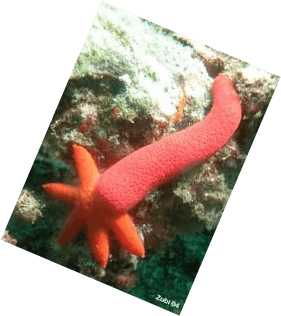
What type of asexual reproduction is taking place?
Fishermen work hard to catch and remove all the starfish that get into their favorite shell fishing beds and the “underwater farms” where they raise clams and oysters. In the past, they put the starfish into their boats, cut them up with knives, and then throw the pieces of starfish overboard. They thought this would kill the starfish. What they did not know was that each piece of starfish will grow into a whole new animal.
Fishermen work hard to catch and remove all the starfish that get into their favorite shell fishing beds and the “underwater farms” where they raise clams and oysters. In the past, they put the starfish into their boats, cut them up with knives, and then throw the pieces of starfish overboard. They thought this would kill the starfish. What they did not know was that each piece of starfish will grow into a whole new animal.
a)
Regeneration
b)
Vegetative propagation
c)
Budding
d)
Fission
74.
Which of the following is NOT an advantage of asexual reproduction?
a)
More efficient.
b)
All organisms can reproduce
c)
No wasted effort finding a mate.
d)
Population has variety to survive in a changing environment.
75.

When comparing the offspring of sexually and asexually reproducing organisms, we would expect the genetic material (DNA) of the sexually reproducing organism to -
a)
contain fewer mutations
b)
be lesser in quantity
c)
be simpler overall
d)
show more variation
76.

All of the offspring of an organism have the same genetic material, which is identical to the parent organism. From this, we can conclude that this organism -
a)
makes its own food
b)
is unicellular
c)
live in a marine habitat
d)
reproduces asexually
77.

Prokaryotes (bacteria) reproduce asexually via -
a)
spore formation
b)
bud creation
c)
vegetative propagation
d)
binary fission
78.
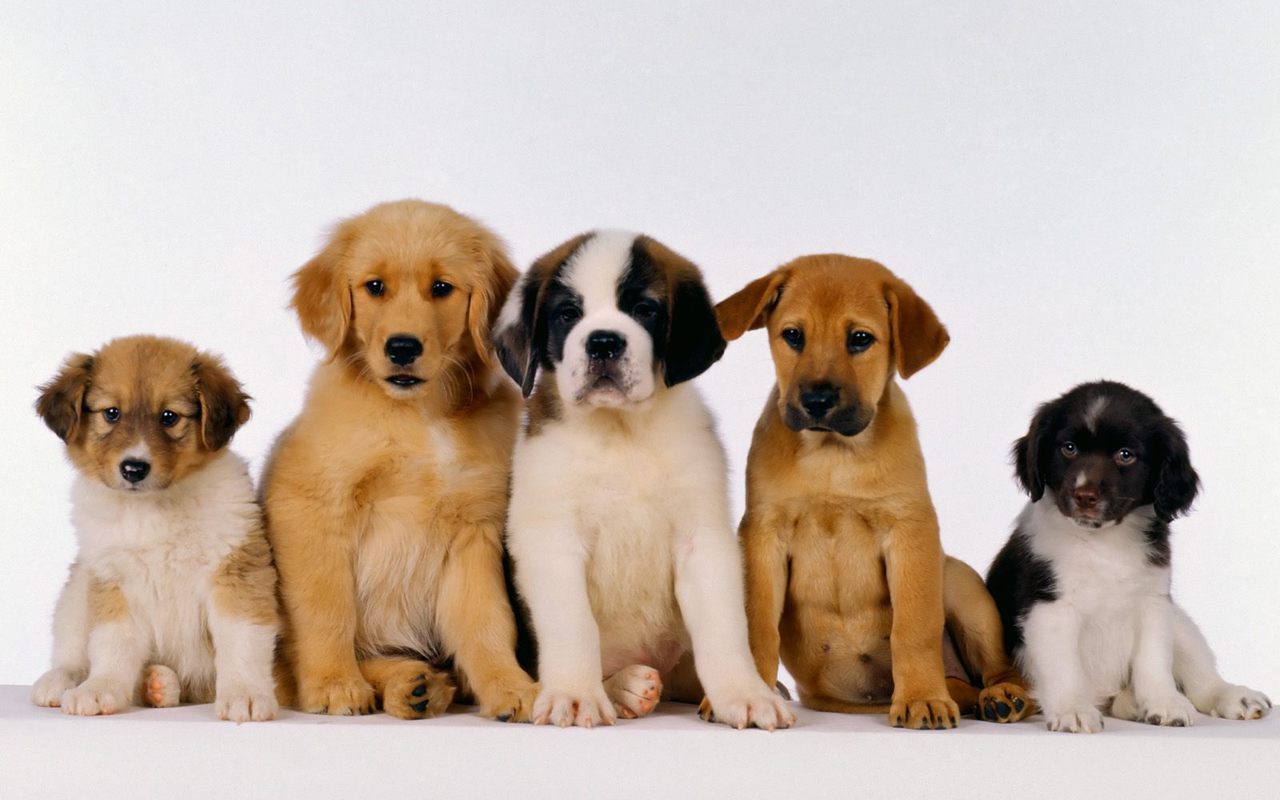
If two organisms reproduce sexually, then their offspring will exhibit a genetic makeup that is -
a)
identical to only one parent
b)
identical to all of its siblings
c)
a unique combination of traits
d)
the recessive traits of each parent
79.
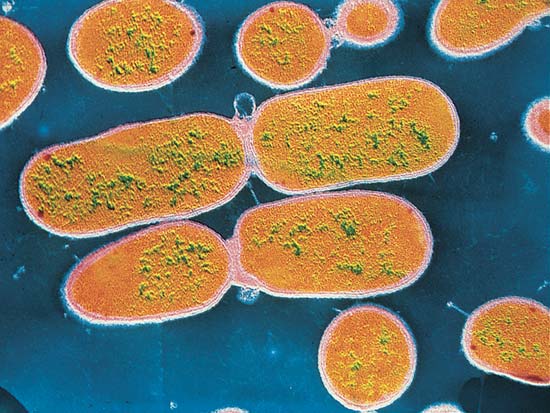
The offspring from asexually reproduced organisms are?
a)
Different than their parents
b)
Identical to parents
c)
Like a combination from both parents
d)
A different species
80.
Requires only one parent
a)
sexual
b)
asexual
81.
Requires two parents
a)
sexual
b)
asexual
82.
Any living thing is called an
a)
organ
b)
organization
c)
organism
83.
All living organisms are made up of ____.
a)
Cells
b)
Bacteria
c)
Organs
d)
Tissue
84.
What are the steps of the cell cycle in order?
a)
Interphase, Mitosis, Cytokinesis
b)
Interphase, Cytokinesis, Mitosis
c)
Mitosis, Cytokinesis, Interphase
d)
Cytokinesis, Mitosis, Interphase
85.
In which phase of mitosis are sister chromatids pulled to opposite sides of the cell?
a)
Prophase
b)
Metaphase
c)
Anaphase
d)
Telophase
86.
In which phase of mitosis do the sister chromatids line up on the equator of the cell?
a)
Prophase
b)
Metaphase
c)
Anaphase
d)
Telophase
87.
In which phase of mitosis does the nucleus disappear, centrioles move to the poles, and chromosomes condense into sister chromatids?
a)
Prophase
b)
Metaphase
c)
Anaphase
d)
Telophase
88.
Which step of the cell cycle do cells spend a majority of their time?
a)
Prophase
b)
Interphase
c)
Mitosis
d)
Cytokinesis
89.
In which phase of the cell cycle do the cells split apart?
a)
Prophase
b)
Interphase
c)
Mitosis
d)
Cytokinesis
90.
Why do cells go through cell division
a)
Growth
b)
Reproduction
c)
Repair
d)
All of the above
91.
The processes of mitosis and cytokinesis produce two identical
a)
daughter cells.
b)
strands.
c)
chromosomes.
d)
chromatids.
92.
The process of organizing and condensing DNA into its compact form takes place at the start of
a)
interphase
b)
metaphase
c)
mitosis.
d)
cytokinesis.
93.
Which is the term for the group of proteins that organizes and condenses long strands of DNA into tight coils?
a)
telomeres
b)
centromeres
c)
chromatids
d)
histones
94.
Which of the following statements is true of cytokinesis?
a)
takes place in plant cells only
b)
completes the cell cycle
c)
organizes DNA
d)
occurs during prophase
95.

Structure (b) is a ____.
a)
chromosome
b)
chromatid
c)
centromere
96.

Name the phase:
a)
Anaphase
b)
Telophase
c)
Metaphase
d)
Prophase
97.

What is the next phase of mitosis?
a)
Prophase
b)
Metaphase
c)
Anaphase
d)
Telophase
98.

In mitosis, the two resulting cells are
a)
different from the starting cell and identical to each other.
b)
different from the starting cell and different from each other.
c)
identical to the starting cell and different from each other.
d)
identical to the starting cell and identical to each other.
99.

Fruit fly body cells have 8 chromosomes. After mitosis, you would expect a resulting fruit fly daughter cell to have -
a)
16 chromosomes.
b)
46 chromosomes.
c)
8 chromosomes.
d)
4 chromosomes.
100.

a)
Anaphase
b)
Metaphase
c)
Cytokinesis
d)
Telophase
101.

a)
Cytokinesis
b)
Anaphase
c)
Telophase
d)
Prophase
102.

a)
Prophase
b)
Interphase
c)
Anaphase
d)
Telophase
103.
The process by which the nuclear material is divided equally between two new cells
a)
mitosis
b)
cancer
c)
spindle
d)
centromere
104.
The longest phase of the cell cycle
a)
prophase
b)
interphase
c)
metaphase
d)
mitosis
105.
Nuclear membrane forms around chromosomes and begins to separate.
a)
Anaphase
b)
Telophase
100 %

