
 Worksheets
1st Semester exam 25 review part 1
Total questions: 92
Worksheet time: 4hrs 28mins
2C6H14 + 19O2 --> 12CO2 + 14H2O
combustion reaction
synthesis reaction
decomposition reaction
single-displacement reaction
double-displacement reaction
Why are electrical forces necessary for elements to form compounds?
the attraction of like charges forms chemical bonds
the repulsion of like charges forms chemical bonds
the attraction of opposite charges forms chemical bonds
electrical forces hold the nucleus together

What does this Lewis dot diagram tell you about the bond for HCN?
It is a covalent bond
Hydrogen and Carbon share 2 electrons
Carbon and Nitrogen share 6 electrons
All of these!
Radium is an alkaline earth metal. What is its' oxidation number?
1+
1-
2+
2-
The following chemical equation is balanced.
NiCl2 + 2NaOH --> Ni(OH)2 + 2NaCl
True
False
Which of the following would increase the rate of a reaction? (MR)
add a catalyst
decrease the temperature
add an inhibitor
increase the concentration
increase the surface area
A bonfire is an _____ reaction.
Endothermic
Exothermic
PbCl2 + AgNO3 --> Pb(NO3)2 + AgCl
combustion reaction
synthesis reaction
decomposition reaction
single-displacement reaction
double-displacement reaction
Is the following equation balanced or unbalanced?
MgCl2 + AgNO3 --> Mg(NO3)2 + AgCl
Balanced
Unbalanced
An ___ is a reaction where more energy is absorbed. (MR)
endergonic
exergonic
endothermic
exothermic
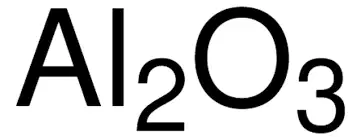
What is the name of this chemical compound
aluminium Iodoxide
aluminium oxide
aluminium trioxide
none of these
Is the following equation balanced or unbalanced?
2Mg + O2 --> 2MgO
Balanced
Unbalanced
Breaking chemical bonds ___ energy.
releases
absorbs
NH3 + HCl --> NH4Cl
combustion reaction
synthesis reaction
decomposition reaction
single-displacement reaction
double-displacement reaction
An element's oxidation number tells you
how many valence electrons it has
how many protons are found in the nucleus
how many electrons it gains or loses when bonding
how many electrons it has
A compound made of many charged atoms covalently bonded together.
binary ionic compound
binary covalent compound
polyatomic ion
double bonded covalent compound
In order to balance the following equation, you can add a '2' after the Hg on the product side.
2HgO --> O2 + Hg
True
False
An ____ reaction is where more energy is released than absorbed.(MR)
endergonic
exergonic
endothermic
exothermic
"C6H12O6 + 6O2 --> 6CO2 + 6H2O + energy" is an ____ reaction.
endergonic
exergonic
Forming chemical bonds ____ energy.
releases
absorbs
Which of the following are ways to measure the rate of a chemical reaction? (MR)
the surface area of the reactants
how fast the reactants are used up
how fast the products appear
increase the temperature
how fast energy is released
"N2 + 3H2 + energy --> 2NH3" is an ____ reaction.
endergonic
exergonic
_____ determine bonding behavior.
negative ions
positive ions
sharing electrons
valence electrons
What is the ratio of hydrogen to oxygen in C6H12O6?
12:6
6:6
2:1
1:1
In an ____ reaction, the products have more energy than the reactants. The energy can be electrical, light, heat, etc.
exergonic
endergonic
exothermic
endothermic
The reason atoms bond is to ___.
create new substances
develop stable outer energy levels
release energy
absorb energy
An atom is stable if it has
a good relationship with friends
forms a nonpolar bond
has 8 electrons in its' outermost energy shell
none of these!

ionic
covalent
A metal and a nonmetal form
an ionic bond
a covalent bond
a salt
both a and c
If atoms bond by losing or gaining electrons they are forming
hydrogen bonds
covalent bonds
polar bonds
ionic bonds
If atoms bond by sharing electrons they are forming
hydrogen bonds
covalent bonds
nonpolar bonds
ionic bonds
What is the smallest particle in a covalent bond?
an atom
an ion
a molecule
none of these
What is the smallest particle in an ionic bond?
an atom
an ion
a molecule
none of these
What type of bond does carbon have with nitrogen in the compound HCN?
It is a covalent bond
a double covalent bond
a triple covalent bond
an ionic bond
If the bonded atoms have slightly different electron charges at opposite ends of the molecule this forms a
polar bond
nonpolar bond
polyatomic ion
hydrogen bond
A positive ion ____. (MR)
has lost electrons
has more electrons than protons
has more electrons than neutrons
has more protons than electrons
In which of the following can you find acids? (MR)
cleaning products
antacid tablets
carbonated drinks
soap
citrus fruit
A substance with a pH of 2 is a ____.
strong base
weak base
strong acid
weak acid
___ is a substance that changes color when exposed to an acid or a base.
Litmus paper
An indicator
A neutralizer
An alkaline
When a base reacts with water it produces ___. (MR)
positive ions
negative ions
hydronium ions
hydroxide ions
A substance with a pH of 11 is ___ times more alkaline than one with a pH of 8.
10
100
1000
10000
A/An ___ is the precipitate/compound that forms when an acid reacts with a base.
buffer
ion
salt
neutralized solution
Which of the following are properties of acids? (MR)
taste bitter
can cause burns to skin
corrosive to metals
taste sour
turns red litmus paper blue
A negative ion ____.
has more electrons than neutrons
has more protons than electrons
has more electrons than protons
has lost electrons
A/An ___ is a substance that interacts with acids or bases to prevent them from affecting the pH.
base
acid
buffer
concentrated solution
Neutralization ___. (MR)
ionizes a base
combines an acid with a base
brings the pH closer to 7
produces a salt and water
ionizes an acid
Bases on the pH scale are ____.
greater than 7
7
less than 7
The strength of an acid or base depends on ___.
how much acid or base you have
how far it is from 7, neutral
the amount of ions produced in the reaction
how close it is to 7, neutral
A strong acid produces more ions and therefore does not conduct electricity as well.
True
False
A substance with a pH of 8 is a ____.
strong base
weak base
strong acid
weak acid
If a substance is said to be alkaline, it is ___. (MR)
acidic
basic
an acid
a base
A solution that has a lot of solute dissolved in the solvent is a ____ solution.
saturated
dilute
concentrated
mixed up
Neutral on the pH scale is ___.
5
6
7
8
Which of the following are characteristic properties of bases? (MR)
cleans dirt and grease
taste sour
can cause chemical burns to tissue
corrosive to metals
turns blue litmus paper red
Weak acids transfer ___ electric current because they have ___ ions.
more, fewer
less, fewer
more, more
less, more
When an acid reacts with water it produces ____. (MR)
hydronium ions
negative ions
hydroxide ions
positive ions
A ___ is a substance that can transfer electrical current.
salt
acid
base
electrolyte
A substance that has a little solute dissolved in the solvent is a ____ solution.
concentrated
dilute
mixed up
saturated
An atom that is not neutral is a/an ___.
isotope
ion
characteristic property
pH
A ___ solution has so much solute dissolved in the solvent, no more will dissolve.
concentrated
dilute
saturated
complicated
A measure comparing the number of positive ions or the number of negative ions is ___.
an acid
a base
pH
alkalinity
Bases are commonly found in soaps and cleaning products.
True
False
Which of the following are properties common to both acids and bases? (MR)
become electrolytes in water
pH
corrosive
can damage tissue
taste
Acids on the pH scale are ___.
greater than 7
7
less than 7
The process by which the nucleus of a cell decaying and emitting matter and energy is called _______.
an isotope
ionization
radioactivity
nuclear fission
Which of the following in NOT one of the 3 types of nuclear radiation?
ionization
alpha radiation
beta radiation
gamma radiation
The process by which nuclei having low masses are united to form nuclei with a larger mass is ____.
a chain reaction
a chemical reaction
nuclear fission
nuclear fusion
Which type of nuclear radiation is composed of 2 protons and 2 neutrons?
alpha radiation
beta radiation
gamma radiation
ionization
Which type of nuclear radiation is composed of 1 electron?
alpha radiation
beta radiation
gamma radiation
ionization
Which type of nuclear radiation is composed of electromagnetic waves?
alpha radiation
beta radiation
gamma radiation
ionization
An element with a different number of neutrons in its nucleus than is shown on the Periodic Table of Elements is called ________.
an ion
an isotope
a beta particle
an alpha particle
The process by which one element changes into another element due to nuclear decay is called _______.
transmutation
ionization
metamorphosis

Polonium 210 undergoes alpha decay. What will its mass number and atomic number be?
mass number 214 atomic number 86
mass number 206
atomic number 82
mass number 210
atomic number 84
mass number 210
atomic number 85

Iodine 131 undergoes beta decay. What will its new mass number and atomic numbers be?
mass number 131
atomic number 54
mass number 135
atomic number 55
mass number 131
atomic number 53
mass number 127
atomic number 52

What type of nuclear reaction is shown?
fission
gamma decay
beta decay
fusion
What type of radiation is most penetrating?
alpha decay
beta decay
gamma ray
What is the nucleus of an isotope called before it decays?
daughter nucleus
parent nucleus
son nucleus
Uncle nucleus
Which of the following is the process of splitting a nucleus into two or more smaller nuclei?
nuclear fusion
nuclear fission
ionization
transmutation
The time required for half of the nuclei of an isotope to decay?
ionization
transmutation
half - life
beta decay
What type of nuclear decay releases 2 protons and 2 neutrons?
gamma decay
beta decay
ionization
alpha decay
The half-life of 14C is 5,730 years. How long would it take for a 100 gram sample of 14C to decay into 50 grams?
5,730 years
2,865 years
11,460 years
17,190 years
Nuclear reactions involve particles in the ______.
electron levels
half-life
nucleus
beta particle
Which is NOT true of chemical reactions?
Chemical reactions involve the electrons of the elements
Chemical reactions involve a change in the mass of the products
The reactants and products in chemical reactions have an equal mass.
A form of radiation that emits an electron is known as _____________.
Beta radiation
Alpha radiation
Gamma radiation
Daughter nucleus
The form of radiation that emits energy but no mass or charge
Alpha radiation
Beta radiation
Gamma radiation
daughter nucleus
Plutonium - 241 has a half life of 14 years. How many years would it take a 100 gram sample to decay to 25 grams?
14 years
42 years
25 years
28 years
Which of the following IS NOT one the 4 fundamental forces?
strong nuclear force
electromagnetism
the jedi force
gravity
weak nuclear force
Which force is primarily responsible for holding protons and neutrons together in the nucleus of atoms
gravity
electromagnetic force
weak nuclear force
strong nuclear force
Which force is primarily responsible for holding atoms together in molecules and compounds
gravity
strong nuclear force
electromagnetic force
weak nuclear force
What is the name given to atoms of the same element that have different numbers of neutrons in their nucleus?
ions
isotopes
protons
it's complicated
___________________ is the process of nuclei decaying and emitting matter and energy.
radioactivity
chemical breakdown
isotope emission
In general, where are most radioactive elements located on the periodic table?
towards the top
towards the middle
towards the bottom
there are no radioactive elements on the periodic table

