
 Worksheets
Waves and Energy
Total questions: 90
Worksheet time: 2hrs 30mins
In the electromagnetic spectrum, which of the following is true of waves with long wavelengths? (SC.7.P.10.1)
They have high frequencies.
They have low frequencies.
They have moderate frequencies.
They have inconsistent frequencies.
The electromagnetic spectrum is made up of bands of waves with different _____ (SC.8.E.5.11)
Speeds
Frequencies
Reflections
Mediums

The diagram below shows the electromagnetic spectrum. Which letters represent radio and gamma waves? (SC.8.E.5.11)
A, F
F, C
A, G
C, G
The diagram below shows the electromagnetic spectrum. Which letters represent radio and gamma waves? (SC.8.E.5.11)
A, F
F, C
A, G
C, G
All of the waves listed below are a part of the electromagnetic spectrum except (SC.8.E.5.11)
Sound Waves
X Rays
gamma rays
light waves
How is the light spectrum used in astronomy? (SC.8.E.5.11)
To take pictures of deep space with telescopes.
To identify elements of stars and galaxies.
To calculate the rate at which other galaxies are moving either away from or toward us.
All of the above.

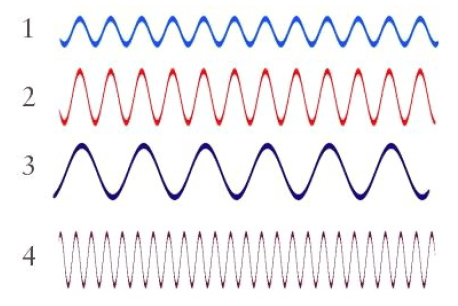
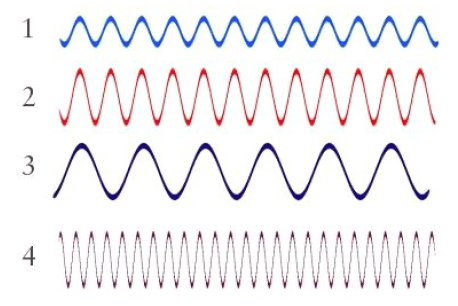
Which wave has a higher frequency? (SC.8.E.5.11)
Wave N
Wave O
The waves have the same frequency.

Use the image to answer the following question(s).
Light exits the prism in the diagram above and separates into different colors of the visible spectrum. These colors are different because they have different __________.
(SC.7.&P.10.1)
densities
reflections by the prism
mixtures of white light
wavelengths
Why can electromagnetic radiation travel through the vacuum of space?
They require a medium.
They do not require a medium.

You can't hear sounds in outer space because there is no
medium
light
energy
heat

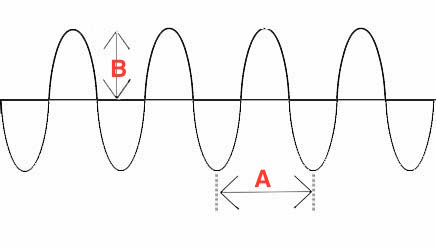
What is a wavelength?
How many waves pass a certain point
The distance from one wave crest to another
The entire length of a wave


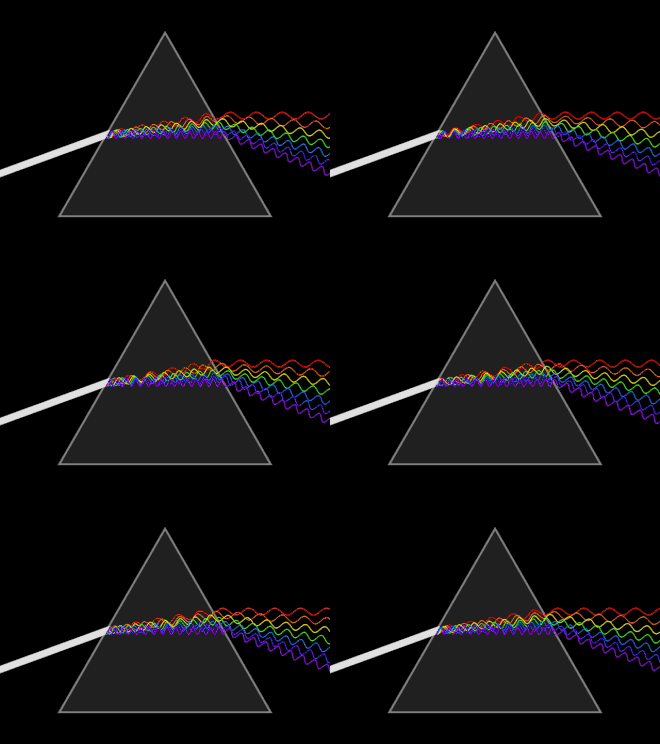
When light passes through a prism, why do you see different colors?
Each color has a different wavelength, so they all bend at different angles
Prisms absorb the white light and reflect the rainbow


What might happen to an object sitting on top of a speaker if loud music is played through the speaker?
Absolutely nothing would happen to the object.
The object could move due to the vibrations of the sound.
The object could appear a different color because the sound is absorbed.
The object could stop the sound from being transmitted out of the speaker because sound cannot travel through a solid.
Which TWO of the following statements about sound are NOT true?
Sound is produced through vibrations.
Sound travels in waves.
Sound can travel through outer space
Sound waves can bounce off of objects to create an echo.
Sound waves can only travel through the air.
Sound waves can travel through all three states of matter. Which of the following best explains why sound travels most quickly through a solid?
Solids always produce an echo, which makes the sound seem louder to the human ear.
Only solids allow the vibrations to travel from one atom (particle) to another.
In solids, the atoms (particles) are closest together, which allows the vibrations to travel rapidly from one to another through the object.
Sound does not travel quickly through a solid. It travels most rapidly through a gas.
Why can't sound travel through outer space?
There is almost no matter in outer space, so the vibrations have no way to travel through the atmosphere. There is nothing to carry the sound waves through space.
Sound actually travels very quickly through outer space because there is no matter to slow down the sound waves.
There are too many planets and stars in outer space that absorb all of the sound waves, so they cannot travel to the human ear.
Because outer space is a "vacuum," the vibrations are irregular and travel in too many directions for us to detect the sound.

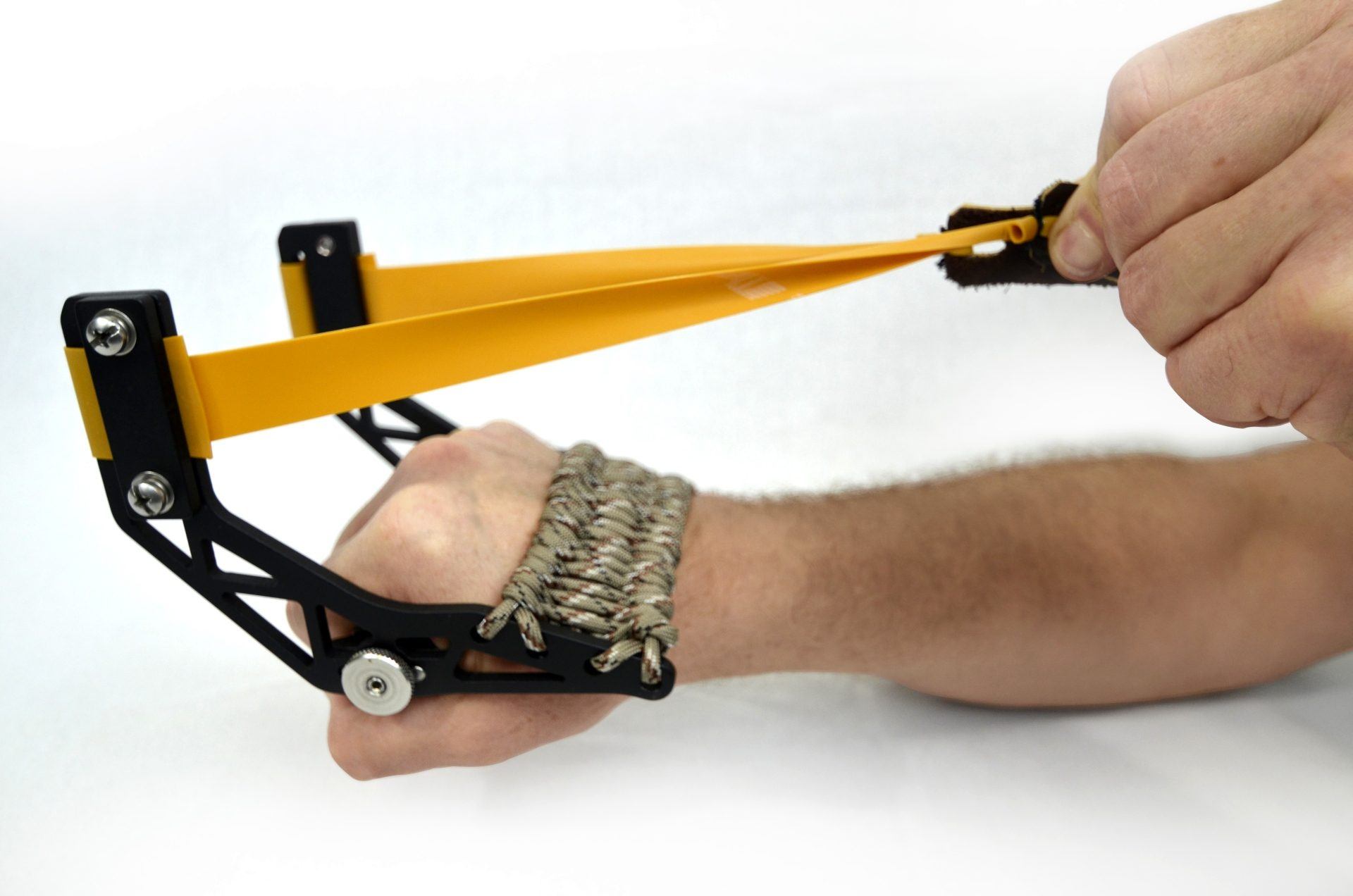
Potential Energy is
created and destroyed
Stored Energy
Vibrations in matter
Energy stored in batteries
Chemical energy is
vibrations in matter
Charged particles that follow a path
Energy stored in compounds
Energy stored in Batteries
Kinetic Energy is
Stored energy
Energy of Motion
vibrations in matter
created and destroyed
Light energy is
Transferred by moving parts
Different depending on distance
Stored energy in compounds
Electromagnetic Energy (travels as radiation)
Heat energy is
Energy of motion
Transfer of molecular kinetic energy (Hot to Cold)
vibrations in matter
charged particles that follow a path
Mechanical energy is
vibrations in matter
Energy stored in batteries
Transferred by moving parts
Transfer of molecular kinetic energy
Sound energy is
Transferred by moving parts
Electromagnetic Energy travels as radiation
Transfer of molecular kinetic energy
Caused by vibrations in matter
Electrical energy is
Transferred by moving parts
Charged particles that follow a path
energy stored in batteries
stored energy in compounds
there is a boiling pot of water, what type of spoon/ladle would you use to NOT burn yourself?
metal
wood
copper
silver
A bike is rusting in the rain, what energy is that?
heat
chemical
kinetic
potential
In heat transfer, the heat__________
Goes cold to hot
goes hot to cold
goes either way
HeAt Is hEaT!
The Sun transforms nuclear energy into _____ and _______ energy.
heat/mechanical
light/chemical
kinetic/light
light/heat

It takes _______ energy to run
chemical
mechanical
potential
kinetic


How will heat flow?
From A to B
From B to A
There is no heat flow.

What causes hot and cold water to become the same temperature once they are combined?
The heat moves from cooler temperature to warmer temperature.
The energy of the hot water runs out.
Heat (thermal) energy from the hot water is transferred to the cold water.
Heat (thermal) energy causes the water to boil.

What happens when the coffee and the cup are in thermal equilibrium?
The temperature of the cup is increasing
The temperature of the coffee is decreasing
There is no net heat flow from the coffee to the cup
There is a net flow from the coffee to the cup

How does heat flow?
object C to object D
object D to object C
heat does not flow between them

What happens when object A touches object B?
Heat flows from A to B, resulting in a temperature of 90 degrees.
Heat flows from B to A, resulting in a temperature of 90 degrees.
Heat flows from A to B, resulting in a temperature around 45 degrees.
Heat flows from B to A, resulting in a temperature around 45 degrees.
Two objects have different temperatures. Object A has a temperature of 42 degrees and Object B is 37 degrees. Which direction should the energy transfer between Objects A and B?
From Object A to Object B, and the resulting temperature will be 42 degrees.
From Object B to Object A, and the resulting temperature will be 37 degrees.
From Object A to Object B, and the resulting temperature will be 40 degrees.
From Object B to Object A, and the resulting temperature will be 40 degrees.
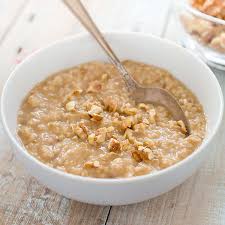
You leave your cold spoon in a hot bowl of oatmeal. What happens after an hour?
The temperature of both the oatmeal and the spoon stay the same
The spoon and the oatmeal become the same temperature
Only the temperature of the oatmeal will change
Only the temperature of the spoon will change
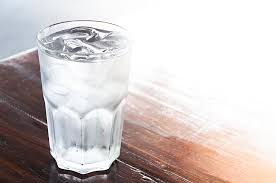
Johnny put ice in his water. Which idea do you think best explains why the water got cold?
The coldness from the ice moved into the water
The coldness and the heat moved back and forth until the water cooled off.
The heat from the water moved into the ice.
The water does not cool of
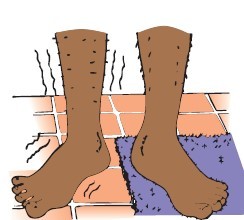

The diagram shows a metal sphere P at 80oC is immersed in a cooler liquid Q. Thermal equilibrium is reached when
temperature of P = temperature of Q
mass of Q displaced = mass of P
volume of Q = volume of P

A student placed a pencil in a cup of water. The pencil appears broken because light
always travels in a straight line.
bends when it passes through water.
makes the water in the glass evaporate.
reflects the pencil on the water's surface.

What is the best explanation for Mickey seeing himself in the mirror?
refraction
absorbed
reflection
flipped
What do we call a material that light can travel through?
air
water
medium
pathway


Kim watched lightning strike and then heard thunder 10 seconds later. What would have happened if he were watching the storm on a warmer day?
The thunder would have been heard before the lightning.
There would have been no change.
The thunder would be heard sooner.
The thunder would be heard later.

