wayground logo

Free Printable Worksheets

Font size

S
M
L
XL
Worksheets

Comp Sci 2 CFE Review

Total questions: 100

Worksheet time: 50mins

Name
Class
Date
1.

A dependent variable is __________.

a)

What is measured in an experiment

b)

What you change in an experiment

c)

A prediction about an experiment

d)

What stays the same in an experiment

2.

A qualitative observation is ________.

a)

Describing qualities and characteristics

b)

A guess you make using an observation

c)

Numbers and labels

d)

What is kept the same in an experiment

3.

When graphing data, where do you place your independent variable?

a)

y-axis

b)

x-axis

c)

in the title

d)

it does not need to go on the graph

4.

What is an example of an inference?

a)

It is going to rain later today.

b)

The clouds are dark gray.

c)

The temperature is 67 degrees Fahrenheit.

d)

All of these are examples of inferences.

5.
A testable prediction about a scientific investigation is a(n)
a)
Question
b)
Observation
c)
Hypothesis
d)
Experiment
6.

The information you collect while doing your experiment is called

a)

conclusions

b)

data

c)

hypotheses

d)

procedures

7.
The independent variable is the ONE thing you _____.
a)
change on purpose
b)
control or keep constant
c)
measure
8.

How many independent variables should you have in an experiment?

a)

two

b)

as many as possible

c)

four

d)

one

9.
Will a construction paper air plane fly faster than an airplane made from notebook paper? Choose the best hypothesis.
a)
If I make a paper airplane from notebook paper, then it will fly faster than construction paper.
b)
Yes.
c)
No.
d)
I think the construction paper air plane will fly faster.
10.
If I ride my bike to school instead of walking, then I will get to school faster. What is the dependent variable?
a)
True
b)
How fast you get to school
c)
Riding a bike or walking
d)
False
11.

If I floss more, then I will have fewer cavities. What is the independent variable?

a)

Number of cavities

b)

Amount of flossing

c)

Type of floss used

d)

Amount of brushing

12.

If I put on a higher factor sunscreen, then I will burn less. What is the dependent variable?

a)

Severity of sunburn

b)

Factor of sunscreen

c)

Time spent in the sun

d)

Weather conditions

13.
Energy due to motion is ____________ energy. 
a)
Potential 
b)
Energy
c)
Kinetic
d)
Friction
14.
__________ energy is the energy due to an object's position or condition
a)
Potential
b)
Kinetic
c)
None of the above 
d)
All of the above 
15.
The faster an object moves, the ________ kinetic energy it has. 
a)
more
b)
less
c)
none of the above
d)
all of the above 
16.
Gravitational potential energy depends on the ________ and ________ of the object. 
a)
Height and mass
b)
Friction and movement
c)
Mass and Movement
d)
Height and Friction 
17.
What kind of energy is in a rock at the edge of a cliff?
a)
Potential
b)
Kinetic
c)
both
d)
neither
18.
Which point has the most potential energy?
a)
D
b)
F
c)
B
d)
A
19.
Which is the best example that something has kinetic energy?
a)
a. a car parked on a steep hill 
b)
b. a tennis ball rolling across the court
c)
c. a picture hanging on the wall 
d)
d. a piece of coal before it's burned 
20.
What is happening to the energy of the girl from point A to point B
a)
kinetic changes to potential
b)
potential changes to kinetic
c)
energy is lost
d)
energy is gained
21.
The law of conservation of energy means ________________________
a)
Energy CAN be created and destroyed or transformed
b)
Energy can be used up or transformed
c)
Energy CANNOT be created or destroyed, only transformed
d)
Energy cannot be transformed
22.
Which bowling ball has LESS kinetic energy
a)
8 m/s
b)
10 m/s
c)
they have the same amount of enery
d)
none of these
23.

What Are The Three Main Types Of Rocks?

a)

Igneous, Depository, Metamorphic

b)

Depository, Igneous, Sedimentary

c)

Metamorphic, Igneous, Depository

d)

Igneous, Metamorphic, Sedimentary

24.

How are metamorphic rocks formed?

a)

Heating and cooling

b)

Deposition

c)

Heating and pressure

d)

Materials gathering and pressing together

25.

How are igneous rocks formed?

a)

Sediment forming together

b)

Heating and pressure

c)

Cooling

d)

Deposition

26.

How are sedimentary rocks formed?

a)

Heating and pressure

b)

Sediment forming together

c)

Weathering

d)

Cooling

27.

The rocks cycle follows a specific order?

a)

True

b)

False

28.

Identify the series of geologic processes that can transform sediment into shale (sedimentary rock), shale into slate (metamorphic), and slate into magma

a)

Cooling; Melting; Heat and Pressure

b)

Compacting and cementing; heat and pressure; melting

c)

Melting; heat and pressure; cooling

d)

Weathering and erosion; compacting and cementing; cooling

29.

The Mount Rushmore National Monument is carved from the granite (formed from magma underground) of South Dakota's Black Hills. What type of rock is granite?

a)

Igneous

b)

Metamorphic

c)

Sedimentary

d)

None of the above

30.
The image illustrates what type of boundary?
a)
Divergent
b)
Convergent
c)
Transform
d)
Emergent
31.
The image illustrates what type of boundary?
a)
Divergent
b)
Convergent
c)
Transform
d)
Emergent
32.
The image illustrates what type of boundary?
a)
Divergent
b)
Convergent
c)
Transform
d)
Emergent
33.
As you approach the center of the earth what happens to the temperature, pressure , and density.
a)
They all increase
b)
They all decrease
c)
They remain the same
d)
They disappear
34.
Which layer is molten nickel and iron?
a)
Crust
b)
Mantle
c)
Outer core
d)
Inner core
35.
Which layer is solid nickel and iron?
a)
Crust
b)
Mantle
c)
Outer core
d)
Inner core
36.
Which layer is contains the convection currents?
a)
Asthenosphere
b)
Lithosphere
c)
Mesosphere
37.
Which layer is the thinnest?
a)
Crust
b)
Mantle
c)
Outer core
d)
Inner core
38.
What is the correct order from the center of the earth to the surface of the earth?
a)
Crust, Mantle, Inner core , Outer core
b)
Crust, Mantle, Outer core , Inner core
c)
Inner core, Outer core, mantle, crust
d)
Outer core , Inner core, Mantle, Crust
39.
Which layer includes the crust and the upper mantle?
a)
Asthenosphere
b)
Lithosphere
c)
Mesosphere
40.

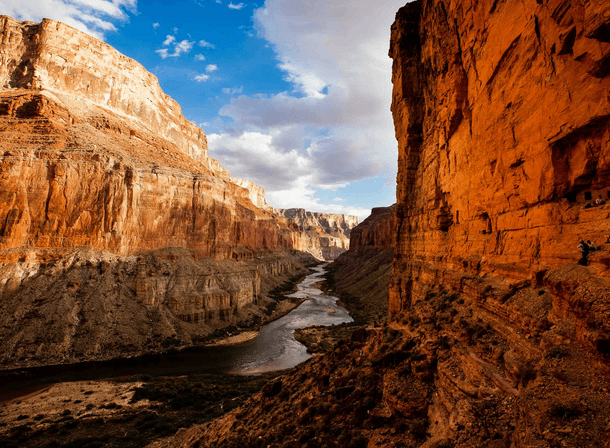
What is it called when a river cuts a deep path through land?

a)

river

b)

mountain

c)

canyon

41.

Define delta.

a)

a narrow stretch of land connecting two larger areas

b)

a point of land that extends into a river, lake or ocean

c)

a body of land jutting into a lake or ocean surrounded by water on three sides

d)

a flat, low-lying land built up from soil carried downstream by a river and deposited at its mouth

42.
Heterozygous is when...
a)
the alleles are the same
b)
the alleles are different
c)
the alleles are absent
d)
the alleles are present
43.
G = green, g = yellow
The genotype for a yellow plant is...
a)
GG
b)
Gg
c)
gg
d)
all of the choices result in yellow
44.
Which of the following alleles is homozygous (purebred) recessive?
a)
Tt
b)
tt
c)
TT
d)
t
45.
Aa, DD, bB, yy are all examples of
a)
genotypes
b)
phenotypes
46.
What you see, or the physical appearance.
a)
Genotype
b)
Phenotype
c)
Homozygous
d)
Heterozygous
47.
One form of a gene is called_______________
a)
a DNA
b)
a Phenotype
c)
a trait
d)
an allele
48.
T - tall and t = short
In the punnett square below, what belongs in the missing square
a)
tt
b)
Tt
c)
Bb
d)
TT
49.
B = brown fur  b = white fur
In the punnett square, what is the probability for white fur? 
a)
0%
b)
25%
c)
50%
d)
75%
50.
What allele combination should go in the missing box?
a)
AA
b)
Aa
c)
aa
d)
none of these
51.

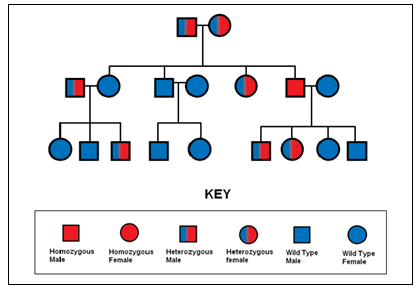
In a pedigree, which shape represents a male?

a)

circle

b)

square

52.

On a pedigree, this symbol represents a ----

a)

not affected male.

b)

not affected female.

c)

affected male.

d)

affected female.

53.

How many individuals are there in the 3rd generation?

a)

1

b)

2

c)

4

d)

6

54.

How are individuals III-2 and II-4 related?

a)

Brother and sister

b)

Dad and daughter

c)

Uncle and niece

d)

Grandfather and granddaughter

55.
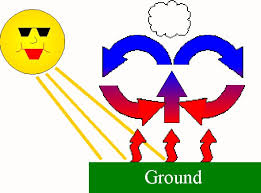
what is the meaning of conduction
a)
when heat transfers from objects that are not touching
b)
heat rise 
c)
cold fall
d)
when heat transfers from objects that are touching
56.
what kind of heat is happening when the sun heats your body
a)
conduction
b)
convection
c)
density
d)
radiation
57.
heat energy traveling through space is an example of _____
a)
convection
b)
density
c)
radiation
d)
conduction
58.
Warm air rises and the cool air sinks.
a)
conduction
b)
convection
c)
radiation
59.
Which portion of the electromagnetic spectrum includes the range of light that can be detected by the human eye? 
a)
ultraviolet light
b)
visible light
c)
infrared light
d)
x-rays
60.
If the wavelength of an electromagnetic wave is longer, what is true about the energy? 
a)
Energy is higher.
b)
Energy is lower. 
c)
Energy is not dependent on wavelength. 
d)
energy is cancelled out
61.
Which part of the electromagnetic spectrum has high enough energy to cause damage to eyes and skin, and sometimes even cancer? 
a)
infrared light
b)
visible light
c)
ultraviolet light
d)
microwaves
62.
Which of the following electromagnetic waves is given off as heat? 
a)
ultraviolet light
b)
x-rays
c)
gamma rays
d)
infrared rays
63.
The distance between one point of a wave to the same point on the next wave.
a)
frequency
b)
wavelength
c)
amplitude
d)
crest
64.
These are the waves that are used to penetrate solids and are used to create medical images.
a)
visible light
b)
gamma rays
c)
x rays
d)
microwaves
65.
The type of EM wave that is used to cook food.  It has a higher frequency than radio waves.
a)
radio
b)
microwave
c)
gamma
d)
visible light
66.
The type of wave with the shortest wavelength and highest frequency.  This type of wave is extremely harmful.
a)
radio
b)
infrared
c)
gamma
d)
x ray
67.
If an object appears black, this means all 7 colors of the visible light spectrum are _____
a)
reflected
b)
abosrbed
c)
diffracted
68.
If an object appears white, this means all 7 colors of the visible light spectrum are _____
a)
reflected
b)
abosrbed
c)
diffracted
d)
refracted
69.
If an object appears blue, this means that ______
a)
all colors are absorbed except blue, blue is reflected
b)
all colors are reflected except blue, blue is absorbed
70.
Light waves travel fastest in ________ 
a)
solid
b)
liquid
c)
gas
d)
vacuum
71.
Sound waves travel fastest in ____
a)
solid
b)
liquid
c)
gas
d)
vacuum
72.

What are the "X" shaped things in the drawing.

a)

PMATs

b)

Chromosomes

c)

Ribosomes

d)

Telophase

73.

What is the purpose of Mitosis?

a)

Growth of an organism and Repair of damaged tissue

b)

To help the body get rid of extra cells

c)

To increase the amount of classwork you have to do

d)

To get rid of the nucleus

74.
What do the cells look like at the end of mitosis?
a)
different from original cell
b)
similar to the original cell
c)
identical to the original cell
d)
none of these
75.

Control center of cell, contains instructions for everything the cell does.

a)

Ribosomes

b)

Nucleus

c)

Endoplasmic Reticulum

d)

Mitochondria

76.

Cell types that divide during Meiosis

a)

4 daughter cells

b)

Identical daughter cells

77.

Ecology is the study of:

a)

only the living things in the environment

b)

only the nonliving things in the environment

c)

how living things interact with each other and the nonliving things in the environment

d)

scientists who perform research on living things

78.

What type of organism can make its own food?

a)

A producer (an autotroph)

b)

A consumer (a heterotroph)

c)

A decomposer

d)

All of the above

79.

In what type of relationship do both organisms benefit from the relationship?

a)

Parasitism

b)

Mutualism

c)

Commensalism

d)

Predation

80.
What does every food chain start with? (Even if it's not drawn or written there!)
a)
producers
b)
sun
c)
consumer
d)
decomposers
81.
An organism that needs to eat other organisms to obtain energy is known as a:
a)
Autotroph
b)
Producer
c)
Consumer
d)
Mutualist
82.
What does a food web represent?
a)
All connections of energy flow throughout all organisms in a habitat.
b)
The specific ways that mutualism is carried out.
c)
A single pathway or energy flow between organisms. 
d)
How carnivores get their food. 
83.
The rabbit in this food web would be considered a:
a)
Decomposer
b)
Producer
c)
Secondary Consumer
d)
Primary Consumer
84.
The nonliving aspects of an ecosystem.
a)
Abiotic factors
b)
Biotic factors
85.
The living portions of the ecosystem.
a)
Biotic factors
b)
Abiotic factors
86.
As you move upward, from level to level, in an energy pyramid, energy _____.
a)
increases
b)
decreases
c)
stays the same
d)
increases exponentially
87.

The Law of Superposition helps scientists to determine what?

a)

The absolute age of rock layers

b)

The age of fossils

c)

The relative age of rock layers

d)

the super powers of squirrels

88.
According to the law of superposition, the oldest fossils are found 
a)
At the top of the rock layers
b)
Near the bottom of the rock layers
c)
In the middle of the rock layers
d)
Somewhat near the surface
89.

Which of the following correctly lists the layers in order from oldest to youngest?

a)

A, B, C, D, E

b)

E, B, C, D, A

c)

E, D, C, B, A

d)

C, B, A, D, E

90.
Which best describes the fossil record?
a)
The fossil record cannot provide evidence of evolution. 
b)
The fossil record provides evidence of a common ancestor to many species.
c)
The fossil record provides evidence that disputes the theory of evolution.
d)
The fossil record is inaccurate because scientists are not able to date fossils.
91.
The ___ parts of organisms are more likely to become fossils.
a)
hard
b)
soft
c)
outer
d)
inner
92.

Which of the following orders the rock layers accurately from oldest to youngest?

a)

1, 2, 3, 4, 5

b)

5, 4, 3, 2, 1

c)

2, 3, 4, 5, 1

d)

1, 2, 3, 5, 4

93.

An element that has broken down and released particles and energy is said to be __________________.

a)

radioactive

b)

igneous

c)

half-life

d)

sad

94.

________________ is the time it takes for half of the radioactive atoms in an element to decay.

a)

Half-life

b)

Radiation

c)

Relative age

d)

Full-life

95.

Make up every piece of matter, contain protons(+), electrons (-) and neutrons (o).

a)

Atoms

b)

Absolute Age

c)

Carbon Film

d)

Relative Age

96.

In undisturbed rock layers, the oldest rocks are on the bottom.

a)

Principle of Superposition

b)

Principle Original Horizontality

c)

Unconformities

d)

Index Fossils

97.
The original element that undergoes radioactive decay is known as the...
a)
daughter element
b)
half-life
c)
parent element
d)
carbon-14
98.

The element that is the product of radioactive decay is known as the...

a)

daughter element

b)

half-life

c)

parent element

d)

carbon-14

99.

Barnacles create home sites by attaching themselves to whales. In this relationship, the whales are neither harmed nor benefited. What type of symbiosis is this relationship?

a)

parasitism

b)

commensalism

c)

mutualism

100.

Egrets feed in fields among cattle. The egrets get easy access to the insects that are stirred up by the cattle, and the cattle do not care if the egrets are there or not. What type of symbiosis is this relationship?

a)

mutualism

b)

commensalism

c)

parasitism