wayground logo

Free Printable Worksheets

Font size

S
M
L
XL
Worksheets

EOC Review

Total questions: 97

Worksheet time: 2hrs 38mins

Name
Class
Date
1.

_____________ refers to all the different kinds of living organisms within a given area.

a)

Biodiversity

b)

Biology

c)

Biome

d)

Ecology

2.
SC.6.L.15.1
Which of the following is an example of an autotroph?
a)
A lion
b)
A tree
c)
An eagle
d)
A mushroom
3.
This domain contains organisms that have a true nucleus in each of their cells. This domain breaks down into four kingdoms.
a)
Animalia
b)
Archaea
c)
Bacteria
d)
Eukarya
4.
Which kingdom would this organism belong to?
a)
Protista
b)
Plantae
c)
Animalia
d)
Fungi
5.
My Kingdom includes mushrooms and yeast!
a)
Animalia
b)
Plantae
c)
Eubacteria
d)
Fungi
6.
Do prokaryotes have a nucleus? 
a)
yes
b)
no
7.

A cell with nucleus is

a)

Autotrophic

b)

Prokaryotic

c)

Eukaryotic

d)

Heterotrophic

8.
Bacteria are all prokaryotic. What does it mean to be prokaryotic?
a)
Has a nucleus 
b)
Sometimes has a nucleus 
c)
Does not have a nucleus 
d)
Has a cell membrane 
9.

Examples are mushrooms and mold

a)

Fungi

b)

Protista

Protista

c)

Plantae

d)

Animalia

10.
Tigers, Jellyfish, Gorillas and Sponges are all part of kingdom _______.
a)
Animalia
b)
Plantae
c)
Fungi
d)
Bacteria
11.
A dichotomous key for trees is provided. Hikers found a tree that has large brown cones and single sharp needles. What species of tree have the hikers found?
a)
Juniper
b)
Pine
c)
Spruce
d)
Fir
12.
A dichotomous key for insects is given. To what order does an insect with two pairs of scaly wings belong?
a)
Coleoptera
b)
Heteroptera
c)
Diptera
d)
Lepidoptera
13.
A student discovers an arachnid with a segmented abdomen, long legs, and a tail with no stinger. The student uses the dichotomous key below to identify it. Which arachnid has the student found?
a)
Whip Scorpion
b)
Wind Scorpion
c)
Daddy long legs
d)
Scorpion
14.
A dichotomous key for trees is provided. Hikers found a tree that has large brown cones and single sharp needles. What species of tree have the hikers found?
a)
Juniper
b)
Pine
c)
Spruce
d)
Fir
15.

Which of the following is a true statement?

a)

Cells are the basic unit of structure and function.

b)

All living organisms are multicellular.

c)

All living organisms contain a nucleus.

d)

All living organisms have a cell wall.

16.

Reproduction that only involves one parent and all offspring are identical; for example, binary fission of bacteria or amoebas.

a)

Asexual

b)

Sexual

c)

Division

d)

Addition

17.

Reproduction that involves two cells from different parents unite to produce the first cell of a new organism.

a)

Asexual

b)

Sexual

c)

Budding

d)

Division

18.

Maintaining a stable internal

environment is called

a)

homeostasis

b)

equilibrium

c)

balance

d)

evenness

19.
What is the most basic unit of life?
a)
cell
b)
tissue
c)
organ
d)
organ system
20.
Which choice shows the levels of organization in order from LARGEST to smallest.
a)
organism, organ system, organ, tissue, cell
b)
cell, tissue, organ, organ system, organism
c)
organism, cell, organ system, tissue, organ
d)
cell, cell, cell, cell, cell
21.
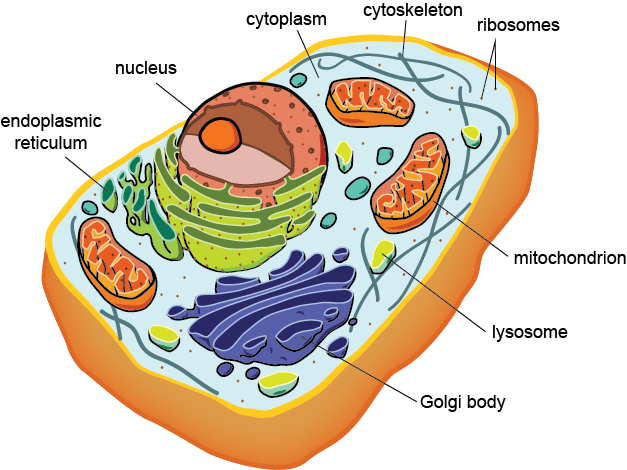
What type of cell is pictured?
a)
Prokaryotic
b)
Eukaryotic
c)
Plant
d)
Animal
22.
Type of cell shown?
a)
Bacterial
b)
Prokaryotic
c)
Eukaryotic
d)
Red blood 
23.

In a eukaryotic cell, where is the DNA located?

a)

In the cell membrane

b)

There is no DNA

c)

In the nucleus

d)

In the cell wall

24.

This organelle controls what goes in and out of plant and animal cells.

a)

Cell Wall

b)

Cell Membrane

c)

Chloroplasts

d)

Cytoplasm

25.

The _____________ stores food, water, wastes, and other materials in both plant and animal cells.

a)

Vacuole

b)

Mitochondria

c)

Cytoplasm

d)

Nucleus

26.
An organelle that captures energy from the sunlight in order to use it to produce food in plant cells is ______________.
a)
Chromatin
b)
Chloroplast
c)
Cytoplasm
d)
Cell Membrane
27.

The _____________ holds the DNA, and controls the functions of eukaryotic cells.

a)

Nucleus

b)

Nuclear Membrane

c)

Mitochondria

d)

Chloroplast

28.

What can only be found in plant cells?

a)

Cell membrane

b)

Vacuole

c)

Chloroplast

d)

Mitochondria

29.
Cell membranes are found in
a)
Only animal cells
b)
Only plant cells
c)
Some plant and animal cells
d)
All plant and animal cells
30.
What organelle is called the "powerhouse" of a cell?

a)
Endoplasmic Reticulum
b)
Nucleus
c)
Mitochondria
d)
Nucleolus
31.
What organelle stores waste and water in both plant and animal cells?
a)
Lysosomes
b)
Golgi Complex
c)
Vacuoles
d)
Endoplasmic Reticulum
32.
Using this image, what organelle is C?
a)
Cell Wall
b)
Mitochondria
c)
Large Cell Vacuole
d)
Chloroplast
33.

What is it called when a bunch of cells comes together to perform a specific function?

a)

Tissue

b)

Cell

c)

Molecule

34.
Which of the following is the correct order of organization in living things from most basic (simple) to most complex?
a)
a.  Organism, cell, tissue, organ, organ system
b)
a.  Organ system, organ, tissue, cell, organism
c)
a.  Cell, tissue, organ, organ system, organism
d)
a.  Cell, organ, tissue, organ, organism, organ system
35.
When a group of organs work together to perform a particular function they create a/an
a)
organ system
b)
organism
c)
tissue
d)
organ
36.
The smallest level of organization of life in an organism
a)
tissue
b)
cell
c)
organ
d)
organ system
37.
The basic unit of structure and function in the human body is the....
a)
organ
b)
organ system
c)
cell
d)
tissue
38.
Tissue that works together to perform a function
a)
organ
b)
cell
c)
organ system
d)
organism
39.
The heart contains different types of tissue. What level is the heart?
a)
cell
b)
organ system
c)
organ
d)
tissue
40.
Which of the following statements is not part of the cell theory?
a)
Cells are the basic unit of structure and function in all living things.
b)
All cells are produced from other cells.
c)
Only animal cells are composed of cells.
d)
All living things are composed of cells.
41.
What is one way in which all living things on Earth are alike?
a)
All living things have hair.
b)
All living things are made of cells and come from other cells.
c)
The cells of all living things have chloroplast.
d)
All living things can move. 
42.
What structures distinguish a plant cell from an animal cell?
a)
Plant cells have cell walls and ribosomes.
b)
Plant cells have cell walls and chloroplasts.
c)
Plant cells have chloroplasts and ribosomes.
d)
Plant cells have chloroplasts and mitochondria.
43.
What kind of cell is this?
a)
Animal 
b)
Plant
44.
This organelle is a rigid outer layer that protects plant cells.
a)
Cell Membrane
b)
Cell Wall
c)
Nucleus
d)
Chloroplast 
45.

What is the function of a chloroplast?

a)

makes proteins for animal cells

b)

allows materials in and out of the cell

c)

provides structure and support

d)

absorbs sunlight for photosynthesis

46.
Food is broken down to supply energy for your body in the ____________
a)
digestive system
b)
endocrine system
c)
excretory system
d)
reproductive system
47.
Breaking food down with the use of enzymes is known as:
a)
Chemical Digestion
b)
Physical Digestion
48.

Which of the following is a disadvantage of asexual reproduction?

a)

All organisms have genetic variation

b)

Parents produces identical off spring which is not suitable for survival in a changing environment

c)

Finding a mate is not needed

d)

It can produce a lot of offspring

49.

what type of tropism is occurring here?

a)

phototropism

b)

thigmotropism

c)

gravitropism

d)

tropictropism

50.

what type of tropism is occurring here?

a)

phototropism

b)

thigmotropism

c)

geotropism

d)

tropictropism

51.
What type of tropism is response to touch? 
a)
Gravitropism
b)
Phototropism
c)
Thigmotropism
d)
Hydrotropism
52.

What does the Xylem transport?

a)

Water and Minerals

b)

Glucose

c)

Blood

d)

Chlorophyll

53.

This structure transports glucose/ sugar (food)

a)

Xylem

b)

Phloem

54.
The arrows in a food chain or web represent ...
a)
They point to the organism that is being eaten.
b)
It shows how sunlight flows within an ecosystem.
c)
They show the direction the energy is flowing between organisms. 
d)
They represent how water is transferred within a habitat.
55.
Which of the following is NOT a heterotroph?
a)
grass
b)
fungus
c)
shark
d)
sea urchin
56.
Which of the following would be the most likely effect, if there were a sudden increase in the cricket population?
a)
There would be a decrease in the small bird population.
b)
There would be a decrease in the grass/flowers population.
c)
There would be a decrease in the mice population.
d)
There would be an increase in the grass/flowers population.
57.
The diagram represents a pyramid of energy in an ecosystem.  Which level would most likely contain organisms that can photosynthesize?
a)
A
b)
B
c)
C
d)
D
58.
Which organisms have the most energy? 
a)
ladybugs
b)
plants
c)
owl
d)
mosquitoes
59.

Organisms that produce their own food mostly through photosynthesis (producers). Examples are plants and algae.

a)

Ominvore

b)

Detritivore

c)

Heterotroph

d)

Autotroph

60.

Organisms that get their energy and nutrition from other organisms (consumers).

a)

Heterotroph

b)

Autotroph

c)

Decomposer

d)

Detritivore

61.

Heterotrophs that get energy and nutrition from dead or decaying organisms or their waste products and recycle nutrients back to the ecosystem.

a)

Producer

b)

Trophic

c)

Decomposer

d)

Autotrooph

62.

Parts of an ecosystem that are living or deal with the living. Examples include producers, consumers, decomposers, predation, disease, competition, parasitism, and symbiosis.

a)

Abiotic Factors

b)

Biotic Factors

c)

Community

d)

Population

63.

Parts of an ecosystem that are not living. Examples: water, soil, sunlight, temperature, altitude.

a)

Detritivores

b)

Herbivores

c)

Biotic Factors

d)

Abiotic Factors

64.
Dd letters are an example of....
a)
heterozygous genes
b)
homozygous genes
c)
dominant genes
d)
recessive genes
65.
the following letters are an example of _______  dd
a)
recessive
b)
homozygous recessive
c)
homozygous dominant
d)
dominant
66.
DD is an example of
a)
homozygous recessive
b)
dominant
c)
Homozygous dominant
d)
recessive
67.

What word describes a trait that helps an organism survive in its environment?

a)

natural selection

b)

mutation

c)

camouflage

d)

adaptation

68.
Which organisms are most likely to survive?
a)
the best adapted
b)
the fastest
c)
the strongest
d)
the most domesticated (tamed)
69.
Change over time
a)
Natural Selection
b)
Selective Breeding
c)
Homeostasis
d)
Evolution
70.

Natural Selection is driven by a change in the environment and survival of the

a)

Earth

b)

Fastest

c)

Fittest

d)

Biggest

71.
Which of these is an example of natural selection?
a)
The largest animal in a population will have more opportunities for reproduction.
b)
Several species of organisms work together so that they all succeed.
c)
One species takes all the resources in an environment leaving none for others.
d)
Organism that are best suited to an environment tend to survive and reproduce more often.
72.
succession that occurs in an area with no soil
a)
ecological succession 
b)
primary succession 
c)
secondary succession
d)
pioneer speciles
73.
succession that occurs in an area where soil is already present
a)
ecological succession 
b)
primary succession 
c)
secondary succession
d)
pioneer speciles
74.
starts with bare rock followed by lichen
a)
primary succession 
b)
secondary succession
c)
both types of succession
75.
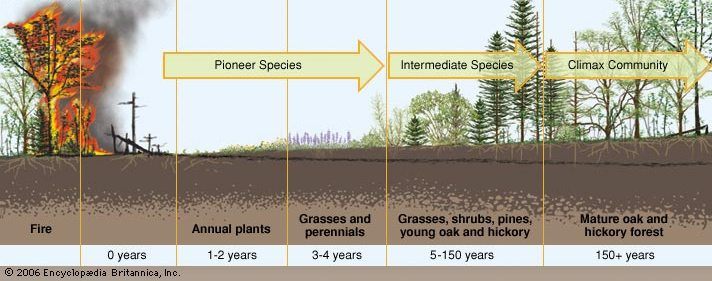
this type of succession occurs after a forest fire
a)
primary succession
b)
secondary succession
c)
both
76.

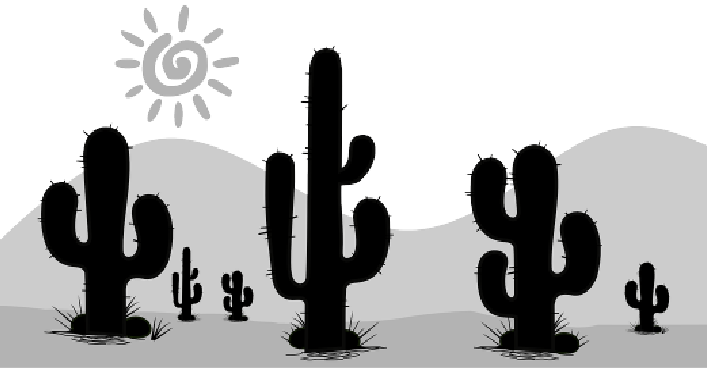
Many of the animals in the desert are ______________ to avoid the extreme heat during the day.

a)

cacti

b)

chia

c)

water

d)

nocturnal

77.
This biome is found around the equator and is home to a large amount of biodiversity.
a)
Deserts
b)
Tropical Rain Forests
c)
Savannas
d)
Chaparral 
78.
T - tall and t = short
In the punnett square below, what belongs in the missing square
a)
tt
b)
Tt
c)
Bb
d)
TT
79.
B = brown fur  b = white fur
In the punnett square, what is the probability for white fur? 
a)
0%
b)
25%
c)
50%
d)
75%
80.
In the punnett square shown, what must the genotype of the missing parent be?
a)
BB
b)
Bb
c)
bb
d)
Tt
81.
In the punnett square shown, what is the genotypes of the two parents?
a)
RW and RR
b)
RW and WW
c)
RR and WW
d)
RW and RR
82.

What is an adaptation?

a)

A feature that helps only a plant grow.

b)

A feature that helps a living thing survive.

c)

A feature that helps a living thing walk.

d)

A feature that that helps only animals survive.

83.
Physical adaptations are:
a)
Body parts that help a living thing survive in its environment
b)
Behaviors that help a living thing survive in its environment
84.
Behavioral adaptations are:
a)
Body parts that help a living thing survive in its environment
b)
Behaviors that help a living thing survive in its environment
85.

An adaption that some plants have for

surviving dry conditions is -

a)

growing tall and producing many large

leaves

b)

changing colours of leaves in autumn

c)

producing wax on stems and leaves

86.
Coloring or another physical characteristic that help an organism blend in with its environment
a)
mimicry
b)
camouflage
c)
hibernation
d)
migration
87.

What does biodiversity mean?

a)

Nitrogen fixation

b)

Only one species in an area.

c)

All abiotic life

d)

The different amount of species in an area

88.

All of the populations that live in one area together

a)

home

b)

town

c)

population

d)

community

89.

A system made up of organisms interacting with one another

a)

biology

b)

abiotic

c)

ecosystem

d)

biotic

90.

A population is...

a)

Multiple species that live in one area

b)

All of the living and nonliving things in an area

c)

A group of one species in one area

d)

None of these

91.
Type of forest biome near the equator; receives a lot of rain; temperatures are warm all year.
a)
desert
b)
tropical rain forest
c)
arctic
d)
temperate rain forest
92.
What is the order of succession shown in this figure?
a)
A, B, C, D
b)
B, A, D, C
c)
C, D, A, B
d)
D, A, B, C
93.
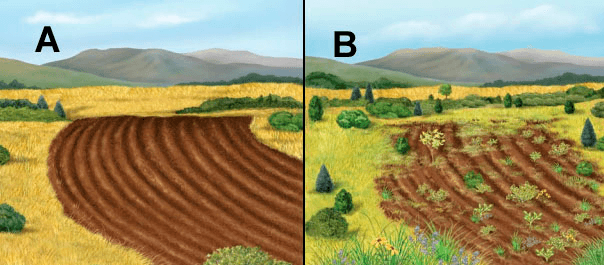
What type of succession is shown going from figure A to figure B?
a)
primary succession
b)
ecological succession
c)
secondary succession
d)
intermediate
94.
The picture shows what type of succession?
a)
primary
b)
secondary
95.
Flashy tails on many animals is an example of coloration. Why might flashy tailed animals display their colors to another of the same species? 
a)
make friends
b)
help build a nest
c)
attract a mate 
d)
scare predators
96.
Most foxes of the desert have a reddish brown coat but the artic fox has a white coat. How has this adaptation allowed the arctic fox to survive over many years?
a)
it gives it warmth during the summer
b)
it makes the fox look meaner
c)
it keeps it warm
d)
its protects it from prey using camoflauge 
97.
Charles Darwin noticed that birds of the Galapagos Islands were very similar in size and shape but their beaks were very different. What is the explanation for birds having different beaks? 
a)
gathering food
b)
building nest
c)
fighting
d)
scaring predators