
 Worksheets
Astronomy I study guide
Total questions: 83
Worksheet time: 3625secs
Which of the planets listed below is a gas giant planet?
Jupiter
Vensus
Earth
Mars


Mercury,Saturn
Jupiter, Uranus, Neptune
Jupiter, Neptune,
Mercury,Saturn,
Uranus
Mars,Jupiter,
Saturn,Uranus
Neptune

What a comet is made of?
Dust, Rock, and Metal
Icy Shell
Icy Shell, Dust, Rock, and Metal
Icy Shell, Dust, Rock, Metal, and Liquid
What is a meteor?
Rocky space debris the size of an asteroid
Icy Shell, Dust, Rock, Metal
A meteoroid that has entered the Earth's atmosphere
A meteorite that has entered the Earth's atmosphere
What is a meteorite?
A meteoroid that is made of minerals
A meteor that has burned up completely and disappeared in Earth's atmosphere
A meteoroid that has landed in the ocean
A meteor that has made it through Earth's atmosphere and landed on Earth.
Which dwarf planet is the smallest and is the only one found in the asteroid belt?
Dawn
Ceres
Makemake
Eris
What is the name and shape of our galaxy?
Milky Way / spiral
Milky Way / elliptical
Milky Way / Irregular
Sombrero / spiral
Planets in our solar system revolve around one star called the _____.
moon
earth
sun
star
There are officially _____ planets in our solar system.
9
8
7
6
This planet is the closest to the sun and travels around it fastest.
Earth
Venus
Jupiter
Mercury
These four planets are called the gas giants because they are made primarily of gas.
Jupiter, Mercury, Uranus, Venus
Saturn, Mercury, Mars, Neptune
Jupiter, Saturn, Uranus, Neptune
Saturn, Venus, Uranus, Neptune
Earth, Mars, Mercury, and Venus are called the _____ planets because they are made mostly of rock.
rocky
extra terrestrial
life
terrestrial
Our sun is located in one of the Milky Way's spiral arms.
True
False
According to the _______________ theory, Earth is at the center of the universe.
Heliocentric
Geocentric
Big Bang
Collision
Which model of the Universe is more accurate?
Geocentric
Heliocentric
Which planet is also known as Earth’s twin (sister) planet?
Jupiter
Mars
Neptune
Venus
A________________ is a large rock floating through space. The size of these objects can range from a boulder to many miles in diameter.
asteroid
meteorite
comet
meteor
Place the following objects in order from smallest to largest:
Planet Universe Solar System Galaxy star asteroid
Planet Universe Solar System Galaxy star asteroid
Universe Solar System Galaxy star asteroid Planet
Universe galaxy solar system star planet asteroid
asteroid planet star solar system galaxy universe
Which of the following planets are terrestrial planets with rocky, solid surfaces?
Earth
Mars
Venus
All of the above
The __________ Theory states that the Universe originated from a single point (singularity) which rapidly expanded.
Collision
Heliocnetric
Big Bang
Geocentric
Our solar system is located on the outer arm of which spiral galaxy?
Andromeda
Orion’s Arm
The Milky Way
The Large Magellanic Cloud
A “dirty snowball” also known as a comet is made of
mostly rock and metal
mostly ice and dust
liquid water
liquid nitrogen
What solar system feature is located between Jupiter and Mars?
The Oort Cloud
The Kuiper Belt
The Sun
The Asteroid Belt
The moon’s gravity is only __________ of Earth’s gravity. This is why you can jump higher on the moon than you can on Earth.
1/4
1/6
1/10
1/100
A ____________ is small rock flying through Earth’s atmosphere, also known as a shooting star
meteor
meteorite
meteoroid
asteroid
A ______________ is a small rock flying through space
meteor
meteoroid
meteorite
asteroid
Which planet is the most similar to Earth with respect to size, mass, and density?
Mercury
Venus
Mars
Jupiter

Which model of the solar system has the sun in the center with all of the planets orbiting it?
heliocentric
geocentric


Why do the stars appear to rotate around the sky?
Because the Earth is spinning
Because the stars are spinning
Because you are dizzy
They're not, it is an illusion
What was the problem with the Greek explanation?
Planetos, which moved back and forth across the night sky
there wasn't a problem
They could feel the earth spinning
They realized turtles can't fly
How did the Greeks try to address the problems in their model
They created even more complex models
They thought that maybe some turtles so have wings hidden under their shells
They decided that the earth must be the spinning
They asked the Romans for help
What new technology did Galileo use to make his observations?
Telescope
Microscope
Eyeglasses
Mirrors
What do scientists do when new information doesn't fit their existing models?
They adapt or change their model to fit the new information once they have confirmed it
They ignore the new information
They put their fingers in their ears and go lalalalala
They immediately throw everything they know out the window
What is the habitable zone around a star also called?
Goldilocks zone
Three Bears zone
Little Red Riding Hood Zone
Twilight Zone
What do scientists think caused the mass extinction of the dinosaurs?
Asteroid collision with Earth
Heart disease
A virus
Being hunted by ancient humans
What do scientists think may be the best way to avoid an asteroid collision with earth
Nuking it
Redirecting it
creating a huge force field around the earth
there is no good way
How did the Solar System form?
A rotating disk of gas and dust was drawn together by the force of gravity.
The sun ejected rocky material which later went on to form the planets.
One very large planetary body broke apart into several smaller planets.
Several stars of different masses cooled and formed the planets and the sun.
The gravitational force between two objects could be very small, unless which of the following is true?
The objects are very far apart.
One of the objects has a very large mass.
Both objects have very large masses and they are close together
Both objects are in the solid state of matter.
Two factors effecting the strength of gravity between 2 objects are...
weight and mass
distance and weight
mass and matter
mass and distance
Which of the following is required for planets to stay in orbit around the Sun? (choose all that apply)
Gravity
Weight
Friction
Inertia (Forward Motion)
What prevents planets from pulled into and crash into the Sun?
Gravity
Weight
Friction
Inertia (Forward Motion)
What prevents planets from drifting off into space and keeps it in the planets in our Solar System?
Gravity
Weight
Friction
Forward Motion
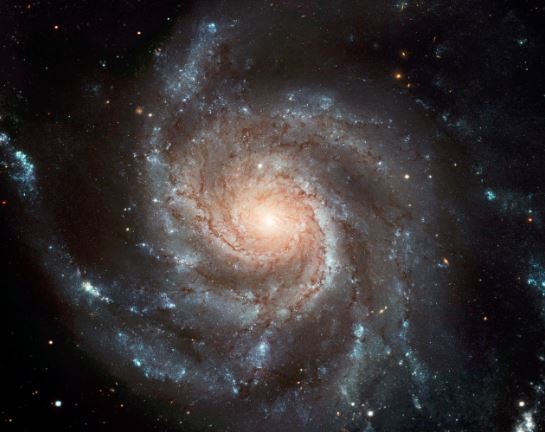
Without gravity, the stars, planets and all objects in the universe would _______.
continue to orbit each other
move in a random direction
move in a straight line
stop moving
A(n) _____ is the curved path of an object around a point/object in space.
orbit
rotation
revolution
phase

Is gravity a push, a pull, or both?
push
pull
both
The more mass equals...
more gravity
less gravity
more jump distance
Which would create the strongest gravity?
Two large planets close together
Two large planets far apart
A large planet and a small planet close together
A large and small planet far apart
A shorter distance does what to gravity?
Increases it
Decreases it
Increases then decreases it
Distance does not affect gravity
"Objects at rest/in motion stay that way unless acted upon by an outside force"
gravity
orbit
inertia
mass
"the amount of matter in something"
mass
inertia
gravity
distance
"force that pulls towards a center of mass"
gravity
mass
inertia
distance
If a planet has too much inertia velocity, what would happen to it?
It would fly off into space
It would get pulled into its star
It would stay in a stable orbit
It would blow up
On planet Coolcats, I can jump further than on Earth. What does this mean about its gravity?
It has more than Earth
It has less than Earth
It has the same as Earth

