wayground logo

Free Printable Worksheets

NEW

Font size

S
M
L
XL
Worksheets

Semester 1 Exam Review

Total questions: 79

Worksheet time: 2hrs 53mins

Name
Class
Date
1.

Which is true of prokaryotic and eukaryotic cells?

a)

Prokaryotic cells are larger than eukaryotic cells.

b)

Eukaryotic cells do not have nuclei, and prokaryotic cells do have nuclei.

c)

Prokaryotic cells lack membrane-bound organelles, and eukaryotic cells contain membrane-bound organelles.

d)

Eukaryotic cells are simpler than prokaryotic cells.

2.
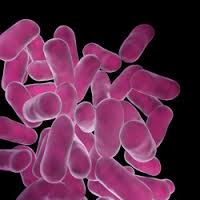
Type of cell shown?
a)
Eukaryotic
b)
Prokaryotic
c)
Bacterial
d)
Plant
3.
First type of cell to appear on Earth?
a)
Plant
b)
Animal
c)
Prokaryotic
d)
Eukaryotic
4.

What does unicellular mean?

a)

Having no cells

b)

Having many cells

c)

Having one cell

d)

Having a cell phone

5.

What is DNA?

a)

Genetic material

b)

An organelle

c)

A type of cell

d)

An organism

6.

Prokaryotic cells do not have __________________.

a)

DNA

b)

Cell membrane

c)

Cytoplasm

d)

Nucleus

7.
A cell is...
a)
the basic unit of structure and function in living organism
b)
an organism
c)
a basic part of everything that we see
d)
found only in animals, not plants
8.
Which of the following are NOT found in animal cells
a)
chloroplasts and cytoplasm
b)
chloroplasts and cell wall
c)
cell wall and cell membrane
d)
mitochondria and nucleus
9.

Which of the following converts food into energy for the cell?

a)

vacuole

b)

mitochondria

c)

cytoplasm

d)

cell membrane

10.
What do vacuoles do? 
a)
They actually do not have an important role
b)
They protect the cell
c)
They are the brain of the cell
d)
storage area for cells; water storage in plants 
11.

Which organelle takes in "sun showers" and helps plants with the process or photosynthesis?

a)

Vacuole

b)

Mitochondria

c)

Cytoplasm

d)

Chloroplast

12.
If you were some bad guy trying to sneak into an animal cell, who would be there to stop you?
a)
nucleus
b)
mitochondria
c)
cell membrane
d)
cell wall
13.
Rocks are not living because
a)
they never move
b)
they aren't needed for humans
c)
they are not made of cells
d)
they don't break down
14.
In order to sustain life, all cells must...
a)
digest nutrients and water
b)
excrete waste and fluids
c)
must be able to maintain a homeostasis environment (aka cellular respiration and regulation)
d)
All of the above
15.

What is NOT a part of cell theory:

a)

all cells come from existing cells

b)

all cells have a nucleus

c)

all living things are made of cells

d)

cells are basic unit of structure and function in living things

16.

Which of the following is the MOST complex level of organization?

a)

Organism

b)

Organ System

c)

Cell

d)

Tissue

17.
How are unicellular organisms different from multicellular organisms? 
a)
There are no differences.
b)
They are made of many cells. 
c)
They are only classified as prokaryotes.
d)
They are made of only one cell. 
18.

Which of the following is the MOST complex level of organization?

a)

Tissue

b)

Organ System

c)

Cell

d)

Organ

19.

What type of cell does NOT have a nucleus?

a)

Prokaryotic cell

b)

Karyotic cell

c)

Eukaryotic cell

d)

Plant cell

20.

Which 2 systems would work together to help a person walk?

a)

muscular & skeletal

b)

muscular & excretory

c)

muscular & reproductive

d)

skeletal & excretory

21.

contains the following organs: stomach, large and small intestine, liver

a)

muscular system

b)

digestive system

c)

endocrine system

d)

urinary / excretory system

22.

which 2 systems work together to move your hand from a fire once it senses heat

a)

nervous, digestive

b)

nervous, endocrine

c)

nervous, muscular

d)

nervous, respiratory

23.

Kidneys, bladder, ureters, urethra

a)

digestive system

b)

endocrine system

c)

excretory system

d)

skeletal system

24.

Which organs belong to the Respiratory System?

a)

Bones, cartilage

b)

Cardiac, smooth, skeletal

c)

Trachea, larynx, pharynx, lungs

d)

Kidneys, urinary bladder

25.

What is the purpose of the Skeletal System?

a)

Transports oxygen and nutrients

b)

Supports and protects the body, creates blood

c)

Movement and heat production

d)

Gas exchange in the body and lungs

26.

What is the purpose of the Circulatory System?

a)

Transports oxygen and nutrients

b)

Removes extra water and wastes

c)

Digests foods and absorbs nutrients

d)

Collects, transfers and processes information

27.

Which level of organization is a heart at?

a)

Cell

b)

Tissue

c)

Organ

d)

Organ System

28.

Main Organs: Skin

a)

Integumentary

b)

Nervous

c)

Skeletal

d)

Muscular

29.

Receives stimuli and transports impulses, coordinates actions and reactions in the body

a)

Integumentary

b)

Nervous

c)

Circulatory

d)

Respiratory

30.
The __________ is the main organ of the nervous system.
a)
heart
b)
lungs
c)
brain
d)
skin
31.

The process in which a seedling sprouts from a seed is known as

a)

photosynthesis

b)

spoutation

c)

fermentation

d)

germination

32.
In multicellular organisms, tissues are comprised of _______.
a)
organs
b)
systems
c)
cells
d)
blood
33.

What is the function of the roots?

a)

Anchor the plant

b)

Transports water and nutrients to different parts of the plant

c)

Make food for the plant through photosynthesis

d)

Becomes the new plant

34.

The site of sexual reproduction in a plant is the

a)

Stem

b)

Flower

c)

Roots

d)

Leaves

35.

Which plant part transports the water and nutrients to the other parts of the plant?

a)

Fruit

b)

Flower

c)

Leaves

d)

Stem

36.

Which of the following is not required for plant growth?

a)

Water

b)

Soil

c)

Sunlight

d)

Carbon Dioxide

37.

Which plant part collects the sunlight which is known as solar energy?

a)

Flower

b)

Fruit

c)

Leaves

d)

Roots

38.

Which plant part is responsible for making food and energy for the entire plant through photosynthesis?

a)

Stem

b)

Flower

c)

Roots

d)

Leaves

39.

Which plant part absorbs water and nutrients?

a)

Leaves

b)

Seed

c)

Stem

d)

Roots

40.
What is the ultimate ORIGINAL source of energy for living things
a)
Sugar
b)
Sun
c)
Moon
d)
Carbon Dioxide
41.
Which of the following is the correct equation for PHOTOSYNTHESIS?
a)
CO+ light + H2O --> O+ Sugar
b)
CO+ sugar + H2O --> O+ light
c)
O2 + light + H2O --> CO+ Sugar
d)
CO+ O2 + H2O --> Light+ Sugar
42.
What is the pigment in chloroplasts that performs photosynthesis?
a)
Chlorosynthesis
b)
Chlorophyll
c)
ADP
d)
Electron Transport
43.
Which gas is removed from the atmosphere during photosynthesis?
a)
hydrogen
b)
oxygen
c)
nitrogen
d)
carbon dioxide
44.
What is photosynthesis?
a)
The process in which humans eat their food
b)
When a photographer takes a photo.
c)
To get your pictures from the photo lab.
d)
The process in which plants make their food.
45.
Chloroplasts are...
a)
Structures of animal cells to produce ATP
b)
Organelles where lipids are elaborated
c)
Specialized structures of plants where food is made
d)
Waste organelle of plants
46.
What are the products of photosynthesis?
a)
water and carbon dioxide
b)
oxygen and glucose
c)
oxygen and carbon dioxide
d)
oxygen and water
47.
Which organelle from the plant cell is primarily responsible for converting sunlight to energy?
a)
Mitochonria
b)
Nucleus
c)
Vacuole
d)
Chloroplast
48.

What is the stimulus in this example?

a)

Internal

b)

Light

c)

Touch

d)

Temperature

49.
What gas is released by plants during photosynthesis?
a)
sulfur
b)
carbon dioxide
c)
oxygen
d)
hydrogen
50.

A tropism is...

a)

a change in the environment

b)

plant movement in response to a stimulus

c)

something that causes a response

d)

when photosynthesis takes place

51.

The shoot of a plant growing up.

a)

Positive geotropism

b)

Negative geotropism

c)

Thigmotropism

d)

Hydrotropism

52.

Roots of a tree growing towards the water line of a house.

a)

Geotropism

b)

Phototropism

c)

Thigmotropism

d)

Hydrotropism

53.

The root of a plant growing down.

a)

Positive geotropism

b)

Negative geotropism

c)

Thigmotropism

d)

Hydrotropism

54.

Venus Flytrap flower reacts to a bug.

a)

Thermotropism

b)

Negative Geotropism

c)

Thigmotropism

d)

Hydrotropism

55.

Sunflowers turning towards the sun.

a)

Hydrotropism

b)

Phototropism

c)

Thigmotropism

d)

Geotropism

56.

What makes a tropism positive or negative?

a)

Positive = movement towards stimulus, Negative = movement away from stimulus

b)

Negative = movement towards stimulus, Positive = movement away from stimulus

c)

Who cares? It doesn't matter whether it is positive or negative

d)

Positive = when a plant is happy, Negative = when a plant is sad

57.

Which of the following is an organism's reaction to a change in it's surrondings?

a)

Response

b)

Development

c)

Distraction

d)

Stimulus

58.

Asexual reproduction in organisms that produce offspring that are_____________?

a)

Diffrent from the parent plant

b)

highly charged organim

c)

identical to the parent plant

d)

not like the parent plant

59.

A stimulus is______________________?

a)

a change in a organisms surrondings

b)

process in which organism grow larger

c)

the result of sexual reproduction

d)

a reaction in change of surrondings

60.
creates genetically different offspring
a)
sexual 
b)
asexual
61.
If two organisms reproduce sexually, then their offspring will exhibit a genetic makeup that is -
a)
identical to only one parent
b)
identical to all of its siblings
c)
a unique combination of traits
d)
the recessive traits of each parent
62.
The offspring from asexually reproduced organisms are?
a)
Different than their parents
b)
Identical to parents
c)
Like a combination from both parents
d)
A different species
63.
All of the offspring of an organism have the same genetic material, which is identical to the parent organism. From this, we can conclude that this organism -
a)
makes its own food
b)
is unicellular
c)
live in a marine habitat
d)
reproduces asexually
64.
 A white cat had a litter of kittens that were orange, grey, and black and white spotted. Is this the result of sexual or asexual reproduction? And how would you characterize the offspring listed above?
a)
Sexual reproduction with uniform offspring
b)
Asexual reproduction with diverse offspring
c)
Sexual reproduction with diverse offspring
d)
Asexual reproduction with uniform offspring
65.
When comparing the offspring of sexually and asexually reproducing organisms, we would expect the genetic material (DNA) of the sexually reproducing organism to -
a)
contain fewer mutations
b)
be lesser in quantity
c)
be simpler overall
d)
show more variation
66.
What are the two forms of reproduction 
a)
sexual and asexual
b)
mitosis and meiosis
c)
Tom and Jerry 
d)
binary fission and fusion
67.
Which is a type of Asexual Reproduction
a)
Sexual 
b)
Binary fission
c)
Cells 
d)
organism 
68.
Heredity is the passing of traits from _____________________ to _____________________
a)
predators to prey
b)
water to rain
c)
parents to offspring
d)
fungi to protists
69.
If a child has red hair, they inherited a certain _______________ from their parents.
a)
ratio
b)
trait
c)
probability
d)
sex chromosome
70.
One trait that is ALWAYS present and causes the other traits to disappear is a ________________________
a)
recessive trait
b)
aggressive trait
c)
absent trait
d)
dominant trait
71.
True or False:  Recessive traits are ALWAYS present 
a)
True
b)
False
72.
Bunny A’s fur is all brown, while his brother and sisters are half brown and half white. The bunnies’ father is all brown, and the mother bunny is half brown and half white. Which best describes why Bunny A has brown fur?
a)
The bunny inherited a brown fur characteristic from each parent. 
b)
The bunny inherited a white fur characteristic from each parent. 
c)
The bunny rejected the white characteristics from its mother.
d)
The bunny rejected the brown characteristics from its father.
73.
A litter of kittens have traits that are similar to both the mother cat and the father cat. Which best explains this situation?
a)
The kittens are provided the same kind of milk from their mother as they grow.
b)
The kittens inherit some of their traits from their mother and some from their father.
c)
The kittens are kept at the same temperatures by their mother when they are first born.
d)
The kittens are taught by their parents to have similar traits.
74.
Mark is asked to write a brief description of himself for the school paper. Which characteristic mentioned in his description has Mark most likely inherited from his parents?
a)
height
b)
favorite food
c)
interest in sports
d)
ability to speak a foreign language
75.

Every living thing has genetic information stored in the form of

a)

Ribosomes

b)

DNA

c)

Chloroplast

d)

Mitochondria

76.

Sections of DNA that have instructions for a specific trait are called _______________

a)

Blueprints

b)

Genes

c)

Heterozygous

d)

Fragments

77.

Traits that are passed from parents to offspring are always

a)

Recessive

b)

Inherited

c)

Dominant

d)

Heterozygous

78.

The passage of genetic instructions from one generation to the next is known as

a)

Alleles

b)

Ancestry

c)

Heredity

d)

Variation

79.

The genetic difference between individuals in the same species is

a)

Interesting

b)

Harmful

c)

Variation

d)

Genetics