
 Worksheets
11-15-18
Total questions: 83
Worksheet time: 1hrs 5mins
Name
Class
Date
1.
Sac within the cytoplasm that is full of fluid; plants have one large; stores food, water, etc.
a)
vacuole
b)
cell wall
c)
lysosome
d)
ribosome
2.
Gives the cell a rigid, box-like shape; outside of the cell membrane; in plants.
a)
cytoplasm
b)
chromatin
c)
cell wall
d)
cell membrane
3.
Consists of a jellylike substance that contains many organelles.
a)
ribosomes
b)
cytoplasm
c)
chloroplasts
d)
cell wall
4.
Which organelle uses energy from sunlight to make sugar?
a)
mitochondria
b)
nucleus
c)
chloroplasts
d)
vacuoles
5.
Which part of the cell is often called "the brain of the cell"?
a)
nuclear membrane
b)
endoplasmic reticulum
c)
nucleus
d)
ribosomes
6.

I am the outer most layer of an animal cell. What am I?
a)
cell wall
b)
nucleus
c)
cell membrane
d)
cell skin
7.

I make proteins for the cell. What am I?
a)
ribosome
b)
mitochondria
c)
chloroplast
d)
lysosome
8.

I am a protein packaging and shipping machine! Who am I?
a)
vacuole
b)
ribosome
c)
endoplasmic reticulum
d)
golgi apparatus
9.

Under a microscope, what kind of cells lack membrane-bound internal organelles?
a)
Prokaryotes
b)
Eukaryotes
c)
Plants
d)
Animals
10.
control, read, and direct the cell using DNA instructions
a)
nucleus
b)
mitochondria
c)
endoplasmic reticulum
d)
lysosome
11.
Controls what enters/leaves a cell
a)
cell membrane
b)
Nuclear membrane
c)
cell wall
d)
cytoplasm
12.

Amino acids link together to form proteins. In which organelle would this process occur?
a)
Lysosome
b)
Ribosome
c)
Centriole
d)
Mitochondria
13.

What am I?
a)
mitochondria
b)
lysosomes
c)
chloroplast
d)
endoplasmic reticulum
14.

What am I?
a)
cell wall
b)
mitochondria
c)
cytoplasm
d)
chloroplast
15.

What am I?
a)
Nucleus
b)
Golgi Body
c)
Mitochondrion
d)
Plasma Membrane
16.

Name this protist?
a)
Euglena
b)
Amoeba
c)
Paramecium
d)
Volvox
17.

Name this protist?
a)
Volvox
b)
Euglena
c)
Amoeba
d)
Paramecium
18.

Name this protist?
a)
Paramecium
b)
Amoeba
c)
Volvox
d)
Euglena
19.

Name this protist?
a)
Amoeba
b)
Euglena
c)
Paramecium
d)
Volvox
20.
Reproduction without the use of sex cells is called what?
a)
Sexual Repoduction
b)
Asexual Reporduction
21.

Fission, budding, and regeneration are all examples of what kind of reproduction?
a)
Asexual Reproduction
b)
Sexual Reproduction
22.

Conjugation is what type of reproduction?
a)
Sexual Reproduction
b)
Asexual Reproduction
23.

How does this protist move?
a)
Pseudopods
b)
Cilia
c)
Flagellum
24.

How does this protist move?
a)
Flagellum
b)
Cilia
c)
Pseudopods
25.

How does this protist move?
a)
Cilia
b)
Flagellum
c)
It just floats about
d)
Pseudopods
26.

How does this protist move?
a)
Cilia
b)
Pseudopods
c)
Flagellum
27.

A protist that can not make its own food is called what?
a)
Autotroph
b)
Heterotroph
28.

A protist that can make its own food is called what?
a)
Heterotroph
b)
Autotroph
29.
Which protist has an oral groove and a gullet?
a)
Paramecium
b)
Volvox
c)
Amoeba
d)
Euglena
30.

What are the finger like projections called?
a)
Flagella
b)
Cilia
c)
Pseudopods
d)
Veela
31.
Which protists are autotrophic?
a)
Euglena and Volvox
b)
Amoeba and Euglena
c)
Volvox and Amoeba
d)
Paramecium Only
32.

What type of reproduction is shown in this picture?
a)
Sexual
b)
Asexual
33.
What type of cells are protists?
a)
Prokaryotic
b)
Eukaryoitc
34.
The Coriolis effect deflects wind direction. How does this process impact ocean surface currents?
a)
The wind deflects the currents to the right in the Northern Hemisphere and to the left in the Southern Hemisphere.
b)
The wind deflects the currents to the left in the Northern Hemisphere and to the right in the Southern Hemisphere.
c)
The wind deflects the currents to the left in both hemispheres.
d)
The wind deflects the currents to the right in both hemispheres.
35.
Ocean currents, prevailing wind patterns, and other atmospheric disturbances are initially caused by which of these?
a)
differences in the phases of the moon
b)
gravitational pull of the Sun
c)
incoming solar radiation
d)
ozone layer depletion
36.
When air is heated, it will MOST likely
a)
expand and fall
b)
expand and rise
c)
condense and fall
d)
condense and rise
37.
Which of the following are narrow belts of strong winds found in the upper troposphere?
a)
doldrums
b)
westerlies
c)
trade winds
d)
jet streams
38.
Which factor causes the motion of surface ocean currents?
a)
the sun
b)
the wind
c)
the moon
d)
hurricanes
39.
Hurricanes are large, powerful storms that form as they travel over warm ocean waters. What do oceans add to make hurricanes so strong?
a)
salt and water
b)
wind and tides
c)
heat and moisture
d)
waves and flooding
40.
When visiting the beach, Felicity observed that a breeze blew in from the ocean during day and out toward the ocean at night. Which factor is MOST responsible for the direction of land and sea breezes in coastal regions?
a)
the revolution of Earth around the Sun
b)
the uneven heating between the land and water
c)
the gravitational pull of Earth on the atmosphere
d)
the daily rise and fall of tides in a regular pattern
41.
Which is responsible for creating wind?
a)
wave action
b)
solar energy
c)
trees blowing
d)
gravitational force
42.
Going north from the equator, hot, moist climates are replaced by hot, dry climates. The boundary between these two climate types is determined by which factor?
a)
altitude above sea level
b)
types of local plant cover
c)
circulation patterns of regional air masses
d)
distance to the nearest mountain range
43.
Weather changes as air masses meet.
a)
True
b)
False
44.

Which city is more likely to have cloudy weather-city C or city E?
a)
City C
b)
City E
45.

Which city probably has warmer weather-city A or city C?
a)
City A
b)
City C
46.

One city experienced thunderstorms recently. Which city would this most likely be?
a)
City A
b)
City B
c)
City C
d)
City D
47.
Which type of pressure system results in stormy weather?
a)
High-pressure system
b)
Low-pressure system
48.
In which type of pressure system does air move up at the pressure center?
a)
High-pressure system
b)
Low-pressure system
49.
In which type of pressure system does air sink at the pressure center?
a)
High-pressure system
b)
Low-pressure system
50.
Which gas in our atmosphere is most abundant?
a)
Argon
b)
Oxygen
c)
Nitrogen
d)
Carbon Dioxide
51.
The air in the troposphere has a greater density than the air in any other layer of the atmosphere,
a)
True
b)
False
52.
Temperature decreases as altitude increases in the Thermosphere.
a)
True
b)
False
53.
What percentage of our atmosphere is made up of other gases such as argon, water vapor, and carbon dioxide?
a)
1%
b)
21%
c)
78%
d)
90%
54.
What is the percentage of oxygen in Earth's atmosphere?
a)
1%
b)
21%
c)
78%
d)
90%
55.
Which layer of the atmosphere contains the greatest amount of water vapor?
a)
Thermosphere
b)
Troposphere
c)
Mesosphere
d)
Stratosphere
56.
In which layer of the atmosphere does weather occur?
a)
Mesosphere
b)
Thermosphere
c)
Stratosphere
d)
Troposphere
57.
What causes the temperature to increase in the stratosphere?
a)
Nitrogen
b)
Ozone
c)
Water Vapor
d)
carbon dioxide
58.
What decreases as you go up in the atmosphere?
a)
Altitude
b)
Atmosphere
c)
Meteors
d)
Air Pressure
59.
What is the lowest main layer of Earth's atmosphere?
a)
Thermosphere
b)
Troposphere
c)
Stratosphere
d)
Mesosphere
60.
What is the outer most main layer of Earth's atmosphere?
a)
Thermosphere
b)
Troposphere
c)
Stratosphere
d)
Mesosphere
61.
What is the second lowest main layer of Earth's atmosphere?
a)
Thermosphere
b)
Troposphere
c)
Stratosphere
d)
Mesosphere
62.

Where is the temperature the highest?
a)
1
b)
2
c)
3
d)
4
63.

Where is the air pressure the greatest?
a)
1
b)
2
c)
3
d)
4
64.
The layers of the atmosphere are classified according to changes in _________.
a)
altitude
b)
density
c)
composition
d)
temperature
65.
What are the 2 most abundant gases in Earth's atmosphere?
a)
carbon dioxide and oxygen
b)
carbon dioxide and nitrogen
c)
nitrogen and oxygen
d)
nitrogen and hydrogen
66.
James plans to climb to the top of Mount Everest. Which of the following statements about his climb will be the most accurate?
a)
Air pressure will rise and the temperature on a thermometer will increase.
b)
Air pressure will fall and the temperature on a thermometer will decrease.
c)
Air pressure will rise and the temperature on a thermometer will decrease.
d)
Air pressure and thermometer will not change.
67.
Which of the following is NOT a reason why the atmosphere is important?
a)
It is made of many layers.
b)
It provides gases living things need.
c)
It provides warm temperatures.
d)
It protects us from UV rays and meteors.
68.
Which of the following is the correct order of the atmosphere layers from Earth to space?
a)
troposphere, stratosphere, mesosphere, thermosphere, exosphere
b)
troposphere, mesosphere, thermosphere, exosphere, stratosphere
c)
thermosphere, stratosphere, mesosphere, troposphere, exosphere
d)
troposphere, stratosphere, mesosphere, exosphere, thermosphere
69.

Robert Hooke, Anton van Leeuwenhoek, Theodor Schwann, Rudolf Virchow, and Matthias Schliden were all responsible for what theory?
a)
The Theory of Gravity
b)
The Theory of Relativity
c)
The Cell Theory
d)
The Theory of Continental Drift
70.
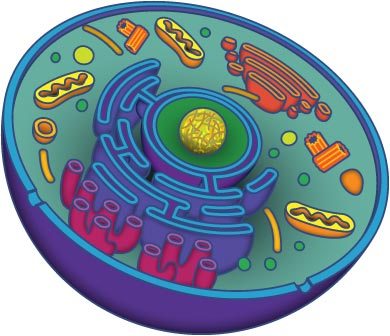
All living things are made up of...
a)
cells
b)
cell tissues
c)
organ
d)
organ systems
71.
All cells come from___________ cells.
a)
pregnant
b)
pre-existing
c)
paternal
d)
pin size
72.
What is the basic structural and functional unit of all living things?
a)
atom
b)
cell
c)
molecule
d)
human
73.
In an organism, groups of cells working together is called...
a)
cell
b)
tissue
c)
organ
d)
organ system
74.
A collection of tissues carrying out a specialized function is...
a)
organ
b)
tissue
c)
organ system
d)
cell
75.
A group of organs working together in an organism is...
a)
tissue
b)
organ group
c)
organ system
d)
organ team
76.
Neurons, red blood cells, and bone cells are all examples of what?
a)
tissue
b)
cells
c)
organs
d)
atoms
77.
What are the levels of organization within living organisms, from simplest to most complex?
a)
tissues, cells, organ system, organs, organism
b)
organism, organ system, organs, tissue, cells
c)
cells, tissue, organs, organ system, organism
d)
cells, organ, tissue, organ system, organism
78.
What do you call a group of two or more different types of tissue working together to accomplish a specific job?
a)
cell
b)
tissue
c)
organ
d)
organ system
79.
Your lungs are made up of epithelial and muscle tissue that work together to help you breathe. What are your lungs an example of?
a)
cell
b)
tissue
c)
organ
d)
organ system
80.
What do you call a group of two or more organs working together to accomplish a specific job?
a)
cell
b)
tissue
c)
organ
d)
organ system
81.
Why do organs team up to form an organ system?
a)
Because one organ on its own could not do it itself
b)
Because tissues need them to do the job
c)
Organ systems can function with only some of the organs
82.
What do you call an organism that is made up of more than one cell?
a)
unicellular
b)
multicellular
c)
eukaryotic
d)
prokaryotic
83.
If the body was a city, what would represent the cell?
a)
brick
b)
house
c)
wall
d)
city block
100 %

