
 Worksheets
1st six weeks review - Chem
Total questions: 85
Worksheet time: 1hrs 17mins
Name
Class
Date
1.
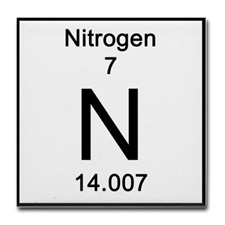
What is the number of protons that the element in this image contain?
a)
14
b)
7
c)
15
d)
18
2.
The first energy level can hold up to how many electrons?
a)
8
b)
4
c)
2
d)
5
3.

What is the atomic mass of "F"
a)
9
b)
18
c)
17
d)
19
4.
The positive particles of an atom are
a)
electrons
b)
positrons
c)
neutrons
d)
protons
5.
an atom with atomic number 6 would have how many protons
a)
6
b)
12
c)
3
d)
cannot be determined
6.
An atoms overall charge is
a)
positive
b)
depends on its mood
c)
neutral
d)
negative
7.
Where are electrons of an atom found?
a)
Nucleus
b)
Electron Cloud
c)
Some are in the nucleus and some in the electron cloud.
d)
They are moving everywhere.
8.
electrons have this type of charge?
a)
negative
b)
positive
c)
neutral
9.
"C" is the element symbol for which element?
a)
calcium
b)
carbon
c)
chlorine
d)
cadmium
10.
Most of the mass in an atom is concentrated in the...
a)
electrons
b)
nucleus
c)
protons
d)
empty space
11.
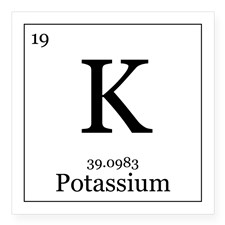
How many neutron are in the atom "K"?
a)
7
b)
2
c)
39
d)
12
12.

What is the name of this element?
a)
Helium
b)
Hydrogen
c)
Argon
d)
Silver
13.

What is the name of this element?
a)
Lithium
b)
Boron
c)
Carbon
d)
Neon
14.

What's a valence electron?
a)
electrons in the second energy level
b)
electrons in the outermost energy level
c)
the atomic number
d)
electrons in the first level
15.
How many Valance electrons does Iodine Have?
a)
6
b)
16
c)
7
d)
17
16.
How many electrons can fit in the first energy level?
a)
2
b)
8
c)
4
d)
16
17.
How many electrons can fit in the third energy level?
a)
2
b)
8
c)
4
d)
16
18.
How many valence electrons do atoms in group 16 have?
a)
4
b)
5
c)
6
d)
7
19.

What is the atomic number of this atom?
a)
2
b)
4
c)
6
d)
none of the above
20.

What group does this element belong to?
a)
Group 1: Alkali metals
b)
Group 18: Noble Gases
c)
Group 2: Alkaline-Earth Metals
d)
Group 17: Halogens
21.

How many valence electrons?
a)
2
b)
3
c)
5
d)
10
22.
In the modern periodic table elements are arranged by:
a)
atomic mass
b)
atomic number
c)
valence electrons
d)
number of isotopes
23.
Each column in the periodic table is called a
a)
period
b)
group
c)
cluster
d)
unit
24.

The yellow atoms are called
a)
metals
b)
nonmetals
c)
metalloids
d)
noble gases
25.
How many electrons does Oxygen need to fill its outer shell?
a)
3
b)
4
c)
1
d)
2
26.
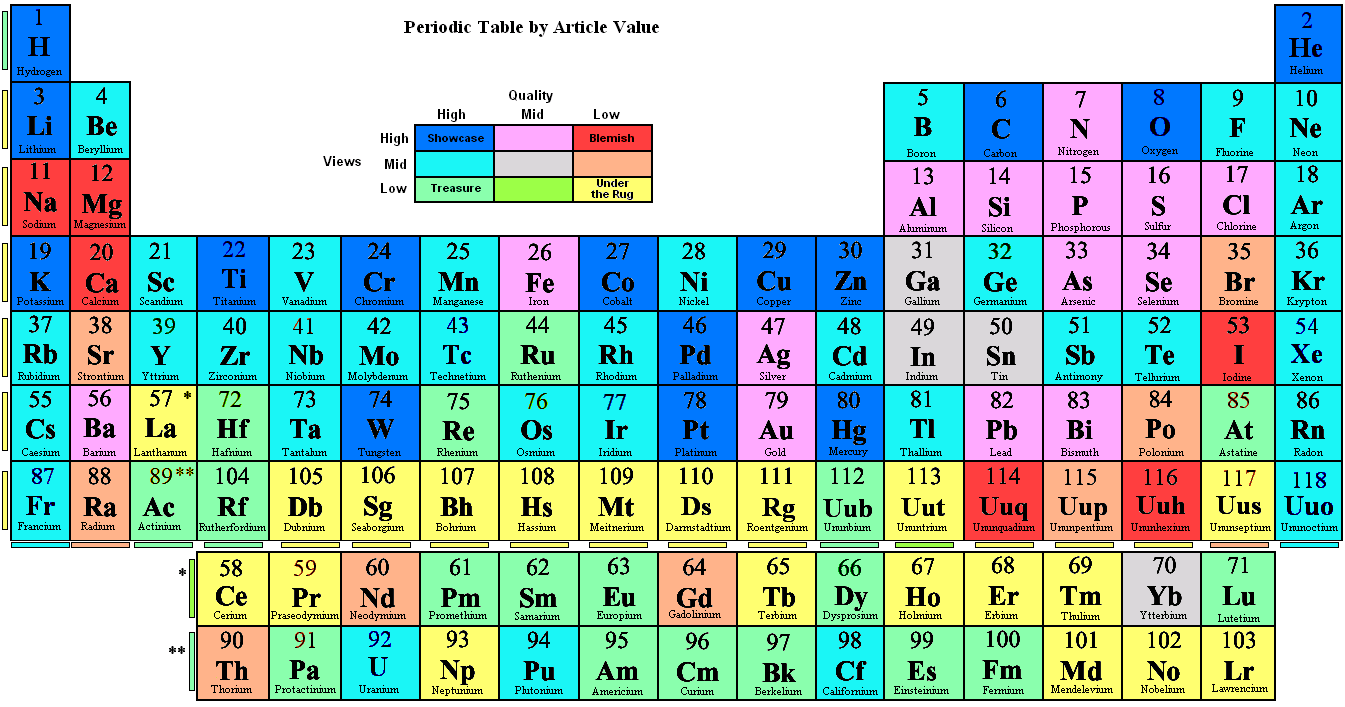
Beryllium is in group number______.
a)
Group 2
b)
Group 3
c)
Group 4
d)
Group 7
27.
The periodic table has __ periods.
a)
18
b)
8
c)
2
d)
7
28.
Group 18 elements are known as the _____ _____ and have full valence shells.
a)
royal gases.
b)
supreme solids.
c)
noble gases.
d)
legit liquids.
29.
Elements in the same ________ are more chemically similar.
a)
group
b)
period
c)
club
d)
table
30.
Which elements have the most similar chemical properties?
a)
K and Na
b)
K and Ca
c)
K and Cl
d)
K and S
31.
What period and group is Silver (Ag)?
a)
Period 2, Group 1
b)
Period 3, Group 16
c)
Period 5, Group 11
d)
Period 2, 14
32.
Which of the following is not a property of metals?
a)
brittle
b)
malleable
c)
lustrous
d)
conductive
33.
Which group of the periodic table is composed of inert (not reactive) gases?
a)
alkali metals
b)
alkaline earth metals
c)
halogens
d)
noble gases
34.
Elements which are shiny, conduct electricity and heat are called
a)
metal
b)
nonmetal
c)
metalloid
d)
nonexistent
35.

The atoms along the staircase are called
a)
metals
b)
nonmetals
c)
metalloids
d)
noble gases
36.
Which is a halogen?
a)
Helium
b)
Chlorine
c)
Oxygen
d)
Neptune
37.
Which is an alkali metal?
a)
Magnesium
b)
Iron
c)
Sodium
d)
Europium
38.
Ions are:
a)
atoms with a positive or negative charge
b)
atoms with no charge
c)
atoms with ONLY a positive charge
d)
atoms with ONLY a negative charge
39.
When an atom loses a valence electron, it becomes a(n) _____________ ion.
a)
positive
b)
negative
c)
neutral
d)
polyatomic
40.
If a substance conducts electricity, is malleable, and shiny - what is it?
a)
Metal
b)
Nonmetal
c)
Metalloid
41.
Anytime you see the word SEMICONDUCTOR - what substance do you have?
a)
Metal
b)
Nonmetal
c)
Metalloid
42.
Which physical property(ies) is/are used to classify elements as metals, nonmetals, or metalloids?
a)
Luster
b)
Conductivity
c)
Mass
d)
Both luster and conductivity are used
43.
All of these properties describe metals EXCEPT -
a)
Malleable
b)
Conductor
c)
Brittle
d)
Shiny
44.
Which of the following is a good conductor of heat?
a)
Metal
b)
Nonmetal
c)
Metalloid
45.
Which of these is a property of metals?
a)
It's malleable
b)
It can't conduct electricity
c)
They are used in food
d)
It's very brittle
46.
One property of a nonmetals is that it is a good conductor of electricity?
a)
true
b)
false
47.
Which of the following properties refers to the ability of metals to be drawn into wires?
a)
A. malleability
b)
B. compressibility
c)
C. ductility
d)
D. luster
48.
Which element is found in group 1 period 2
a)
Lithium
b)
Magnesium
c)
Beryllium
d)
Potassium
49.
Which element is found in group 16 period 3?
a)
Sulfur (S)
b)
Selenium (Se)
c)
Chlorine (Cl)
d)
Carbon (C)
50.
Which element is found in group 17 period 3?
a)
Chlorine
b)
Flourine
c)
Oxygen
d)
Phosphorous
51.
Which element is found in period 3 group 2?
a)
Sodium (Na)
b)
Magnesium (Mg)
c)
Yttrium (Y)
d)
Boron (B)
52.
Which element is found in group 13 period 6?
a)
Titanium (Ti)
b)
Thallium (Tl)
c)
Lead (Pb)
d)
Mercury (Hg)
53.
Which element is found in group 18 period 4?
a)
Neon (Ne)
b)
Chlorine (Cl)
c)
Krypton (Kr)
d)
Xenon (Xe)
54.
Which element is found in group 2 period 7?
a)
Radium (Ra)
b)
Radon (Rn)
c)
Stontium (Sr)
d)
Lutetium (Lu)
55.
How many elements are in C6H12O6?
a)
1
b)
2
c)
3
d)
4
56.
How many atoms of carbon (C) are in C6H12O6?
a)
3
b)
6
c)
12
d)
24
57.
Element or compound?
H2O
H2O
a)
element
b)
compound
58.
Element or compound?
O2
O2
a)
Element
b)
Compound
59.
Which of the following is a compound?
a)
Co
b)
O2
c)
C
d)
CO2
60.
Which is the correct formula for:
three hydrogen (H)
one sulfur (S)
four oxygen (O)
three hydrogen (H)
one sulfur (S)
four oxygen (O)
a)
H3SO4
b)
HSO4
c)
H4S3O
d)
H2O
61.
How many atoms are there TOTAL in:
H2SO4
H2SO4
a)
6
b)
5
c)
7
d)
3
62.
How many atoms are there TOTAL in:
H2SO4
H2SO4
a)
6
b)
5
c)
7
d)
3
63.
How many Sodium (Na) are in 6NaCl?
a)
1
b)
12
c)
6
64.
How many O's are in Al₂(SO₄)₃
a)
4
b)
12
c)
7
d)
24
65.
How many molecules are in 10MgCl2?
a)
10
b)
2
c)
30
d)
13
66.

In this image, what are the symbols in red are called the_______.
a)
Products
b)
Reactants
c)
Subscripts
d)
Coefficients
67.
The law of conservation of mass states that....
a)
Matter can be created
b)
Matter is sometimes destroyed
c)
Matter cannot be created or destroyed
d)
Matter can be created but not destroyed
68.
Which equation is balanced?
a)
2H2 + O2 --> 2H2O
b)
H2 + O2 ---> H2O
c)
H2 + 2O2 ---> 2H2O
d)
2H2 + 2O2 ---> 2H2O
69.
Na + MgF2 --> NaF + Mg
What are the reactants?
What are the reactants?
a)
Na + MgF2
b)
Na
c)
NaF + Mg
d)
NaF
70.
NH3 ---> N2 + H2
What are the products?
What are the products?
a)
N2 + H2
b)
N2
c)
H2
d)
NH3
71.
CaCO3 represents a chemical
a)
Symbol
b)
Formula
c)
Subscript
d)
Reaction
72.
Which of the following shows the correct way to balance the chemical equation?
Fe + O2 -> Fe2O3
Fe + O2 -> Fe2O3
a)
4Fe + 3O2 -> 2Fe2O3
b)
2 Fe + 3O2 -> Fe2O6
c)
4 Fe + O6 -> 2Fe2O3
d)
None of the options are correctly balanced.
73.
Which coefficients balance this equation:
NH3 + O2 ----> NO + H2O
NH3 + O2 ----> NO + H2O
a)
2,3,5,6
b)
5,5,4,6
c)
4,6,4,5
d)
4,5,4,6
74.
Is burning wood a chemical or physical change?
a)
chemical
b)
physical
75.
Is glass breaking a chemical or phyiscal change?
a)
chemical
b)
physical
76.
Is hammering wood together to build a house a chemical or physical change?
a)
chemical
b)
physical
77.
Is a a rusting bicycle a chemical or physical change?
a)
chemcial
b)
physical
78.
Is melting ice a chemical or physical change?
a)
chemical
b)
physical
79.
Is corroding metal a chemical or physical change?
a)
physical
b)
chemical
80.
Is bleaching your hair a physical or chemical change?
a)
physical
b)
chemical
81.
Are fireworks exploding a physical or chemical change?
a)
phyiscal
b)
chemical
82.
Is frying an egg a physical or chemical change?
a)
chemical
b)
physical
83.
Is burning leaves a physical or chemical change?
a)
chemical
b)
physical
84.
The Law of Conservation of Mass States
a)
Energy cannot be created nor destroyed, it can only change form.
b)
Mass cannot be created nor destroyed, it can only change form.
c)
Matter cannot be created nor destroyed, it can only change form.
d)
Mass can be created or destroyed, it cannot change form.
85.
If you have 15 grams of Baking Soda and 20 grams of Vinegar as products, what would you expect the mass of your reactants to be?
a)
15 grams
b)
20 grams
c)
5 grams
d)
35 grams
100 %

