
 Worksheets
End of Second quarter Exam 2025
Total questions: 85
Worksheet time: 53mins
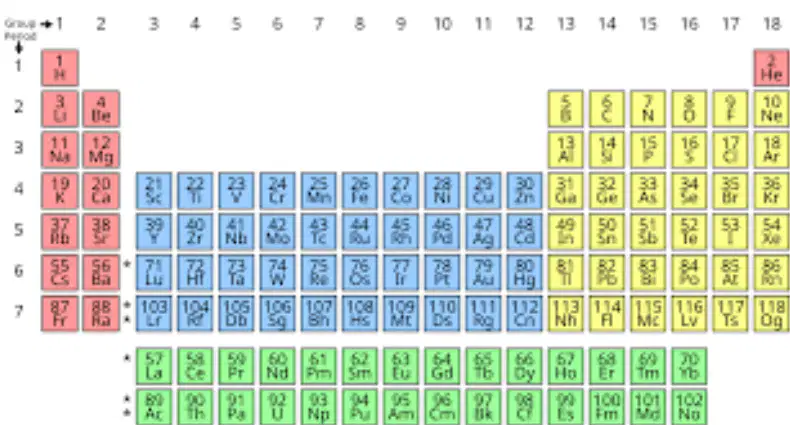
What information does the atomic number on the periodic table tell you?
Number of neutrons
Number of protons
Atomic mass
Number of energy levels
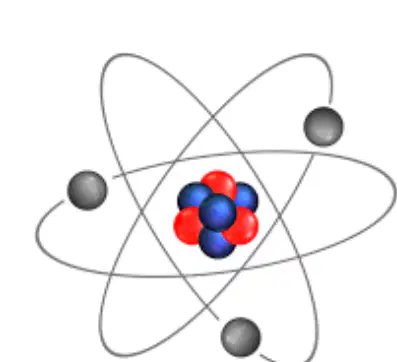
Which subatomic particle is found in the nucleus and has a positive charge?
Electron
Neutron
Proton
Ion
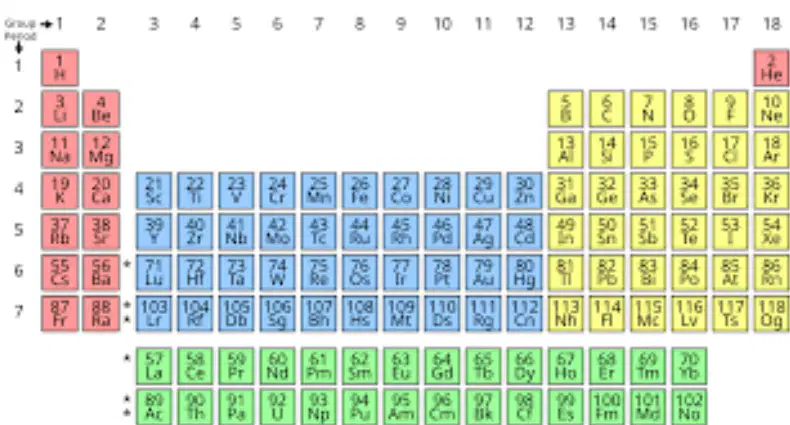
Elements in the same group (column) of the periodic table usually have:
The same number of neutrons
The same atomic mass
Similar chemical properties
The same number of energy levels
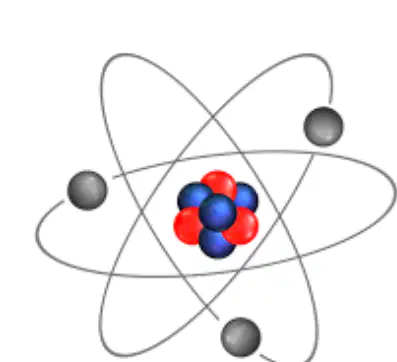
Which particle in the atom has the least mass?
Proton
Neutron
Electron
Nucleus
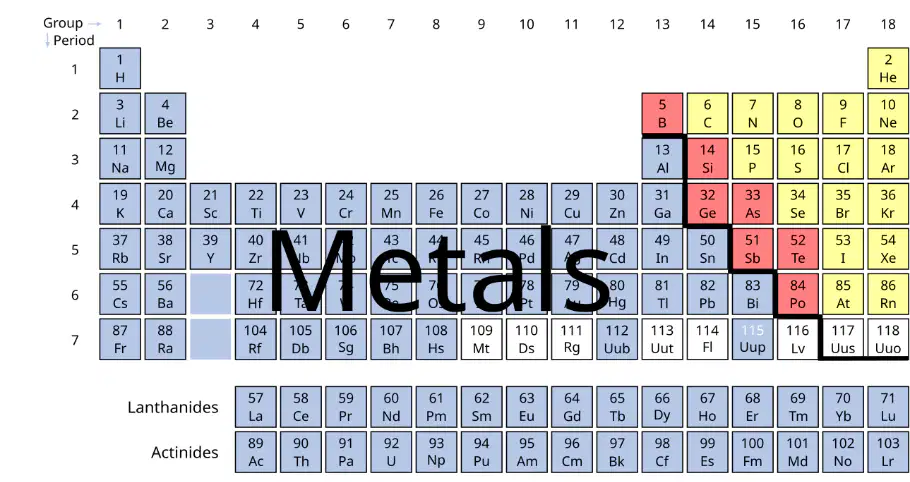
Which element is classified as a metal?
Oxygen
Carbon
Sodium
Neon

What does atomic mass represent?
Number of protons
Mass of electrons
Protons + neutrons
Protons + electrons
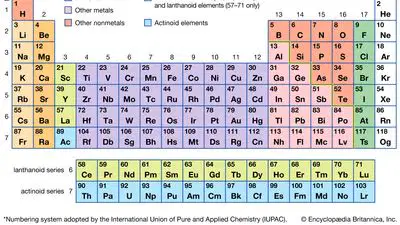
Moving from left to right across a period, what generally happens to atomic number?
It decreases
It stays the same
It increases
Two elements have different numbers of protons. What does this tell you?
They are the same element
They are isotopes
They are different elements
They have the same mass
What is the primary source of energy for most life on Earth?
The moon
The sun
Wind
Water
What is energy?
Something that takes up space
The ability to do work or cause change
A form of matter
Something that has mass
What is kinetic energy?
Energy stored in an object at rest
Energy an object has due to its motion
Energy from the sun
Energy stored in chemical bonds
Which of the following is an example of potential energy?
A rolling ball
A stretched rubber band
A speeding car
Flowing water
What happens when energy is transformed from one form to another?
Some energy is destroyed
The total amount of energy increases
The total amount of energy remains the same
Some energy is created
What is the unit of measurement for energy?
Newton
Joule
Watt
Volt
How does a solar panel harness energy?
It converts heat into electrical energy
It captures the sun’s thermal energy
It converts light energy from the sun into electrical energy
It stores potential energy
How does a wind turbine generate electricity?
It converts the energy from falling water into electrical energy
It transforms wind energy into electrical energy
It captures light energy from the sun
It stores mechanical energy
Which of these is a renewable energy source?
Coal
Natural gas
Solar energy
Nuclear energy
Why are fossil fuels considered nonrenewable resources?
They are found in large amounts
They are constantly replaced by natural processes
They take millions of years to form
They do not produce pollution
Which of these is NOT an example of a renewable energy source?
Biomass
Geothermal
Wind
Oil
What type of energy is primarily used by human muscles when moving?
Chemical energy
Thermal energy
Light energy
Nuclear energy
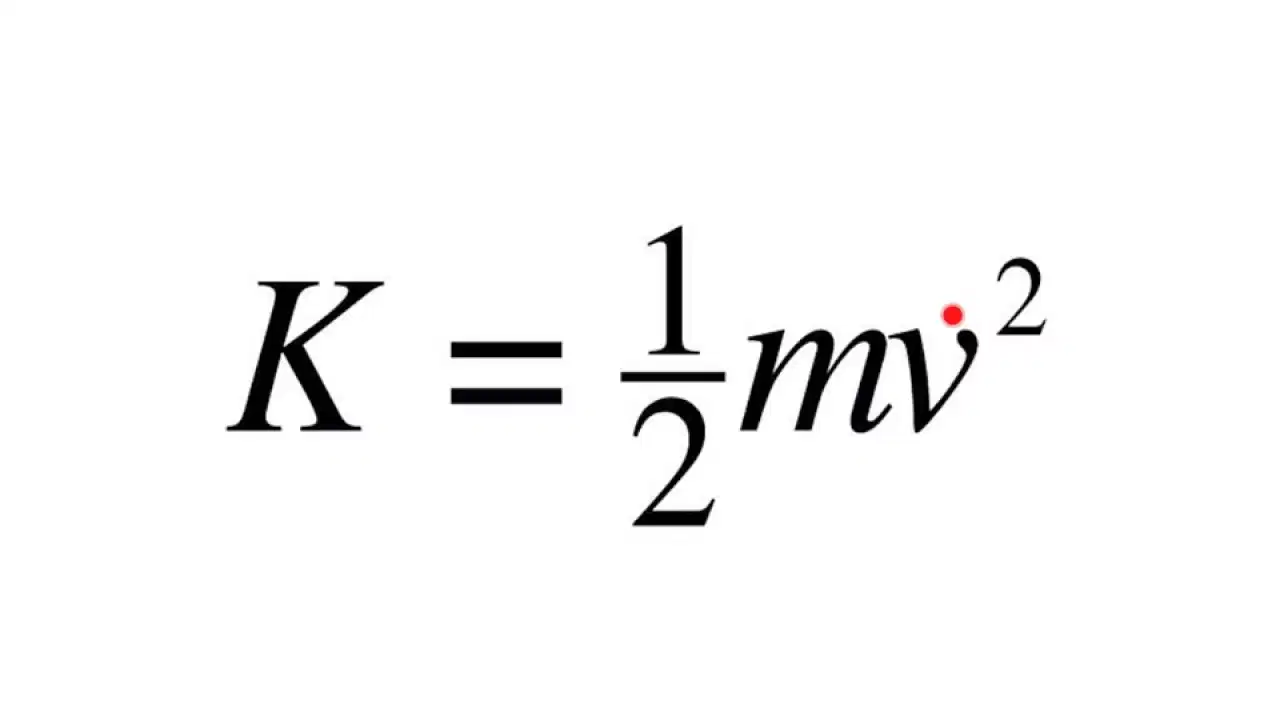
A bicycle and rider have a total mass of 40 kg and are moving at 5 m/s. What is the Kinetic Energy?
100 J
500 J
400 J
250 J

A student lifts a 2 kg backpack to a shelf 3 m high. What is the gravitational potential energy?
6 J
60 J
0.6 J
600 J
What is force?
The amount of space an object takes up
The amount of material present
A push or pull upon an object
What is the unit for force?
Newtons
Kg times m/s
kg
What is mass?
The amount of space an object takes up
The amount of material present - “stuff”
The gravitational force
What is the unit for mass?
kg
mass/ seconds
Newtons
Momentum
What is the unit for acceleration?
meters/ seconds squared - m/s²
mass/ seconds
Kg
newtons
What is acceleration?
Distance / time from point a to point b
distance/ time
Kg times m/s
What is the formula for measuring speed?
Mass divided by acceleration
Mass divided by time
Distance divided by time
What is the unit for speed?
Newtons
Kg times m/s
m/s
How is speed different from acceleration?
Speed is just distance divided by time and acceleration is d/t from point a to point b.
There is no difference
What is the formula for measuring velocity?
Distance divide by time
Distance divided by time with direction
What is the unit for velocity?
mass/ seconds squared - m/s²
meters/ seconds
Kg
newtons
What is the correct unit for momentum?
mass/ seconds squared - m/s²
mass/ seconds
Kg times m/s
Newtons

What is the net force acting on the object?
20 up
5 up
15 down
5 down
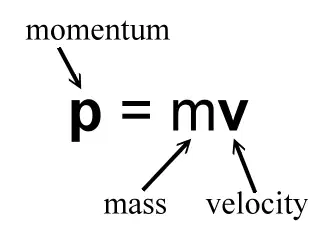
What is the momentum of a child and wagon if the total mass of the child and wagon is 22 kg and the velocity is 1.5 m/s?
33 kg·m/s
22 kg·m/s
1.5 kg·m/s
44 kg·m/s

A bowling ball of 35.2 kg generates 218 kg·m/s units of momentum. What is the velocity of the bowling ball?
6.19 m/s
2.18 m/s
8.23 m/s
12.5 m/s
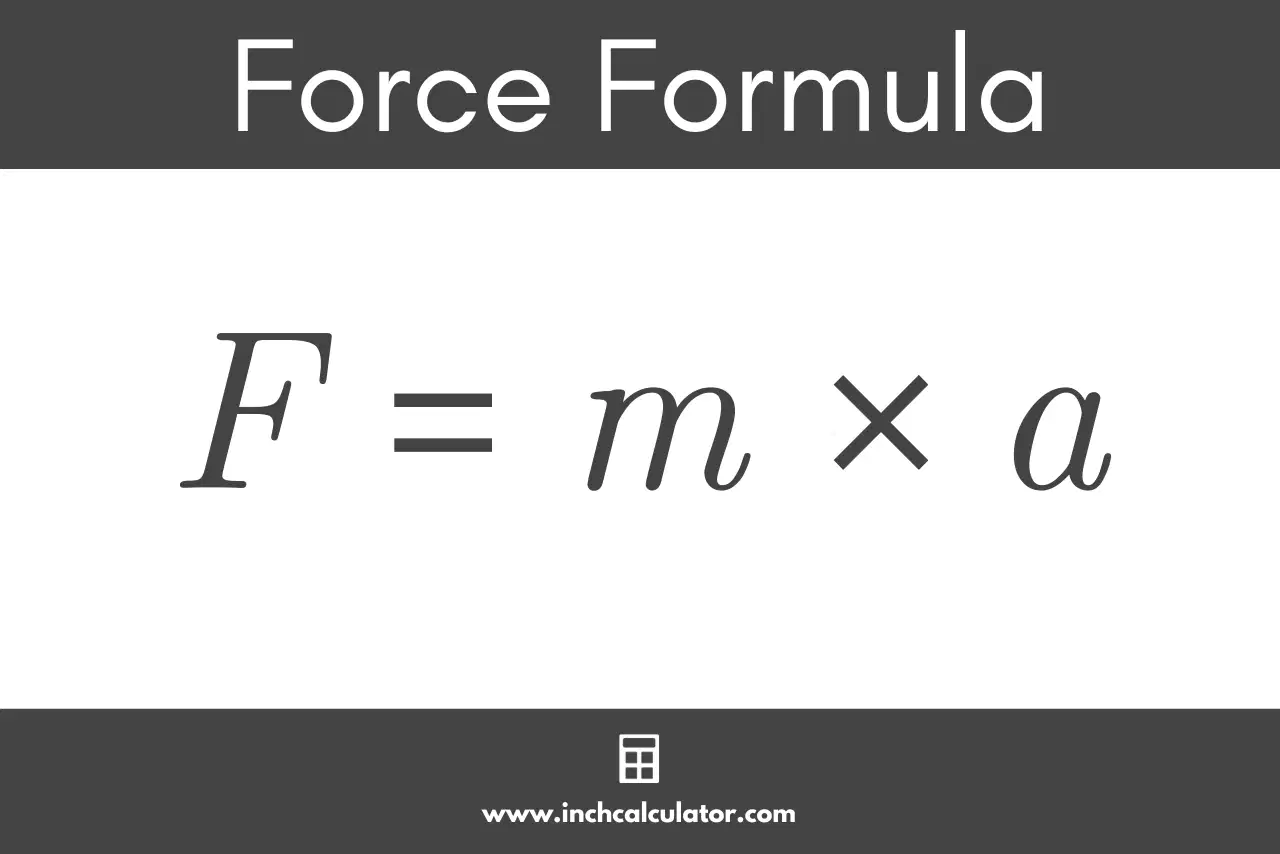
Force = 12 N
Mass = 6 kg
What is the acceleration?
2 m/s²
5 m/s²
0.5 m/s²
10 m/s²
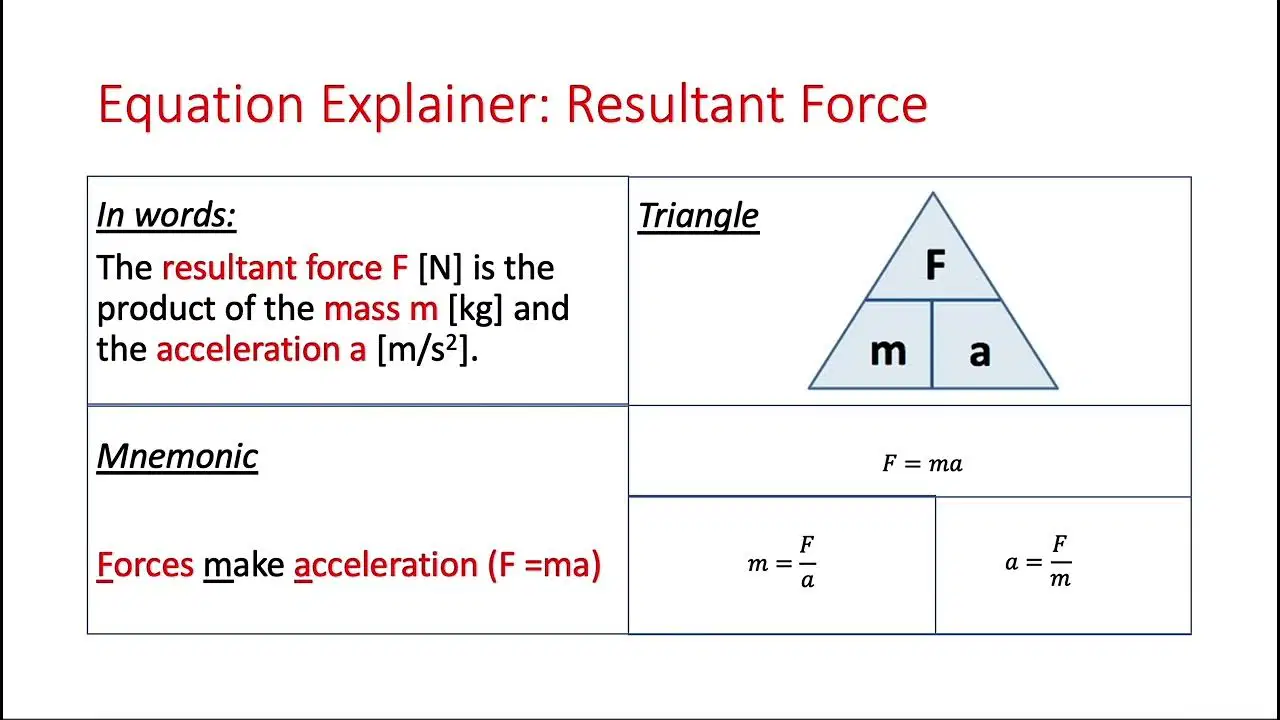
Mass is 10 kg
Acceleration is 9 m/s
What is the force?
90 N
45 N
120 N
60 N
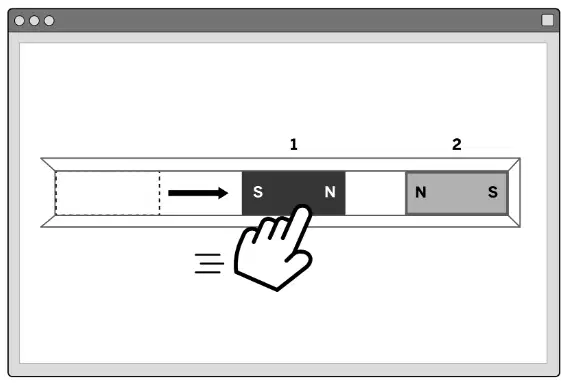
In a computer simulation, Juan moves a magnet (Magnet 1) closer to another magnet (Magnet 2) that cannot move. Which statement accurately describes the change in potential energy?
The potential energy does not change because the magnets in the system do not change.
The potential energy increases because Magnet 1 moves against the magnetic force.
The potential energy decreases because Magnet 1 moves against the magnetic force.
The potential energy decreases because Magnet 1 moves in the same direction as the magnetic force.
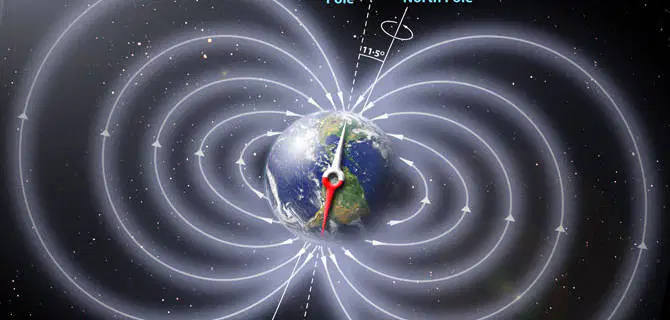
Which evidence would best support the conclusion that Earth acts like a large magnet?
Rocks are heavy.
A freely suspended compass needle aligns to roughly the same direction anywhere on Earth.
The Sun emits light.
Water boils at 100°C.
A student cuts a bar magnet in half and tests each piece. What will they observe?
One piece becomes only a north pole and the other only a south pole.
Both pieces lose all magnetism.
Each piece has both a north and a south pole.
Which material would a magnet most likely attract in a classroom investigation?
Plastic ruler.
Copper paper clip.
Iron nail.
Rubber eraser.
A teacher asks: “Why do field lines never cross?” Which reasoning is best?
Field lines are imaginary, so they can cross.
They cross only in electric fields.
Crossing would mean two different field directions at the same point, which is impossible.
They only cross inside magnets.
If a compass is placed directly above the midpoint of a bar magnet, which direction will the needle point?
Random.
Toward the magnet’s north pole only.
Along the local magnetic field tangent (from N→S outside the magnet).
Downward into the page.
A lab gives students three unknown metals and asks which are magnetic. Which procedure best tests this?
Hold them in sunlight.
Bring a standard magnet near each and record attraction distance.
Weigh them.
Shake them.
A graph from an investigation shows magnetic force drops to nearly zero beyond 10 cm. What practical application follows?
Magnets are useless.
Magnetic devices must be placed within effective distances to work.
Fields work better at long range.
Which real-world device relies on controlled magnetic fields created by current?
Mechanical pencil.
Electric motor.
Thermometer.
How does wrapping a ferromagnetic core with more turns of wire affect an electromagnet, assuming current is constant?
Weakens the field.
No change.
Increases magnetic field strength.
Converts it to permanent magnet.
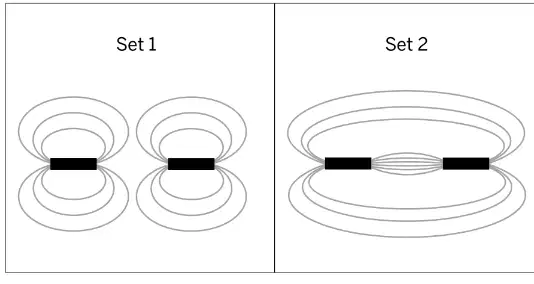
Based on the magnetic field line diagrams, what will happen next with these two sets of magnets?
The magnets in Set 1 will repel, and the magnets in Set 2 will attract.
The magnets in Set 1 will attract, and the magnets in Set 2 will repel.
The magnets in Set 1 will not move, and the magnets in Set 2 will attract.
In both sets, the magnets will attract.
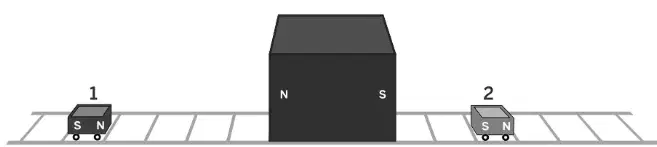
An engineer is investigating potential energy with two identical magnetic roller coaster cars on different sides of a center magnet that cannot move. To test her ideas, the engineer will move one car one space. Which movement will result in the largest increase in potential energy?
Moving Car 1 one space toward the center magnet.
Moving Car 2 one space away from the center magnet.
Moving Car 2 one space toward the center magnet.
All these movements will result in the same change in potential energy because they each move a roller coaster car the same distance.
A student asks, “How does the distance from a flashlight affect light intensity?” Which part of the experiment does this question describe?
Conclusion
Criteria
Hypothesis
Research question
A student predicts: “If the distance from the light source increases, then the measured light intensity will decrease.” This statement is a:
Control
Hypothesis
Constant
Variable
In an experiment testing how distance from a light source affects brightness, what is the independent variable?
Light intensity measured in lux
Type of light bulb
Distance from the light source
Room temperature
What is the dependent variable in a lab where students measure how bright light is at different distances?
Distance from the light
Light intensity (lux)
Battery type
Flashlight position
Which factor should be kept constant in a light wave experiment to ensure fair results?
Distance measured
Light intensity
Time of measurement
Type of flashlight
A student measures light intensity with the flashlight turned off. This setup is best described as the:
Independent variable
Dependent variable
Control
Criteria
Why is a control important in a light wave experiment?
It increases brightness
It changes the variables
It provides a comparison for results
It replaces the hypothesis
Which statement best describes criteria in a scientific investigation?
Variables that change
Rules for success or evaluation
Data collected
The experiment's conclusion
Convert the following number to standard form: 1.2 × 10⁷.
12,000,000
1,200,000
120,000,000
120,000
Write 62,000 in scientific notation.
6.2 × 10⁴
6.2 × 10³
62 × 10³
0.62 × 10⁵
Convert the following number to standard form: 5.6 × 10⁻³.
0.0056
0.056
0.00056
0.56
Write 0.00056 in scientific notation.
5.6 × 10⁻⁴
5.6 × 10⁻⁵
5.6 × 10⁻³
5.6 × 10⁻⁶
Calculate the result of (3 × 10⁶) - (5.0 × 10⁵).
2.5 × 10⁶
3.5 × 10⁶
2.0 × 10⁶
1.5 × 10⁶
Calculate the result of (8.5 × 10⁶) × (5 × 10⁷).
4.25 × 10¹⁴
4.25 × 10¹³
8.5 × 10¹³
4.25 × 10⁷

Which of the labeled structures is an electron?
a
b
c

What is this element symbol's name?
(a)

What is this element symbol's name?
(a)

What is this element symbol's name?
(a)

What is this element symbol's name?
(a)

What is this element symbol's name?
(a)

What is this element symbol's name?
(a)

(a)

What is this element symbol's name?
(a)

What is this element symbol's name?
(a)

What is this element symbol's name?
(a)

What is this element symbol's name?
(a)

What is this element symbol's name?
(a)

What is this element symbol's name?
(a)

What is this element symbol's name?
(a)

What is this element symbol's name?
(a)

What is this element symbol's name?
(a)

What is this element symbol's name?
(a)



