wayground logo

Free Printable Worksheets

Font size

S
M
L
XL
Worksheets

Matter Cycles and Energy Flow in Ecosystems

Total questions: 88

Worksheet time: 2hrs 1mins

Name
Class
Date
1.

Energy CANNOT be...

a)

Given to your friend

b)

Lost to the environment as heat

c)

Created or destroyed

d)

transferred to the surroundings

2.

A producer is an organism that...

a)

breaks down waste

b)

eats other animals

c)

a herbivore

d)

makes its own food

3.

Fungi are...

a)

producers

b)

decomposers

c)

consumers

d)

carnivores

4.

The general name for an organism that eats plants and animals.

a)

carnivore

b)

omnivore

c)

herbivore

d)

folklore

5.

To cycle means...

a)

a small unit of life

b)

a place an organism lives

c)

to repeat a process

d)

the weight of living things

6.

A rattlesnake is best described as a..

a)

decomposer

b)

omnivore

c)

carnivore

d)

herbivore

7.

A grasshopper is a ...

a)

decomposer

b)

omnivore

c)

carnivore

d)

herbivore

8.

Which of these shows a possible food chain for an ecosystem?

a)

shark--> fish --> plankton -->sun

b)

sun --> plankton --> fish --> shark

c)

plankton --> sun --> fish --> shark

d)

plankton --> fish --> shark --> sun

9.

If an organism uses photosynthesis to make its energy, it is a _____.

a)

tertiary consumers

b)

producer

c)

primary consumer

d)

secondary consumer

10.

Trees, flowers, and seeds are all examples of _______.

a)

producers

b)

abiotic factors

c)

a community

d)

a food chain

11.

As energy makes its way up the food pyramid only ______ of energy from one organism gets passed on to the next organism.

a)

10%

b)

20%

c)

30%

d)

40%

12.

Which kind of organism is an autotroph?

a)

consumer

b)

producer

c)

decomposer

d)

herbivore

13.

Which organisms are heterotrophs?

a)

photosynthesizers

b)

producers

c)

consumers

d)

plants

14.

Which is the primary consumer in this food chain?

a)

rabbit

b)

grass

c)

snake

d)

hawk

15.

Which of the following describes an interconnection of food chains in an ecosystem?

a)

Food chain

b)

Food web

c)

Energy pyramid

d)

Producer web

16.
What does the arrow in a food chain or food web mean?
a)
A series of steps in which organisms transfer (move) energy by eating and being eaten.
b)
An organism that breaks down wastes and dead organisms.
c)
Shows what eats what and consists of many food chains in an ecosystem
d)
The transfer (movement) of energy.
17.
What is the definition of the word omnivore?
a)
An animal that eats only plants
b)
An animal that eats both plants and animals
c)
An animal that eats other animals
d)
An organism that can make its own food.
18.
What is the definition of the word decomposer?
a)
Shows what eats what and consists of many food chains in an ecosystem
b)
The transfer (movement) of energy.
c)
An animal that eats other animals
d)
An organism that breaks down wastes and dead organisms.
19.
Consumers obtain energy by
a)
eating other organisms
b)
eating plants
c)
photosynthesis
d)
nitrogen
20.

If there is 10,000 kJ of energy available in the producer population, how many kilojoules of energy would be found in the carnivore population?

a)

10,000 kJ

b)

1,000 kJ

c)

100 kJ

d)

10kJ

21.

Animal that gets its energy and nutrition from eating meat.

a)

Detritivore

b)

Ominvore

c)

Carnivore

d)

Herbivore

22.
Use the diagram to answer the question.
The Mayfly is a food source for which 3 organisms?
a)
Frog, Dragon Fly and snake
b)
Frog, trout and dragon fly
c)
Frog, salamander and trout
d)
Frog and phytoplankton
23.
In the energy pyramid here, which organisms have the most energy available?
a)
Producers
b)
Carnivores
c)
Herbivores
d)
Top Predator
24.

In the food chain below, which is the producer?


grass --> mouse --> snake --> hawk

a)

grass

b)

mouse

c)

snake

d)

hawk

25.

What would happen to the organisms in the food web below if the number of rabbits decreased

a)

There would be less carrots and grasses

b)

There would be more foxes

c)

There would be less birds

d)

There would be more carrots and less foxes

26.

Consumers that eat only plants are called

a)

Carnivores

b)

Omnivores

c)

Herbivores

d)

Scavengers

27.

Organisms that break down wastes and dead organisms and return the raw materials to the environment are called

a)

Consumers

b)

Decomposers

c)

Producers

d)

Scavengers

28.

A wolf eats a rabbit, that just ate some berries. What would you call the rabbit?

a)

Producer

b)

Omnivore

c)

Primary Consumer

d)

Secondary Consumer

29.
What are animals called in a food chain?
a)
Producers
b)
Consumers
c)
Decomposers
d)
Plants
30.
What is the role of a producer?
a)
Use sunlight to make food
b)
Gain energy from eating other organisms
c)
Keep other species from overpopulating
d)
Breaking down dead stuff 
31.
Which type of consumer eats meat only?
a)
Producers
b)
Herbivores
c)
Carnivores
d)
Omnivores
32.
Which type of consumer eats meat and plants?
a)
Herbivores
b)
Carnivores
c)
Omnivores
d)
Plants
33.

True/False

Food webs show you multiple feeding relationships in an ecosystem. Food chains show you one pathway of energy.

a)

True

b)

False

34.

An energy pyramid represents what?

a)

How much sunlight is available for the ecosystem to use.

b)

The available amount of energy in each trophic layer in an ecosystem

c)

How much energy is needed to build a pyramid.

35.
The rabbit in this food web would be considered a:
a)
Decomposer
b)
Producer
c)
Secondary Consumer
d)
Primary Consumer
36.

The fox in this food web would be considered a:

a)

primary and secondary consumer

b)

producer and primary consumer

c)

secondary and tertiary consumer

d)

tertiary and quaternary consumer

37.
The mouse in this food web would be considered a:
a)
Primary Consumer
b)
Producer
c)
Tertiary Consumer
d)
Secondary Consumer
38.
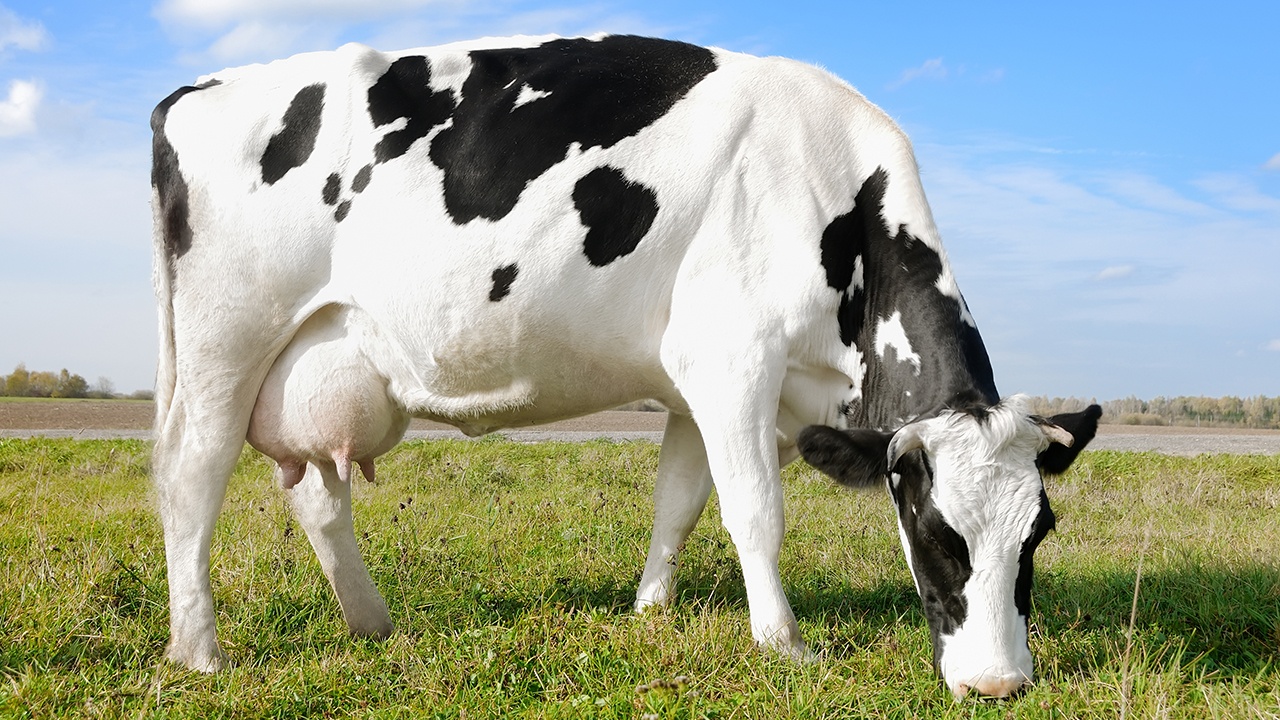
The image provided is an example of a(n):
a)
Autotroph
b)
Carnivore
c)
Herbivore
d)
Decomposer
39.

If there is 1000 Kcal available in the producers in trophic level 1, how much energy is available in the carnivores in trophic level 3?

a)

10 Kcal

b)

1 Kcal

c)

100 Kcal

d)

1000 Kcal

40.

The diagram represents a pyramid of energy in an ecosystem. Which level would most likely contain herbivores?

a)

A

b)

B

c)

C

d)

D

41.
Which organism recieves the least amount of energy from the producer?
a)
Owl
b)
Grasshopper
c)
Lilypad
d)
Mouse
42.

Consumers have several energy levels. All the statements are false except

a)

As consumers advance to other levels, they get fewer in number.

b)

As consumers advance to higher levels, they become more numerous.

c)

As consumers advance, they restrict their diet to one organism.

d)

As consumers advance they make more energy.

43.
How does matter move among the living and nonliving parts of an ecosystem?
a)
matter is recycled within and between ecosystems
b)
one-way flow of energy
c)
two-way flow of energy only
d)
three-way flow of energy only
44.
What is our role in the carbon cycle? 
a)
We are made of carbon. 
b)
We release it into the atmosphere when we breathe. 
c)
We release it into the atmosphere when using fossil fuels. 
d)
All of the above. 
45.
Where is the majority of nitrogen located?
a)
Most of the nitrogen on Earth is in the atmosphere.
b)
Most of the nitrogen on Earth is in the soil.
c)
Most of the nitrogen on Earth is in the water.
d)
None of the above.
46.
When animals break down glucose to create energy, they release water and carbon dioxide (CO2.) How can carbon dioxide (CO2) be reused within the food web?
a)
It can be used by animals as a source of oxygen.
b)
It can be used by both plants and animals to produce energy.
c)
It can be used by plants during photosynthesis to create glucose.
47.
Which group in a food web is most likely to change atmospheric nitrogen into forms that are usable?
a)
consumers
b)
decomposers
c)
producers
d)
scavengers
48.
Which shows the correct flow of energy through this simple food chain?
a)
fox → grass → rabbit
b)
grass → fox → rabbit
c)
grass → rabbit → fox
d)
rabbit → grass → fox
49.
What is the energy source for the carbon dioxide cycle?
a)
plants
b)
the Sun
c)
respiration
50.
Which best explains the role of bacteria in an ecosystem?
a)
They break down organic matter into necessary nutrient components.
b)
 They release energy from the decomposition of atmospheric gases.
c)
They convert carbon dioxide and water into simple carbohydrates.
d)
They absorb energy from the synthesis of inorganic compounds.
51.
Which molecule is necessary in order for respiration to occur in plants and animals?
a)
nitrogen
b)
oxygen
c)
sulfur
d)
water
52.
Which best describes the role plants serve in the oxygen cycle?
a)
They absorb oxygen during photosynthesis.
b)
They absorb oxygen during decomposition reactions.
c)
They release oxygen as a waste product of photosynthesis.
d)
They release oxygen as a waste product in cellular respiration.
53.
Which of the following is an example of a biotic factor in an ecosystem?
a)
sunlight
b)
stream
c)
rock
d)
tree
54.
Most producers get energy from the Sun using the process of
a)
cellular respiration
b)
chemosynthesis
c)
photosynthesis
d)
consumption
55.
Decomposers are important to ecosystems because they
a)
return vital nutrients to the ecosystem
b)
capture energy from the Sun
c)
are producers
d)
can be omnivores
56.
A consumer gets energy by
a)
absorbing sunlight.
b)
breaking down dead organisms.
c)
soaking it up from the ground.
d)
feeding on other organisms.
57.
The cycling of matter is important because
a)
Matter can be created and destroyed
b)
Only a limited amount of matter is available so it has to be recycled
c)
Matter can only be found in a solution
d)
Bacteria use matter to convert organisms into solar energy
58.

Plants, animals, and decomposers (which consume dead things) are in a forest ecosystem. Scientists are studying photosynthesis in the forest. Which group or groups of organisms should they study?

a)

all organisms in the forest

b)

animals and decomposers

c)

plants and decomposers

d)

plants

59.
Where does cellular respiration take place in the cell?
a)
Cell Membrane
b)
Nucleus
c)
Mitochondria
d)
Vacuole
60.
What kind of things perform cellular respiration?
a)
All living cells
b)
plants only
c)
animals only
d)
yeast only
61.
Where in the cell does photosynthesis occur?
a)
mitochondria
b)
stomata
c)
xylem
d)
chloroplast
62.
Which of the following removes carbon from the atmosphere?
a)
Combustion
b)
Respiration
c)
Photosynthesis
d)
Death
63.
Molecules are 
a)
2 atoms bound together 
b)
2 elements bound together 
c)
2 or more atoms mixed together
d)
2 or more atoms bound together 
64.
Respiration is the process by which animals take in _____ and release _____. 
a)
photosynthesis, air
b)
carbon, oxygen
c)
oxygen
d)
oxygen, carbon dioxide
65.

Organisms that break down wastes and dead organisms and return the raw materials to the environment

a)

Producer

b)

Consumer

c)

Decomposer

66.

Consumers that eat only plants

a)

Carnivores

b)

Omnivores

c)

Herbivores

d)

Scavengers

67.

Consumers that eat only animals

a)

Carnivores

b)

Omnivores

c)

Herbivores

d)

Scavengers

68.

Consumers that eat both plants and animals

a)

Omnivores

b)

Carnivores

c)

Herbivores

d)

Scavengers

69.

A food _______ is a series of events in which one organism eats another and obtains energy.

a)

chain

b)

web

c)

pyramid

d)

plate

70.

A food _______ consists of many overlapping food ________.

a)

web, chains

b)

chain, webs

c)

pyramid, webs

d)

web, pyramids

71.

As you work your way up the energy pyramid, what happens to the energy?

a)

It increases

b)

It decreases

c)

It stays the same

d)

Nothing

72.

In the energy pyramid, what is the bottom level composed of?

a)

Producers

b)

First-Level Consumers

c)

Second-Level Consumers

d)

Third-Level Consumers

73.
How is Nitrogen removed from the air and put into compound that living things can use?
a)
plants
b)
photosynthesis
c)
chemosynthesis
d)
nitrogen fixing bacteria
74.
What gas does burning things release into the atmosphere?
a)
oxygen
b)
carbon dioxide
c)
nitrogen
d)
diethylchlorofloromethane
75.
What happens to carbon dioxide levels in the atmosphere when we burn fossil fuels?
a)
carbon dioxide levels in the atmosphere rise
b)
carbon dioxide levels in the atmosphere fall
c)
carbon dioxide levels in the atmosphere stay the same
76.
Which of the following take carbon dioxide out of the atmosphere?
a)
plant and animal respiration
b)
volcanoes
c)
combustion of fossil fuels
d)
photosynthesis
77.
What is the most abundant gas in the atmosphere?
a)
hydrogen
b)
oxygen
c)
helium
d)
nitrogen
78.

Using the diagram, which of the following describes how energy moves through the food chain?

a)

between producers and consumers, in either direction

b)

consumers --> producers; in one direction

c)

producers --> consumers; in one direction

d)

producers --> consumers; in a cycle

79.
Which of the following is an example of a food producer?
a)
Human
b)
Grizzly Bear
c)
Orca
d)
Oak Tree
80.
How is the sun a part of a food chain?
a)
it is eaten
b)
it is the energy source
c)
it feeds animals
d)
it tastes good
81.
What is this called?
a)
Food Web
b)
Food Chain
c)
Abiotic Factors
82.

process that uses oxygen to break down glucose to release energy

a)

Cellular Respiration

b)

Photosynthesis

c)

Chemical energy

d)

Radiant Energy

83.

Sugar

a)

photosynthesis

b)

carbon dioxide

c)

glucose

d)

water

84.

Sunlight

a)

Chemical energy

b)

radiant energy

c)

oxygen

d)

glucose

85.

gas that animals exhale

a)

carbon dioxide

b)

oxygen

c)

water

d)

glucose

86.

stored energy in the molecules of glucose

a)

radiant energy

b)

water

c)

carbon dioxide

d)

chemical energy

87.

Organisms that make their own food

a)

plants

b)

autotrophs

c)

producers

d)

All of these

88.

Which statement is true?

a)

Ecosystems are interdependent.

b)

Producers only depend on the sun for all of their resources.

c)

Consumers can do the process of photosynthesis.

d)

Cellular respiration only occurs in plants.