
 Worksheets
Foundations of Government
Total questions: 18
Worksheet time: 18mins
Which branch can veto legislation.
Legislative
Executive
Judicial
Congress

Which clause states that the Constitution, laws and treaties of the national government are the “supreme law of the land.”
Extradition Clause
Supremacy Clause
Full Faith & Credit Clause
Privileges & Immunities Clause
What does the Judicial Branch do?
Create laws
Enforce laws
Interpret laws
Write laws

Which clause is the Constitution's requirement that each State accept the public acts, records, and judicial proceedings of every other State.
Privileges and Immunities Clause
Extradition Clause
Full Faith & Credit Clause
Supremacy Clause



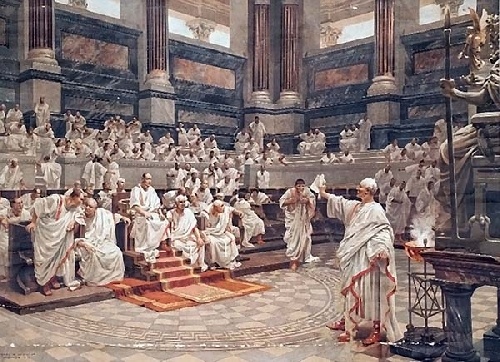
America's government is most similar to:
the Vatican's Theocracy
Middle Ages Monarchy
Athenian Democracy
Roman Republic

What was a major change from the Articles of Confederation to the Constitution?
The government gained the power to tax, created the executive branch, and did not need unanimous consent to do anything.
The government lost the power to raise an army, collect taxes, and make amendments.
The government gained the power to declare laws and actions of other branches unconstitutional.
The government lost the power to protect freedom of speech, religion, and the right to bear arms.

The Great Compromise was a compromise between--
Mass. Plan and New Jersey Plan
Virginia Plan and New Jersey Plan
Virginia Plan and New York Plan
Virginia Plan and Delaware Plan

What is the difference between a democracy and a republic?
In a Democracy, people are represented by someone else. In a Republic, people get a direct say in government.
In a Republic, people are represented by someone else. In a Democracy, people get a direct say in government.
In a Democracy, people get a direct say in government. In a Republic, people are ruled by a King.
In a Republic, people are represented by someone else. In a Democracy, the government is based around religious law.

Which political theory held that God created the state, and God had given those of "royal birth" the right to rule?
Common Law
Natural Rights
Divine Right Theory
Social Contract Theory

The rule of law gives ___________ to a government.
natural rights
a social contract
sovereignty
legitimacy

Which of the following is an example of an Autocracy?
The United States
Medieval England
The Vatican
North Korea

An accused person who flees to another state after committing crime must be returned to the state in which they allegedly committed the crime.
Full Faith & Credit Clause
Extradition Clause
Supremacy Clause
Privileges & Immunities Clause

