
 Worksheets
8th Grade SMLS Midterm Review
Total questions: 220
Worksheet time: 4hrs 35mins
Name
Class
Date
1.
What is anything with mass and volume?
a)
matter
b)
mass
c)
solid
d)
compound
2.
Which course would study the composition of matter and how it reacts?
a)
physics
b)
biology
c)
chemistry
d)
geology
3.
Which state of matter has a definite shape and has definite volume?
a)
gas
b)
liquid
c)
solid
4.
What is the ratio of mass to volume?
a)
matter
b)
density
c)
percent error
d)
space
5.
Which tool would be used to measure mass?
a)
graduated cylinder
b)
scale
c)
balance
d)
beaker
6.
What would a new substance formed with new properties be called?
a)
mixture
b)
element
c)
solution
d)
compound
7.
Which measurement system would most likely be used in a scientific lab?
a)
English
b)
metric
8.
What is the formula for density?
a)
mass x volume
b)
volume/mass
c)
mass/volume
d)
mass + volume
9.
If the mass of an object is 1000kg on Earth, what is it's mass on the moon?
a)
10kg
b)
100kg
c)
1000kg
d)
10,000kg
10.
The mass of an object _______ as it moves away from the center of Earth
a)
stays the same
b)
decreases
c)
increases
d)
doubles
11.

The amount of particles or "stuff" in a given amount of space is called __________.
a)
Mass
b)
Volume
c)
Density
d)
Weight
12.
Every form of matter has two kinds of properties________properties and ________properties.
a)
chemical and biological
b)
solid and liquid
c)
spatial and physical
d)
physical and chemical
14.
Which statement is true of all matter?
a)
It has mass.
b)
It can be seen.
c)
It exists only as a solid.
d)
It maintains its shape and size.
14.
Which statement is true of all matter?
a)
It has mass.
b)
It can be seen.
c)
It exists only as a solid.
d)
It maintains its shape and size.
15.
A metal coin has certain properties that can be measured. Which property of a coin is different on the moon than it is on Earth?
a)
mass
b)
weight
c)
volume
d)
density
16.
Which phrase describes the mass of an ice cube?
a)
the total amount of water in the ice cube
b)
an estimation of the wight of the ice cube
c)
the amount of space that the ice cube occupies
d)
the product found by multiplying its length, width, and height
17.
That is the volume of a rectangular solid that is 40 centimenters long, 10 centimeters wide and 5 centimenters high?
a)
400 cm3
b)
500 cm3
c)
1000cm3
d)
2000cm3
18.

a)
water
b)
iron
c)
silver
d)
gold
19.

a)
water
b)
iron
c)
silver
d)
gold
20.

Josie partially filled a graduated cylinder with water. She then dropped a rock into the water. The illustration below shows what happened to the level of the water inside the graduated cylinder. What is the volume of the rock?
a)
5 mL
b)
10 mL
c)
35 mL
d)
40 mL
21.

The basic particle of an element
a)
Proton
b)
Electron
c)
Nucleus
d)
Atom
22.

What is the volume of Object X?
a)
10.0 cm3
b)
15.0 cm3
c)
20.0 cm3
d)
25.0 cm3
23.

What is the volume of the fish?
a)
18.0 cm3
b)
6.0 cm3
c)
38.0 cm3
24.

Which box has a higher density?
a)
Box A
b)
Box B
c)
cannot be determined
d)
they are the same
25.
The tool we use to mass various objects is known as the:
a)
graduated cylinder
b)
meter stick
c)
test tube
d)
triple beam balance
26.
The name of the liquid measurement line that is read for liquid volume is known as the
a)
bubble
b)
meniscus
c)
water line
d)
none of these
27.
The scientist who discovered the displacement method of finding the volume of objects is
a)
Galilieo
b)
Isaac Newton
c)
Archimedes
d)
SpongeBob
28.
The displacement method is used to:
a)
determine the mass of various objects
b)
determine the weight of various objects
c)
determine the volume of regular solids
d)
determine the volume of irregular solids
30.
The density of water is
a)
2 g/ml
b)
0
c)
1 g/ml
d)
.5 g/ml
30.
The density of water is
a)
2 g/ml
b)
0
c)
1 g/ml
d)
.5 g/ml
31.
An object has a density of 3 g/ml. If submerged in water, the object will:
a)
float
b)
float halfway in the water
c)
sink
d)
cause the water to overflow out of the container
32.
As a substance heats up, its molecules ___________________.
a)
slow down and get closer together
b)
slow down
c)
speed up and get farther apart
d)
stop
33.
If a solid block of wood has a volume of 10 cm3 and a mass of 40 grams, what is its density?
a)
40 grams
b)
4 cm3
c)
4 g/cm3
d)
40 g/cm3
34.
Does the amount of a substance make a difference in its boiling point?
a)
yes
b)
no
35.
What are some things that are true of ALL metals?
a)
they are magnetic
b)
they are soluble in water
c)
they are all good conductors of electricity
d)
they all have the same melting point
36.
If a magnet broke into a thousand tiny pieces, would all the individual pieces be magnetic?
a)
yes
b)
no
37.
True or False. If you have the same volume of two different substances, they may have different densities.
a)
True
b)
False
38.
If you have a block of ice that has a mass of 500 grams, how many grams of water will you have when the ice melts?
a)
400 grams
b)
500 grams
c)
200 grams
d)
600 grams
39.
Which one is not a chemical change?
a)
a wick burning
b)
a nail rusting
c)
metal corroding
d)
wax melting
40.
True or False. When a chemical change takes place, a new substance is formed every time.
a)
True
b)
False
41.
Which one is not a physical change?
a)
paper ripping
b)
chopping wood
c)
gold melting into a liquid
d)
a match burning
42.
If you completely dissolve a powder into water, this is an example of a ___________change.
a)
chemical
b)
physical
43.
Hot temperatures can _____________ the speed of a chemical change.
a)
decrease
b)
increase
44.
Matter is anything that has _______________ and takes up _______________.
a)
space.....matter
b)
matter...room
c)
eye... a seat
d)
mass.... space
45.
Mass is the amount of __________________ in an object or substance.
a)
matter
b)
space
c)
volume
d)
mass
46.
Volume is the amount of ______________________ in an object or substance.
a)
mass
b)
matter
c)
space
d)
particles
47.
A physical property is a characteristic of matter that can be ____________ or _______________ without changing the chemical composition.
a)
changed or measured
b)
observed or measured
c)
observed or changed
d)
measured or combusted
48.
Texture is a(n) _______________________ physical property of matter.
a)
observable
b)
measurable
49.
Color is a(n) _______________________ physical property of matter.
a)
observable
b)
measurable
50.
Volume is a(n) _______________________ physical property of matter.
a)
observable
b)
measurable
51.
Odor is a(n) _______________________ physical property of matter.
a)
observable
b)
measurable
52.
Length is a(n) _______________________ physical property of matter.
a)
observable
b)
measurable
53.
Temperature is a(n) _______________________ physical property of matter.
a)
observable
b)
measurable
54.
Which is a physical change?
a)
Liquid water freezing into solid ice
b)
Burning wood
c)
Silver tarnishing
d)
Iron rusting
55.

What is the density of water?
a)
1.0 g/mL
b)
2 g/mL
c)
5 g/M
5.0 g/mL
5.0 g/mL
d)
10 g/mL
56.
A property of matter is the ability to allow energy to easily flow through it. These materials are called
a)
Insulators
b)
Conductors
c)
Precipitates
57.
ANY 2 or more atoms bonded together are classified as a...
a)
Compound
b)
Mixture
c)
Element
d)
Molecule
58.
All the characteristics scientists use to tell matter apart is what definition...
a)
Mass
b)
Precipitation
c)
Displacement method
d)
Properties of matter
59.
The 3 State of Matter are?
a)
Idaho, Texas, and Florida
b)
Matter, Mass, and Weight
c)
Solids, Liquids, and Gas
d)
Steel, Copper, and Brass
60.
If an ice cube is left out in room it will change from one state of matter to another. Which is the correct order of State of Matter that the ice cube will go through?
a)
Gas, Solid, Liquid
b)
Liquid, Solid, Gas
c)
Liquid, Gas, Solid
d)
Solid, Liquid, Gas
61.

What is the volume of the rock? The water level is displaced from 20 mL to 23 mL with the rock.
a)
3 mL
b)
23 mL
c)
20 mL
d)
43 mL
62.
the process by which a solids becomes a liquid
a)
melting
b)
freezing
c)
boiling
d)
sublimation
63.
the process by which a liquid becomes a solid
a)
freezing
b)
deposition
c)
sublimation
d)
evaporation
64.
a process by which a liquid becomes a gas
a)
evaporation
b)
sublimation
c)
freezing
d)
boiling
65.
when a solid changes directly to a gas
a)
sublimation
b)
deposition
c)
evaporation
d)
melting
66.
another process by which a liquid becomes a gas by producing bubbles that dissolve into air
a)
boiling
b)
evaporation
c)
condensation
d)
sublimation
67.
the process by which a gas changes its state to become a liquid
a)
condensation
b)
evaporation
c)
deposition
d)
sublimation
68.

Which of these is a gas?
a)
The gray particles
b)
The blue particles
c)
The red particles
69.

Which of these is a solid?
a)
The gray particles
b)
The blue particles
c)
The red particles
70.

Which of these is a liquid?
a)
The gray particles
b)
The blue particles
c)
The red particles
71.
a measurement of usable energy after an energy conversion is called energy efficiency
a)
true
b)
false
72.
What is energy?
a)
The ability to do work
b)
Light
c)
Heat
d)
Gas
73.
Energy causes ___________ to occur.
a)
change
b)
motion
c)
age
74.
Energy of motion is which type of energy?
a)
Potential
b)
Kinetic
c)
Sound
75.

What type of energy is in this picture?
a)
Kinetic
b)
Potential
c)
Electromagnetic
76.
When plants convert the sun's energy into food, which type of energy does the sun energy become?
a)
kinetic
b)
chemical
c)
thermal
77.
The type of energy that allows us to hear is
a)
Mechanical
b)
Sound
c)
Light
d)
Field
78.

What kind of energy?
a)
Thermal
b)
Chemical
c)
Nuclear
d)
Mechanical
79.

What kind of energy?
a)
Radiant
b)
Electrical
c)
Thermal
d)
Chemical
80.

Which type of energy is being produced?
a)
light
b)
nuclear
c)
chemical
d)
mechanical
81.
Which state of matter has the fastest molecules?
a)
solid
b)
liquid
c)
gas
d)
water
82.
What type of energy do plants use to make sugar in the photosynthetic process?
a)
heat energy
b)
chemical energy
c)
solar energy
d)
kinetic energy
83.
What type of energy is stored in the particles of matter?
a)
chemical energy
b)
heat energy
c)
kinetic energy
d)
mechanical energy
84.
What machine changes electrical energy into light and sound energy
a)
battery
b)
lightbulb
c)
alarm clock
d)
apple
85.
On a roller coaster, where is maximum potential energy?
a)
at the top of the big hill
b)
at the bottom of the big hill
c)
Mechanical Energy
86.
On a roller coaster, where is maximum kinetic energy?
a)
at the top of the big hill
b)
at the bottom of the big hill
c)
going down the big hill
87.
On a roller coaster, where is the least potential energy?
a)
at the top of the big hill
b)
at the bottom of the big hill
c)
going down the big hill
88.
the ability to do work
a)
energy
b)
mechanical energy
c)
kinetic energy
d)
potential energy
89.
Which of the followings are examples of light energy?
a)
electrical outlets, light bulb
b)
candle flame, light bulb light
c)
candle flame, light bulb light
d)
juggling bowling pins, casting a fishing pole
90.
Which of the followings are examples of electrical energy
a)
boiling water, steam, heat from a flash light
b)
an unlit match, digestion of food, batteries
c)
candle flame, llight bulb light
d)
electrical outlets, light bulb
91.
What category of energy is in a stack of books?
a)
Potential Energy (Gravitational)
b)
Kinetic Energy
92.

The skater has the greatest __________________ energy.
a)
Potential
b)
Kinetic
c)
Mechanical
d)
Radiant
93.
Stored energy that results from the position or shape of an object is called...
a)
Thermal
b)
Potential
c)
Kinetic
d)
Gravitational
94.
Kinetic energy increases as an object moves _________.
a)
slower
b)
faster
c)
at the same speed
d)
through an object
95.
Which of the followings are examples of thermal energy?
a)
a violin string plucked, talking, ringing telephone
b)
boiling water, steam, heat from a flashlight
c)
candle flame, light bulb light
d)
energy from the sun (fusion, energy from a nuclear power plant (fission)
96.
Chemical energy is based on the movement of particles within matter.
a)
True
b)
False
97.
Nuclear energy holds an atom's nucleus together.
a)
True
b)
False
98.
Electromagnetic energy is the energy used to move objects.
a)
True
b)
False
99.
Kinetic energy is energy of motion, and potential energy is stored energy.
a)
True
b)
False
100.
the energy you use to put a book on a shelf or turn a car key
a)
mechanical
b)
sound
c)
chemical
d)
thermal
101.
the vibration of particles in a solid, liquid or gas
a)
sound
b)
chemical
c)
nuclear
d)
thermal
102.
when wood or gasoline burns, chemical energy produces heat
a)
chemical
b)
thermal
c)
nuclear
d)
electromagnetic
103.
total amount of energy from the movement of particles
a)
thermal
b)
chemical
c)
nuclear
d)
electromagnetic
104.
waves which include visible light, x-rays, and microwaves
a)
electromagnetic
b)
thermal
c)
chemical
d)
nuclear
105.
energy released from the fusing of small nuclei to form larger nuclei keeps the sun burning
a)
nuclear
b)
electromagnetic
c)
thermal
d)
mechanical
106.
law of conservation of energy states that energy can neither be created nor destroyed
a)
true
b)
false
107.
The measure of average kinetic energy of all the particles within an object is called ____________.
a)
temperature
b)
conduction
c)
radiation
d)
heat
108.
The energy transferred between the particles of two objects because of the temperature difference between the two objects is called ________________.
a)
heat
b)
insulator
c)
conductor
109.
In which state of matter are molecules moving the slowest?
a)
solid
b)
liquid
c)
gas
d)
all of the above
110.
Insulation is used in the walls of a building to ____.
a)
trap solar energy
b)
keep thermal energy from moving through the walls
c)
conduct thermal energy
d)
keep cold air from moving through the walls
111.
A high specific heat means...
a)
It heats up quickly with energy added
b)
It requires more energy to change temperature
112.
What has particularly high specific heat?
a)
Water
b)
Gases
c)
Metals
d)
Poptarts
113.
Compared to metal, water seems to have a ___________ specific heat.
a)
High, it takes a lot of energy to heat up and change temperature
b)
Low, because it does not require a lot of energy to change temperature
114.
Cloth changes temperature more slowly than metal; therefore, cloth has a higher _____________ than metal.
a)
specific heat
b)
temperature
c)
calorimeter
d)
thermal conductor
115.
What does the average motion of an object's particles tell you
a)
how hot the object is
b)
how cold the object is
c)
the temperature of the object
d)
how fast the particles are moving
116.
What is an example of conduction?
a)
Stove heating a pan
b)
sunlight
c)
wind patterns
117.
What is an example of convection?
a)
Stove heating on a pan
b)
Wind patterns
c)
Sunlight
118.
Which is an example of radiation?
a)
Stove heating a pan
b)
Sunlight
c)
Wind patters
119.
Which of these is not a kind of thermal energy transfer?
a)
Conduction
b)
Convection
c)
Conversion
d)
Radiation
120.
In which state does water the lowest average kinetic energy
a)
Liquid
b)
Gas
c)
Solid
d)
Others
121.
heat always travels from _____ to ______ objects
a)
hot to cold
b)
cold to hot
c)
cold to cold
d)
hot to hot
122.
you get sunburned because of _______
a)
conduction
b)
convection
c)
radiation
123.
heat energy traveling through space is an example of _____
a)
convection
b)
density
c)
radiation
d)
conduction
124.

This is a lava lamp. When the light bulb heats the wax, the wax rises. When the wax cools, it falls. This cycle of rising/falling is an example of:
a)
Conduction.
b)
Convection.
c)
Radiation.
125.

The baby chickens are kept warm from the heat lamps demonstrates this type of heat transfer.
a)
conduction
b)
convection
c)
radiation
126.
Ironing a shirt is an example of...
a)
condensation
b)
conduction
c)
convection
d)
radiation
127.
A chair is placed several feet from a fireplace. The fireplace has a glass screen. The side of the chair facing the fireplace gets warm because of
a)
conduction
b)
convection
c)
radiation
128.

The heat from a hot burner to a pot is transferred by ______.
a)
convection
b)
insulation
c)
radiation
d)
conduction
129.

Walking on the warm sand sand with your bare feet demonstrates this type of heat transfer.
a)
conduction
b)
convection
c)
radiation
130.
When the temperature of matter decreases the particles ...
a)
speed up and move farther apart
b)
speed up and move closer together
c)
slow down and move farther apart
d)
slow down and move closer together
131.
A thermal insulator doesn't allow heat to pass through it easily.
a)
True
b)
False
132.

These materials are considered good thermal conductors.
a)
cotton balls
b)
wood
c)
metals
d)
fiberglass
133.
Warm air is __________ dense than cold air and rises creating convection currents.
a)
more
b)
less
134.
A(n) _____________ is a material that is a poor energy conductor.
a)
insulator
b)
conductor
135.
A(n) ________________ is a material through which energy can be easily transferred as heat.
a)
conductor
b)
insulator
136.
The energy transferred between the particles of two objects because of the temperature difference between the two objects is called ________________.
a)
heat
b)
insulator
c)
conductor
137.
The measure of average kinetic energy of all the particles within an object is called ____________.
a)
temperature
b)
conduction
c)
radiation
d)
heat
138.
The total energy used in any process is conserved according to _____________.
a)
the first law of thermodynamics
b)
the second law of thermodynamics
139.
Nuclear energy, wind power, tidal power and bioenergy are all examples of...
a)
Thermal energy sources
b)
Alternative energy sources
c)
Different sources of energy
140.
Conduction is...
a)
Heat transfer through solids
b)
Heat transfer through fluids
c)
Heat transfer through waves
141.
Convection is...
a)
Heat transfer through solids
b)
Heat transfer through fluids
c)
Heat transfer through waves
142.
Radiation is...
a)
Heat transfer through solids
b)
Heat transfer through fluids
c)
Heat transfer through waves
143.
The kinetic theory of matter states that all of the particles that make up matter are constantly in motion.
a)
True
b)
False
144.

atoms have neutrons and ________ in the nucleus
a)
protons
b)
electrons
c)
shells
d)
ions
145.
electrons are found in the __________
a)
nucleus
b)
shells
146.
protons have a ___________ charge
a)
positive
b)
negative
c)
neutral
147.
protons and_______ have equal but opposite charges
a)
neutrons
b)
shells
c)
ions
d)
electrons
148.
The mass number of an element that has18 protons, 18 electrons, and 19 neutrons is _____.
a)
12.5
b)
13
c)
25
d)
37
149.
The atomic number of an element that has 9 protons, 9 electrons, and 10 neutrons is _____.
a)
9
b)
10
c)
19
d)
28
150.
If the number of electrons in an atom changes you make a(n) __________________.
a)
ion
b)
isotope
c)
new element
d)
isomer
151.
How many neutrons does uranium-239 have
a)
92
b)
147
c)
239
d)
331
152.
Which particle contributes least to the total mass of an atom?
a)
Proton
b)
Neutron
c)
Electron
d)
Nucleus
153.
Which of the following is unique for any given element?
a)
the number of neutrons
b)
the charge on the electrons
c)
the number of protons
d)
the mass of a neutron
154.
Which statement is true about oxygen-17 and oxygen-18?
a)
They do not have the same number of protons.
b)
Their atoms have an identical mass.
c)
They are isotopes of oxygen.
d)
The have the same mass number.
155.
The mass number of a single atom is
a)
the sum of the protons and neutrons in the atom.
b)
twice the number of protons in one atom of the element.
c)
a ratio based on the mass of a carbon-12 atom.
d)
a weighted average of the masses of the element’s isotopes.
156.
An atom with an unequal number of protons and electrons is said to have (a) ___.
a)
no charge
b)
balance
c)
charge
d)
unbalance
157.
Determined by adding the number of protons and neutrons.
a)
atomic number
b)
atomic weight
c)
mass number
d)
atomic matter
158.
An atom has 10 protons and a mass number of 18. It has __ neutrons
a)
10
b)
18
c)
28
d)
8
159.
How many protons are present in phosphorus-31
a)
15
b)
16
c)
31
d)
46
160.

Gaining or losing electrons in an atom changes its...
a)
element type.
b)
charge.
c)
isotope type.
d)
atom type.
161.

Changing the number of neutrons in an atom changes its...
a)
element type.
b)
mass.
c)
charge.
d)
atom type.
162.

When there are the same number of protons and electrons in an atom, that atom is a...
a)
positive ion.
b)
negative ion.
c)
unstable isotope.
d)
neutral atom.
163.

What is different about isotopes of the same element?
a)
# of protons
b)
# of electrons
c)
# of neutrons
164.
What is the term for the weighted average mass of all of the naturally occurring isotopes of an atom of that element?
a)
Atomic Number
b)
Mass Number
c)
Atomic Mass
165.
An atom has 5 neutrons and a mass number of 9. How many protons does it have?
a)
2
b)
4
c)
5
d)
9
166.
What is the electrical charge of a proton?
a)
1+
b)
1-
c)
neutral
d)
2-
167.

How many electrons does potassium K contain?
a)
19
b)
39
c)
20
d)
40
168.

What element is represented in this Bohr Model?
a)
Carbon
b)
Hydrogen
c)
Aluminum
d)
Lithium
169.

How many electrons are in the outer most shell of Sodium (Na)?
a)
3
b)
1
c)
2
d)
4
170.
What identifies the element?
a)
Protons
b)
Neutrons
c)
valence electrons
d)
Nucleus
171.
How many electrons can the first energy level hold?
a)
1
b)
2
c)
8
d)
0
172.
How many electrons are in the outer most level of Carbon?
a)
4
b)
8
c)
6
d)
2
173.

How did Mendeleev arrange the elements?
a)
alphabetical
b)
density
c)
melting point
d)
atomic mass
174.
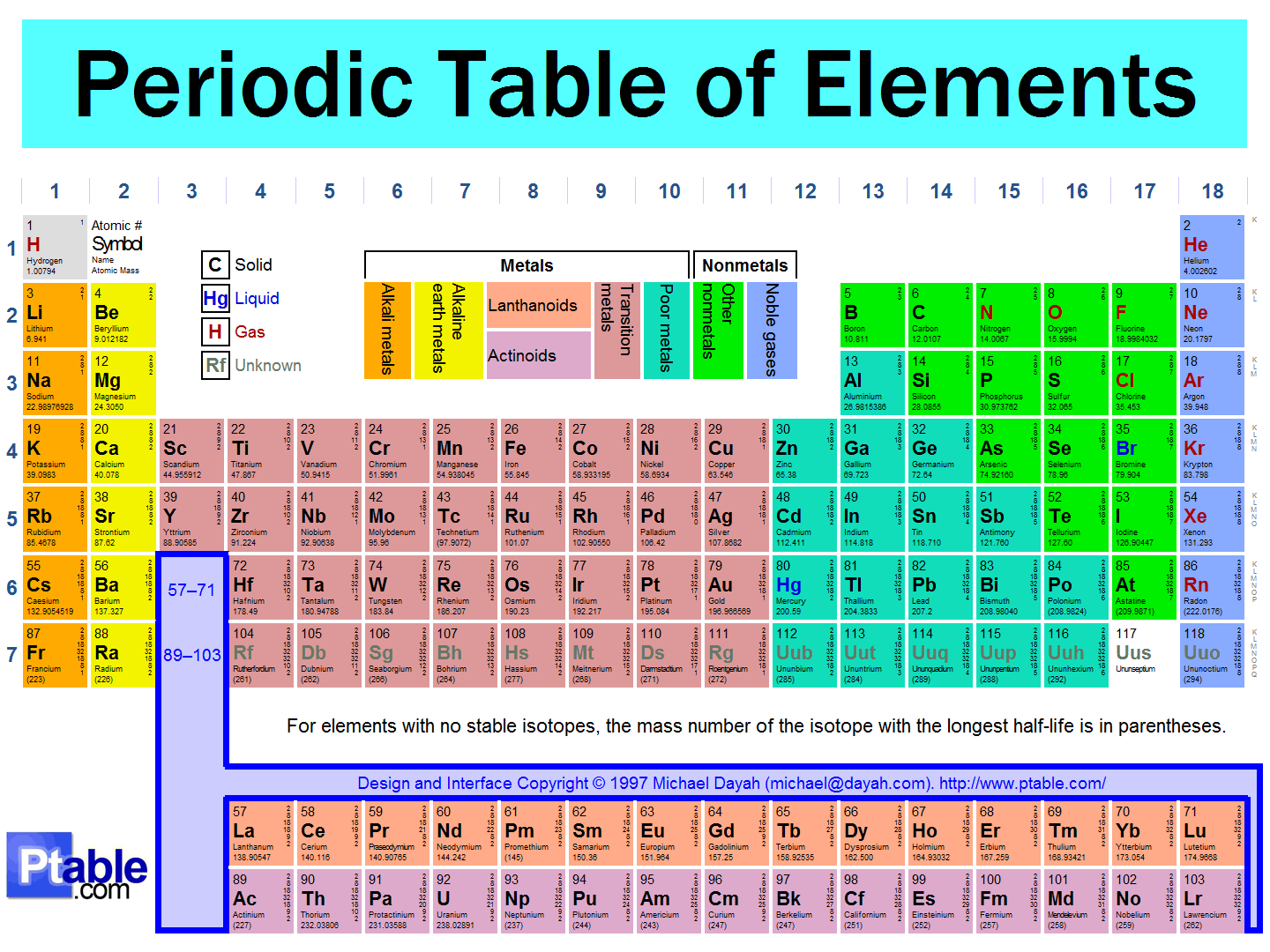
The horizontal row on the periodic table is called a
a)
group
b)
family
c)
period
d)
atomic number
175.

A vertical column is called...
a)
group
b)
tower
c)
period
d)
crew
176.
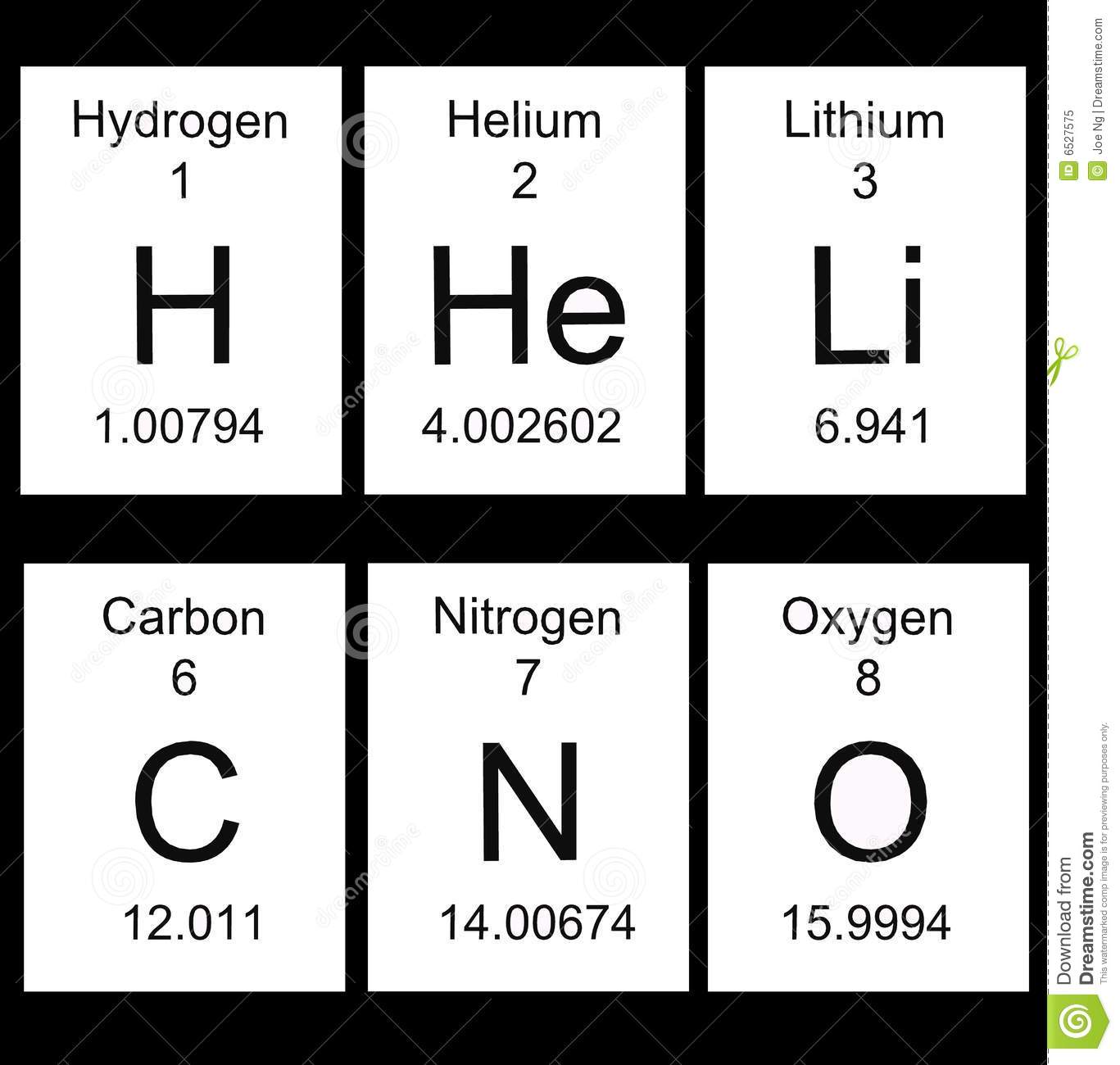
The number at the bottom of each square on the periodic table is the ...
a)
atomic number
b)
atomic mass
c)
chemical symbol
d)
element name
177.
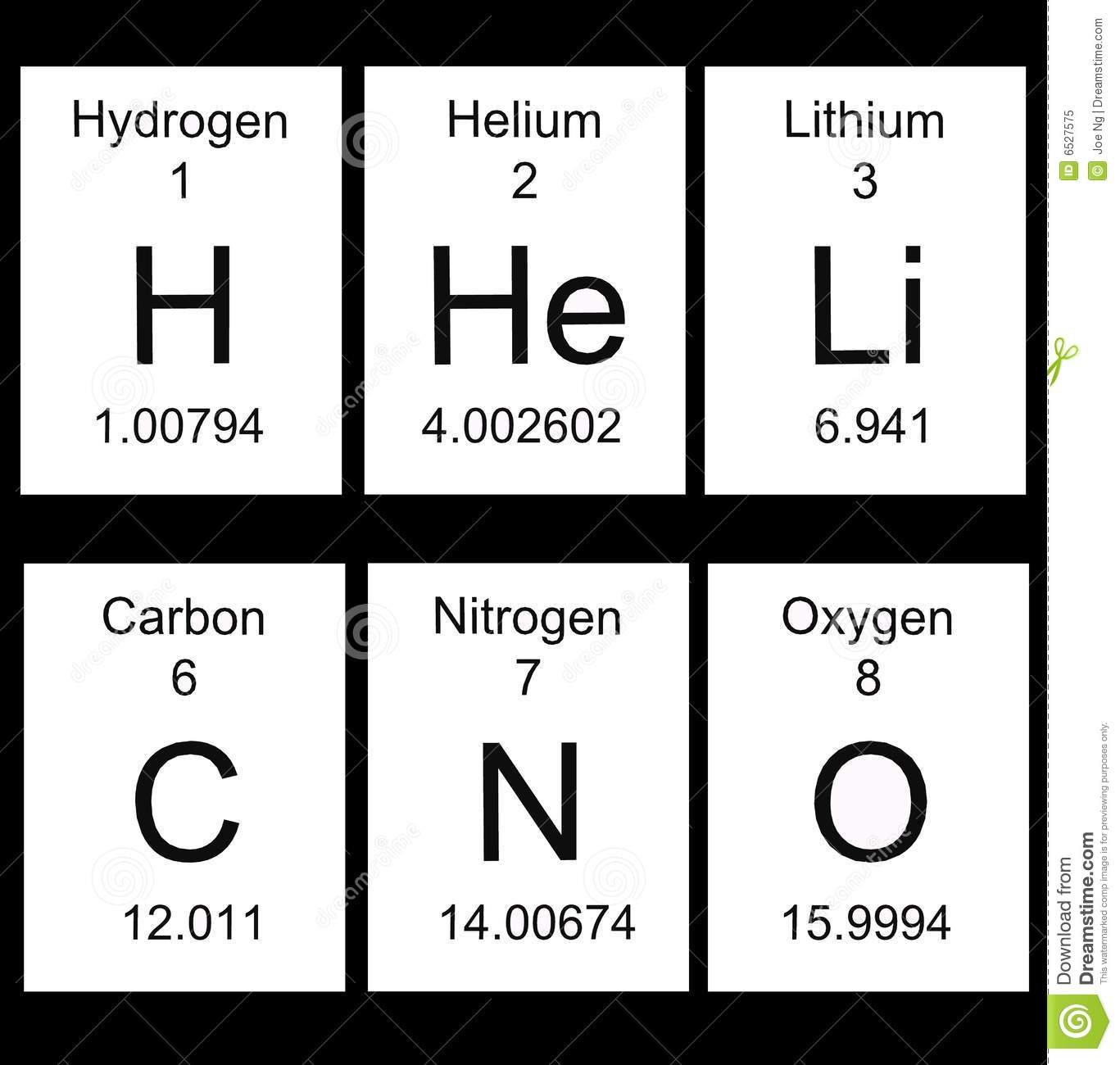
The number at the top of each square on the periodic table is the ...
a)
atomic number
b)
atomic mass
c)
Chemical Symbol
d)
Element Name
178.

What group of elements don't have individual names?
a)
Alkaline-earth Metals
b)
Transition Metals
c)
Alkali Metals
d)
Halogens
179.

Most of the elements on the periodic table are classified as _____.
a)
Metals
b)
Nonmetals
c)
Metalloids
d)
Periods
180.
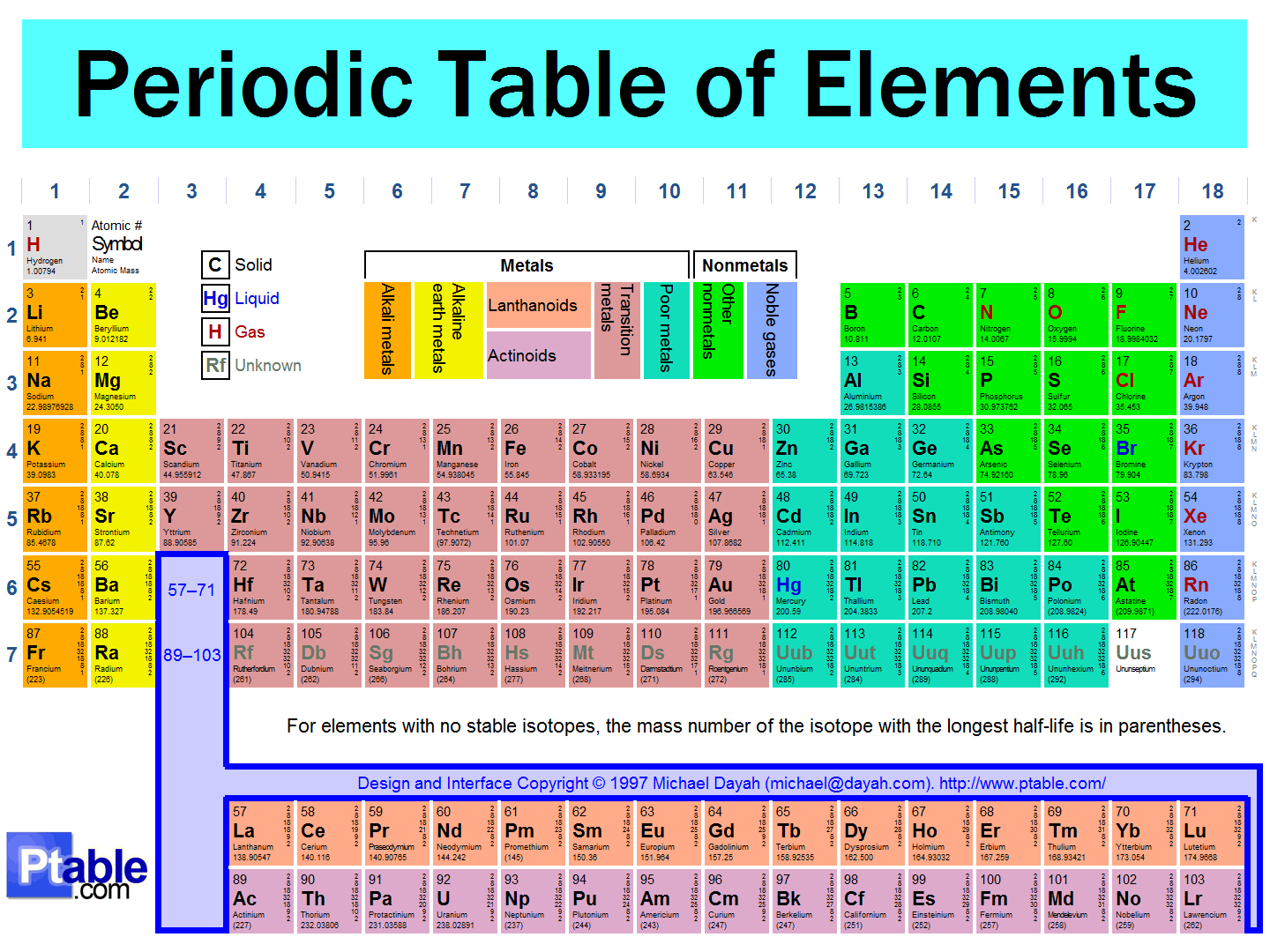
This class of elements are sometimes called "semiconductors."
a)
Metals
b)
Nonmetals
c)
Metalloids
d)
Groups
181.

Which section are the metals in?
a)
dark blue
b)
light blue
c)
purple
d)
pink
182.

In what section would Transition Metals be found?
a)
purple
b)
light blue
c)
yellow
d)
red
183.
Metalloids can be described as...
a)
same as nonmetals
b)
bad conductors
c)
characteristics of metals and nonmetals
d)
same as metals
184.
Elements running along the zigzag line on the periodic table are normally?
a)
non metals
b)
metals
c)
metalloids
d)
rare earth metals
185.
Which is an alkali metal?
a)
Magnesium
b)
Iron
c)
Sodium
d)
Europium
186.
Rows on the period table are called _____ while columns are called _____.
a)
groups, families
b)
groups, periods
c)
periods, groups
d)
families, groups
187.
The majority of elements on the periodic table are
a)
man made.
b)
nonmetals.
c)
metals.
d)
gases.
188.
Elements in the same ________ are more chemically similar.
a)
group
b)
period
c)
club
d)
table
189.
Group 18 elements are known as the _____ _____ and have full valence shells.
a)
royal gases.
b)
supreme solids.
c)
noble gases.
d)
legit liquids.
190.
Each column(up&down) in the periodic table is called a
a)
period
b)
group
c)
cluster
d)
unit
191.
In the modern periodic table elements are arranged by:
a)
atomic mass
b)
atomic number
c)
valence electrons
d)
number of isotopes
192.
Which feature distinguishes polar molecules from nonpolar molecules?
a)
Polar molecules contain atoms that are chemically bonded together
b)
Polar molecules can contain more than one atom of the same element
c)
Polar molecules can contain atoms of different elements
d)
Polar molecules contain electrons that are not shared equally by the atoms
193.
What is a covalent bond?
a)
A covalent bond is a bond in which two atoms share electrons
b)
A covalent bond is a bond in which one atom gains an electron
c)
A covalent bond is a bond in which two atoms contribute unequal numbers of electrons
d)
A covalent bond is a bond in which all electrons remain with their original atoms
194.
What type of bond is found in a NaCl (salt) molecule?
a)
Covalent
b)
Ionic
195.
What type of bond is found in a water molecule?
a)
Covalent
b)
Ionic
196.
Bond formed when two or more electrons are shared.
a)
Covalent
b)
Ionic
c)
Hydrogen
d)
Metallic
197.
Bond that forms when one or more electrons are transferred from one atom to another.
a)
Covalent
b)
Hydrogen
c)
Ionic
d)
Metallic
198.
Electrons that are used for form bonds are called?
a)
Valence Electrons
b)
Mobil Electrons
c)
Transition Electrons
d)
Passive Electrons
199.
What do atoms gain, lose, or share when they bond?
a)
protons
b)
neutrons
c)
electrons
d)
atoms
200.
Information obtained through the senses.
a)
observation
b)
inference
c)
analysis
d)
conclusion
201.
Break down in order to bring out the essential elements or structure
a)
analyze
b)
research
c)
results
d)
conclusion
202.
A value that does not change
a)
constant
b)
independent
c)
dependent
203.
The axis that goes across the bottom of the graph. The X-axis.
a)
horizontal
b)
vertical
204.
reasonable; making use of reason and good sense
a)
logical reasoning
b)
illogical reasoning
c)
deductive reasoning
d)
inductive reasoning
205.
the group that does not receive the experimental treatment.
Contrasts with the experimental group and serves as a comparison for evaluating the effect of the treatment.
Contrasts with the experimental group and serves as a comparison for evaluating the effect of the treatment.
a)
experimental
b)
control
206.
In an experiment, the group that is exposed to the treatment, that is, to one version of the independent variable.
a)
experimental
b)
control
207.
Collected body of data from observations and experiments
a)
evidence
b)
research
c)
conclusion
d)
hypothesis
208.
When an experiment is done several times to see if you get similar results each time
a)
repeated trials
b)
experiment
c)
purpose
d)
data
209.
The ability of a test to measure what it is intended to measure
a)
valid
b)
invalid
210.
A conclusion reached on the basis of evidence and reasoning
a)
inference
b)
conclusion
c)
analysis
d)
results
211.
A statement of what will happen next in a sequence of events.
a)
prediction
b)
procedure
c)
analysis
d)
research
212.
the study and collecting of information about something.
a)
research
b)
prior knowledge
c)
conclusion
d)
purpose
213.
A summary based on evidence or facts
a)
conclusion
b)
analysis
c)
report
d)
results
214.
A prediction that can be tested
a)
hypothesis
b)
question
c)
analysis
d)
conclusion
215.
The outcome factor; the variable that may change in response to manipulations of the independent variable.
a)
independent
b)
dependent
c)
control
216.
the experimental factor that is manipulated (changed); the variable whose effect is being studied
a)
independent
b)
dependent
c)
control
217.
any measurable conditions, events, characteristics, or behaviors that are controlled or observed in an experiment
a)
variables
b)
data
c)
research
d)
analysis
218.
facts, figures, and other evidence gathered through observations
a)
data
b)
results
c)
graphs
d)
evidence
219.
data in the form of recorded descriptions rather than numerical measurements
a)
quantitative
b)
qualitative
220.
Data that is in numbers
a)
quantitative
b)
qualitative
100 %

