
 Worksheets
MP3 3 week Review
Total questions: 47
Worksheet time: 33mins
Name
Class
Date
1.
Organisms classified as plantae have these characteristics:
a)
cell membrane, nucleus, eats other organisms
b)
cell membrane, cell wall, nucleus, makes its own energy from the sun
c)
millions of dollars
d)
geotropism, megatropism, phototropism
2.
Which parts of the plant exhibit phototropism?
a)
cheese
b)
roots
c)
leaves
3.

Gravitropism (also called geotropism) is when a plant grows in response to gravity. Which part of the plant moves toward gravity?
a)
roots
b)
stems
c)
leaves
d)
fur
4.
Hair color is
a)
a genetic trait
b)
an acquired trait
c)
purple
d)
soft
5.

What type of tropism response to light?
a)
Gravitropism
b)
Thigmotropism
c)
Phototropism
d)
Hydrotropism
6.
Gravitropism (also called geotropism) is when a plant grows in response to gravity.
a)
True
b)
False
7.
All Offspring of Asexual reproduction are identical
a)
True
b)
False
8.

All of the offspring of an organism have the same genetic material, which is identical to the parent organism. From this, we can conclude that this organism -
a)
makes its own food
b)
is unicellular
c)
live in a marine habitat
d)
reproduces asexually
12.
Some traits are inherited, some traits are acquired.
Language is an
Language is an
a)
inherited trait
b)
acquired trait
10.
Some traits are inherited, some traits are acquired.
tongue rolling is
tongue rolling is
a)
inherited trait
b)
acquired trait
11.
the passing of genetic traits from parent to offspring.
a)
heredity
b)
trait
c)
gene
d)
allele
12.
Some traits are inherited, some traits are acquired.
Language is an
Language is an
a)
inherited trait
b)
acquired trait
13.
the passing of genetic traits from parent to offspring.
a)
heredity
b)
trait
c)
gene
d)
allele
14.
One major function of the excretory system is to clean the what?
a)
urine
b)
blood
c)
kidneys
d)
bladder
15.
The word excretion means:
a)
to make things bigger
b)
to move things around
c)
to get rid of waste
d)
to deliver messages
16.
Which organ system removes cellular wastes as the result of cellular respiration?
a)
nervous
b)
digestive
c)
excretory
d)
circulatory
17.
The stomach releases hydrochloric acid and enzymes that break down the protein in meats and turn the protein into amino acids. This change is
a)
Physical
b)
Chemical
18.
Acids and enzymes are used in
a)
physical digestion
b)
chemical digestion
19.
During chemical digestion
a)
only changes in size and shape occur
b)
a new substance is formed
20.
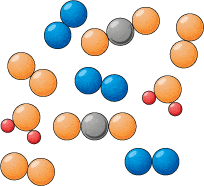
These are found on the Periodic Table.
a)
elements
b)
mixtures
c)
compounds
21.
Which of the following is not a compound?
a)
HCl
b)
Cl
c)
NaCl
d)
CO2
22.
The compound PO4 is...
a)
inorganic
b)
organic
23.
The compound CHO is...
a)
inorganic
b)
organic
24.
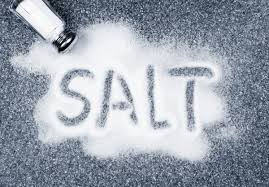
Is NaCl (table salt) a Organic or Inorganic Compound?
a)
Inorganic
b)
Organic
25.
Organic Compounds are made of these two elements:
a)
helium and carbon
b)
neon and cobalt
c)
hydrogen and carbon
d)
carbon and calcium
26.

Poison dart frogs are brightly colored because
a)
camouflage
b)
to make them taste better
c)
to attract predators
d)
to warn predators
27.
What are some properties of a metal?
a)
liquid, dull, bad conductor of electricity, magnetic, malleabl
b)
shiny, soft, good conductor of electricity, non-magnetic, brittle
c)
shiny, solid, good conductor of electricity, magnetic, malleable
d)
shiny, solid, bad conductor of electricity, magnetic, malleable
28.
Which of these is a property of metals?
a)
It's malleable
b)
It can't conduct electricity
c)
They are used in food
d)
It's very brittle
29.
Which of the following is not a characteristic of metals?
a)
brittle
b)
good conductor
c)
ductile
d)
malleable
30.
Objects that are brittle break into pieces.
a)
true
b)
false
31.
Metals are not brittle.
a)
true, they are malleable
b)
false, they break
c)
You know nothing, John Snow.
32.
Where the better adapted organisms survive to pass traits along to offspring.
a)
Evolution
b)
Natural Selection
c)
Extinction
d)
Artifical Selection
33.
Why are advantageous traits more likely to be passed onto offspring?
a)
Because they are more likely to survive and reproduce.
b)
Because they come from dominant alleles.
c)
Because they come from recessive alleles.
d)
Because the trait is an acquired phenotype.
34.
The purpose of selective breeding is to
a)
Get bigger animals
b)
get smaller animals
c)
create animals with desirable traits
d)
create animals with bad traits
35.
It is very common for yellow labs to have bad hips. This is because owners want purebred yellow labs who are good hunting dogs. This is an example of
a)
Natural Selection
b)
Selective breeding
c)
Mitosis
d)
Fossil Record
36.

All of the following statements are reasons for selective breeding except:
a)
To produce offspring with desirable characteristics
b)
Farmers increase their profit by improving crops
c)
To improve the quality of food products
d)
To increase migration patterns
37.
Problems with selective breeding include
a)
Better animals
b)
More Meat
c)
Animals can have bad health problems
d)
more diversity
38.
The goal of every species on earth is...
a)
to survive and reproduce
b)
divide and conquer
c)
survive and conquer
d)
reproduce and die
39.

a)
protective coloration
b)
warning coloration
c)
protective resemblance
d)
mimicry
40.

When humans breed organisms with specific traits to influence the traits of the next generation, it is __________.
a)
adaptation
b)
natural breeding
c)
natural selection
d)
selective breeding
41.

According to natural selection, which organisms are most likely to survive?
a)
The fastest organisms
b)
The biggest organisms
c)
The best-adapted organisms
d)
The most domesticated organisms
42.
Jack has a rock. The rock has a mass of 14g and a volume of 2cm3. What is the density of the rock?
a)
7 mL
b)
7 g/cm3
c)
28 g/cm3
d)
1/7 g/cm3
43.
Frank has an eraser. It has a mass of 4g, and a volume of 2cm3. What is its density?
a)
8 g/cm3
b)
2 g/cm3
c)
1/2 g/cm3
d)
24 g/cm3
44.
Frank has a paper clip. It has a mass of 9g and a volume of 3cm3. What is its density?
a)
3 g/cm3
b)
1/3 g/cm3
c)
27 g/cm3
d)
39 g/cm3
45.
Density equals
a)
mass
b)
volume
c)
mass divided by volume
d)
speed divided by time
46.
mass divided by volume equals
a)
density
b)
distance divided by time
c)
speed
d)
destiny
47.
Sarah's pen has a volume of 25 centimeters cubed and a mass of 75g. What is the density?
a)
2
b)
1
c)
Cannot be solved
d)
3
100 %

