
 Worksheets
3rd Grade Fossils
Total questions: 35
Worksheet time: 12mins
Name
Class
Date
1.

What is the name of this kind of fossil?
a)
Amber Fossil
b)
Mold fossil
c)
Trace Fossil
d)
Petrification Fossil
2.

Which type of rock from the choices below would most likely contain a fossil?
a)
Igneous
b)
Sedimentary
c)
Metamorphic
d)
Soil
3.
The trace or remains of an organism that lived a long time ago, often preserved in sediment is called _______.
a)
soil
b)
fossil
c)
dinosaur
d)
igneous rock
4.
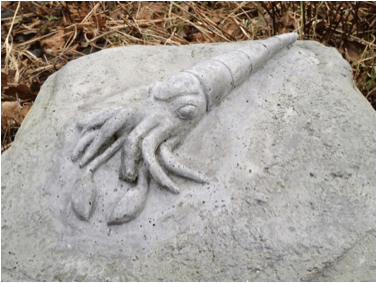
This type of fossil is a mold filled with sediment that creates a solid copy of an organism.
a)
mold
b)
petrified
c)
cast
d)
trace
5.

This type of fossil is a mark or cavity made in sediment in the shape of a shell or other body.
a)
cast
b)
trace
c)
petrified
d)
mold
6.

This type of fossil provides evidence of the activities of ancient organisms; examples include marks left by footprints or tails.
a)
mold
b)
rock
c)
trace
d)
cast
7.
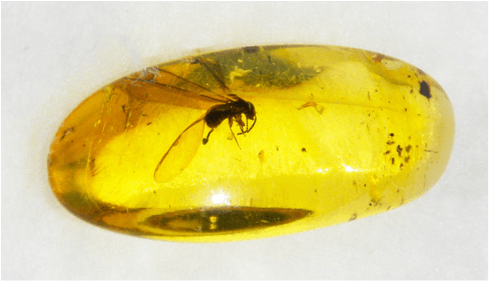
This material does an excellent job of preserving insect remains.
a)
cast
b)
amber
c)
mold
d)
rock
8.

A scientist who studies fossils is called a __________.
a)
geologist
b)
biologist
c)
paleontologist
d)
chemist
9.
Which of the following is an example of a fossil?
a)
A living woolly mammoth.
b)
A leaf that just fell off a tree.
c)
An imprint of a leaf from thousands of years ago.
d)
A recently buried shark.
10.
Which of these is NOT a fossil?
a)
footprints left by an animal thousands of years ago.
b)
a leaf print from thousands of years ago.
c)
a picture of an animal from long ago.
d)
the remains of a dinosaur that have turned to stone.
11.

You find a fossil of an animal. Which of the following is probably true about that animal?
a)
The animal lived long ago.
b)
The animal lived about 5 years ago.
c)
The animal is extinct.
d)
The animal is still alive.
12.

Which of these is NOT true about fossils?
a)
Fossils can be imprints or remains.
b)
Most fossils are very old.
c)
Plants and animals can leave fossils.
d)
Fossils are formed by the soft parts of animals.
13.

You find several fossils of fish, clams, mussels, and shells in an area. What type of environment likely existed in the area long ago?
a)
forest
b)
desert
c)
ocean
d)
mountain
14.

In what type of rock do we find fossils?
a)
Igneous
b)
Metamoprhic
c)
Gneiss
d)
Sedimentary
15.
Which of these is an example of a fossil?
a)
An old book.
b)
The remains of a shark tooth from long ago.
c)
An ancient clay pot.
d)
An old piece of paper dug up.
16.

Which fossil would tell you that a place probably used to be underwater?
a)
A leaf
b)
A dinosaur footprint with water inside
c)
A tooth of an unknown organism
d)
A clam shell
17.

How old do Paleontologists believe the Earth is?
a)
2017 years old
b)
3.6 thousand years old
c)
4.6 billion years old
d)
4.6 million years old
18.

You go on a search and find a plant fossil. Which conclusion can you draw from this fossil?
a)
This plant lived long ago.
b)
This plant is now extinct.
c)
This plant could not live in today's environment.
d)
This plant was an important source of food for ancient animals.
19.

How is a cast fossil formed?
a)
A dead animal is buried and decays, leaving behind an opening in the shape of its body.
b)
An animal steps in mud, which hardens into rock.
c)
Bits of minerals slowly replace a dead plant.
d)
Mud or minerals fill an opening left after an animal decays.
20.
Which of these fossils is a trace fossil?
a)
an insect trapped in sap
b)
a dinosaur footprint
c)
a dinosaur bone
d)
a petrified tree
21.

If you were to find animal tracks which were created in mud long ago, what information could you tell about the animal?
a)
size of the animal
b)
name of the animal
c)
color of the animal
d)
what the animal ate
22.

A Georgia scientist found fossils of the teeth and skull bone of an animal similar to an alligator. Where could the fossil most likely have been found?
a)
Mountains
b)
Piedmont
c)
Marsh and Swamp
d)
Upper Coastal Plain
23.
What is the difference between a mold fossil and a cast fossil?
a)
There is not a difference between the two fossils.
b)
A mold fossil is filled with mud
c)
A cast fossil is filled with mud which hardens.
d)
A mold fossil is larger.
24.
Scientists can find the following information from studying fossils except _________.
a)
what kinds of food they ate by examining their teeth.
b)
what kinds of animals and plants lived at the same time period.
c)
which fossils are older based on what layer of soil they were found in .
d)
what color skin they had.
25.

Look at the fossil above. Where would be the BEST place to find it?
a)
desert
b)
jungle
c)
near the ocean
d)
piedmont
26.

The fossil above is an example of __________.
a)
a cast fossil
b)
a mold fossil
c)
a trace fossil
d)
an amber fossil
27.

Where would these fossils most likely be found in Georgia?
a)
piedmont
b)
swamp & marsh
c)
Atlantic ocean
d)
mountain
28.

Which of the following would NOT help an organism become fossilized?
a)
shell
b)
skeleton
c)
buried quickly with sediment
d)
soft body parts
29.
Ms. Burrows wants to make something that looks like a fossil. Which should she do?
a)
mix sand and clay and let it dry
b)
cover a seed with soil and water it
c)
push a shell into clay and pull it out
d)
wrap a leaf around a rock and freeze it
30.

Fossils of fish are found on mountain tops. What does this tell you?
a)
the fish were dropped there by flying birds
b)
this land was once under the ocean
c)
farmers fed the fish to the cows
d)
fish used to live on land
31.
Which animal part would MOST LIKELY form a fossil?
a)
fur
b)
lung
c)
bone
d)
muscle
32.

Why do bones and teeth remain as part of some fossils?
a)
they are white
b)
bones are large
c)
the parts are hard
d)
bones decay easily
33.
What type of creature would most likely be found in an amber fossil?
a)
fish
b)
large mammal
c)
insect
d)
bird
34.

Wood that turns into stone is called ____________ wood.
a)
permineralization
b)
petrified
c)
cast
d)
replacement
35.

One of the oldest organisms discovered is called ____________.
a)
a dinosaur
b)
a micro-organism
c)
a trilobite
d)
a cast and mold fossil
100 %

