
 Worksheets
Cell Process
Total questions: 24
Worksheet time: 15mins
Name
Class
Date
1.

Directs all cell activities through the DNA located there.
a)
Lysosomes
b)
Nucleus
c)
ribosomes
d)
Mitochondria
2.
Which organelle is only found in a plant cell?
a)
nucleus
b)
chloroplast
c)
mitochondria
d)
cell membrane
3.

Which part of the cell is often called "the brain of the cell"?
a)
nuclear membrane
b)
endoplasmic reticulum
c)
nucleus
d)
mitochondria
4.
This organelle takes food and turns it into ENERGY for plant and animal cells.
a)
Chloroplast
b)
Mitochondria
c)
Lysosome
d)
Ribosome
5.
The site of photosynthesis
a)
ribosome
b)
mitochondria
c)
chloroplast
d)
nucleus
6.

I am the outer most layer of an animal cell. What am I?
a)
cell wall
b)
nucleus
c)
cell membrane
d)
cell skin
7.
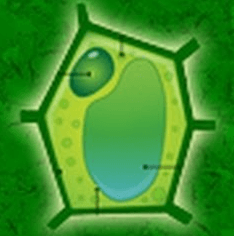
A rigid layer that lies outside the cell's membrane is...
a)
Cytoskeleton
b)
Cilia
c)
Cell Wall
d)
Flagella
8.
What organelle is called the "powerhouse" of a cell?
a)
Endoplasmic Reticulum
b)
Nucleus
c)
Mitochondria
d)
Nucleolus
9.
What is the gel-like substance inside of cells called?
a)
photoplasm
b)
photosynthesis
c)
cytoskeleton
d)
cytoplasm
10.
What is an example of a single-celled organism?
a)
bacteria
b)
plants
c)
animals
d)
humans
11.
What organelle is considered to be the “gatekeeper” for plant and animal cells?
a)
Cell Wall
b)
Cytoplasm
c)
Nucleous
d)
Call Membrane
12.
What kind of cells contain mitochondria?
a)
prokaryotic
b)
eukaryotic
13.
What will most likely be the result if all of the mitochondria are removed from a plant cell?
a)
It will be unable to carry out respiration.
b)
It will lose water through osmosis.
c)
It will break down the ribosomes in the cell.
d)
It will be unable to photosynthesize.
14.
What is osmosis?
a)
Diffusion of water through a membrane.
b)
Movement of particles from low to high concentration.
c)
Conversion of glucose to ATP.
d)
Conversion of sunlight to glucose.
15.
Which BEST describes cellular respiration
a)
Conversion of sunlight to glucose.
b)
Process of moving oxygen into the cell.
c)
Process of moving carbon dioxide into the cell.
d)
Conversion of glucose to ATP.
16.
Which BEST describes photosynthesis?
a)
Conversion of radiant energy to glucose.
b)
Conversion of glucose to ATP.
c)
Maintaining cell homeostasis.
d)
The movement of particles from high to low concentration.
17.
What does a nerve cell do?
a)
Fights infection.
b)
Sends and receives messages.
c)
Carries oxygen.
d)
Contracts to move structures.
18.
Before mitosis begins, which happens before the nucleus starts dividing?
a)
The cytoplasm separates.
b)
The DNA replicates.
c)
The sister chromatids separate.
d)
The homologous chromosomes cross over.
19.
What types of cells are produced by mitosis?
a)
diploid gametes
b)
haploid gametes
c)
diploid body cells
d)
haploid body cells
20.
Which of the following is NOT found in an animal cell?
a)
nucleus
b)
ribosome
c)
mitochondria
d)
chloroplast
21.
During diffusion
a)
substances (things) moves from high to low concentration
b)
water moves when energy is used
c)
large or oddly shaped molecules move across a cell membrane
d)
water moves from high to low concentration
22.

_______ regulates what enters and leaves a cell.
a)
Cell Membrane
b)
Nucleus
c)
Mitochondria
d)
Cytoplasm
23.
In the given scenario what will happen to the organism: salt is poured onto eggplant.
a)
Water will move out of the eggplant cells and the cells will shrink.
b)
Water will move out of the eggplant cells and the cells will swell.
c)
Water will move into the eggplant cells and the cells will swell.
24.
Before mitosis begins, which happens before the nucleus starts dividing?
a)
The cytoplasm separates.
b)
The DNA replicates
c)
The homologous chromosomes cross over.
d)
The sister chromatids separate
100 %

