
 Worksheets
Adaptations and Natural Selection
Total questions: 21
Worksheet time: 23mins
Name
Class
Date
1.

A species lives in a particular environment. What is TRUE about the environment that the species lives in and about how the species will look over thousands of years?
a)
The environment will stay the same, and the traits of the species will stay the same.
b)
There will be changes to the environment, but the traits of the species will stay the same.
c)
There will be changes to the environment that could lead to changes in the traits of the species.
d)
There will be changes to the environment, and the traits of the species will change, but the changes in the environment could never lead to changes in the traits of species.
2.

Some individuals of a species were moved to a new location that had different environmental conditions than their original location. According to the theory of natural selection, what could happen after many generations to the offspring of the organisms that had been relocated?
a)
The descendants would look the same as the original individuals because species do not change.
b)
The descendants would look different from the original individuals in some ways, and they would look the same in some ways.
c)
The descendants would become a completely different species that would have no similarities to the original individuals.
d)
The descendants would look the same as the original individuals because the environment does not affect how species look.
3.

When the peppered moths' light-colored trees were covered in soot, the forest was suddenly made up of dark-colored trees. Which of the following explains what will happen to the moth population?
a)
The light moths that survive will not mate and have offspring because they know that their offspring would easily be seen and eaten by predators.
b)
The light moths that survive will have dark offspring because the change in the environment will cause the parents to have offspring that would do better in the new environment.
c)
The light moths will see that the dark moths will be less likely to be eaten by predators, so they made themselves dark as well.
d)
The dark moths will be better camouflaged from predators, so more of them will survive and pass on those traits.
4.
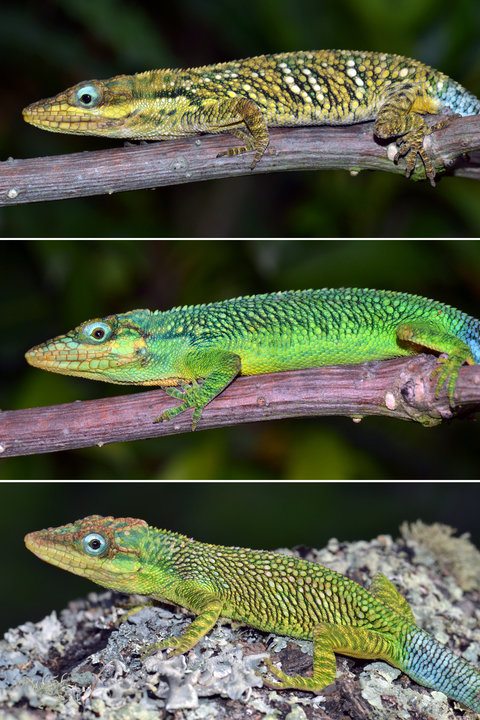
Individual members of a species could have differences in inherited characteristics that affect which of the following?
a)
Ability to find food.
b)
Ability to avoid predators
c)
Ability to find a mate.
d)
All of the above.
5.

A species of bird ate many types of seeds. The individuals vary in beak size. If a drought were to kill off the trees that produce small seeds and leave only large seeds, how would the population change?
a)
The birds with larger beaks were better at eating the large seeds than those with smaller beaks, so only the birds with larger beaks got enough food to survive, reproduce, and pass the trait of large beaks to the next generation.
b)
The birds with smaller beaks had to work harder than those with larger beaks to crack open the large seeds. The more they used their beaks, the larger their beaks became, so they were able to get enough food to survive, reproduce, and pass the traits of large beaks to the next generation.
c)
The birds with smaller beaks grew their beaks so that they would be better able to eat the large seeds and get enough food to survive, reproduce, and pass the trait of larger beaks to the next generation.
d)
Beak size is random and will not be determined by the types of seeds available.
6.
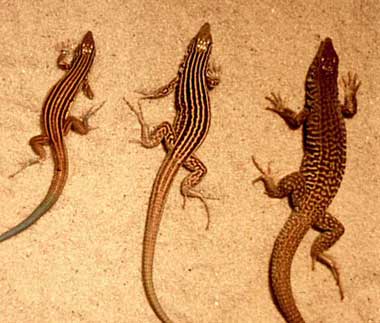
According to the theory of natural selection, what would happen to a species of lizards when a new predator is introduced into the environment where the lizards live?
a)
All of the lizards would try to develop new traits to avoid the new predator.
b)
Some of the lizards would try to develop new traits to avoid the new predator, and the other lizards would die.
c)
The lizards that already have the traits needed to avoid the new predator would be more likely to survive and reproduce, and the ones that do not would be less likely to survive and reproduce.
d)
Because all lizards of the same species have the same traits, one lizard would not have an advantage over another lizard. They would either all survive or all die.
7.
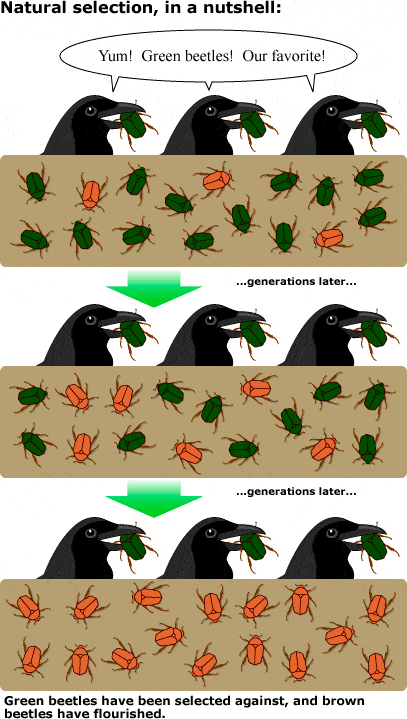
Which of the following is REQUIRED for the process of natural selection to occur?
a)
Members of the same species must compete with one another.
b)
Members of different species must compete with one another.
c)
There must be a sudden environmental change.
d)
Traits must be inherited from one generation to the next.
8.

A Viceroy butterfly looks like the
Monarch butterfly. The Viceroy tastes terrible to birds, so birds won't take
the chance and eat the Viceroy. What is this kind of adaptation?
a)
Mimicry
b)
Camouflage
c)
Hibernation
d)
Migration
9.

Dogs bark at strangers to protect themselves and
their pack. What kind of adaptation is barking?
a)
Playful
b)
Instinctive
c)
Learned
d)
Hibernation
10.

If an animal cannot survive during a particular
season, what might that animal do?
a)
Adapt
b)
Migrate
c)
Hibernate
d)
Both migrate and hibernate
11.

A
shark’s sharp teeth would be a(n) _______________.
a)
structural adaptation.
b)
physiological adaptation
c)
behavioral adaptation.
d)
none of the available options.
12.

When an animal tries to look, sound, or act like
another animal to fool predators into thinking it is poisonous or dangerous,
this is called?
a)
camouflage
b)
hibernation
c)
migration
d)
mimicry
13.

Which population would best be adapted to maneuver in a rocky, mountainous region?
a)
a population of organisms with hooves
b)
a population of organisms with thick fur
c)
a population of organisms with gills
d)
a population of organisms with moist skin
14.

An organism has thick white fur, a bushy tail,
and short ears. It often burrows holes and curls into a ball for warmth. For
which environment is this organism most likely adapted?
a)
Grassland
b)
Arctic Tundra
c)
Coniferous Forest
d)
Desert
15.
Which of these statements best describes what Charles Darwin observed on the Galapagos Islands?
a)
The finch population on each island was unique.
b)
The finches on the islands ate seeds and nuts but no insects.
c)
The finches on the islands were the same as the finches in Ecuador.
d)
The finches could produce offspring only with finches from other islands.
16.

Beak shape depends on...
a)
where birds live
b)
who they hang out with
c)
diet (fish or seeds)
d)
exercise
17.

The bright, red color of the male cardinal is an adaptation that helps it to
a)
hide from predators
b)
find the food it eats
c)
absorb sunlight for warmth
d)
look attractive to females
18.

What is this bird's beak best suited for?
a)
tearing food
b)
eating small seeds
c)
getting flower nectar
d)
digging insects from bark
19.
An example of a behavioral adaptation is
a)
The long neck of a giraffe
b)
Penguins huddling together for warmth
c)
A camel's hump used to store water
d)
A polar bear's white fur used for camouflage
20.
When the Virginia opossum feels threatened it will exhibit behaviors like running or growling. Sometimes it will roll over, become stiff, drool, and change its breathing to a slow and shallow pace. Possums can maintain this behavior for up to four hours. Some predators will think the opossum is dead and go away. The adaptation the opossum is using is an example of ___.
a)
an environmental adaptation
b)
a behavioral adaptation
c)
a physiological adaptation
d)
a structural adaptation
21.

Which foot has adaptations for surviving in a water environment?
a)
A
b)
B
c)
C
d)
D
100 %

