
 Worksheets
Earth Changes:Weathering&Erosion/Glaciers/Earthquakes/Volcanoes
Total questions: 38
Worksheet time: 28mins
Name
Class
Date
1.
What is the movement of soil from one place to another?
a)
weathering
b)
deposition
c)
discharge
d)
erosion
2.
What triggers mudslides?
a)
ice
b)
rain
c)
wind
d)
temperature
3.
Which type of sediment will be dropped first as the wind slows?
a)
biggest
b)
smallest
c)
heaviest
d)
lightest
4.
Weathering involves the movement of rocks and minerals by agents such as water, wind and gravity.
a)
True
b)
False
5.
The process of slowly breaking rocks into smaller pieces is called
a)
weathering
b)
erosion
c)
deposition
6.
The process of moving weathered rock and depositing it in another location is called?
a)
weathering
b)
erosion
c)
deposition
7.
What are the agents of erosion?
a)
smoke, fire, water, and carbon dioxide
b)
moving water, ice, waves, and winds
c)
sand, dirt, mud, clay
d)
igneous rock, sedimentary rock, and metamorphic rock
8.
What are the two types of weathering?
a)
erosion and deposition
b)
Acid rain and carbonation
c)
exfoliation and gravity
d)
mechanical and chemical
9.

Water entering a small crack or hole will freeze in cold temperatures causing the frozen water to expand. This makes the hole or crack larger. This is called?
a)
Root Pry
b)
Exfoliation
c)
Ice Wedging
d)
Abrasion
10.

What type of mechanical weathering causes landslides?
a)
Ice Wedging
b)
Exfoliation
c)
Gravity
d)
Abrasion
11.
Which of the following are an example of root-pry?
a)
Landslides moving downhill
b)
Roots growing into a crack of a rock
c)
Rocks peeling and flaking
12.

True or False:
The Grand Canyon is an example of rapid erosion?
The Grand Canyon is an example of rapid erosion?
a)
True
b)
False
13.
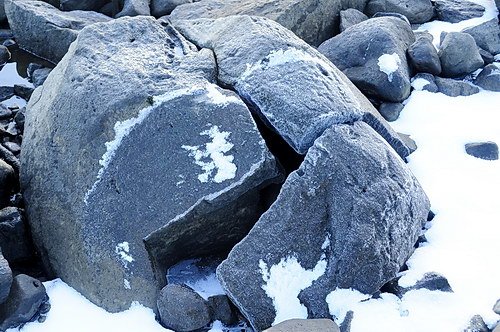
How does freezing water cause the weathering of rocks? The freezing water—
a)
keeps the rocks in place.
b)
makes the rocks last longer.
c)
expands cracks and breaks rocks.
d)
causes rocks to fall in landslides.
14.

Over long periods of time, deposition may change the Earth’s surface by _____.
a)
forming new land features.
b)
breaking down large rocks into smaller ones.
c)
washing away beaches.
d)
moving topsoil.
15.

A cliff formed near the ocean. Which statement best describes how this cliff formed?
a)
Warm air melted the rock.
b)
Sun rays evaporated the rock.
c)
Ocean waves washed away rock.
d)
Plant roots pushed away the rock.
16.

What causes the greatest erosion effect on our beaches?
a)
Waves
b)
Gravity
c)
Glaciers
d)
Wind
17.

Which of these is an example of erosion?
a)
Light shining onto a mountain.
b)
Rain breaking down rocks on a mountain into smaller pieces.
c)
Wind blowing away sediment to a new place on the mountain.
d)
All of the above.
18.
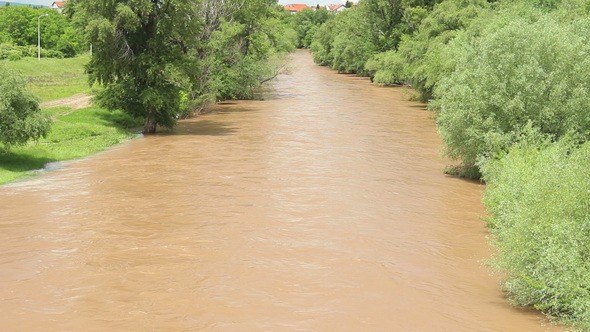
Muddy water being carried away by a fast-moving river is an example of
a)
Weathering
b)
Erosion
c)
Deposition
d)
A nice place to swim
19.

What is an enormous mass of ice moving over land, causing weathering of rock and soil?
a)
A glacier
b)
An iceberg
c)
An ice wedge
d)
A sand dune
20.
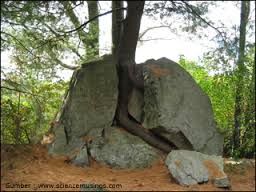
How do plants weather rocks?
a)
During photosynthesis
b)
When roots grow into cracks of rocks and expand the rock breaks.
c)
When the plant moves water from the roots to the leaves, the rock breaks.
d)
Plants don't weather rocks.
21.

Which of the following is NOT a slow change to Earth's surface?
a)
Weathering
b)
Erosion
c)
Deposition
d)
Landslides
22.

Which of the following is NOT a fast change in Earth's surface?
a)
Landslides
b)
Erosion
c)
Volcanoes Erupting
d)
Earthquakes
23.
A _____ is a mass of ice that moves downhill due to its weight.
a)
glacier
b)
erratic
c)
fjiord
d)
moraine
24.
This type of rock can weather easily by carbonic acid.
a)
Limestone
b)
Granite
c)
Trees
d)
Diamonds
25.

The outside layer of the earth is called ______________________.
a)
core
b)
crust
c)
mantle
d)
outer core
26.
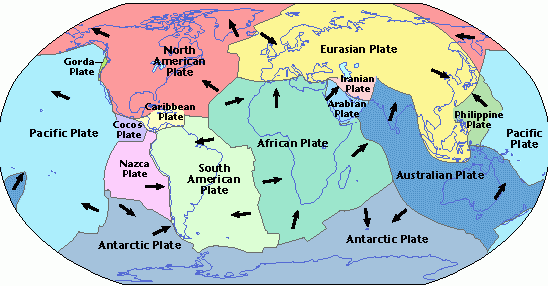
Many earthquakes happen along the borders of...
a)
Countries
b)
Tectonic Plates
c)
Climate Zones
d)
None of the above.
27.

The huge pieces of the earth's crust are called ____________________________.
a)
crust
b)
plates
c)
directions
d)
seismos
28.
1. What is a fault?
a)
A type of earthquake.
b)
A break in a tectonic plate.
c)
A type of wave
29.
During an earthquake, the earth's crust can crack.
a)
true
b)
false
30.
Mountains form from ...
a)
plates sliding past one another
b)
collision of plates
c)
plates moving away from each other
31.
What is molten rock that has formed deep within the Earth?
a)
Hot Spot
b)
Magma
c)
Lava
d)
Volcano
32.
What is molten rock that has reached the Earth's surface?
a)
Aa
b)
Lava
c)
Magma
d)
Pahoehoe
33.
Two of Earth’s plates pushed together, and the ground moved. What happened?
a)
an earthquake
b)
a landslide
c)
a volcano
d)
an avalanche
34.
A volcano under the ocean slowly releases lava over time. As the lava is released, it cools and hardens on the ocean floor. Which feature will most likely form from the release and cooling of the lava on the ocean floor over time?
a)
a fault
b)
a reef
c)
a sandbar
d)
an island
35.
Which change makes a structure on Earth’s surface?
a)
A flood makes people leave a town.
b)
An earthquake makes waves in a field.
c)
A volcano makes new land with lava.
d)
A landslide into a bay makes a tidal wave.
36.
Sediment deposition, earthquakes, and weathering are similar in that they
a)
all cause erosion.
b)
all happen quickly.
c)
are all a result of weather.
d)
can all change the surface of the earth.
37.

The figure shows the change to a mountain over a few months. Which event most likely caused the increase in the size of the mountain?
a)
erosion
b)
landslide
c)
volcanic eruption
d)
earthquake activity
38.

A section of rock layers is shown in the diagram. Which most likely caused the rock layers to move?
a)
flooding
b)
a mudslide
c)
weathering
d)
plate tectonics
100 %

