
 Worksheets
Chapter 8 - Test 1 "Asexual Rep. & The Cell Cycle"
Total questions: 33
Worksheet time: 2hrs 34mins
Name
Class
Date
1.
As we already know, animal like protists (the amoeba and paramecium) reproduce by asexual reproduction. Which of the following is an example of how the amoeba and paramecium reproduce using asexual reproduction?
a)
regeneration - amoebas and paramecium that are split in half will regenerate, and create more identical offspring
b)
sporulation - as amoebas and paramecium die, they release pores that reproduce other protists under certain environmental conditions.
c)
binary fission - amoebas and paramecium divide by binary fission, within which the cytoplasm and the nucleus divide equally under certain environmental conditions.
d)
budding - amoebas and paramecium reproduce by budding, within which the cytoplasm divides unequally, and the nucleus divides equally. The amoeba or paramecium can either create a colony, or split into two different protists.
2.
Which of the following is/are advantages of asexual reproduction?
a)
It allows the organisms to crowd out the other organisms that reproduce more slowly. As we have seen, bacteria can reproduce very rapidly in a short time!
b)
Asexual reproduction allows the organism to better fight off diseases, unlike organisms that reproduce sexually. Asexual reproduction allows for greater diversity, in turn, asexual reproducers have a greater life expectancy.
c)
Most asexual reproductive organisms live in ideal conditions, which allows them to reproduce rapidly.
d)
both b and c are correct
3.
As we already know, bacteria reproduce very rapidly under certain environmental conditions. What is the method within which bacteria undergo asexual reproduction?
a)
Budding - asexual reproduction in which a new organism develops as an outgrowth of the parent. The new organism, called the bud, is a tiny duplicate of the parent organism. In budding, the nucleus divides equally and the cytoplasm divides unequally.
b)
Regeneration by Fragmentation - type of asexual reproduction where the organism fragments a piece of itself off. In turn, the fragment reproduces an identical creature. Examples are flatworms and starfish
c)
Binary Fission - type of asexual reproduction where the parent organism divides equally in half reproducing identical offspring
d)
Sporulation - cells that contain a nucleus and a small amount of cytoplasm. Spores are surrounded by tough protective coats that enable them to survive unfavorable conditions, such as extreme heat or cold, for long periods of time. When environmental conditions become favorable, each spore can develop and produce by releasing spores.
4.
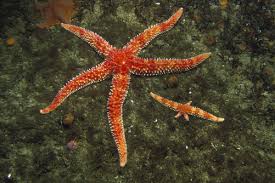
During the late 1800's, oyster fishermen were having a problem with starfish eating most of the oyster population. As a result, the fishermen "cut apart" the starfish. Why would this be a "bad" idea?
a)
Starfish reproduce by budding, within which the starfish grew back and wiped out most of the oyster population.
b)
Starfish reproduce by binary fission, within which the starfish grew back and wiped out most of the oyster population
c)
Starfish reproduce by sporulation, within which the starfish grew back and wiped out most of the oyster population
d)
Starfish reproduce by regeneration by fragmentation, within which the starfish grew back and wiped out most of the oyster population.
5.
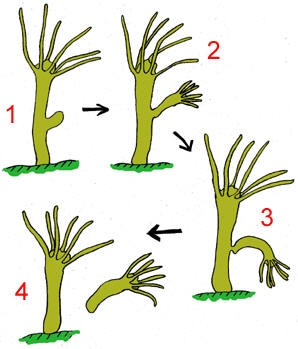
During this process of asexual reproduction, the organelle called "nucleus" divides evenly, while the organelle called "cytoplasm" divides unequally? Yeast and the hydra produce by this type of asexual reproduction?
a)
Budding
b)
Binary Fission
c)
sporulation
d)
Regenertaion
6.
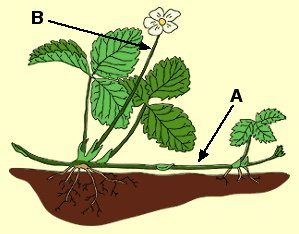
During this type of asexual reproduction, plants produce genetically identical offshoots (clones) of themselves, which then develop into independent plants?
a)
Binary Fission
b)
Sporulation
c)
Regeneration
d)
Vegetative Propagation
7.
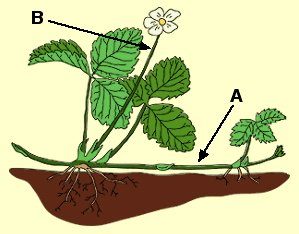
Which of the following asexual reproduction processes includes strawberries, within which strawberries reproduce when the parent organism sends out tendrils which can take root and grow into new organisms.
a)
Tuber
b)
Bulb
c)
Runner
d)
Binary Fission
8.
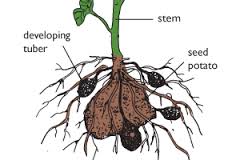
Tubers reproduce by asexual reproduction by sprouting off a new organisms from the original tuber's eye. Which of the following organisms reproduces in this fashion?
a)
Strawberries
b)
Potatoes
c)
Onions
d)
Hydra
9.
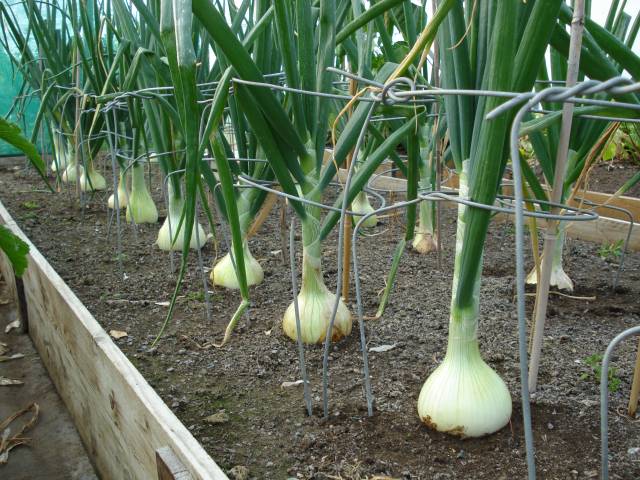
As we already know, onions reproduce asexually. How does an onion reproduce asexually?
a)
The parent onion sends out tendrils which can take root and grow into new organisms. This type of asexual reproduction can be called a runner.
b)
The onion has eyes, within which the eyes of an onion create a new organism by sprouting out from the original tuber.
c)
The parent onion is a bulb, within which the onion parent bulbs create lateral buds or shoots, which can grow into new bulbs and grow into separate organisms.
d)
Onions reproduce by splitting them in half, and planting them into the soil. This is an asexual process known as fragmentation by regeneration.
10.
Which of the following is/are disadvantages of asexual reproduction?
a)
It allows the organisms to crowd out the other organisms that reproduce more slowly. As we have seen, bacteria can reproduce very rapidly in a short time!
b)
Most organisms that reproduce by asexual reproduction do not live in ideal conditions. Most of the reproduction is kept in check by limited resources, predators, and their own waste.
c)
Organisms that tend to reproduce by asexual reproduction are not able to fend off diseases, unlike organisms that are able to reproduce sexually. Asexual reproduction involves 1 parent and one source of DNA, within which asexual organisms are not able to fend off diseases
d)
Both ideas are correct, within which most organisms that reproduce by asexual reproduction do not live in ideal conditions, and diseases can be passed on by the identical parent offspring.
11.
_______________is the process of manipulating an organism’s genetic material in an effort to produce desired traits?
a)
asexual reproduction
b)
sexual reproduction
c)
genetic engineering
d)
genesis
12.
_________________ are plants that have been genetically engineered by human processes by identify the genes for desirable traits and insert them into new plants?
a)
Heterogenic Plants
b)
Transgender Plants
c)
Transgenic Plants
d)
Homogenic Plants
13.
What are two methods for producing transgenic plants? Hint, this can be found on the first video segment of the STEM lab activity.
a)
Biolistic Transformation and Gene Splicing
b)
Geoenginnering Transformation and Genotype Splicing
c)
Genetic Transformation and Phenotype Splicing
d)
None of these answers are correct.
14.
Biolistic Transformation can be described as:
a)
the process by which a favorable trait can be injected into a seed by using tungsten or gold. After, the gene can be inserted into the plants DNA by high pressure.
b)
the process by which microbiologist cut out part of the DNA in a gene, and adding new more favorable DNA in its place.
15.
Gene splicing can be described as:
a)
the process by which a favorable trait can be injected into a seed by using tungsten or gold. After, the gene can be inserted into the plants DNA by high pressure.
b)
the process by which microbiologist cut out part of the DNA in a gene, and adding new more favorable DNA in its place.
16.

What are the two steps within which the cell cycle that allow for the everyday function of the cell, and cell division?
a)
Mitosis and Meiosis
b)
Mitosis and Cytokinesis
c)
Interphase and Mitosis
d)
Interphase and Cytokinesis
17.
Most of the cell cycle consists of _____________ the time between cell division? Also, the cell performs everyday activities including cellular respiration and cellular regulation. Also, DNA replication occurs during this stage of the cell cycle?
a)
Mitosis
b)
Meiosis
c)
Interphase
18.

Which of the following is the term for cell division within which the cell is about to split into two identical daughter cells? This occurs due to exact DNA replication...
a)
Meiosis
b)
Interphase
c)
G1 Stage
d)
Mitosis
19.

In general, what causes cancer within living things?
a)
Cancer can be caused by the uncontrollable cell growth within a living thing. This uncontrollable cell growth goes undetected, and is too late when cells find the cells that are reproducing uncontrollably.
b)
Cancer can be caused by cells that have not fully grown within living things. In turn, these cells tend to stay stuck together creating tumors in living things.
c)
Cancer is usually inherited by your parents, thus cancer cells are already in living things that have similar genetics as their parents that have cancer.
20.

According to the image, what percent of the cell is in mitosis?
a)
10 Percent of the cell is in mitosis
b)
50 Percent of the cell is in mitosis
c)
90 Percent of the cell is in mitosis
d)
The cell is always conducting mitosis.
21.
All cells must undergo mitosis to reproduce new cells?
a)
True - All cells within living things must undergo mitosis to create new cells.
b)
False - Brain and nerve cells do not undergo mitosis to create new cells.
22.
What happens if a cell, most anyway, is not doing it's job, like making a good copy of it's D.N.A. or growing correctly?
a)
The cell continues to perform tasks to try and keep the living organisms alive
b)
The cell will eventually divide, within which the cell will fix itself during the DNA replication phase.
c)
The cell will eventually die off, or other cells will destroy the living cell to maintain homeostasis in living things.
23.

What are cancer cells?
a)
Cells you caught from another person.
b)
Cells that are infected with a virus.
c)
Cells that are inherited from parents
d)
Cells that are growing out of control, and keep reproducing mutated cells.
24.
What is a tumor within a living thing?
a)
Cells that have self destructed through Apoptosis
b)
Cancer cells that are performing Mitosis too quickly.
25.
As we discussed, chemotherapy is a way for living things to fight cancer cells. Why does a person's hair fall out while receiving chemotherapy treatments?
a)
Chemotherapy is a type of treatment that causes extreme stress on an individual. Thus, a person loses their hair due to this stress.
b)
Chemotherapy is a type of treatment that targets the cells that are reproducing uncontrollably, and like cancer cells, hair cells reproduce very quickly.
26.
The process of the cell cycle where the nucleus divides to create two identical nuclei is called __________.
a)
Interphase
b)
Mitosis
c)
Meiosis
d)
Mutation
27.
Which of these is the part of the cell that contains hereditary material, aka DNA genetic material?
a)
interphase
b)
chromosomes
c)
embryo
d)
zygote
28.

The final step in the mitosis process for animal cells is _________, within which the spindle fibers dissolves and nuclear envelopes form around the chromosomes in both cells.
a)
Telophase
b)
Cytokinesis
c)
Metaphase
d)
Anaphase
29.

This phase in mitosis allows the chromosomes to "condense," or become so tightly wound that you can see them under a microscope. The wall around the nucleus, called the nuclear envelope, disappears. Spindles also form and attach to chromosomes to help them move.
a)
Prophase
b)
Metaphase
c)
Anaphase
d)
Telophase
30.

During this phase of mitosis, the two sister chromatids of each chromosome separate, resulting in two sets of identical chromosomes.
a)
Prophase
b)
Metaphase
c)
Anaphase
d)
Telophase
31.

Why do cells divide within living things?
a)
Cells must divide in order for living things to grow and develop.
b)
cells must divide in living things to repair damaged cells.
c)
Cells must divide to replace older, worn out cells.
d)
All of the answers are correct. Cells divide for living things to grow and develop, to repair damaged cells, and to replace older worn out cells.
32.

During this phase of mitosis, the chromosomes line up in the center of the cell. The chromosomes line up in a row, one on top of the next. The spindle fibers line up the chromosomes by attaching to the chromosomes centromeres.
a)
Prophase
b)
Metaphase
c)
Anaphase
d)
Telophase
33.
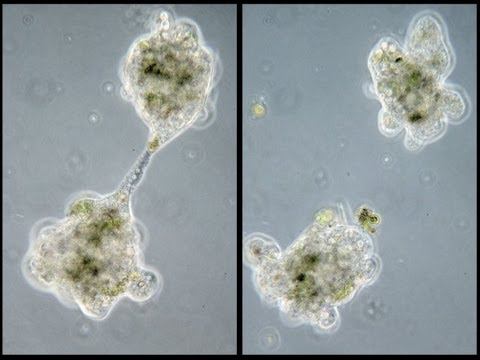
______________ is the type of reproduction that involves 1 parent, and performs exact DNA replication? During this type of reproduction, there is no fertilization. Also, cells undergo the cell division called mitosis during this type of reproduction.
a)
asexual reproduciton
b)
sexual reproduction
c)
binary fission
d)
sporulation
100 %

