
 Worksheets
DNA and Genetics Review
Total questions: 50
Worksheet time: 50mins
Name
Class
Date
1.
The DNA is found in the nucleus of what type of organisms?
a)
Bacteria
b)
Eukaryotes
c)
Prokaryotes
d)
Viruses
2.
Which of the following is a base that is NOT contained in DNA?
a)
Adenine
b)
Thymine
c)
Uracil
d)
Guanine
3.
Chargraff's Rule says that
a)
Adenine will be equal to Thymine
b)
Cytosine will be equal to Thymine
c)
Uracil will be equal to Guanine
d)
Adenine will be equal to Cytosine
4.
Which is NOT a function of DNA?
a)
to signal when an organisms is in need of a basic necessity
b)
to carry genetic information from one generation to the next
c)
to determine the characteristics and traits of an organism
d)
easily copied for the process of cell division
5.
DNA is copied during
a)
Translation
b)
Transcription
c)
Reproduction
d)
Replication
6.
The enzyme that attaches the complimentary base pairs to the original strand of DNA is called
a)
helicase
b)
polymerase
c)
replicase
d)
synthase
7.
The enzyme that unzips the DNA to prepare for replication
a)
helicase
b)
replicase
c)
polymerase
d)
synthase
8.
A mutation that replaces one nitrogen base with a different one is called
a)
substitution
b)
insertion
c)
deletion
d)
inversion
9.
DNA and RNA are macromolecules in the category of
a)
Proteins
b)
Lipids
c)
Nucleic Acids
d)
Carbohydrates
10.
DNA is a polymer made of monomers called
a)
Nucleotides
b)
Proteins
c)
Amino Acids
d)
Lipids
11.
Which sequence of DNA bases would pair with this partial strand
ATG TGA CAG
ATG TGA CAG
a)
ATG TGA CAG
b)
TAC ACT GTC
c)
GTA AGT GAC
d)
CAT TCA CTG
12.
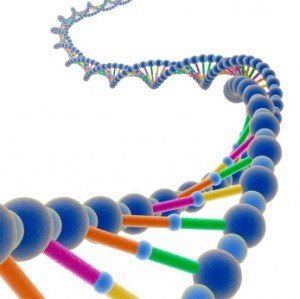
Which of the following best describes a DNA molecule?
a)
double helix
b)
contains ribose
c)
made of amino acids
d)
contains Uracil
13.
Which of the following units are repeatedly joined together to form a strand of DNA?
a)
amino acids
b)
nucleotides
c)
fatty acids
d)
polysaccharides
14.

In a molecule of double-stranded DNA, the amount of Adenine present is always equal to the amount of
a)
cytosine
b)
guanine
c)
thymine
d)
uracil
15.
Guanine bonds with ______________.
a)
Adenine
b)
Guanine
c)
Cytosine
d)
Thymine
16.
Why is DNA important?
a)
it is very small and very complicated
b)
it's in everything
c)
it serves as the blueprint for traits of all living things
d)
because we eat it every day for energy
17.
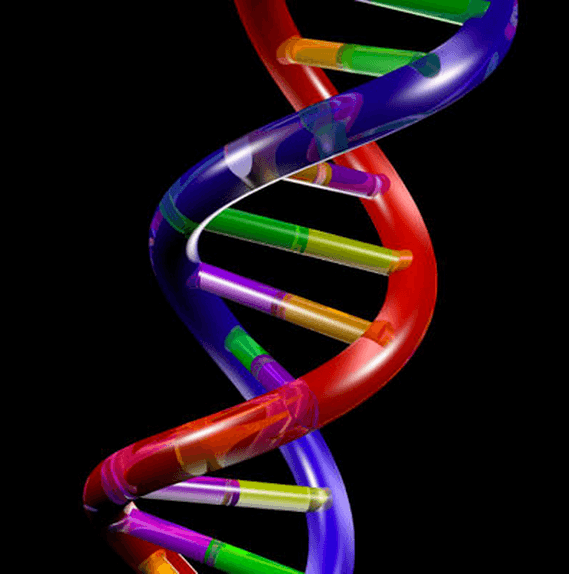
What determines the code, or information, of a DNA molecule?
a)
the shape (structure) of the nitrogen bases
b)
the order (sequence) of the nitrogen bases
c)
the color of the nitrogen bases
d)
the frequency (number) of nitrogen bases
18.
Which 2 molecules form the sides (backbone) of the DNA ladder?
a)
deoxyribose sugar and adenine
b)
deoxyribose sugar and a hydrogen bond
c)
deoxyribose sugar and the nucleus
d)
deoxyribose sugar and phosphate
19.
Which organelle is DNA usually found in?
a)
cell membrane
b)
vacuole
c)
chloroplast
d)
nucleus
20.
What are the three components of a nucleotide?
a)
sugar, hydrogen, nitrogen base
b)
sugar, oxygen, nitrogen base
c)
sugar, phosphate, nitrogen base
d)
sugar, phosphate, protein
21.
Any change in the sequence of nucleotides in DNA or RNA is known as...
a)
A mutation
b)
A transition
c)
An antinucleotide
d)
A transfer
22.
A specific sequence of DNA nucleotides that codes for a specific protein is known as..
a)
A gene
b)
A nucleotide
c)
A polypeptide
d)
An allele
23.
What does DNA stand for?
a)
Ribonucleic Acid
b)
Deoxyribonucleic Acid
c)
Both of these
d)
None of these
24.
Which series is arranged in order from largest to smallest in size?
a)
chromosome, nucleus, cell, DNA, nucleotide
b)
cell, nucleus, chromosome, DNA, nucleotide
c)
nucleotide, chromosome, cell, DNA, nucleus
d)
cell, nucleotide, nucleus, DNA, chromosome
25.
A mass of cancer cells is called a
a)
tumor
b)
chromosome
c)
mutation
d)
phenotype
26.
What is Rosalind Franklin known for?
a)
starting the race to sequence the human genome
b)
discovering a transforming principle
c)
building the first accurate model of DNA
d)
taking photos of crystallized DNA fibers with x-rays
27.
What does genome refer to?
a)
an organism's complete sequence of DNA
b)
a type of genetic mutation
c)
the acquired traits of an organism
d)
inserting the DAN of one organism into the DNA or another organism
28.
When treating cancer and giving a patient a strong drug with many side effects. What is this called?
a)
Radiation
b)
Surgery
c)
Chemotherapy
29.
What genotype would be homozygous A
a)
iAiB
b)
IBiA
c)
iAiA
d)
iAi
30.
What genotype would a person with type O blood have?
a)
iAiB
b)
iBiB
c)
iAi
d)
ii
31.
What is the phenotype for this blood type. iAiB
a)
A
b)
B
c)
AB
d)
O
32.
What scientists are know for discovering DNA?
a)
Gregor Mendal
b)
Robert Hooke
c)
Watson & Crick
d)
Rosalind Franklin
33.
How many chromosomes are in each cell?
a)
46
b)
23
c)
45
d)
47
34.
A gene gives the instructions for protein synthesis. Which type of molecule is responsible for "reading"the instructions and then creating the protein?
a)
ATP
b)
RNA
c)
DDT
d)
DNA
35.
The process of converting DNA into RNA is known as..
a)
Translation
b)
Transcription
c)
Duplication
d)
Replication
36.
The form of RNA that carries the genetic sequence from the nucleus into the cytoplasm.
a)
mRNA
b)
rRNA
c)
tRNA
d)
snRNA
37.
The type of mutation where a nucleotide is replaced with a different nucleotide.
a)
Substitution Mutation
b)
Insertion Mutation
c)
Deletion Mutation
d)
Transition Mutation
38.
A mutation where one or more nucleotides are removed from the genetic sequence.
a)
A substitution
b)
A deletion
c)
An insertion
d)
A transversion
39.
The form of RNA that carries amino acids and contains anticodons.
a)
mRNA
b)
rRNA
c)
tRNA
d)
snRNA
40.
The simple organelle that is responsible for reading RNA and converting it into a protein.
a)
The ribosome
b)
The nucleus
c)
The amino acid
d)
The transcriptase
41.
A group of 3 RNA nucleotides that codes for a specific amino acid.
a)
A codon
b)
An anticodon
c)
An amino acid
d)
A Cyclophan
42.
Translation takes place in the
a)
ribosome
b)
chloroplast
c)
nucleus
d)
mitochondria
43.
Brings the amino acids to the ribosome
a)
mRNA
b)
tRNA
c)
rRNA
d)
DNA
44.
When does DNA replication happen?
a)
Before Mitosis begins
b)
During prophase
c)
During metaphase
d)
During anaphase
45.

The process represented in the diagram produces a molecule that is complementary to the template strand of DNA. What type of molecule is produced?
a)
New DNA
b)
Polypeptide
c)
Messenger RNA
d)
Carbohydrate
46.
offspring produced from two different parent types, breeds, or species
a)
hybrid
b)
fertilize
c)
DNA
47.
male lion and female tiger
a)
liger
b)
leopon
c)
jagulep
48.

How many of II-1 and II-2's girls have Huntington's?
a)
1
b)
2
c)
3
d)
4
49.

Which gender can be carriers of colorblindness and not have it?
a)
Just males
b)
Just females
c)
Both genders
50.

Give the genotype for person III-3
a)
GG
b)
Gg
c)
gg
100 %

