
 Worksheets
Atoms Review
Total questions: 54
Worksheet time: 37mins
Name
Class
Date
1.
all matter is made of what
a)
energy
b)
atoms
c)
electrons
d)
compounds
2.
The positive particles of an atom are
a)
electrons
b)
positrons
c)
neutrons
d)
protons
3.
the central region of an atom where its neutrons and protons are is its
a)
nucleus
b)
electron cloud
c)
core
d)
center
4.
an atom with atomic number 6 would have how many protons
a)
6
b)
12
c)
3
d)
cannot be determined
5.
Particles in an atom that are neutral and have no charge are
a)
negatrons
b)
electrons
c)
neutrons
d)
protons
6.
True or False? Neutrons have a negative charge
a)
True
b)
False
7.
What is the atomic number for an element with three protons?
a)
2
b)
1
c)
3
d)
6
8.
A particle that moves around the nucleus is a(n)...
a)
Proton
b)
Neutron
c)
Electron
d)
Quark
9.
In the modern periodic table elements are arranged by:
a)
atomic mass
b)
atomic number
c)
valence electrons
d)
number of isotopes
10.

What does the 1.00794 stand for?
a)
Hydrogen
b)
atomic number
c)
atomic mass
d)
atomic explosion
11.
Particles in an atom that are neutral and have no charge are
a)
negatrons
b)
electrons
c)
neutrons
d)
protons
12.
The particles that are found in the nucleus of an atom are
a)
neutrons and electrons
b)
electrons only
c)
protons and neutrons
d)
protons and electrons
13.
Neutrons are _______________ particles.
a)
negative
b)
positive
c)
neutral
d)
cows
14.
The smallest part of an element is known as the
a)
Periodic Table
b)
Atom
c)
Group
d)
Period
15.
Where are neutrons located in the atom?
a)
shells/orbitals
b)
rings
c)
center
d)
nucleus
16.
How does the size of a proton compare to the size of a neutron?
a)
larger
b)
smaller
c)
equal
17.

These particles orbit around the nucleus of an atom. What are they called?
a)
electrons
b)
protons
c)
neutrons
d)
photons
18.

What is the overall charge of this atom?
a)
+3
b)
-3
c)
0
d)
+1
19.
The atomic number of an elements is the total number of which particles in the nucleus?
a)
neutrons
b)
protons
c)
electrons
d)
protons and electrons
20.
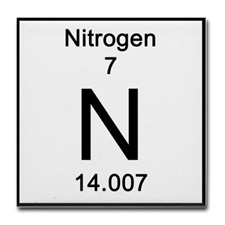
What is the number of protons that the element in this image contain?
a)
14
b)
7
c)
15
d)
18
21.
The first energy level can hold up to how many electrons?
a)
8
b)
4
c)
2
d)
5
22.

What is the atomic mass of "F"
a)
9
b)
18
c)
17
d)
19
23.
an atom with atomic number 6 would have how many protons
a)
6
b)
12
c)
3
d)
cannot be determined
24.
An atoms overall charge is
a)
positive
b)
depends on its mood
c)
neutral
d)
negative
25.
Where are electrons of an atom found?
a)
Nucleus
b)
Electron Cloud
c)
Some are in the nucleus and some in the electron cloud.
d)
They are moving everywhere.
26.
"C" is the element symbol for which element?
a)
calcium
b)
carbon
c)
chlorine
d)
cadmium
27.
What is the atomic symbol for sodium?
a)
Na
b)
So
c)
NaCl
d)
S
28.
Most of the mass in an atom is concentrated in the...
a)
electrons
b)
nucleus
c)
protons
d)
empty space
29.
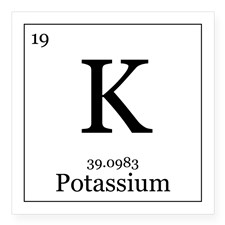
How many neutron are in the atom "K"?
a)
20
b)
2
c)
39
d)
12
30.
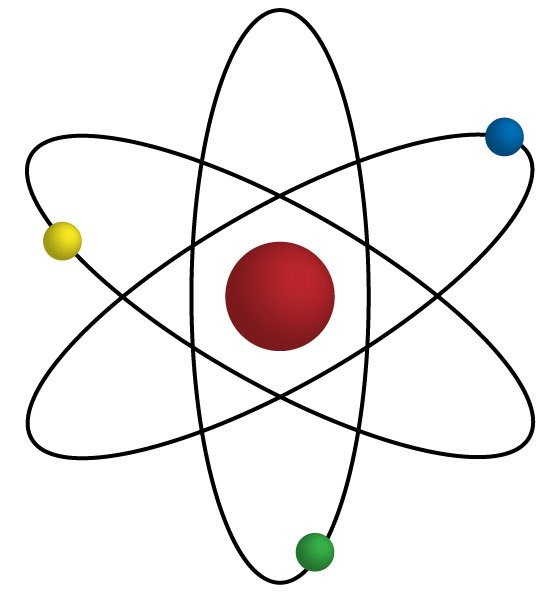
What are the 3 particles that make-up the atom?
a)
protons, neutrons, and isotopes
b)
neutrons, isotopes, and electrons
c)
positives, negatives, and electrons
d)
protons, neutrons, and electrons
31.
Ions are:
a)
atoms with a positive or negative charge
b)
atoms with no charge
c)
atoms with ONLY a positive charge
d)
atoms with ONLY a negative charge
32.
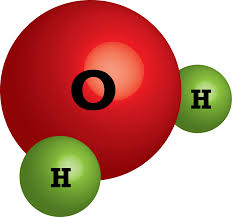
How many atoms of Hydrogen are in this compound
a)
1
b)
2
c)
3
d)
4
33.

How many atoms of Oxygen are in this compound?
a)
1
b)
2
c)
3
d)
4
34.
How many electrons should Lithium have around its Lewis dot model?
a)
1
b)
2
c)
3
d)
4
35.
How many electrons should Beryllium have around its Lewis dot model?
a)
1
b)
2
c)
3
d)
4
36.
How many electrons should Nitrogen have around its Lewis dot model?
a)
1
b)
3
c)
4
d)
5
37.
How many electrons should Carbon have around its Lewis dot model?
a)
1
b)
3
c)
4
d)
5
38.
How many electrons should Neon have around its Lewis dot model?
a)
5
b)
6
c)
7
d)
8
39.
Which of the following has a full valence shell?
a)
Oxygen
b)
Neon
c)
Barium
d)
Carbon
40.

What's a valence electron?
a)
electrons in the second energy level
b)
electrons in the outermost energy level
c)
the atomic number
d)
electrons in the first level
41.

How many electrons does a Copper atom have?
a)
63
b)
29
c)
92
d)
34
42.

The blue elements are called
a)
metals
b)
nonmetals
c)
metalloids
d)
noble gases
43.

The elements along the staircase are called
a)
metals
b)
nonmetals
c)
metalloids
d)
noble gases
44.
All the elements on the right side of the periodic table are called..
a)
Metals
b)
Metalloid
c)
Nonmetals
45.
Each horizontal row in the periodic table is called a
a)
group
b)
period
c)
cluster
d)
unit
46.
Each column or family in the periodic table is called a
a)
period
b)
group
c)
cluster
d)
unit
47.
The family in the periodic table that contains the most reactive metals is the_______
a)
Alkaline Earth Metals
b)
Transition Metals
c)
Alkali Metals
d)
Other Metals
48.

In which region would the nonmentals be found?
a)
1
b)
4
c)
3
d)
5
49.

In which region would the most reactive elements be found?
a)
1
b)
4
c)
5
d)
3
51.
Each column in the periodic table is called a
a)
period
b)
group
c)
cluster
d)
unit
51.
Each column in the periodic table is called a
a)
period
b)
group
c)
cluster
d)
unit
52.

Which letter in the periodic table above represents a transition metal?
a)
A
b)
B
c)
G
d)
D
53.

Which letter on the periodic table above represents an alkali elements?
a)
E
b)
D
c)
A
d)
B
54.

Which color on the periodic table above represents the halogens?
a)
purple
b)
yellow
c)
blue
d)
green
100 %

