
 Worksheets
LGB: Cell Theory
Total questions: 25
Worksheet time: 12mins
Name
Class
Date
1.

According to cell theory, where did this cell come from?
a)
another living cell
b)
energy from sun
c)
a multicellular organism
d)
the nonliving environment
2.

Robert Hooke, Anton van Leeuwenhoek, Theodor Schwann, Rudolf Virchow, and Matthias Schliden were all responsible for what theory?
a)
The Theory of Gravity
b)
The Theory of Relativity
c)
The Cell Theory
d)
The Theory of Continental Drift
3.
This scientist concluded that animals and, in fact, all living things are made of cells:
a)
Hooke
b)
Leeunwenhoek
c)
Schleiden
d)
Schwann
4.
This scientist concluded that plants are made of cells:
a)
Virchow
b)
Schwann
c)
Schleiden
d)
Leeunwenhoek
5.
What tool do you use to view the cells?
a)
metric ruler
b)
centrifuge
c)
microscope
d)
pipette
6.
Which of the following is NOT a cell theory.
a)
All non-living things are made of cells
b)
All cells come from pre-existing cells
c)
Cells are the basic unit of structure and function of all living things
7.
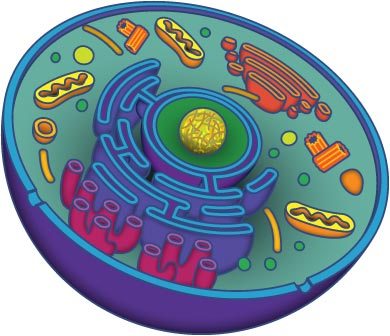
All living things are made up of...
a)
cells
b)
cell tissues
c)
organ
d)
organ systems
8.
What is the basic structural and functional unit of all living things?
a)
atom
b)
cell
c)
molecule
d)
human
9.
All cells are produced ____________.
a)
from nothing
b)
from other cells
10.
Hold the slide in place on the stage
a)
Stage
b)
Stage Clips
c)
Aperature
d)
Light Source
11.
Holds objective lenses; Rotates to change objectives
a)
Arm
b)
Base
c)
Revolving Nosepiece
d)
Diaphragm
12.
Moves the stage slightly to sharpen the image
a)
Body Tube
b)
Course Focus Knob
c)
Aperature
d)
Fine Focus Knob
13.
Long tube; holds ocular lens and revolving nosepiece
a)
Base
b)
Arm
c)
Diaphragm
d)
Body Tube
14.
Supports the microscope and located at the bottom
a)
Base
b)
Arm
c)
Body Tube
d)
Stage
15.
Place where slide is placed on while being viewed
a)
Base
b)
Stage Clips
c)
Diaphragm
d)
Stage
16.
Moves stage up and down for focusing; large amounts
a)
Fine Focus Knob
b)
Large Focus Knob
c)
Course Focus Knob
d)
Small Focus Knob
17.
What will be the total magnification if the ocular lens is 10X and the objective lens is 40X?
a)
40X
b)
10X
c)
100X
d)
400X
18.
What will be the total magnification if the ocular lens is 10X and the objective lens is 10X?
a)
10X
b)
100X
c)
1000X
d)
1X
19.

Piece 7
a)
Ocular Lens
b)
Objective Lens
c)
Base
d)
Arm
20.

Number 3
a)
Ocular Lens
b)
Objective Lens
c)
Diaphragm
d)
Base
21.

Number 8
a)
Base
b)
Stage
c)
Tube
d)
Arm
22.

Number 10
a)
Stage
b)
Stage Clips
c)
Diaphragm
d)
Base
23.

Number 12
a)
Course Adjustment
b)
Fine Adjustment
c)
Small Adjuster
d)
Large Adjuster
24.

Number 6
a)
Insulator
b)
Objective Lens
c)
Ocular Lens
d)
Light
25.
who created the idea of the cell
a)
hooke
b)
leeuwenhoek
c)
virchow
d)
schwann
100 %

