
 Worksheets
Ch. 11 The Nation Grows and Prospers
Total questions: 35
Worksheet time: 32mins
Name
Class
Date
1.
Rapid movement of people from the rural areas to cities in search of industrial jobs was known as:
a)
Industrialization
b)
Urbanization
c)
Depopulation
d)
Migration
2.
Where did the Industrial Revolution begin?
a)
Germany
b)
France
c)
Great Britain
d)
United States
3.
Before the Industrial Revolution all products were created by
a)
Factories
b)
Hand
c)
Slaves
d)
Royalty
4.
What was the Industrial Revolution?
a)
Changes and advancements in government
b)
Changes and advancements in militarism
c)
Changes and advancements in religion
d)
Changes and advancements in the production of goods
5.
What was the first industry affected by the Industrial Revolution?
a)
Automobile
b)
Railroad
c)
Textile
d)
Telephone
6.
The political period after the war of 1812, which was dominated by the Democratic - Republican Party and marked by high American morale, is called what?
a)
American System
b)
Colonial Period
c)
Expansion Era
d)
Era of Good Feelings
7.
This Presidential policy informed Europe that we would not tolerate interference
in the Western Hemisphere.
in the Western Hemisphere.
a)
Missouri Compromise
b)
Era of Good Feelings
c)
Monroe Doctrine
d)
Era of Expansion
8.

What was the Erie Canal used for?
a)
Disney cruises
b)
Test battle ships
c)
Drinking water for the city of Buffalo
d)
Ship goods faster and cheaper to the Atlantic Ocean
9.

What is the name of the
man-made waterway that connects Lake Erie to the Hudson River
and then to the Atlantic Ocean
man-made waterway that connects Lake Erie to the Hudson River
and then to the Atlantic Ocean
a)
Panama Canal
b)
Buffalo River
c)
Niagara Falls
d)
Erie Canal
10.
Which of the following inventions would be best for the Erie Canal?
a)
Cotton Gin
b)
Steamboat
c)
Steam Locomotive
d)
Mechanical Reaper
11.
What was the impact or effect of the Steamboat?
a)
It made air transportation faster
b)
It increased the need for slave labor
c)
It made land transportation faster
d)
It made water or river transportation faster
12.
The Erie Canal, Steamboat, and Steam Locomotive all helped people move _________ cheaper and faster in an effort to accomplish our Manifest Destiny.
a)
north
b)
east
c)
west
d)
south
13.

His steamboat, the Clermont, allowed passengers to travel upstream ushering in a new age of river travel.
a)
Eli Whitney
b)
Robert Fulton
c)
F. Lowell
d)
Slater
14.

This invention by Eli Whitney made it possible to produce items in large numbers by standardizing parts to allow for easier replacement
a)
Interchangeable Parts
b)
Cotton Gin
c)
Steamboat
d)
Factory System
15.

The invention of the cotton gin increased the efficiency of cotton production and actually increased the demand for this
a)
Water Power
b)
Coal
c)
FIre
d)
Slaves
16.

He began the factory system in which all manufacturing steps are combined in one place
a)
Eli Whitney
b)
Robert Fulton
c)
Francis Lowell
17.
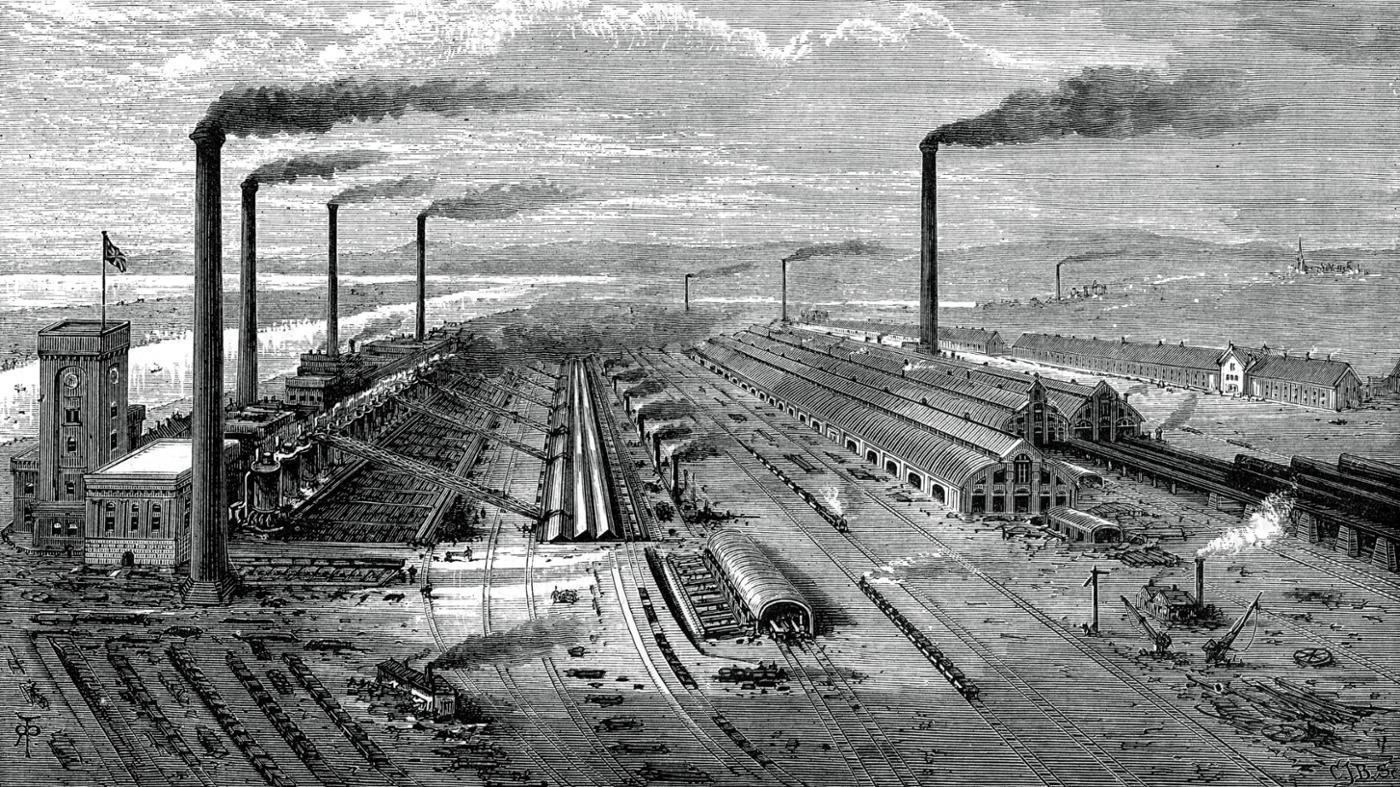
What is the area of the United States where the Industrial Revolution began
a)
South
b)
Midwest
c)
New England
d)
South
18.
A turnpike is a ________________________.
a)
road on which tolls are collected
b)
water power source
c)
tool used for agriculture
d)
steamboat
19.
Corduroy roads were made up of ________________.
a)
the fabric corduroy
b)
dirt
c)
logs laid side by side
d)
wood chips
20.
The government-funded road connecting Ohio to the East was called the __________________.
a)
National Road
b)
Ohio Road
c)
East Road
d)
International Road
21.
A problem with river travel was _______________.
a)
moving upstream against the current was slow
b)
it was uncomfortable
c)
seasickness
d)
less popular
22.
Which one is NOT a reason how steamboats changed river travel?
a)
transportation easier and more comfortable
b)
shipping goods were cheaper and faster
c)
river cities grew
d)
shipping goods were more expensive
23.
What is a canal?
a)
steamboat
b)
waterway built by people
c)
immigrant
d)
explorer
28.
Which region benefited most from protective tariffs on industry?
a)
North
b)
South
c)
East
d)
West
25.
What did the Monroe Doctrine tell European nations?
a)
Stop colonizing in the Western Hemisphere!
b)
Stop colonizing in the Eastern Hemisphere!
c)
Get out of the USA!
d)
Stop trading with Great Britain!
26.
Protective tariffs are taxes placed on imported goods. They are designed to protect
a)
American businesses
b)
American farmers
c)
American banks
d)
American gov’ts
27.
How would a typical southern farmer feel about protective tariffs?
a)
They would like protective tariffs because they protect their crops
b)
They would dislike protective tariffs because they reduce the markets for them to sell their crops
c)
They would like protective tariffs because they build foreign markets free of taxes
d)
The would dislike protective tariffs because they protect businesses, not farmers
28.
Which region benefited most from protective tariffs on industry?
a)
North
b)
South
c)
East
d)
West
29.
Bolivar led independence movements all over.......
a)
Latin America
b)
United States
c)
Canada
d)
Europe
30.
Who was the Father of Mexican independence?
a)
Simon Bolivar
b)
Jose de San Martin
c)
Miguel Hidalgo
d)
Mr. Robbie Wilson
31.
Who led a slave revolt against French domination in Haiti?
a)
Toussant Louverature
b)
Michael Jackson
c)
Mr. Wilson
d)
Simon Bolivar
32.
The American and French Revolutions influenced what area to fight for their own political independence?
a)
Canada
b)
Russia
c)
South America
33.
One way in which Toussaint L'Ouverture, Simón Bolívar, and José de San Martín are similar is that they all were
a)
industrial labor reformers
b)
democratically elected leaders
c)
leaders of independence movements
d)
supporters of mercantile policies
34.
Which statement about the French and Latin American revolutions is accurate?
a)
People in both regions were fighting for freedom from England.
b)
Strong French monarchs led revolutions in Latin America.
c)
Revolutions in both regions were based on the idea of natural rights.
d)
The French Revolution was modeled after revolutions in Latin America
35.

Based on a comparison of these maps of South America, which conclusion is accurate?
a)
Between 1790 and 1828, South American political boundaries remained unchanged except for Brazil.
b)
Spain continued to gain South American colonies in the 19th century.
c)
All of South America was independent by 1828.
d)
Many regions of South America gained their independence between 1790 and 1828.
100 %

