
 Worksheets
Feedback loops and Water Cycle
Total questions: 51
Worksheet time: 30mins
Name
Class
Date
1.
Failure to maintain homeostasis could result in:
a)
lack of internal balance
b)
eventual death
c)
difficulty carrying on metabolism
d)
all three
2.
The two types of feedback systems that help organisms maintain homeostasis are:
a)
positive and negative
b)
receptor and effector
c)
static and dynamic
d)
minor and major
14.
Maintaining body temperature is an example of a:
a)
negative feedback loop
b)
positive feedback loop
4.
The process of childbirth is an example of:
a)
negative feedback loop
b)
positive feedback loop
5.
The "cause" for something to happen is the
a)
response
b)
effect
c)
stimulus
d)
homeostasis
6.
The "effect" of a given stimulus is the...
a)
response
b)
stimulus
c)
cause
d)
result
7.
When you get cut, your skin cells release hormones that signal platelets to come and stop the bleeding. Platelets then release more hormones that signal even more platelets to help stop bleeding. The hormone signals continue until the cut is closed.
a)
Positive Feedback Response
b)
Negative Feedback Loop
8.
When glucose levels in the blood rise, your brain sends a signal to your pancreas. The pancreas releases insulin, which opens channels in cell membranes to allow glucose to enter the cell, lowering blood sugar levels.
a)
Positive Feedback Response
b)
Negative Feedback Loop
9.
Rapid growth during puberty causes your body to release more and more growth hormones. As you grow, more and more growth hormones are released until puberty is reached, and then the hormones stop.
a)
Positive Feedback Response
b)
Negative Feedback Loop
15.
If the calcium in your blood decreases below homeostasis levels, a gland in the brain will sense the decrease and send a chemical message to your bones. Your bones will release calcium into the blood, bringing blood calcium levels back up.
a)
Positive Feedback Response
b)
Negative Feedback Loop
16.
As you get dehydrated, your blood becomes thicker and harder to pump. Your kidneys will respond by stopping urine production, sending the water from urine into your bloodstream to thin your blood back to normal level.
a)
Positive Feedback Response
b)
Negative Feedback Loop
12.
What is another word that can be used to describe "homeostasis"?
a)
STABLE
b)
EQUAL
c)
COMPLETE
d)
CORRECT
13.
Negative Feedback Loops:
a)
amplify processes
b)
prevent small changes from getting larger
c)
are initiated during childbirth
d)
are found only in plants
14.
Maintaining body temperature is an example of a:
a)
negative feedback loop
b)
positive feedback loop
15.
If the calcium in your blood decreases below homeostasis levels, a gland in the brain will sense the decrease and send a chemical message to your bones. Your bones will release calcium into the blood, bringing blood calcium levels back up.
a)
Positive Feedback Response
b)
Negative Feedback Loop
16.
As you get dehydrated, your blood becomes thicker and harder to pump. Your kidneys will respond by stopping urine production, sending the water from urine into your bloodstream to thin your blood back to normal level.
a)
Positive Feedback Response
b)
Negative Feedback Loop
17.
Feedback loops are important because they allow organisms and the environment to
a)
change based on new inputs
b)
fall apart
c)
change based on new outputs
d)
maintain balance
18.
Which cycle is driven the most by energy from the sun?
a)
nitrogen
b)
water
c)
phosphorous
d)
carbon
19.
Which term best describes how plants release water in the form of water vapor?
a)
evaporation
b)
precipitation
c)
transpiration
d)
condensation
20.

What part of the water cycle does this picture show?
a)
condensation
b)
precipitation
c)
evaporation
d)
sublimation
21.
Which is the opposite of condensation?
a)
runoff
b)
evaporation
c)
precipitation
d)
transpiration
22.
what is the water division of earth
a)
ocean water 97.5 per cent,freshwater frozen as ice 1.5 per cent and freshwater 1 per cent
b)
ocean water-47%,freshwater 50%,freshwater frozen as ice 3%
c)
ocean water 1%,freshwater frozen as ice-90%,freshwater9%
d)
freshwater-33.33%,freshwater frozen as ice 33.33%,ocean water 33.33%
23.
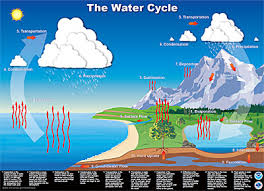
During which stage do clouds form?
a)
condensation
b)
evaporation
c)
precipitation
24.
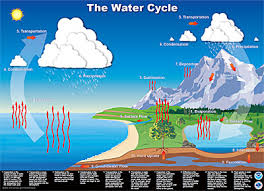
Which stages does liquid water from the ocean turn into water vapor?
a)
condesantion
b)
evaporation
c)
precipitation
d)
run off
25.
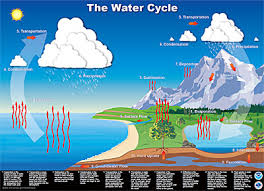
Which stage does ground water try to return to the ocean or soak into the ground?
a)
condensation
b)
evaporation
c)
precipitation
d)
run off
26.
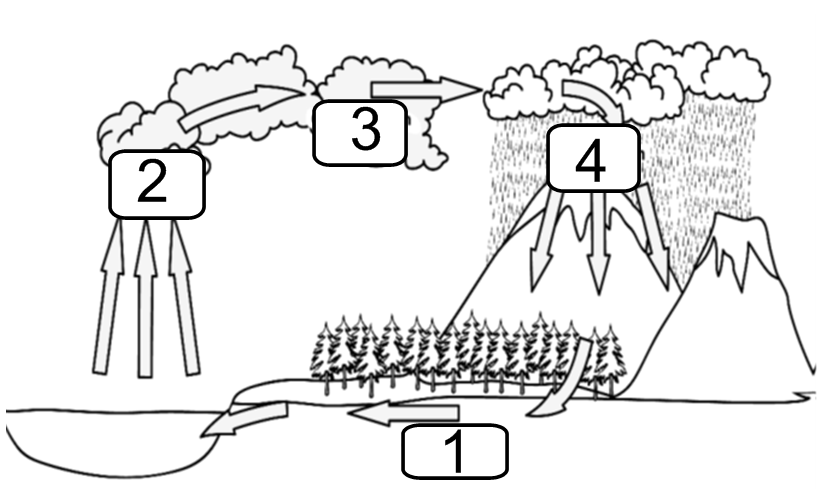
Which stage does the #2 show in the diagram?
a)
condensation
b)
evaporation
c)
precipitation
d)
run off
27.

Which stage does the #3 show in the diagram?
a)
condensation
b)
evaporation
c)
precipitation
d)
run off
28.

What is it called when plants give off water vapor as a waste product?
a)
condensation
b)
evaporation
c)
sublimation
d)
transpiration
29.
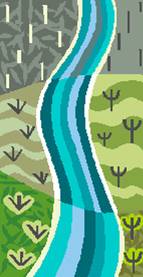
What is water that flows in rivers and streams into the oceans and lakes?
a)
evaporating
b)
condensing
c)
precipitating
d)
runoff
30.
Snow, sleet, hail, and rain are all examples of ________________.
a)
evaporation
b)
condensation
c)
accumulation
d)
precipitation
31.
What is the water cycle?
a)
the 3 forms of water
b)
the movement of water on, above, or below the surface of the Earth
c)
when water melts
d)
when clouds form
32.

Rainwater that flows into streams and rivers from surface areas
a)
spit
b)
erosion
c)
runoff
d)
sand bar
33.
The Earth's greatest source of energy comes from the _________.
a)
precipitation
b)
rotation of its axis
c)
Sun
d)
oceans currents
34.

Which of the following activities use the Least amount of water yearly?
a)
bath
b)
faucets
c)
toilets
d)
clothes washer
35.

Which of the following activities use the most water yearly?
a)
baths
b)
faucets
c)
toilets
d)
clothes
36.
How could someone reduce the amount of water they use yearly?Run the dishwasher multiple times a dayTake hour long showersHave the faucet run while you brush your teeth Wash you clothes one a week.
a)
Run dishwasher multiple times per day
b)
take hour long showers
c)
Have faucet run while you brush your teeth
d)
Wash your cloths once per week.
37.

This graph represent the interactions in the predator prey ecosystem. Based on this image, what type of feedback loops is this one?
a)
Positive
b)
Negative
c)
Intermittent
d)
full loop
38.
What interactions do you see occurring in this graph?
a)
Both animals maintain each other in balance
b)
The hares are going extinct
c)
The lynxes are going extinct
d)
There is no correlation.
39.
How does the hare influence the lynx?
a)
They kill the lynx with over population
b)
The lynx die off because the hare population decreases.
c)
The lynx die off because the hare population increases
d)
The lynx population increases when the hare population increases
40.

What type of feedback loop is represented in the graph above?
a)
Positive
b)
negative
c)
intermittent
d)
full loop
41.
What is the correlation between parts per million (ppm) and temperature changes.
a)
No correlation
b)
b. The highers the temperature the lower the carbon levels
c)
The higher the carbon levels the higher the temperature
d)
The higher the year, the lower the ppm.
42.
If the ppm continue rising, what would be its effect?
a)
The temperature will lower
b)
The temperature will continue to rise
c)
the temperature will level
d)
Global warming is a hoax.
43.
The Geosphere is...
a)
All liquid water on Earth
b)
A 100km thick layer of gases
c)
frozen water on earth
d)
Earths entire solid body
44.
All frozen water on Earth is...
a)
Hydrosphere
b)
Geosphere
c)
Cryosphere
d)
Atmosphere
45.
Bio =
a)
Science
b)
Math
c)
Earth
d)
Life
46.
Geo =
a)
Earth
b)
Sphere
c)
Life
d)
Water
48.
Hydro =
a)
Sphere
b)
Earth
c)
Life
d)
Water
48.
Hydro =
a)
Sphere
b)
Earth
c)
Life
d)
Water
49.
About _____ of the world's water is salty ocean water.
a)
12%
b)
43%
c)
47%
d)
97%
50.
Ecosystems can be changed by natural events or by human actions. Which is an example of a natural event?
a)
forest fire started by campers
b)
toxic smoke pouring out into the atmosphere
c)
building a road through a prairie ecosystem
d)
a volcano erupting
51.
The _________ is the solid part of the earth with three main layers: the core, the mantle, and the crust.
a)
geosphere
b)
hydrosphere
100 %

