
 Worksheets
Q3 Test Review
Total questions: 51
Worksheet time: 31mins
Name
Class
Date
1.
Elements which are shiny, conduct electricity and heat are called
a)
metal
b)
nonmetal
c)
metalloid
d)
nonexistent
2.
In the modern periodic table elements are arranged by:
a)
atomic mass
b)
atomic number
c)
valence electrons
d)
number of isotopes
3.

What does the 1.00794 stand for?
a)
Hydrogen
b)
atomic number
c)
atomic mass
d)
atomic explosion
4.

The atomic number of this pictured element is
a)
28
b)
58.6934
c)
Ni
d)
Nickel
5.
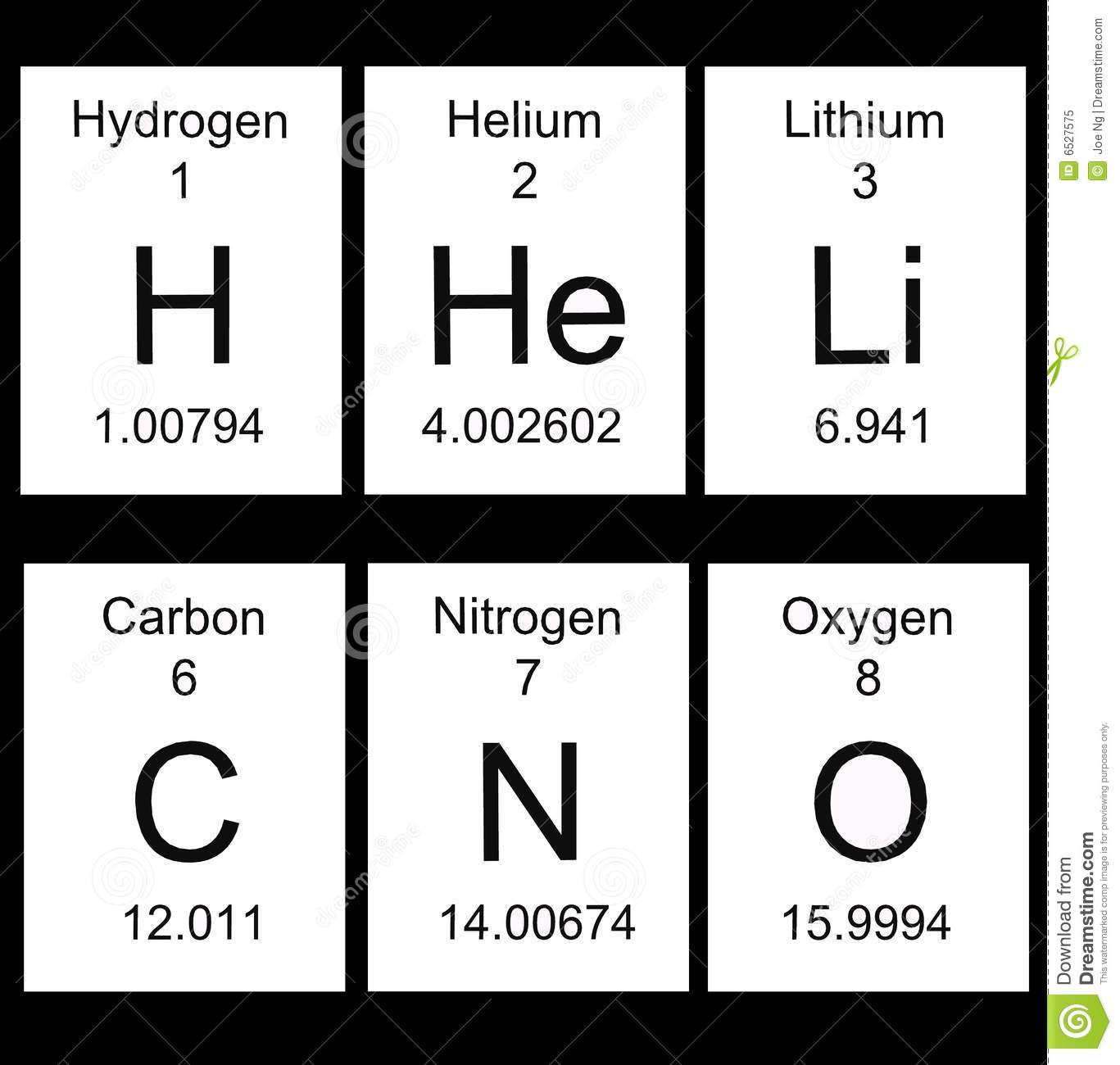
What is the chemical symbol for Lithium?
a)
H
b)
He
c)
Li
d)
N
6.

How many neutrons are in a Gold atom?
a)
79
b)
196
c)
118
d)
275
7.
Non-metals are dull, brittle, and will shatter when hammered.
a)
TRUE
b)
FALSE
8.
What are the vertical columns of the periodic table called (we sometimes
call them families)?
a)
a. groups
b)
b. periods
c)
c. atomic number
d)
d. rows
9.
The horizontal row on the
periodic table is called a(n)
a)
a. group.
b)
b. family.
c)
c. period.
d)
d. atomic number.
10.
Which of the following represents an element?
a)
H2O
b)
H2
c)
NaCl
d)
CaCO3
11.
Salt has a chemical formula of NaCl. Salt is a...
a)
Compound
b)
Element
c)
Mixture
d)
None of the Above
12.
What cannot be broken down into other substances?
a)
Compound
b)
Mixture
c)
Solids
d)
Element
13.
How many elements are represented in the compound?
Na2CO3
Na2CO3
a)
1
b)
2
c)
3
d)
4
14.
A combination of substances that are not chemically combined is called a(n)____________.
a)
mixture
b)
compound
c)
physical
d)
element
15.
An element is made up of only one kind of _____.
a)
isotope
b)
plastic
c)
atom
d)
metal
16.

The blue numbers in the image below are called ___________.
a)
compounds
b)
coefficients
c)
subscripts
d)
chemical formulas
17.
A combination of substances that are not chemically combined is called a(n)____________.
a)
mixture
b)
compound
c)
physical
d)
element
18.
The atmosphere is a _________.
a)
element
b)
mixture
c)
compound
d)
energy
19.
These are mixtures that are the same throughout.
a)
homogeneous mixtures
b)
heterogeneous mixtures
c)
mixed mixtures
20.
These are mixtures that are not the same throughout.
a)
homogeneous mixtures
b)
heterogeneous mixtures
c)
solutions
d)
water
21.
The mass after a physical change, such as ice melting into water, stays the same
a)
True
b)
False
22.

Is this equation balanced?
a)
yes
b)
no
c)
Not enough information
23.
The number in front of a compound or element in a chemical equation is a
a)
Subscript
b)
Coefficient
c)
Superscript
d)
Charge
24.
Which of these is NOT a chemical reaction?
a)
Two liquids mix to give a new color
b)
Two gases react to make a liquid
c)
A liquid and a solid mix to make a gas
d)
Melting an aluminum can
25.

Is this equation balanced?
a)
yes
b)
no
c)
Not enough information
26.
Ca + O2 --> CaO
What coefficient goes in front of CaO?
What coefficient goes in front of CaO?
a)
1
b)
2
c)
3
d)
4
27.
Cu2O + C --> Cu + CO2
What coefficient goes in front of Cu?
What coefficient goes in front of Cu?
a)
1
b)
2
c)
3
d)
4
28.
KNO3 --> KNO2 + O2
What coefficients are needed to balance the reaction?
What coefficients are needed to balance the reaction?
a)
2, 2, 1
b)
2, 3, 2
c)
1, 2, 2
d)
1, 3, 1
29.
An ending substance that is made during a chemical reaction is called
a)
Reactant
b)
Product
c)
Atom
d)
Molecule
30.
The Law of Conservation of Mass states
a)
that matter exists in all states and reacts the same
b)
that matter can only be changed into new substances by introducing a catalyst
c)
that matter exists in the same state throughout any chemical change
d)
that matter cannot be created or destroyed and that the mass of the products must equal the mass of the reactants
31.
The number of atoms on one side of a chemical equation is equal to
a)
a molecule of a substance
b)
the amount of gas released during a chemical reaction
c)
the number of atoms on the other side of a chemical equation
d)
all of the matter that exists in the universe
32.
The arrow in a chemical reaction is known as
a)
yields
b)
mixture
c)
energy
d)
equals
33.
How many O's are in Al₂(SO₄)₃
a)
4
b)
12
c)
7
d)
24
34.
What is the left part of a chemical equation called?
H2 + O → H2O
H2 + O → H2O
a)
Reactants
b)
Products
c)
Yields
d)
Chemical Equation
35.
What kind of chemical reaction is this:
Zn + 2HCl --> ZnCl2 + H2
Zn + 2HCl --> ZnCl2 + H2
a)
Synthesis
b)
Decomposition
c)
Single Replacement
d)
Double Replacement
36.
What kind of reaction is this:
2H2 + O2 --> 2H2O
2H2 + O2 --> 2H2O
a)
Synthesis
b)
Decomposition
c)
Single Replacement
d)
Double Replacement
37.
What is the right part of a chemical equation called?
H2 + O → H2O
H2 + O → H2O
a)
Reactants
b)
Products
c)
Yields
d)
Chemical Equation
38.
What kind of reaction is this:
2H2O2 →2 H2O + O2
2H2O2 →2 H2O + O2
a)
Synthesis
b)
Decomposition
c)
Single Replacement
d)
Combustion
39.
Which of the following is NOT an indication of a chemical reaction?
a)
Formation of a precipitate
b)
Formation of a gas (bubbling)
c)
Heat is given off
d)
Mixing two chemicals together
40.
Compounds break down into simpler substances in this type of reaction.....
a)
Double Replacement
b)
Single Replacement
c)
Synthesis
d)
Decomposition
41.
How many Al atoms are in this compound?
4Al2O3
4Al2O3
a)
2
b)
8
c)
6
d)
4
42.
Occurs when different atoms in two different compounds trade places
a)
Double Replacement
b)
Single Replacement
c)
Synthesis
d)
Decomposition
43.

A gel ice pack getting cold after you put it in the freezer for an hour.
a)
Chemical Change
b)
Physical Change
44.

A copper penny turning greenish after a few years.
a)
Chemical Change
b)
Physical Change
45.

In Elephant toothpaste, what evidence shows a chemical reaction took place?
a)
Formation of a solid
b)
Formation of a gas (oxygen)
c)
Formation of carbon dioxide
d)
Formation of a gas (nitrogen)
46.
A reaction that occurs when two or more elements or compounds combine to make a more complex substance is called
a)
double replacement
b)
decomposition
c)
synthesis
d)
single replacement
47.
Occurs when one element replaces another one in a compound
a)
Synthesis
b)
Single replacement
c)
Double replacement
d)
Decomposition
48.

This image represents
a)
a double replacement reaction
b)
a decomposition reaction
c)
a single replacement reaction
d)
a complex compound reaction
49.

This picture represents
a)
Synthesis
b)
Double Replacement
c)
Single Replacement
d)
Decomposition
50.
A change in which NEW substances are formed.
a)
Chemical change
b)
Physical change
c)
Casual change
d)
Formal change
51.
How many atoms are there TOTAL in:
H2SO4
H2SO4
a)
6
b)
5
c)
7
d)
3
100 %

