
 Worksheets
Universe Unit Test Practice
Total questions: 106
Worksheet time: 4hrs 21mins
Name
Class
Date
1.
How many days does it take Earth to orbit the Sun?
a)
88 days
b)
365 days
c)
216 days
d)
1 day
2.
The amount of time it takes for an object to rotate once
a)
period of revolution
b)
period of rotation
c)
prograde rotation
d)
retrograde rotation
3.
The inner planets are called terrestrial planets because
a)
they are very hot
b)
the can support life
c)
they have massive gas atmosphere
d)
they are very dense and rocky
4.
What are the inner planets composed of?
a)
gases and ice
b)
rock and ice
c)
gases and rock
d)
rock
5.
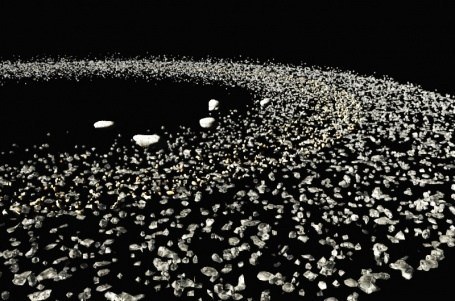
The asteroid belt can be found between which two planets?
a)
Earth and Mars
b)
Venus and Earth
c)
Saturn and Uranus
d)
Mars and Jupiter
6.
What is the correct order of the planets from the sun?
a)
Mercury, Venus, Earth, Mars, Jupiter, Saturn, Uranus, Neptune
b)
Mercury, Earth, Venus, Mars, Jupiter, Saturn, Uranus, Neptune
c)
Mercury, Venus, Earth, Mars, Saturn, Jupiter, Uranus, Neptune.
d)
Mars, Venus, Earth, Mercury, Jupiter, Saturn, Uranus, Neptune.
7.

Cold, huge, gaseous planets are...
a)
Inner planets
b)
Outer planets
c)
Both
d)
Saturn
8.

What is a common characteristic of the inner planets?
a)
Large
b)
Gaseous
c)
Rings
d)
Terrestrial
9.

Which season have the same amount of daylight hours?
a)
Spring & Fall
b)
Winter & Summer
c)
None of the seasons have equal daylight hours
d)
All are equal
10.

What season is letter A in the northern hemisphere?
a)
Winter
b)
Summer
c)
Spring
d)
Fall
11.
If its ____ in the Northern hemisphere, then its summer in the Southern hemisphere.
a)
spring
b)
summer
c)
fall
d)
winter
12.
Day with the most daylight hours in the northern hemisphere
a)
Autumnal Equinox
b)
Summer Solstice
c)
Winter Solstice
d)
Vernal Equinox
13.
Day with the least daylight hours in the northern hemisphere
a)
Autumnal Equinox
b)
Summer Solstice
c)
Winter Solstice
d)
Vernal Equinox
14.
Just as Earth moves around the sun, the moon revolves around Earth. About how many Earth days does it take for the moon to travel around Earth?
a)
about 7 days
b)
about 28 days
c)
about 180 days
d)
about 365 days
15.
They are sometimes called shooting stars
a)
interplanetary dust
b)
asteroids
c)
comets
d)
meteors
16.
Sometimes I am called a "dirty snowball". I have a hydrogen cloud, coma, and a nucleus. I am invisible except when near the sun. What am I?
a)
Asteroid
b)
Star
c)
Meteor
d)
Comet
17.
The tail of a comet usually faces
a)
toward the sun
b)
toward the Earth
c)
away from the Sun
d)
away from the Earth
18.
I am several miles in diameter, originate beyond the outer plants, thought to have struck early Earth, consists of bodies of ice, stone and organic compounds
a)
comet
b)
asteroid
c)
meteor
d)
star dust
19.
We are composed mainly of rock and metal.
a)
comets and stars
b)
stars and meteors
c)
asteroid and meteors
d)
comets and asteroid
20.
I am a rock entering a planet's atmosphere.
a)
meteor
b)
meteorite
c)
asteroid
d)
comet
21.
What do comets orbit
a)
The Stars
b)
The Planets
c)
The Sun
22.
Between a meteroid and a comet, whose orbit (ellipse) moves the furthest away from the sun and sometimes past Neptune?
a)
meteroids
b)
comets
23.
How does a meteor compare to a meteorite?
a)
A meteor is moving through Earth's atmosphere and the meteorite actually lands on Earth
b)
A meteorite is moving through the Earth's atmosphere and the meteor actually lands on Earth
c)
Meteors are made up of Carbon and meteorites are made of ice
d)
They are the same thing
24.
What does the rotation of the earth cause us to experience?
a)
seasons
b)
year
c)
day & night
d)
eclipse
25.
What season is when the north pole is tilted toward the sun?
a)
summer
b)
winter
c)
fall
d)
spring
26.
What is the longest day of the year?
a)
winter solstice
b)
summer solstice
c)
fall equinox
d)
spring equinox
27.
What is the tilt's degree on the Earth's axis?
a)
53.2
b)
25.3°
c)
35.2°
d)
23.5°
28.
If in the southern hemisphere is winter, what is the northern hemisphere?
a)
Shimoneta
b)
Winter
c)
Autumn
d)
Summer
29.
What is the date of the Summer solstice?
a)
June 21-22
b)
September 21-22
c)
December 21-22
d)
April 16-18
30.

At position A, which hemisphere would have summer?
a)
Northern hemisphere
b)
Southern hemisphere
31.

At position D in the Northern hemisphere it would be _____?
a)
Summer
b)
Winter
c)
Spring
d)
Fall
32.

Spinning of the Earth on its axis is called...
a)
rotation
b)
revolution
c)
orbit
33.

If the earth rotated slower, how would that affect the length of the day?
a)
longer day
b)
shorter day
c)
same time, 24 hours
34.
The SUN REVOLVES around the:
a)
Moon
b)
Earth
c)
The Sun doesn't revolve
35.
The EARTH REVOLVES around the:
a)
Sun
b)
Moon
c)
The Earth doesn't revolve
36.
How long does it take for the Earth to complete 1 REVOLUTION?
a)
1 day or 24 hours
b)
1 year or 365 1/4 days
c)
1 month or 28-30 days
37.
What does ROTATION mean?
a)
To SPIN
b)
To ORBIT or GO AROUND
38.
Day and night is caused by the _____________ of earth on its axis.
a)
revolution
b)
orbit
c)
rotation
39.
What are the reasons for the seasons?
a)
Earth's tilt and rotation.
b)
Earth's rotation and revolution.
c)
Earth's tilt and revolution.
d)
Earth's tilt and resolution
40.

What happens when the area in which you live tilts away from the sun?
a)
It is summer.
b)
It is spring.
c)
It is winter.
d)
It is fall.
41.
The term equinox means....
a)
equal amount of day light and equal amount of night
b)
Equal amount of winter and summer
c)
Equal amounts of hot dogs for everyone
d)
The longest day of the year
42.
What do June 21 and December 21 have in common?
a)
equinox dates
b)
the moon is full
c)
solstice dates
d)
the cold fronts blow in
43.
What is the longest day of the year?
a)
winter solstice
b)
summer solstice
c)
fall equinox
d)
spring equinox
44.

Why is the Equator warmest?
a)
Because it is closest to the sun.
b)
Because it receives the most direct sunlight
c)
Because no clouds form here.
d)
Because it is far from the sun
45.

In spring, the axis of the earth is pointed away or toward the sun?
a)
towards
b)
Neither away or toward
c)
away
46.

Which season is taking place in the Southern Hemisphere in Position 1?
a)
Winter
b)
Spring
c)
Summer
d)
Fall
47.

Which season is taking place in the Northern Hemisphere in Position 1?
a)
Winter
b)
Spring
c)
Summer
d)
Fall
48.

Which season is taking place in the Northern Hemisphere in Position 2?
a)
Winter
b)
Spring
c)
Summer
d)
Fall
49.

Which season is taking place in the Northern Hemisphere in Position 3?
a)
Winter
b)
Spring
c)
Summer
d)
Fall
50.

Which season is taking place in the Northern Hemisphere in Position 3?
a)
Winter
b)
Spring
c)
Summer
d)
Fall
51.

Which season is taking place in the Northern Hemisphere in Position 4?
a)
Winter
b)
Spring
c)
Summer
d)
Fall
52.
When the Northern Hemisphere is pointing towards the sun, what season is the Southern Hemisphere?
a)
Winter
b)
Spring
c)
Fall
d)
Summer
53.
What are the reasons for the seasons?
a)
Earth's tilt and rotation.
b)
Earth's rotation and revolution.
c)
Earth's tilt and revolution.
d)
Earth's tilt and resolution
54.
How long after a new moon will it take to see another new moon?
a)
12 days
b)
29.5 days
c)
27.3 days
d)
365 days
55.
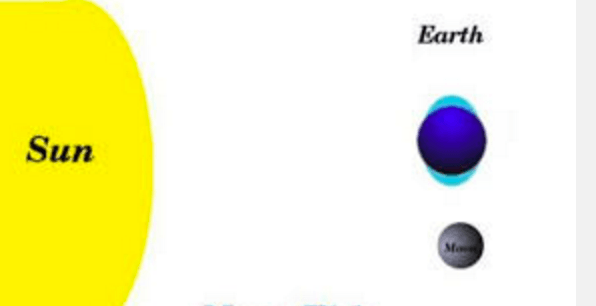
Which moon phase is shown in this diagram?
a)
new moon
b)
1st quarter
c)
full moon
d)
last quarter/3rd quarter
56.

Which moon phase is shown in this diagram?
a)
new moon
b)
first quarter
c)
full moon
d)
last quarter/3rd quarter
57.
Tides are caused by ___________
a)
wind
b)
gravitational pull of moon
c)
waves gravitation toward land
d)
rain
58.

What phase is this?
a)
Waning Gibbous Moon
b)
Waxing Gibbous Moon
c)
Waning Crescent Moon
d)
Waxing Crescent Moon
59.

What phase is this?
a)
Full Moon
b)
First Quarter Moon
c)
Last Quarter Moon
d)
New Moon
60.
Which way does the moon revolve?
a)
clockwise
b)
counter clockwise
c)
some times it changes direction
d)
it doesn't revolve
61.
When the moon is in between the earth and the sun it is a
a)
New Moon
b)
Full Moon
c)
First Quarter
d)
Third Quarter
62.
Waxing means...
a)
Growing
b)
Dying
c)
Losing light
d)
Moving
63.
Which of the following statements is most accurate about the Movement of Earth and the Sun?
a)
The Sun revolves around the Earth
b)
The Earth rotates around the Sun
c)
The Earth revolves around the Sun
d)
The Earth rotates and revolves around the Sun
64.

What would be the result if the Earth's axis was not tilted but straight up and down?
a)
Nothing would change
b)
There would be no seasons
c)
Days would get longer
d)
The Equator would burn up and the poles would freeze
65.
What is a lunar month?
a)
The time from one new moon to the next new moon.
b)
The time from one full moon to the next full moon.
c)
The time it takes the moon to orbit the earth.
d)
The month of October .
66.

Name the phase of the moon for letter a
a)
First Quarter
b)
Last Quarter
c)
Waxing Gibbous
d)
Waning Gibbous
67.
Define Full Moon
a)
None of moon is visible
b)
Half moon phase is visible
c)
Complete�moon face�is visible
d)
Less Than half of moon is visible�
68.
Define New Moon
a)
None of moon is visible from Earth
b)
All of moon visible from Earth
c)
Moon is 1/2 visible from Earth
d)
Moon is more than Half Visible from Earth
69.
Define Quarter Moon
a)
None of moon visible
b)
Less than Half the moon is visible
c)
More than half of moon is visible
d)
Half of the moon is visible
70.
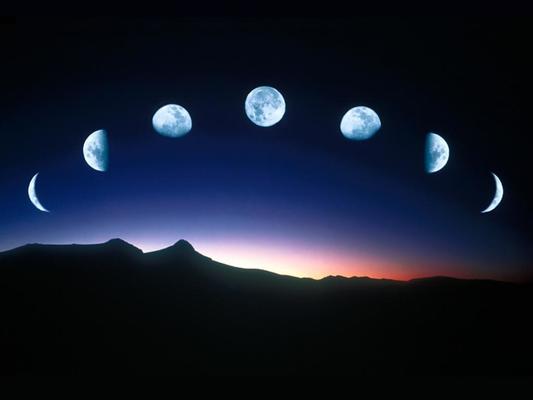
When the moon waxes, it ________.
a)
adds a thick covering to its crust
b)
seems to get bigger in size
c)
goes from a full moon back to a new moon
d)
shaves its legs
71.

When the moon wanes, it ________.
a)
goes from a new moon to a full moon
b)
goes from a full moon to a new moon
c)
appears to get larger in size
d)
cries a lot
72.
How much of the moon is always lit?
a)
can't tell
b)
always changes
c)
half
d)
3/4
73.
A lunar eclipse occurs when the Moon casts a shadow on Earth.
a)
True
b)
False
74.
A solar eclipse occurs when Earth casts a shadow on the Moon.
a)
True
b)
False
75.
Why is a lunar eclipse very rare?
a)
Because it happens every new moon
b)
Because the moon's orbit is tilted, so the sun, moon and earth rarely line up
c)
because the moon isn't close enough to the earth
d)
because the earth isn't close enough to the sun
76.
A solar eclipse only happens during a ________ moon.
a)
New
b)
Cresent
c)
Gibbous
d)
Full
77.
A lunar eclipse only happens during a ________ moon.
a)
New
b)
Cresent
c)
Gibbous
d)
Full
78.
A neap tide occurs when?
a)
1st and 3rd quarters
b)
Waxing gibbous
c)
Waning gibbous
d)
Full moon
79.

A spring tide occurs when?
a)
During the first quarter
b)
During a waxing gibbous
c)
During a last quarter
d)
During a full moon
80.

What phase occurs immediately after a full moon?
a)
Waxing gibbous
b)
Waxing crescent
c)
Waning gibbous
d)
Waning crescent
81.
What is shadowed, or hidden, during a solar eclipse?
a)
Sun
b)
Moon
c)
Earth
d)
Jupiter
82.
What does the word "solar" refer to?
a)
Sun
b)
Moon
c)
Earth
d)
Energy
83.
What does the word "lunar" refer to?
a)
Sun
b)
Moon
c)
Earth
d)
Night
84.
What is shadowed, or hidden, during a lunar eclipse?
a)
Sun
b)
Moon
c)
Earth
d)
Pluto
85.
How many high tides are there in Myrtle Beach every day?
a)
One
b)
Two
c)
Three
d)
Four
86.

What type of tides would this arrangement of earth-moon-sun create?
a)
neap tide
b)
spring tide
c)
new moon tide
d)
full moon tide
87.

What type of tide would this arrangement of earth-moon-sun create?
a)
full moon tide
b)
new moon tide
c)
neap tide
d)
spring tide
88.

Which body has the greater effect on Earth's tides?
a)
Sun
b)
Saturn
c)
Moon
d)
Venus
89.

What is a difference between spring and neap tides?
a)
Spring tides occur when the earth and sun are IN LINE with the new or full moon.
b)
Spring tides occur when moon in 3rd or 1st quarter phases
c)
Spring tides are LOWER than neap tides
d)
Spring tides occur in Spring and neap tides can occur in any season
90.
What causes tides?
a)
gravity
b)
wind
c)
spring
d)
neap
91.

The diagram below shows the alignment of the sun, the moon, and Earth. In which locations are neap tides taking place?
a)
1 and 2
b)
1 and 3
c)
2 and 4
d)
3 and 4
92.

What moon phase is at position 1?
a)
new moon
b)
waxing gibbous
c)
waning gibbous
d)
waning crescent
93.

What moon phase is at position 6?
a)
waxing crescent
b)
waxing gibbous
c)
waning gibbous
d)
waning crescent
94.

What moon phase is at position 3?
a)
waxing crescent
b)
1st quarter
c)
3rd quarter
d)
waning crescent
95.

What moon phase is at position 4?
a)
waxing crescent
b)
waxing gibbous
c)
waning gibbous
d)
waning crescent
96.
How long does it take for the moon to go around the Earth?
a)
500 years
b)
28 days
c)
dab
97.
What causes the moon to be illuminated?
a)
The Sun
b)
Drake
c)
The Ocean
98.

What phase is this?
a)
Full Moon
b)
First Quarter Moon
c)
Last Quarter Moon
d)
New Moon
99.

What phase is this?
a)
Full Moon
b)
New Moon
c)
Waxing Gibbous Moon
d)
Waning Gibbous Moon
100.

What phase is this?
a)
First Quarter Moon
b)
Last Quarter Moon
c)
Waning Gibbous Moon
d)
Waxing Gibbous Moon
101.

What phase is this?
a)
First Quarter Moon
b)
Last Quarter Moon
c)
Waxing Gibbous Moon
d)
Waning Gibbous Moon
102.

What phase is this?
a)
Waning Gibbous Moon
b)
Waxing Gibbous Moon
c)
Waning Crescent Moon
d)
Waxing Crescent Moon
103.
What is the order during a solar eclipse
a)
sun, moon, earth
b)
sun, earth, moon
104.
The moon seems to change shape from day to day in a cycle that lasts about a month as it goes through _.
a)
revolutions
b)
phases
c)
rotations
d)
eclipses
105.
Eclipse that occurs during a full moon.
a)
Lunar
b)
Solar
106.
Eclipse that occurs during a New Moon.
a)
Lunar
b)
Solar
100 %

