Worksheets
Moon Phases and Tides
Total questions: 52
Worksheet time: 46mins
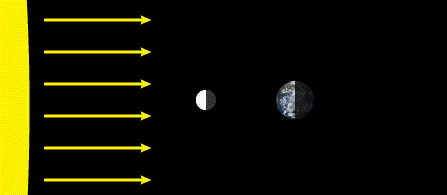
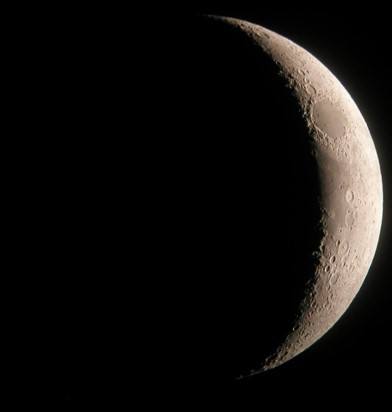
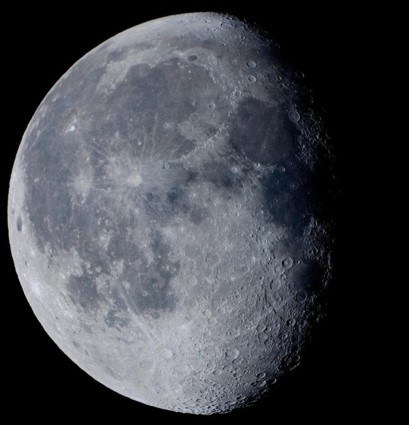
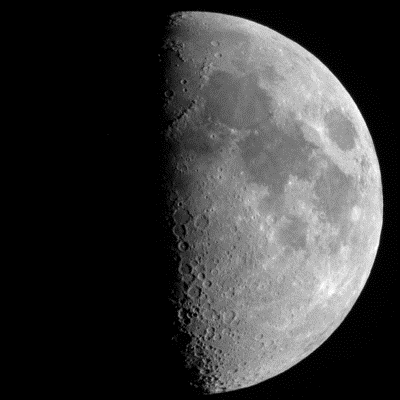
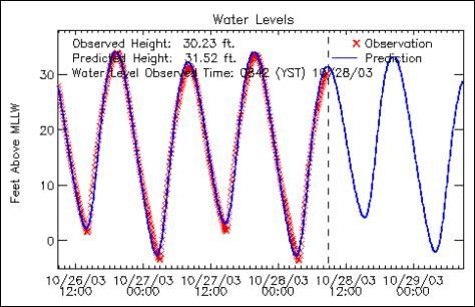
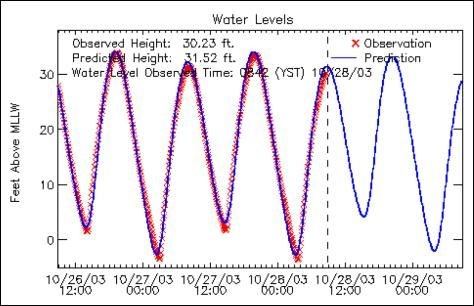
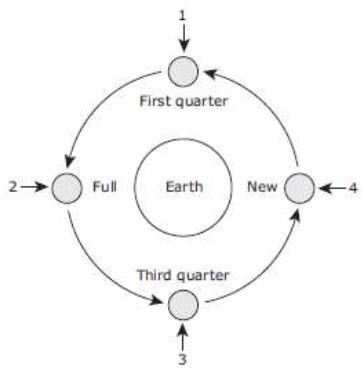
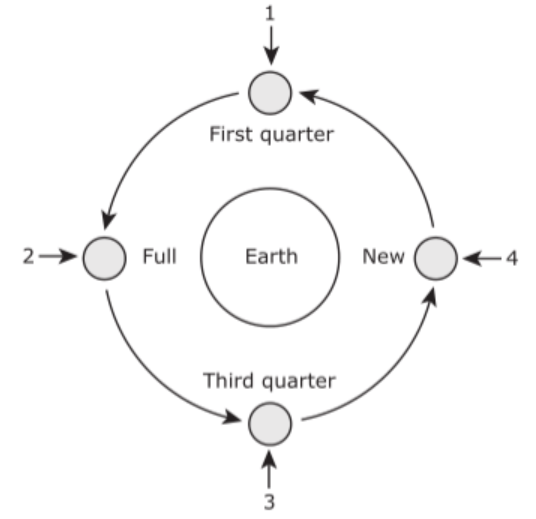
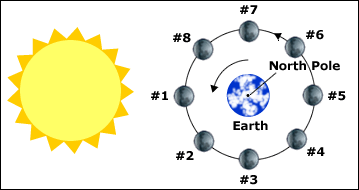
The diagram below shows four phases of the moon as it revolves around Earth.
A student builds a model based on this diagram. The student uses foam balls to represent the moon and Earth and a flashlight to represent the sun. The student should shine the flashlight on the model of Earth from Position—
1
2
3
4
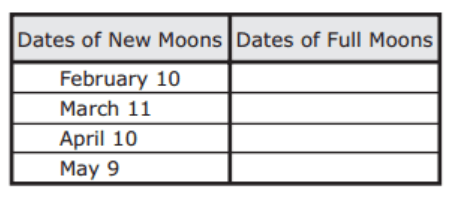
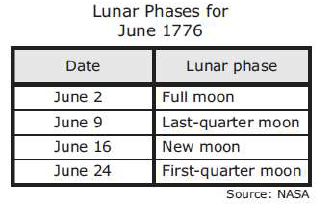
A student must complete the column of the table that lists the dates of the full moons.
What are the most likely dates of the full moons?
February 5, March 7, April 5, May 4
February 15, March 17, April 15, May 14
February 25, March 27, April 25, May 24
February 29, March 31, April 29, May 28
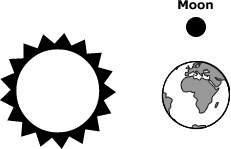
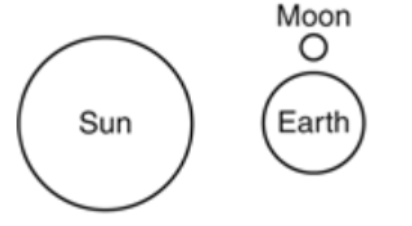
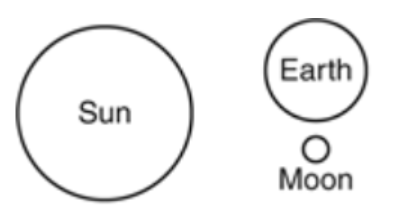
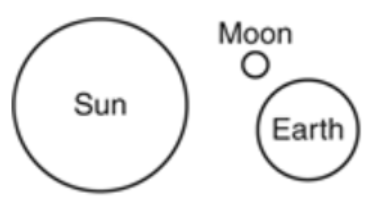
A student uses paper and fasteners to create a model of Earth, the sun, and the moon. The sun and Earth are attached to the paper background, while the moon is free to revolve around Earth.
Which diagram shows the objects arranged so that a third/last quarter moon would be visible from Earth?

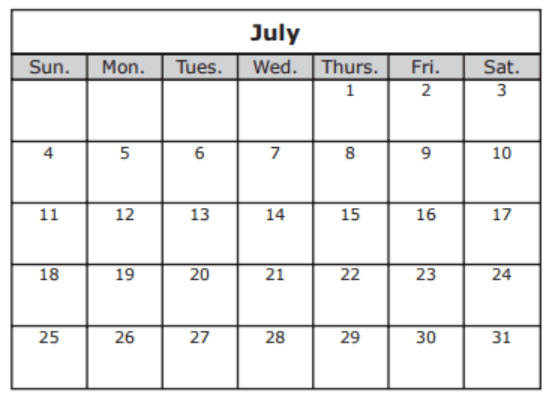
Two friends want to go for a night hike when there is a full moon in July.
If there is a third-quarter moon on July 2, what is the approximate date of the next full moon?
July 9
July 16
July 23
July 30
The appearance of the moon changes in a predictable way in a pattern that lasts approximately 28 days. The changes in appearance are called phases of the moon. What is the main cause of moon phases?
The distance between the Earth and the moon.
The tilt of Earth on its axis compared to the tilt of the moon on its axis.
The amount of sunlight the Earth’s surface is exposed to.
The position of the moon in relationship to the Earth and Sun.
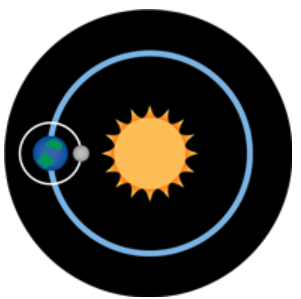
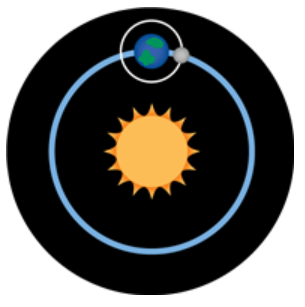
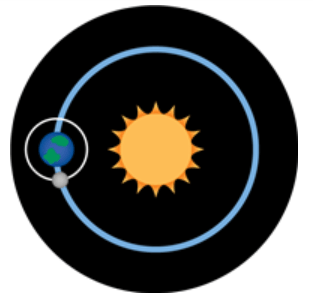
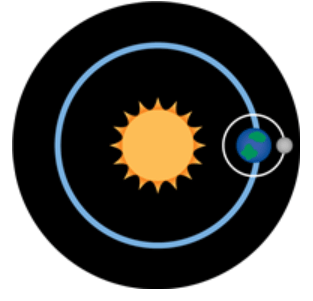
Which diagram BEST represents the relationship of the Earth, moon, and sun during the new moon phase?
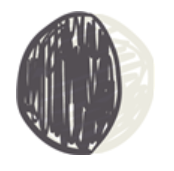
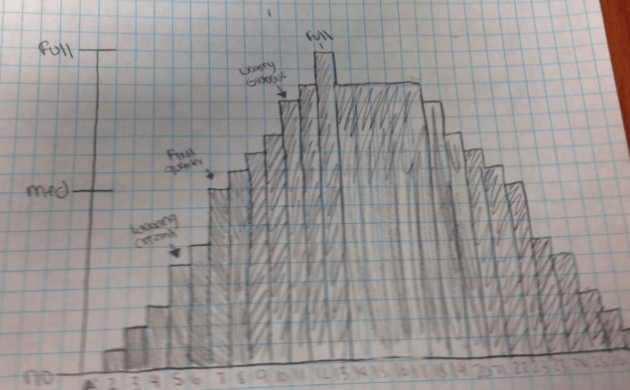
Susan is sketching the appearance of the moon each night. Below is her entry for last night.
What will Susan’s entry look like in 14 days?




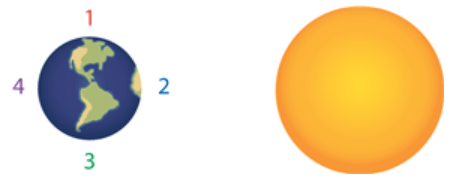
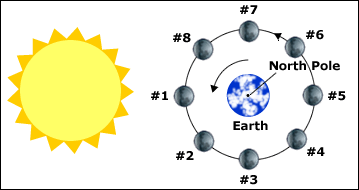
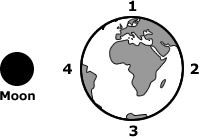
A student is drawing a diagram to show the positions of Earth, the moon, and the sun during a full moon.
Where on the diagram should the student place the moon to accurately show its position relative to the Earth and the sun during a full moon?
1
2
3
4
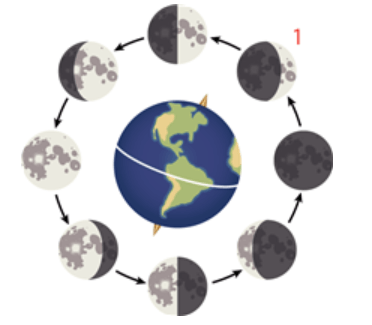
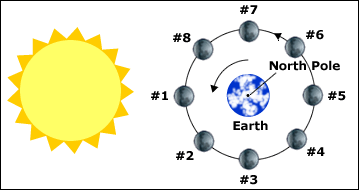
What is the phase of the moon indicated by the 1 in the diagram shown above?
waning crescent phase
waning gibbous phase
waxing crescent phase
waxing gibbous phase
The alignment of the Moon and Sun has an affect on Earth’s ocean tides. What force causes this effect?
sun spots
magnetic fields
gravity
air resistance
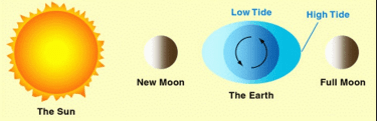
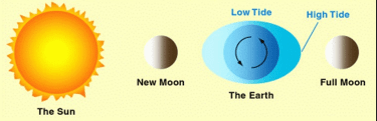
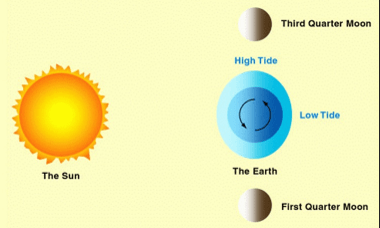
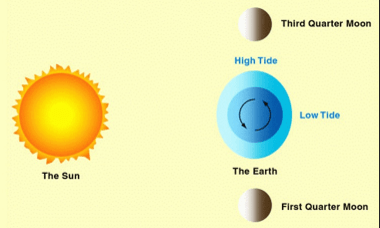
Which moon phases are associated with the highest tides?
full and three quarter
new and first quarter
new and full
first quarter and three quarter
The appearance of the moon changes in a predictable pattern that lasts approximately 28 days. The changes in appearance are called phases of the moon. What is the main cause of moon phases?
The distance between the Earth and the moon.
The tilt of Earth on its axis compared to the tilt of the moon on its axis.
The amount of sunlight the moon’s surface is exposed to.
The position of the moon in relationship to the Earth and Sun.
Mrs. Gupta is the Cub Scout den mother. She is taking a troop of boys on a camp out and believes it will be easier if she schedules the outing to happen during the full moon. Last night she observed a waning gibbous moon. Approximately how many days will she have to wait before the next full moon?
7
14
24
28
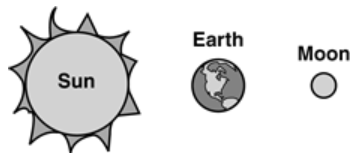
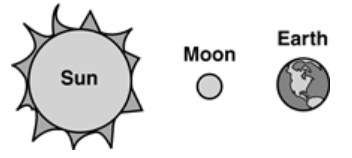
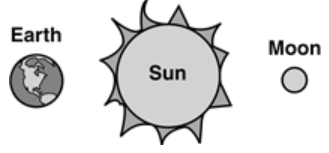
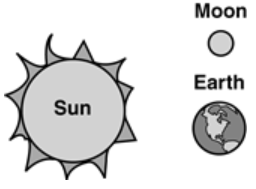
Which diagram shows the position of the Moon, Earth and Sun, when the Moon appears full on Earth?
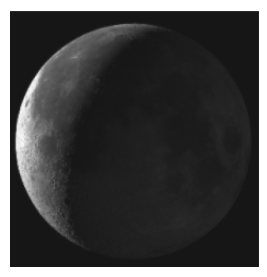
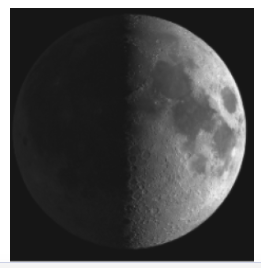
A student viewed the moon through binoculars one week after a new moon. Which image shows the phase of the moon that the student observed?
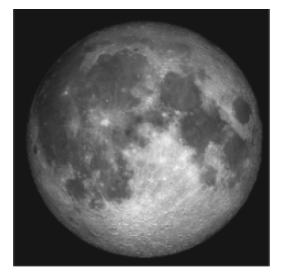

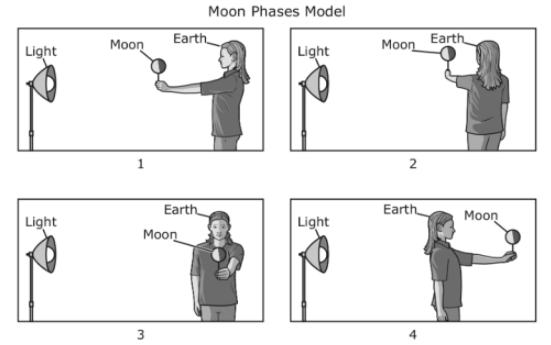
A student models moon phases. She holds a foam ball on a stick in front of her body and then stands in front of a light as shown. The student uses herself to represent Earth. She turns her body slowly to represent four different moon phases.
Which numbered diagram represents the student modeling a full moon?
Diagram 1
Diagram 2
Diagram 3
Diagram 4
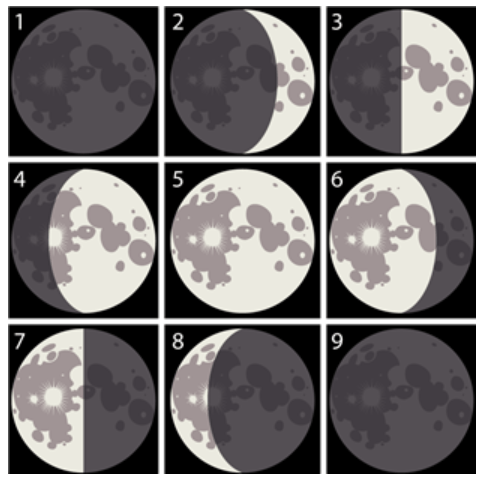
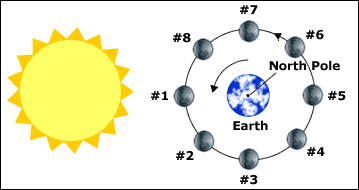
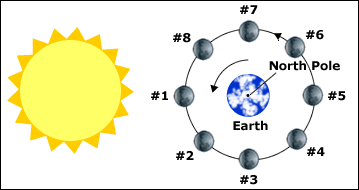
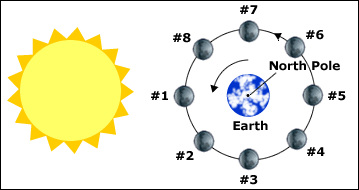
The diagram above represents the phases of the moon. Position 1 represents the new moon. Positions 2 through 8 represent the phases of the moon that follow.
Which phase does position 6 represent?
Full moon
Waning crescent
Waning gibbous
Quarter moon
A father wanted to explain how the moon shines to his five-year-old child by comparing it to an object that the child uses. Which statement below is the best explanation?
The moon is like a flashlight. It produces its own light.
The moon is like a mirror. It reflects light produced by the sun.
The moon is like a glow-in-the-dark sticker. It absorbs light during the day and glows at night.
The moon is like a burner on a stove. When it reaches a certain temperature, it glows.
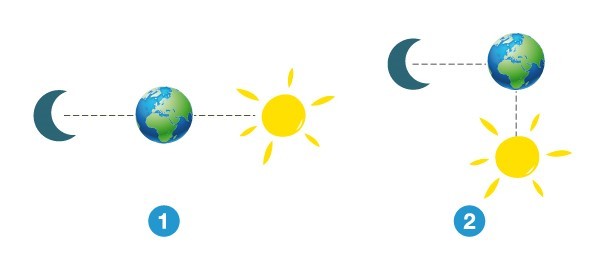
Which model of the Sun, Earth, and the Moon represents the positions that would result in the highest tides occurring on Earth?
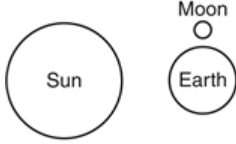
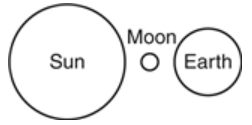
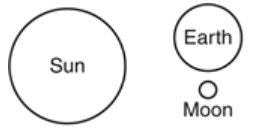
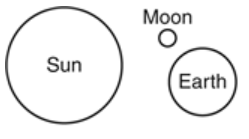
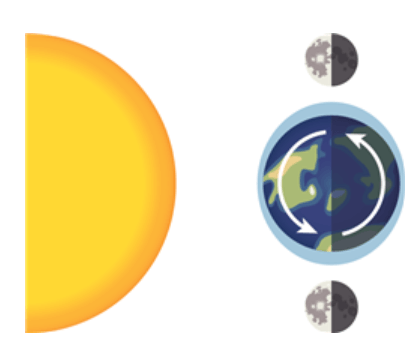
The gravitational impact of the moon and the sun can be seen when observing the Earth’s tides. The diagram shows a snapshot of where the high tides can occur due to the moon's alignment with the Earth at that moment.
Why are the tides more affected by the moon’s gravitational pull than the sun’s?
The moon is larger than the sun, giving it a stronger gravitational pull on the Earth.
The moon is closer to the Earth, giving it a stronger gravitational pull on the Earth.
The sun’s gravitational pull is spread evenly among all planets in the solar system, but the moon’s gravity only affects the Earth.
The rock that composes the moon creates a special gravitational pull that affects the liquids found on the Earth.
The moon phases occur because...
the sun, the earth, and the moon do a dance and create shadows
the moon grows and shrinks
the moon revolves around the earth
the moon produces its own light
The moon goes through every phase..
once a month
twice a month
once a year
the moon doesn't have phases, it has seasons