
 Worksheets
Quiz 2- REVIEW
Total questions: 50
Worksheet time: 1hrs 1mins
Name
Class
Date
1.

What is the picture
a)
ribosome
b)
nucleus
c)
cell wall
d)
mitochondrion
2.

What does this structure do?
a)
supports the cell
b)
cell's control center
c)
converts energy to food
d)
makes proteins
3.

What is this?
a)
mitochondria
b)
lysosomes
c)
chloroplast
d)
endoplasmic reticulum
4.
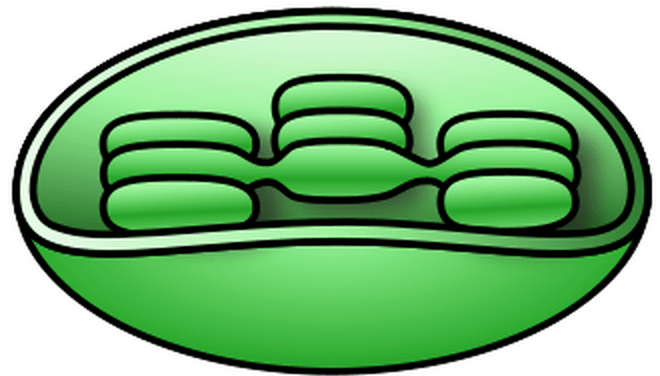
I am only found in a plant cell. What am I?
a)
cell wall
b)
mitochondria
c)
cytoplasm
d)
chloroplast
5.

I store water in both plant and animal cells. What am I?
a)
cytoplasm
b)
ribosomes
c)
vacuole
d)
lysosomes
6.

I am a protein packaging and shipping machine! Who am I?
a)
vacuole
b)
ribosome
c)
endoplasmic reticulum
d)
golgi apparatus
7.

You might think of me as the trash collector or recycler is maybe more accurate. What am I?
a)
cytoplasm
b)
lysosme
c)
vacuole
d)
ribosome
8.

I make proteins for the cell. What am I?
a)
ribosome
b)
mitochondria
c)
chloroplast
d)
lysosome
9.

I am the outer most layer of an animal cell. What am I?
a)
cell wall
b)
nucleus
c)
cell membrane
d)
cell skin
10.
Which part of the cell is often called "the brain of the cell"?
a)
nuclear membrane
b)
endoplasmic reticulum
c)
nucleus
d)
ribosomes
11.
Which structure is found in plant cells and not in animal cells?
a)
cell wall
b)
centriole
c)
nucleus
d)
cytoplasm
12.
Which organelle uses energy from sunlight to make sugar?
a)
mitochondria
b)
nucleus
c)
chloroplasts
d)
vacuoles
13.
Consists of a jellylike substance that contains many organelles.
a)
ribosomes
b)
cytoplasm
c)
chloroplasts
d)
cell wall
15.
Gives the cell a rigid, box-like shape; outside of the cell membrane; in plants.
a)
cytoplasm
b)
chromatin
c)
cell wall
d)
cell membrane
15.
Gives the cell a rigid, box-like shape; outside of the cell membrane; in plants.
a)
cytoplasm
b)
chromatin
c)
cell wall
d)
cell membrane
16.

Is this made of plant cells or
animal cells?
animal cells?
a)
Plant
b)
Animal
c)
Neither
17.

Is this made of plant cells or
animal cells?
animal cells?
a)
Plant
b)
Animal
c)
Neither
18.

Is this made of plant cells or
animal cells?
animal cells?
a)
Plant
b)
Animal
c)
Neither
19.

Which of the following would help you determine if the image shown comes from a plant or an animal?
a)
the number of mitochondria
b)
the size of the vacuole
c)
the presence of a cell wall
d)
all of these could be used
20.

What cell part is NOT found in all cells?
a)
Cell Wall
b)
Cell Membrane
c)
Cytoplasm
d)
Genetic Material
21.
Before cells can divide, what must be copied?
a)
mitochondria
b)
cytoplasm
c)
DNA
d)
Cell Wall
22.
The division of the nucleus is known as:
a)
Synthesis
b)
Mitosis
c)
G1
d)
G2
23.
The material of chromosomes which is made up of proteins and DNA is called ________________.
a)
Centromere
b)
Chromatid
c)
Karyotype
d)
Chromatin
24.
Uncontrollable cell growth is known as _____
a)
obesity
b)
cancer
c)
diabetes
d)
hepatitis
25.
What are the steps of the cell cycle in order?
a)
Interphase, Mitosis, Cytokinesis
b)
Interphase, Cytokinesis, Mitosis
c)
Mitosis, Cytokinesis, Interphase
d)
Cytokinesis, Mitosis, Interphase
26.
In which phase of mitosis do the sister chromatids line up on the equator of the cell?
a)
Prophase
b)
Metaphase
c)
Anaphase
d)
Telophase
27.
Which step of the cell cycle do cells spend a majority of their time?
a)
Prophase
b)
Interphase
c)
Mitosis
d)
Cytokinesis
28.
Why do cells go through cell division
a)
Growth
b)
Reproduction
c)
Repair
d)
All of the above
29.

a)
Anaphase
b)
Cytokinesis
c)
Telophase
d)
Metaphase
30.

a)
Cytokinesis
b)
Interphase
c)
Anaphase
d)
Metaphase
31.

This picture shows which process?
a)
mitosis
b)
meiosis
c)
the cell cycle
32.

a)
prophase
b)
metaphase
c)
anaphase
d)
telophase
33.

a)
prophase
b)
metaphase
c)
anaphase
d)
telophase
34.
The cells produced via meiosis are called:
a)
sex cells
b)
somatic cells
c)
body cells
d)
skin cells
35.

A human usually has xx amount of chromosomes.
a)
6
b)
22
c)
4
d)
46
36.
What causes genetic variation in meiosis?
a)
chromosomes lining up
b)
crossing over of chromosomes
c)
separation of chromosomes
d)
chromosomes pulling apart
37.
The purpose of meiosis is to form ________ cells.
a)
body
b)
sex
c)
somatic
d)
brain
38.
How many daughter cells are produced at the end of meiosis?
a)
1
b)
2
c)
3
d)
4
39.
Which of the following is NOT a gamete?
a)
egg
b)
sperm
c)
skin cell
d)
all of the above are gametes
40.

Which process and type of resulting cells are represented?
a)
mitosis, gametes
b)
mitosis, body cells
c)
meiosis, gametes
d)
meiosis, body cells
41.

Meiosis makes sperm and egg cells. In humans, sperm and egg cells each have _____ chromosomes. Therefore a fertilized human egg cell (sperm and egg cell combined) would create a cell with _____ chromosomes.
a)
23, 46
b)
46, 23
c)
2, 4
d)
50, 100
42.
The ___________ is the basic unit of life
a)
organ
b)
cell
c)
atom
d)
tissue
43.
Organs and tissues that perform the same function is called _____________?
a)
cells
b)
tissues
c)
organ system
d)
organs
44.
A group of tissues that perform a similar function is called_____. (Examples include the heart, lungs or stomach)
a)
cells
b)
tissues
c)
organs
d)
organ system
45.
When many organ systems work together it can form...
a)
organ
b)
cells
c)
organ system
d)
organism
46.
What is the correct order of organization
a)
tissues-cells-organs-organ systems-organism
b)
cell-tissue-organs-organ systems-organism
c)
organism-cells-tissues-organ systems-organism
d)
tissues-cells-organs-organ sytems-organism
47.
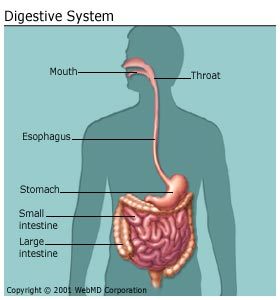
This is a example of........
a)
organ system
b)
cells
c)
organ
d)
tissue
48.
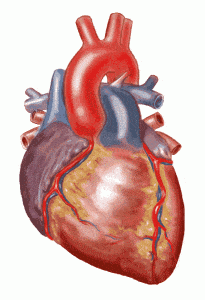
This is a example of ........
a)
cell
b)
organ system
c)
organ
d)
tissue
49.
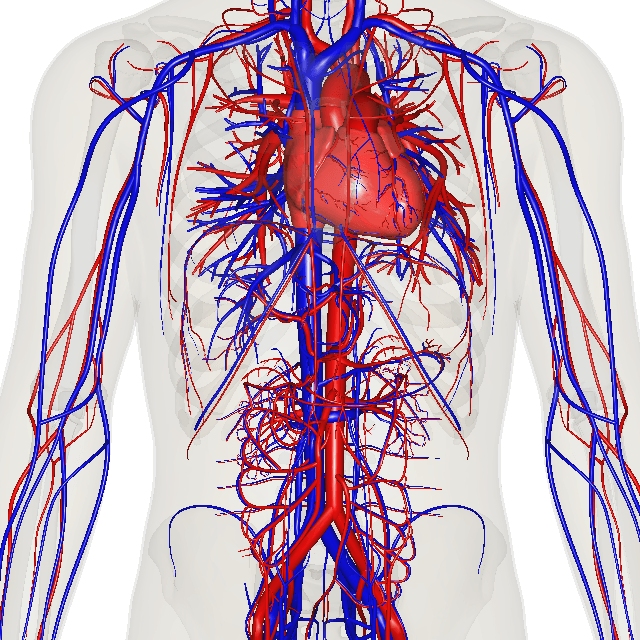
This is a example of ........
a)
organ
b)
organ system
c)
tissue
d)
cell
50.
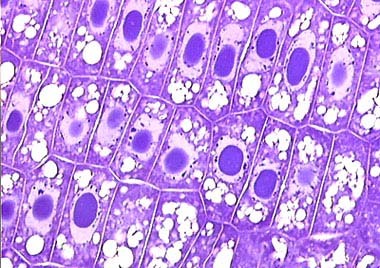
This is a example of ........
a)
cell
b)
tissue
c)
organ
d)
organ system
100 %

