wayground logo

Free Printable Worksheets

NEW

Font size

S
M
L
XL
Worksheets

Biology & Chemistry

Total questions: 55

Worksheet time: 41mins

Name
Class
Date
1.
A single living thing is called:
a)
a species
b)
a biot
c)
an organism
d)
an individual
2.
Which type of cell has no nucleus?
a)
Eukaryote
b)
Prokaryote
c)
Animal
d)
Plant
3.
Which of the following describes all living things?
a)
They are composed of many cells
b)
They are able to obtain and use energy
c)
They feed on other organisms
d)
They can make their own food
4.
All living things are composed of one or more ______________.
a)
Units
b)
Boards
c)
Cells
d)
Bones
5.
Cells with a nucleus and membrane-bound organelles are called ____________________.
a)
prokaryotes
b)
eukaryotes
c)
bacteria
d)
protists
6.
An organism that makes its own food is called? 
a)
Autotroph
b)
consumer
c)
Heterotroph
d)
More than one is correct
7.
If a kingdom is full of organisms that are multicellular and heterotrophic which kingdom is it?
a)
Protista
b)
Plants 
c)
Animal 
d)
Fungi
8.
What domain includes plants, animals, fungi, and protists, all are eukaryotes?
a)
Eukarya
b)
Archaea
c)
Bacteria 
d)
Protists
9.
Mushrooms are classified under which kingdom?
a)
Plant
b)
bacteria
c)
protist
d)
fungi
10.
Organisms that reproduce asexually generally have offspring that are 
a)
unicellular. 
b)
multicellular. 
c)
genetically varied. 
d)
genetically identical. 
11.

An organism that must eat because it can't make its own food is called?

a)

Autotroph

b)

Protists

c)

Producer

d)

Heterotroph

12.
All the members of ONE species interacting in a given area are called:
a)
organism
b)
population
c)
community
d)
ecosystem
13.
Which organisms are capable of surviving as a single cell?
a)
bacteria
b)
humans
c)
plants
d)
fish
14.
Which of the following contains abiotic factors?
a)
organism
b)
population
c)
community
d)
ecosystem
15.
What is an advantage of sexual reproduction?
a)
Allows genetic variation
b)
Only needs one parent
c)
Happens very quickly
d)
Offspring are exact copies of parent
16.

Which is the best way to classify grasshoppers?

a)

Grasshoppers are multi-celled organisms because they are made up of one cell that carries out all of their life processes.

b)

Grasshoppers are single-celled organisms because they are made up of one cell that carries out all of their life processes.

c)

Grasshoppers are single-celled organisms because they are made up of many cells that carry out all of their life processes.

d)

Grasshoppers are multi-celled organisms because they are made up of many cells that carry out all of their life processes.

17.
Temperature, light, air, water, and soil are all  _____  parts of the environment
a)
alive
b)
biotic 
c)
abiotic
d)
living
18.
A living or once-living organisms in an ecosystem is a
a)
population
b)
biotic factor
c)
abiotic factor
d)
community
19.

Which of the following has only abiotic factors?

a)

Sunlight, algae, and temperature

b)

Guppy, crab, oxygen

c)

Sunlight, soil, and weather

d)

Algae, temperature, and dog

20.

Which definition would best describe the word community?

a)

A single living thing

b)

A group of the same species

c)

All of the populations in a specific area at a time

d)

All of the abiotic and biotic factors in a specific area

21.

An extremophile is a microorganism that exists in harsh environments. In what domain would this creature belong?

a)

Eukarya

b)

Archaea

c)

Bacteria

d)

Plantae

22.
Which type of cell is bigger?
a)
Prokaryotic
b)
Eukaryotic 
23.
Which type of cell?
a)
Prokaryote
b)
Eukaryote
24.

PRO means NO! Prokaryotic cells have no ____________.

a)

nucleus

b)

DNA

c)

cytoplasm

d)

color

25.

Which would fit the best description of a cat?

a)

unicellular, autotrophic, reproduces asexually

b)

multi-cellular, heterotrophic, reproduces asexually

c)

multi-cellular, heterotrophic, reproduces sexually

d)

multi-cellular, autotrophic, reproduces sexually

26.
This part of the scope is what you look through and magnifies 10x:
a)
scanning power objective
b)
eyepiece
c)
body tube
d)
base
27.

This part of the microscope holds the slide:

a)

base

b)

stage

c)

body tube

d)

arm

28.

What actual magnification do we get if we use the medium objective lens (x10)? [Remember that the eyepiece is already x10]

a)

x10

b)

x40

c)

x400

d)

x100

29.
What 2 parts of the microscope should you hold when carrying the microscope?
a)
body tube and arm
b)
arm and base
c)
base and body tube
d)
base and stage
30.
Anton von___ was given credit for inventing the first simple microscope.
a)
Hooke
b)
Johan
c)
Leewenhoek
31.
Elements which are shiny, conduct electricity and heat are called
a)
metal
b)
nonmetal
c)
metalloid
d)
nonexistent
32.
The simplest substance is..?
a)
Carbon
b)
An element
c)
Water
d)
A simple compound 
33.

All of the following would classify an element as a metal except?

a)

Dull

b)

Luster

c)

Malleable

d)

Hard

34.

Which of the following properties refers to the ability of metals to be drawn into wires?

a)

malleability

b)

compressibility

c)

ductility

d)

luster

35.
Silicon is a semiconductor and has properties of both metals and nonmetals. What type of element is Silicon? 
a)
Metal
b)
Nonmetal
c)
Metalloid
d)
Pretty
36.
In a lab, a student observes a sample of an element. It is brittle and a poor conductor of heat. It cannot be hammered into sheets. Which type of element is this?
a)
metal
b)
aurum
c)
metalloid
d)
nonmetal 
37.
The chemical formula for water is H20. This information tells you that water is 
a)
a mixture
b)
a solution
c)
an element 
d)
a compound
38.
What is the formula for density?
a)
density = mass x volume
b)
density = mass / volume
c)
density = mass + volume
d)
density = mass - volume
39.
How many Elements are in this compound?
CuSO4
a)
3
b)
1
c)
4
d)
5
40.
Anything that has mass and takes up space is called
a)
heterogeneous
b)
homogeneous
c)
matter
d)
density
41.
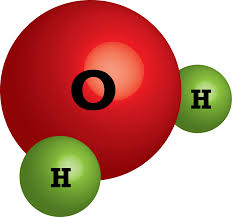
How many atoms of Hydrogen are in this compound
a)
1
b)
2
c)
3
d)
4
42.

What is the chemical symbol for Hydrogen?

a)

HY

b)

Hy

c)

H

d)

Hg

43.

What does the chemical symbol "C" represent?

a)

Carbon

b)

Copper

c)

Cobalt

d)

Potassium

44.

Nitrogen has an atomic number of:

a)

1

b)

7

c)

17

d)

71

45.

The element with an atomic number of 8 is:

a)

Silicon

b)

Chlorine

c)

Boron

d)

Oxygen

46.

Which element is represented by the symbol "Na"?

a)

Sodium

b)

Nalium

c)

Strontium

d)

Xenon

47.
All of the following are properties used to classify elements as metals, non-metals, and metalloids EXCEPT —
a)
texture
b)
conductivity
c)
luster
d)
malleability
48.

Anything that has mass and takes up space is called

a)

volume

b)

matter

c)

magnetism

d)

electricity

49.

You have a substance with a mass of 20g and a volume of 5 mL. What is its density?

a)

4 g/mL

b)

100 g/mL

c)

25 g/mL

d)

15 g/mL

50.

Mass = 40 g, Volume = 4 mL, Density = ?

a)

10 g

b)

10 g/mL

c)

160 mL

d)

160 g/mL

51.

What is a mixture?

a)

elements chemically combined

b)

A combination of different things physically combined

c)

it is found on the Periodic Table

d)

something that cannot be broken down

52.

When sugar is stirred in lemonade, it dissolves. Which answer describes this physical property?

a)

state of matter

b)

conductivity

c)

luster

d)

solubility

53.

Look at the picture. Which of these liquids would be the most dense?

a)

lamp oil

b)

water

c)

dish soap

d)

honey

54.

An element's symbol has how many capital letters?

a)

2

b)

0

c)

it depends

d)

1

55.

A compound's formula has how many capital letters?

a)

1

b)

0

c)

2 or more