
 Worksheets
Cell Transport Quiz
Total questions: 20
Worksheet time: 21mins
What organelle is responsible for homeostasis in the cell?
cell wall
cell membrane
nucleus
cytoplasm
The cell membrane...
controls the cell and contains DNA
is used for structure and support
controls what enters and leaves the cell
makes ribosomes
Which is NOT true about simple diffusion?
It is a form of passive transport
This transport is typical for large molecules
It is how O2 and CO2 travel across the membrane
Molecules travel with the concentration gradient

B is pointing to the
polar hydrophilic heads
nonpolar hydrophobic heads
polar hydrophilic tails
nonpolar hydrophobic tails
A is pointing to the
polar hydrophilic heads
nonpolar hydrophobic heads
polar hydrophilic tails
nonpolar hydrophobic tails
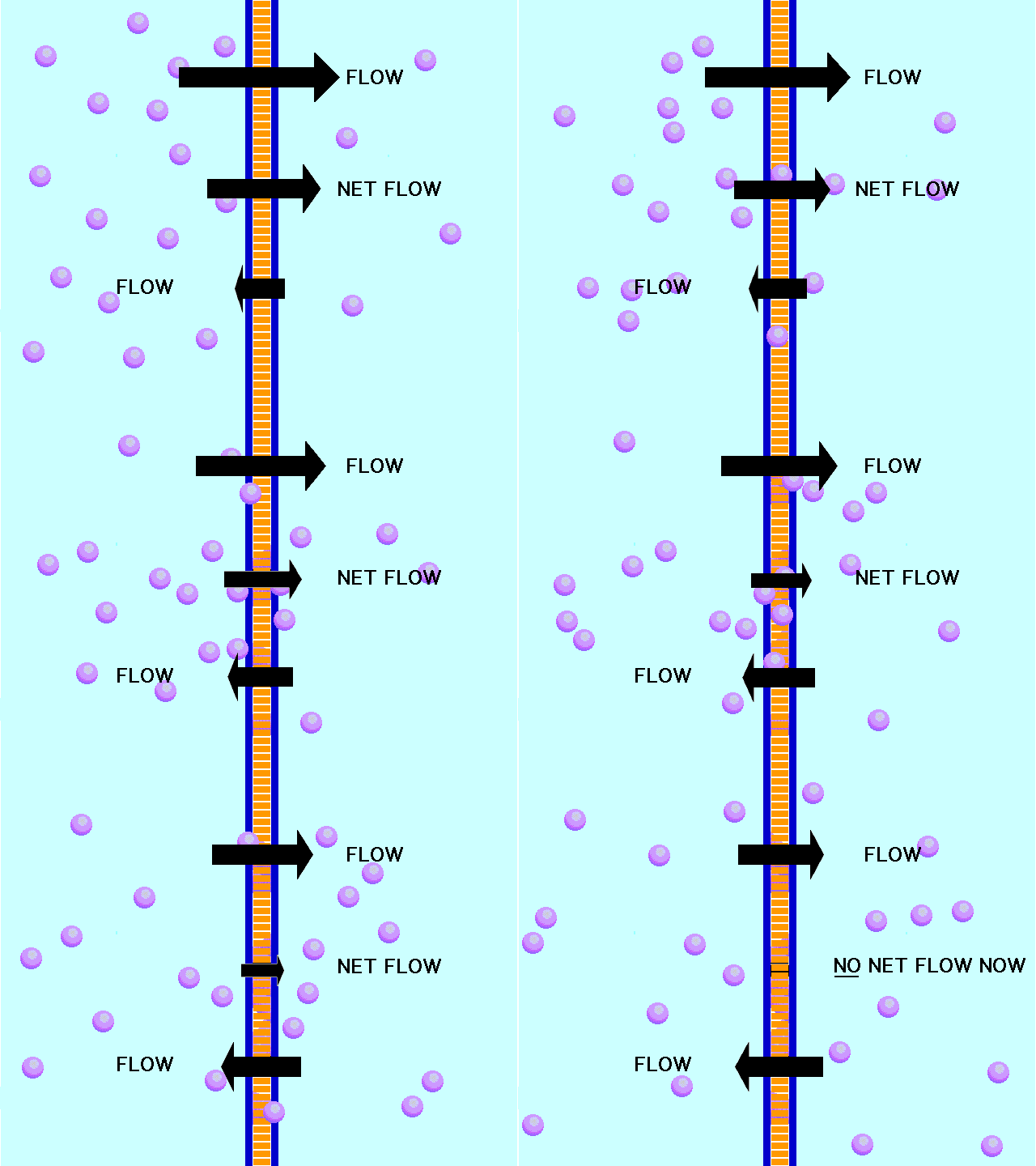
Passive transport is shown
Active transport is shown
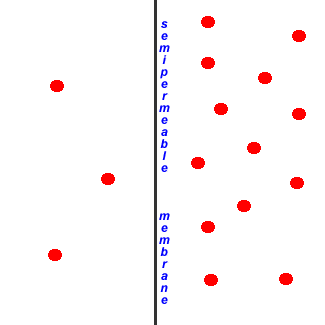
Which side of the membrane has a HIGH concentration?
left
right
top
bottom
Which side of the membrane has a LOW concentration?
left
right
top
bottom
Endocytosis and exocytosis are forms of ______ because they require energy.
passive transport
active transport
The type of transport that goes against the concentration gradient and requires energy is...
passive transport
facilitated diffusion
active transport

What cell transport is shown in the picture?
Facilitated Diffusion
Membrane pump
Diffusion
Endocytosis

What cell transport is shown in the picture?
Facilitated Diffusion
Active Transport
Diffusion
Osmosis
Osmosis is the movement of _____ across a membrane.
food
energy
oxygen
water
During osmosis
water moves from high to low concentration
large or oddly shaped molecules move across a cell membrane
water moves when energy is used
proteins are built

What is the definition of Selective Permeability?
The movement of materials across the cell membrane that requires NO ENERGY from the cell.
The movement of materials through (or across) the cell membrane
The ability of the cell membrane to allow some things to pass through while preventing other things from passing through.
The movement of molecules from an area of high concentration to a area of low concentration
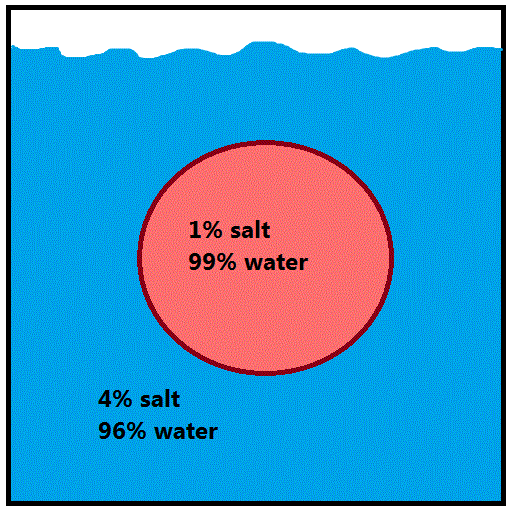
Where will the water go?
Into the cell
Out of the cell
Equally in & out - it's isotonic
There is no water
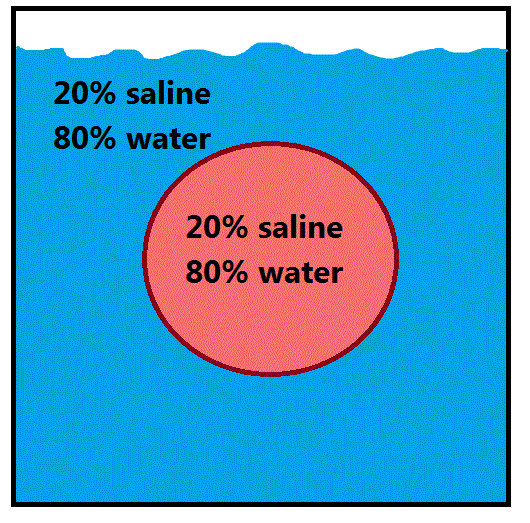
A blood cell is placed into the jar, as seen. Where will the water go?
Into the cell
Out of the cell
Equally in & out
The water will not move
Why can't you drink salt water?
It's hypertonic to your cells
It's hypotonic to your cells
It's isotonic to your cells
It's paratonic to your cells

Which cell is placed into a hypotonic environment?
A
B
C
D

Why did the red blood cell shrink?
It was placed in a hypotonic solution
It was placed in a hypertonic solution
It was placed in an isotonic solution
The oxygen left the cell

