
 Worksheets
IGCSE Intermediate revision
Total questions: 141
Worksheet time: 12hrs 33mins
Name
Class
Date
1.
How would you write 0.0005 in scientific notation?
a)
50 x 10-5
b)
5 x 10⁻⁴
c)
5 x 10⁻³
d)
.5 x 10-3
2.
How would you write 4.3756 x 10⁴ in standard form?
a)
437,560,000
b)
0.00043756
c)
43,756
d)
4,3756
3.
Which of the following numbers is correctly written in scientific notation?
a)
20.35 x 10⁴
b)
.2035 x 104
c)
2035 4
d)
2.035 x10⁴
4.
Put the following number in scientific notation:
4,281
4,281
a)
4.281 x 10³
b)
0.4281 x 10⁴
c)
4.281 x 10⁻³
d)
42.81 x 10²
5.
Convert 15,000 to scientific notation.
a)
1.5 x 10⁴
b)
1.5 x 10³
c)
15 x 103
d)
15 x 104
6.

Find the surface area of this figure.
a)
148 cm²
b)
120 cm²
7.

Determine the radius of the penny
a)
59.66 mm
b)
9.5 mm
c)
38 mm
d)
119.32 mm
8.

Area?
a)
108 cm sq
b)
60 cm
c)
432 cm sq
d)
216 cm sq
9.
What is surface area?
a)
Inside of the object
b)
the sum of all theareas of all the shapes that cover the surface of the object.
c)
Something Mr. Strickland made up?
d)
Surface area is what you get when you boil unicorn tears.
10.

Find the volume of the figure?
a)
4003 cm3
b)
336 cm3
c)
36 cm3
d)
412 cm3
11.

Find the volume of the figure?
a)
1100 in3
b)
1600 in3
c)
1200 in3
d)
1500 in3
12.

Find the volume of the figure?
a)
460 cm 3
b)
660 cm 3
c)
60 cm 3
d)
360 cm 3
13.

What is the SURFACE AREA of this figure? * hint the height of this CUBE is 3
a)
64 cm2
b)
54 cm2
c)
36 cm
14.

What is the surface area of this figure?
a)
200 cm 2
b)
800 cm 2
c)
400 cm 2
d)
100 cm 2
15.
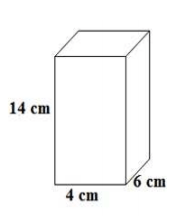
What is the surface area of this figure?
a)
3000 cm 2
b)
164 cm 2
c)
236 cm 2
d)
328 cm 2
16.
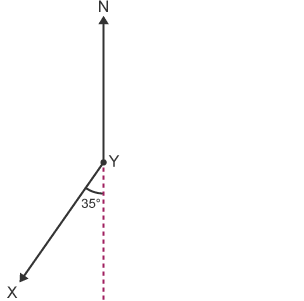
What is the bearing
a)
215
b)
035
c)
30
d)
145
17.
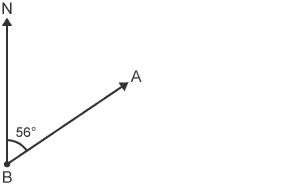
What is the correct bearing
a)
304
b)
44
c)
56
d)
056
18.
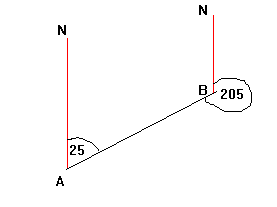
What is the bearing of B from A
a)
025
b)
205
c)
25
d)
155
19.
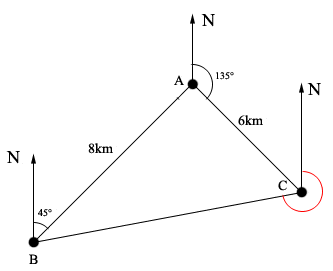
What is
the Bearing
of C
from A?
a)
45
b)
225
c)
045
d)
135
20.
factorise 6m2 + 16m
a)
2(3m2 + 8m)
b)
2m(3m + 8)
c)
2m(3m - 8m)
d)
not factorable
21.
Factorise 4x + 14
a)
2(x+7)
b)
4(x+10)
c)
4(x+3)
d)
2(x+12)
22.
Factorise 8x + 12
a)
4(x+2)
b)
8(x+4)
c)
4(x+3)
d)
4(2x+3)
23.
Factorise fully: 6x + 18
a)
3(2x + 6)
b)
6(x+3)
c)
2(3x+9)
d)
6(x+12)
24.
Factorsie fully: 20x + 30
a)
10(2x+3)
b)
10(x+3)
c)
5(4x+6)
d)
2(10x+15)
25.
Factorise fully: 27x + 45
a)
27(x+18)
b)
3(9x+15)
c)
9(3x+5)
d)
9(3x+36)
26.
Factorise: 3x + 12
a)
3(x+4)
b)
3(x+5)
c)
3(3x + 9)
d)
3(x+9)
27.
Factorise: 4x2 + 8x
a)
4x(x+2)
b)
4(x2+2x)
c)
2x(2x+4)
d)
2(2x2+4)
28.
Factorise: 9x - 12
a)
4(3x - 3)
b)
3(3x - 4)
c)
3x(x - 4)
d)
9(x-3)
29.
Expand 7(x + 6)
a)
7x + 42
b)
7x + 6
c)
13x
d)
7x - 42
30.
Expand 5(x - 4)
a)
5x + 20
b)
5x - 4
c)
x
d)
5x - 20
31.
Expand 8(5x + 7)
a)
40x + 56
b)
40x - 56
c)
40x + 7
d)
47x
32.
Expand 7(4x - 6)
a)
28x - 42
b)
28x + 42
c)
28x - 6
d)
-14x
33.
Expand x(3x + 4)
a)
3x2 + 4x
b)
3x2 + 4
c)
7x
d)
3x + 4x
34.
Expand 4x(2x - 6)
a)
8x2 - 24x
b)
6x2 - 24x
c)
8x2 - 24
d)
6x2 - 24
35.
Expand 3x2(x + 2)
a)
3x3 + 6x2
b)
3x3 + 3x2
c)
3x2 + 6x2
d)
3x3 + 2x2
36.
Expand xy(x + 3)
a)
x2y + 3xy
b)
xy2 + 3xy
c)
x2 + 3y
d)
x2y + 3
37.
Expand 2xy(x + y)
a)
2x2y + 2xy2
b)
2xy + 2yx
c)
2x2 + 2y2
d)
2x2y2
38.
Factorise:
x2 + 2x – 3
x2 + 2x – 3
a)
(x - 2)(x + 1)
b)
(x + 1)(x - 3)
c)
(x + 2)(x - 1)
d)
(x - 1)(x + 3)
39.
Factorise:
x2 – 5x – 24
x2 – 5x – 24
a)
(x - 5)(x + 19)
b)
(x - 8)(x + 3)
c)
(x - 3)(x + 8)
d)
(x - 19)(x + 5)
40.
Factorise:
p2 + 5p - 36
p2 + 5p - 36
a)
(p + 12)(p - 3)
b)
(p + 9)(p - 4)
c)
(p + 2)(p - 18)
d)
(p + 6)2
41.
Factorise:
x2 + 4x - 32
x2 + 4x - 32
a)
(x - 8)(x + 4)
b)
(x + 8)(x - 4)
c)
(x + 8)( x + 4)
d)
(x - 8)(x - 4)
42.
Which axis is the point (3, 0) on?
a)
The x-axis
b)
The y-axis
43.
Which axis is the point (0,-7) on?
a)
The x-axis
b)
The y-axis
44.

What are the coordinates of A?
a)
(0.5, 1.0)
b)
(0.5, -1.0)
c)
(-1.0, 0.5)
d)
(-0.5, 1.0)
45.

What are the coordinates of B?
a)
(-0.75, 0.5)
b)
(-3, 2)
c)
(-1.0, 0.5)
d)
(0.5, -0.75)
46.

What are the coordinates of C?
a)
(-1, -1)
b)
(-0.5,-0.5)
c)
(-0.25, -0.25)
d)
(-0.1, 0.1)
47.
Which axis runs up and down?
a)
x
b)
y
48.
Ordered pair (0,0) is also known as the ___.
a)
y-axis
b)
x-axis
c)
origin
49.
Which axis runs horizontally?
a)
x
b)
y
50.
How do you write an ordered pair?
a)
(X,X)
b)
(Y,X)
c)
(X,Y)
d)
(Y,Y)
51.
A function is: f(x)=7+3x
Find f(10)
Find f(10)
a)
1
b)
37
c)
317
d)
20
52.
A function is g(x)=5x2-3
Given that g(a)=42, find a.
Given that g(a)=42, find a.
a)
8817
b)
3√5 ∕ 5
c)
15
d)
3
53.
Two functions are: f(x)=2x-5 and g(x)=4+√x
x≥0
Find fg(15)
x≥0
Find fg(15)
a)
25
b)
3+2√15
c)
9
d)
0
54.

a)
A
b)
B
c)
C
d)
D
55.

a)
A
b)
B
c)
C
d)
D
56.

a)
A
b)
B
c)
C
d)
D
57.

Find the gradient of the line.
a)
-2
b)
2
c)
-1
d)
1
58.
What does "m" represent in y=mx+c?
a)
y-intercept
b)
gradient
c)
macaroni
d)
nothing
59.
What is the gradient in the equation: y=4x+3
a)
3
b)
4x
c)
4
d)
x
60.
What is the y-intercept in the following equation: y=-4x-5
a)
-4
b)
-4x
c)
5
d)
-5
61.
If m=3 and c=6, what is the correct equation?
a)
y=3-6
b)
y=3x-6
c)
y=3x+6
d)
y=6x+3
62.
Determine the slope and y-intercept from the following equation: y = 3/2x + 3
a)
slope: 5 y-intercept: (0,3)
b)
slope: 3/2 y-intercept: (0,3)
c)
slope: 4 y-intercept: (0,3/2)
d)
slope: 1/5 y-intercept: (0,5)
63.
Find the slope of the line that passes through the points (2, 4) and (6, 12)
a)
1/2
b)
-1/2
c)
2
d)
-2
64.
Find the slope of the line that passes through
(10, 1) and (5, 2)
(10, 1) and (5, 2)
a)
1/5
b)
-1/5
c)
5
d)
-5
65.
Find the slope of the line that passes through
(-2, 8) and (0, 8)
(-2, 8) and (0, 8)
a)
0
b)
-2
c)
2
d)
1/2
66.

Find the slope of the line.
a)
-2
b)
2
c)
-1
d)
1
67.

Find the slope of the line.
a)
Undefined
b)
0
c)
1
d)
-1
68.
Solve the equation:
-5x = 25
-5x = 25
a)
x = 20
b)
x = -20
c)
x = -5
d)
x = 5
69.
19 + a = -50
a)
a = -950
b)
a = -69
c)
a = -31
d)
a = -50/19
70.
x - 8 = -5
a)
13
b)
-13
c)
3
d)
-3
71.
4x + 7 = 23
a)
x = 16
b)
x = 4
c)
x = 9
d)
x = 12
72.
In the equation 4y +-9 =-36
y = -4
y = -4
a)
True
b)
francine
c)
False
73.
5x+4=-6
a)
2
b)
-2
c)
10
d)
15
74.
-4x+1=21
a)
x=120
b)
x=5
c)
x=30
d)
x=-5
75.
Solve each equation for the following variable.
x - 4 = 12
x - 4 = 12
a)
x = 8
b)
x = 16
c)
x = -8
d)
x = 3
76.
Solve: 3(x-4) = -3
a)
3
b)
-3
c)
5
d)
-5
77.
Solve:
2(2x + 3) = -6(x + 9)
2(2x + 3) = -6(x + 9)
a)
1.2
b)
6
c)
-6
d)
7.5
78.
Solve:
7x + 19 = -2x + 55
7x + 19 = -2x + 55
a)
4
b)
14.8
c)
8.2
d)
-4
79.
Solve:
6(5x - 3) + 2 = 14
6(5x - 3) + 2 = 14
a)
2
b)
.5
c)
-1
d)
1
80.
Solve:
3(x - 2) = 18
3(x - 2) = 18
a)
6.7
b)
4
c)
8
d)
-4
81.
Solve:
32 - 7x = -6(x + 3)
32 - 7x = -6(x + 3)
a)
50
b)
3
c)
-3
d)
-50
82.
Solve:
2(a + 4) = 2a - 8 + 4a
2(a + 4) = 2a - 8 + 4a
a)
3
b)
-3
c)
-4
d)
4
83.
Which number below is a prime number?
a)
9
b)
8
c)
7
d)
12
84.
Which number is a factor of 36?
a)
7
b)
9
c)
10
d)
5
85.
Which list has only prime numbers?
a)
2, 3, 4, 5
b)
1, 5, 7, 9
c)
2, 3, 5, 7
d)
2, 4, 6, 8
86.
A PRIME NUMBER is...
a)
a number that has only one factor.
b)
a number that has at least two factors.
c)
a number that has more than two factors.
d)
a number that has only two factors.
(1 and itself)
(1 and itself)
87.
What is the prime factorization of 36?
a)
2 X 2 X2 X 5
b)
2 X 2 X 3 X 3
c)
4 X 3 X 3
d)
4 X 9
88.
Which of these is another way to write the product of 12 X 7?
a)
2 X 3 X 7
b)
3 X 4 X 7
c)
3 X 6 X 7
d)
6 X ^ X 7
89.
What is the total number of factors of 12?
a)
4
b)
6
c)
8
d)
12
90.
What are 2 factors that 15 and 24 have in common?
a)
1 and 3
b)
3 and 6
c)
5 and 8
d)
5 and 12
91.

Find the value of x.
a)
7
b)
8
c)
9
d)
10
92.

Find the value of x.
a)
15
b)
16
c)
18
d)
17
93.
The Pythagorean Theorem ONLY works on which triangle?
a)
obtuse
b)
scalene
c)
isosceles
d)
right
94.

What is Pythagorean Theorem?
a)
a2+b2=c2
b)
a+b=c
c)
a-b=c
d)
c-a=c
95.

Find the length of the missing side.
a)
25 cm
b)
42 cm
c)
52 cm
d)
48 cm
96.

Casey travels from her house directly west to the bank and then directly north from the bank to the mall. She then travels home on the road connecting the mall and her house. What is her total distance traveled?
a)
17 miles
b)
32 miles
c)
37 miles
d)
40 miles
97.
What is the side across from the right angle called?
a)
Leg
b)
Pythagoras
c)
Hypotenuse
d)
Altitude
98.
What is the acronym to help you remember the ratios to use in trigonometry?
a)
RIGHTANG
b)
SOHCAHTOA
c)
SHOCHATOA
99.
Calvin paints pictures and sells them at art shows. He charges $56.25 for a large painting. He charges $25.80 for a small painting. Last month he sold six large paintings and three small paintings. How much did he make in all?
a)
$323.55
b)
$82.05
c)
$414.90
d)
$567.50
100.
Uncle Ben has 440 chickens on his farm. 39 are rooster and the rest are hens. 15 of his hens do not lay eggs.. The rest lay eggs. How many egg-laying hens does Uncle Ben have on his farm?
a)
368 egg-laying hens
b)
425 egg-laying hens
c)
386 egg-laying hens
d)
401 egg-laying hens
101.
Write an inequality for the situation:
George rented a bike for 4 hours. There was a $10 dollar deposit to pay in addition to the hourly rate. What was the hourly rate if the total came to no more than $65?
George rented a bike for 4 hours. There was a $10 dollar deposit to pay in addition to the hourly rate. What was the hourly rate if the total came to no more than $65?
a)
10x + 65 ≥ 40
b)
4x + 10 ≤ 65
c)
4x - 10 ≤ 65
d)
65 + 4x ≥ 40
102.
Yellow Cab Taxi charges a $1.75 flat rate in addition to $0.65 per mile. Katie has no more than $10 to spend on the taxi ride. How far can she go?
a)
1.75 + 0.65m < 10
b)
1.75 + 0.65m > 10
c)
1.75m + 0.65 < 10
d)
1.75m + 0.65 > 10
103.
You bike at a speed no faster than 17.6 miles per hour. Write and solve an inequality that represents how long you must ride in order to go 70 miles.
a)
17.6h < 70
b)
17.6 + h ≥ 70
c)
h/17.6 ≥ 70
d)
17.6h ≤ 70
104.
What is the area of a square with a length of 4 cm?
a)
16 cm
b)
16 cm2
c)
8 cm2
d)
8 square cm
105.
Which measurement is best for determining the distance walking around the edge of a park?
a)
area
b)
perimeter
106.
How do you find the AREA of a TRIANGLE?
a)
Length x Width
b)
1/2 (Length x width)
c)
1/3 (Length x width)
d)
Base x Height
107.

Find the area of the parallelogram.
a)
30 ft2
b)
25 ft2
c)
50 ft2
d)
15 ft2
108.

Which Quadrilateral has 4 right angles, 2 sets of parallel sides, and all of its' sides are the same length?
a)
Triangle
b)
Rhombus
c)
Rectangle
d)
Square
109.

Has 2 pairs of parallel sides.
a)
Trapezoid
b)
Triangle
c)
Parallelogram
d)
Rhombus
110.
How many sides does a Hexagon have?
a)
6
b)
4
c)
3
d)
9
111.
What is the next term in the sequence 1, 4, 9, 16, 25, ...?
a)
34
b)
36
c)
39
d)
41
112.
Find the nth term of...
2,4,6,8...
2,4,6,8...
a)
3n
b)
2n
c)
4n
d)
10n
113.
Find the nth term of...
10,20,30,40...
10,20,30,40...
a)
3n
b)
2n
c)
4n
d)
10n
114.
Find the nth term of...
3,5,7,9...
3,5,7,9...
a)
2n+1
b)
2n-1
c)
2n+2
d)
2n-2
115.
What are the next 2 terms:
23, 7, -9, -25...
23, 7, -9, -25...
a)
41 and 57
b)
-9 and 7
c)
-41 and -57
d)
none of the above
116.
What is the common difference:
-6, -1, 4, 9...
-6, -1, 4, 9...
a)
+5
b)
-5
c)
-6
d)
+1/5
117.
Find the 22nd term of the following sequence:
5, 8, 11, ...
5, 8, 11, ...
a)
14
b)
68
c)
63
d)
71
118.

How many students have more than 1,000 songs on their MP3 player?
a)
5
b)
16
c)
10
d)
4
119.
An event with a probability of one
a)
experimental probability
b)
outcome
c)
certain event
d)
permutation
120.
Probability can be written as a
a)
fraction
b)
decimal
c)
percent
d)
all of the above
121.
-7 X 6 =
a)
-42
b)
42
122.
16 X (-7) =
a)
112
b)
-112
123.
-4 x (-5) x 7 =
a)
140
b)
-140
124.
4 x (-8) =
a)
32
b)
-32
125.
2 x (-6) x 3 =
a)
36
b)
-36
126.
-3 x (-8) x (-6) =
a)
144
b)
-144
c)
24
127.
24 + [56 ÷ (-7) + (-12)]
a)
24
b)
20
c)
4
128.
The initial temperature of a solution was 16oC. The temperature dropped 3oC every minute. What was the temperature of the water after 15 minutes in oC?
a)
-28
b)
-29
c)
-30
129.
4 + [5 x (-8) + (-3) x 4] =
a)
-48
b)
-52
c)
4
130.
Evaluate
(-10) ÷ (+0.5) + (-20)
(-10) ÷ (+0.5) + (-20)
a)
-25
b)
-40
c)
0
d)
40
131.
Write 53 in long form
a)
125
b)
5 x 5 x 5
c)
53
132.
Write 62 x 63 as a single power
a)
7776
b)
66
c)
65
d)
365
133.
Simplify: χ3 ÷ χ2
a)
χ
b)
χ5
c)
χ6
d)
χ-1
e)
1/χ
134.

Simplify.
a)
A
b)
B
c)
C
d)
D
135.

8
a)
W
b)
O
c)
R
d)
K
136.
Simplify -90
a)
1
b)
-1
c)
-9
d)
9
137.
Simplify the following expression:
xy-7
xy-7
a)
xy7
b)
x/y7
c)
x7/y
d)
x7y
138.
What is the value of (-2)3?
a)
-8
b)
-6
c)
6
d)
8
139.

Evaluate the expression using the quotient rule.
a)
214 z13
b)
22/z7
c)
214/ z7
d)
22 z7
140.
Simplify (34x5y6z-7)0
a)
34x5y6 / z7
b)
34x5y6 / x-7
c)
0
d)
1
141.
Simplify 5-2
a)
-10
b)
1/25
c)
1/(5)2
d)
-1/10
100 %

