wayground logo

Free Printable Worksheets

Font size

S
M
L
XL
Worksheets

4.1-4 trig test review

Total questions: 138

Worksheet time: 5hrs 32mins

Name
Class
Date
1.

Coterminal angles have the same initial and ​ (a)   sides.

Choose from the below words
terminal
complementary
initial
origin
standard
2.

90°

a)

π2\frac{\pi}{2}

b)

π\pi

c)

π4\frac{\pi}{4}

d)

π3\frac{\pi}{3}

e)

π6\frac{\pi}{6}

3.

180°

a)

π2\frac{\pi}{2}

b)

π\pi

c)

π4\frac{\pi}{4}

d)

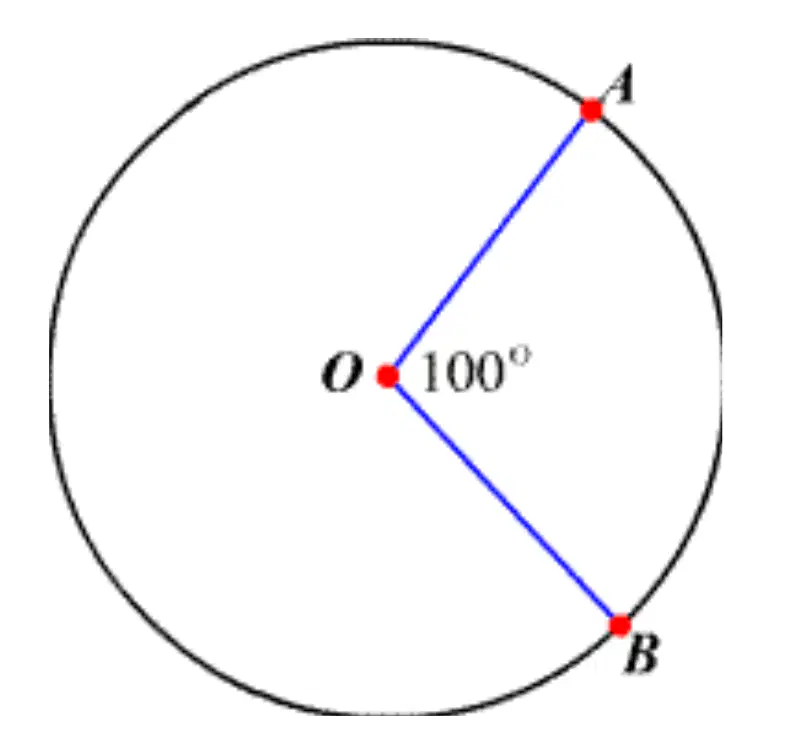
π3\frac{\pi}{3}

e)

π6\frac{\pi}{6}

4.

60°

a)

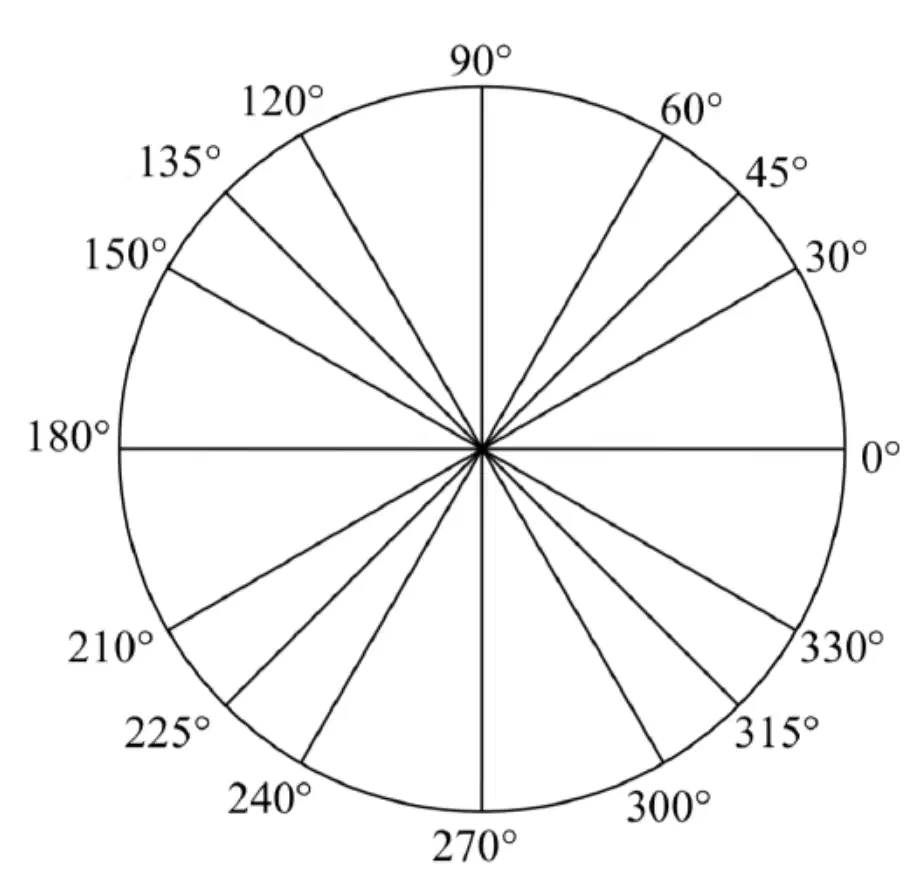
π2\frac{\pi}{2}

b)

π\pi

c)

π4\frac{\pi}{4}

d)

π3\frac{\pi}{3}

e)

π6\frac{\pi}{6}

5.

30°

a)

π2\frac{\pi}{2}

b)

π\pi

c)

π4\frac{\pi}{4}

d)

π3\frac{\pi}{3}

e)

π6\frac{\pi}{6}

6.

120°

a)

2π3\frac{2\pi}{3}

b)

3π4\frac{3\pi}{4}

c)

5π4\frac{5\pi}{4}

d)

3π2\frac{3\pi}{2}

e)

5π6\frac{5\pi}{6}

7.

135°

a)

2π3\frac{2\pi}{3}

b)

3π4\frac{3\pi}{4}

c)

5π4\frac{5\pi}{4}

d)

3π2\frac{3\pi}{2}

e)

5π6\frac{5\pi}{6}

8.

270°

a)

2π3\frac{2\pi}{3}

b)

3π4\frac{3\pi}{4}

c)

5π4\frac{5\pi}{4}

d)

3π2\frac{3\pi}{2}

e)

5π6\frac{5\pi}{6}

9.

360°

a)

2π3\frac{2\pi}{3}

b)

3π4\frac{3\pi}{4}

c)

π\pi

d)

3π2\frac{3\pi}{2}

e)

2π2\pi

10.

Calculate the angle measure in degrees for 5π4\frac{5\pi}{4} radians.

a)

135135^\circ

b)

180180^\circ

c)

225225^\circ

d)

270270^\circ

11.

Calculate the angle measure in radians for 300300^\circ .

a)

5π3\frac{5\pi}{3}

b)

3π2\frac{3\pi}{2}

c)

7π4\frac{7\pi}{4}

d)

11π6\frac{11\pi}{6}

12.

Match the following angles correctly.

a)

3π2\frac{3\pi}{2}

1.

270 degrees

b)

2π3\frac{2\pi}{3}

2.

120 degrees

c)

π\pi

3.

180 degrees

d)

2π2\pi

4.

360 degrees

e)

3π4\frac{3\pi}{4}

5.

135 degrees

13.

Graph an angle of 2π3\frac{2\pi}{3} in standard position. Which quadrant does the terminal side lie in?

a)

Quadrant I

b)

Quadrant II

c)

Quadrant III

d)

Quadrant IV

14.
Positive angles are measured in which direction from standard position?
a)
Clockwise
b)
Counterclockwise
15.

Identify the initial side of an angle in standard position.

a)

Positive x-axis

b)

Positive y-axis

c)

Negative x-axis

d)

Negative y-axis

16.

If this is a right angle, what does angle x equal?

a)

x=90

b)

x=25

c)

x=15

d)

x=32

17.

Which of the following angles are co-terminal to 330o?

a)

-330o, 330o

b)

510o, -210o

c)

690o, -30o

d)

420o, -330o

18.

Which of the following angles are co-terminal to -35o?

a)

325o, -395o

b)

395o, -325o

c)

145o, -215o

d)

-125o, 325o

19.

To convert from radians to DEGREES

a)

multiply by

π180°\frac{π}{180°}

b)

multiply by
180°π\frac{180°}{π}

c)

multiply by
π2\frac{π}{\sqrt{2}}

d)

multiply by
π3\frac{π}{\sqrt{3}}

20.

Find a coterminal angle to 45°.

a)

360°

b)

405°

c)

315°

d)

295°

21.

Add:

π3+2π\frac{\pi}{3}+2\pi

a)

7π3\frac{7\pi}{3}

b)

5π3-\frac{5\pi}{3}

c)

3π3\frac{3\pi}{3}

d)

7π6\frac{7\pi}{6}

22.

Subtract:

π32π\frac{\pi}{3}-2\pi

a)

7π3\frac{7\pi}{3}

b)

5π3-\frac{5\pi}{3}

c)

3π3\frac{3\pi}{3}

d)

7π6\frac{7\pi}{6}

23.

The POSITIVE co-terminal angle for 120°-120\degree is (a)   degrees.

24.

Find the POSITIVE co-terminal angle for:

π2\frac{\pi}{2}

a)

5π4\frac{5\pi}{4}

b)

5π2\frac{5\pi}{2}

c)

4π4\frac{4\pi}{4}

d)

3π2-\frac{3\pi}{2}

25.

Which would you use to verify?

a)

Reciprocal Identities

b)

Pythagorean Identities

26.

Which would you use to verify?

a)

Reciprocal Identities

b)

Pythagorean Identities

27.

Which would you use to verify?

a)

Reciprocal Identities

b)

Pythagorean Identities

28.

Which would you use to verify?

a)

Reciprocal Identities

b)

Pythagorean Identities

29.
a)

cot(u)

b)

cos(u)

c)

tan(u)

d)

csc(u)

e)

sec(u)

30.
a)

sin(u)

b)

cot(u)

c)

tan(u)

d)

csc(u)

e)

sec(u)

31.
a)

cot(u)

b)

cos(u)

c)

sin(u)

d)

csc(u)

e)

sec(u)

32.
a)

cot(u)

b)

cos(u)

c)

tan(u)

d)

sin(u)

e)

sec(u)

33.
a)

cot(u)

b)

cos(u)

c)

tan(u)

d)

sin(u)

e)

csc(u)

34.
a)

sec(u)

b)

cos(u)

c)

tan(u)

d)

sin(u)

e)

csc(u)

35.
a)

sec(u)

b)

cos(u)

c)

tan(u)

d)

sin(u)

e)

csc(u)

36.
a)

sec(u)

b)

cos(u)

c)

tan(u)

d)

sin(u)

e)

cot(u)

37.

sin(90 - u)

a)

sec(u)

b)

cos(u)

c)

tan(u)

d)

csc(u)

e)

cot(u)

38.

1cos2θ=1-\cos^2\theta=  

a)

sin2θ\sin^2\theta  

b)

sec2θ\sec^2\theta  

c)

tan2θ\tan^2\theta  

39.

What is the circumference?

a)

50

b)

96

c)

24

d)

18

40.

Find the arc length.  The angle given is π/4. Leave your answer in terms of π.

a)

7π/4

b)

7π/2

c)

1π/8

d)
45π
e)

π/56

41.

Find the length of the arc.

a)

10π cm

b)

15π cm

c)

5π cm

d)

2π/3 cm

e)

2π/45 cm

42.

Find the length of the arc.

a)

31.42cm

b)

15.71cm

c)

282.74cm

d)

23.56cm

43.

The arc length from A to B is 5π/3. Find the radius of the circle.

a)

6

b)

5

c)

4

d)

3

e)

2

44.

The length of the bolded arc is 3π. If a bug walks on this arc and it takes 6 seconds, what is the bug's linear speed?

a)

π2\frac{\pi}{2}

b)

2π2\pi

c)

π\pi

d)

18π18\pi

45.

A neighborhood carnival has a Ferris wheel whose radius is 30 feet.  You measure the time it takes for one revolution to be 70 seconds.  What is the linear speed in feet per second? (Round to the thousandths place)

(a)  

46.

A child sits 0.75 m from the center of a merry go round. The merry go round makes one revolution in 4 seconds. What is the child's linear speed?

a)

1.9 m/s

b)

1.2 m/s

c)

12.6 m/s

d)

4.7 m/s

47.

Label sides of the angle in standard position

48.

Where is the vertex of an angle in standard position?

a)

The point where the terminal side meets the x-axis

b)

The origin (0,0)(0,0)

c)

The point where the initial side meets the y-axis

d)

The point where the terminal side meets the y-axis

49.

Put the angles given where they belong.
(quadrantal angles and blue lines)

50.

Find the remaining trig ratios if sinθ=23\sin\theta=\frac{2}{3}  

a)

cosθ=57 tanθ=25\cos\theta=\frac{5}{7}\ \tan\theta=\frac{2}{5}   cscθ=32 secθ=75 cotθ=52\csc\theta=\frac{3}{2}\ \sec\theta=\frac{7}{5}\ \cot\theta=\frac{5}{2}  

b)

cosθ=255 tanθ=23\cos\theta=\frac{2\sqrt{5}}{5}\ \tan\theta=\frac{2}{3}   cscθ=32 secθ=52 cotθ=32\csc\theta=\frac{3}{2}\ \sec\theta=\frac{\sqrt{5}}{2}\ \cot\theta=\frac{3}{2}  

c)

cosθ=52 tanθ=255cscθ=32 secθ=255cotθ=552\cos\theta=\frac{\sqrt{5}}{2}\ \tan\theta=\frac{2\sqrt{5}}{5}\csc\theta=\frac{3}{2}\ \sec\theta=\frac{2\sqrt{5}}{5}\cot\theta=\frac{5\sqrt{5}}{2}  

d)

cosθ=53 tanθ=255cscθ=32 secθ=355cotθ=52\cos\theta=\frac{\sqrt{5}}{3}\ \tan\theta=\frac{2\sqrt{5}}{5}\csc\theta=\frac{3}{2}\ \sec\theta=\frac{3\sqrt{5}}{5}\cot\theta=\frac{\sqrt{5}}{2}  

51.

a)

A

b)

B

c)

C

d)

D

52.

a)

A

b)

B

c)

C

d)

D

53.

Equation for arc length is of a circle is

a)

s = θrs\ =\ \theta r

b)

C=2πdC=2\pi d

c)

s=2πrs=2\pi r

d)

s = d  ts\ =\ d\ ·\ t

54.

Match the following

a)

1sec(x)\frac{1}{\sec\left(x\right)}

1.

cos(x)

b)

1cot(x)\frac{1}{\cot\left(x\right)}

2.

tan(x)

c)

1csc(x)\frac{1}{\csc\left(x\right)}

3.

sin(x)

55.

The ratio opphyp\frac{opp}{hyp} describes (a)   (θ)\left(\theta\right)

56.

The ratio oppadj\frac{opp}{adj} describes (a)   (θ)\left(\theta\right)

57.

The ratio adjhyp\frac{adj}{hyp} describes (a)   (θ)\left(\theta\right)

58.
a)
b)
c)
59.
a)
b)
c)
60.
a)
b)
c)
61.
a)
b)
c)
62.
a)
b)
c)
63.
a)
b)
c)
64.

cos(π)\cos\left(\pi\right)  

a)

1

b)

0

c)

1/2

d)

-1

65.

cos(0)\cos\left(0\right)  

a)

0

b)

1

c)

-1

d)

1/2

e)

-1/2

66.

sin(0)\sin\left(0\right)  

a)

0

b)

1

c)

-1

d)

-1/2

67.

cos(π4)\cos\left(\frac{\pi}{4}\right)  

a)

2\sqrt[]{2}  

b)

22\frac{\sqrt[]{2}}{2}  

c)

1/2

d)

1

68.

cos(π2)\cos\left(\frac{\pi}{2}\right)  

a)

0

b)

1

c)

-1

d)

1/2

69.

sin(3π2)\sin\left(\frac{3\pi}{2}\right)  

a)

-1/2

b)

0

c)

1

d)

-1

70.

tan(π4)\tan\left(\frac{\pi}{4}\right)  

a)

-1

b)

0

c)

1

d)

4

71.

Review:
ln(1)\ln\left(1\right)  

a)

1

b)

ee  

c)

0

d)

-1

72.

Why is cos(5π3)\cos\left(\frac{5\pi}{3}\right) positive?

a)

It always looks on the bright side of life

b)

x is positive in the 4th quadrant

c)

x is always positive in all quadrants

d)

It's not positive, it's negative

73.
Find secΘ.
a)
17/15
b)
15/17
c)
8/17
d)
17/8
74.

sec(x)csc(x)\frac{\sec\left(x\right)}{\csc\left(x\right)}

a)

tan(x)

b)

cot(x)

c)

cos(x)

d)

sec(x)

75.

Simplify to a single trig function with no denominator.

sin(x)tan(x)\frac{\sin\left(x\right)}{\tan\left(x\right)}

a)

cos(x)

b)

sin(x)

c)

tan(x)

d)

csc(x)

76.

Label sides

77.

Label the sides

78.

Match the following

a)

sin2 xcos2 x\frac{\sin^{2\ }x}{\cos^{2\ }x}

1.

tan² x

b)

cos2 xsin2 x\frac{\cos^{2\ }x}{\sin^2\ x}

2.

cot² x

c)

1sin2 x\frac{1}{\sin^{2\ }x}

3.

csc² x

d)

1cos2 x\frac{1}{\cos^{2\ }x}

4.

sec² x

79.

What is the value of cos(0)\cos(0) ?

a)

0

b)

12\frac{1}{2}

c)

22\frac{\sqrt{2}}{2}

d)

1

e)

-1

80.

What is the value of sin(0)\sin(0) ?

a)

0

b)

12\frac{1}{2}

c)

22\frac{\sqrt{2}}{2}

d)

1

e)

-1

81.
sin π =
a)
0
b)
1
c)
-1 
d)
undefined
82.

Match the following

a)

sin(0)

1.

0

b)

cos(π)

2.

-1

c)

cos(π/4)

3.

√2/2

d)

sin(π/3)

4.

√3/2

e)

cos(π/3)

5.

1/2

83.

1 - a2 is a difference of squares.

a)
True
b)
False
84.

How else could this be written 1sinx+1cosx\frac{1}{\sin x}+\frac{1}{\cos x} ?

a)

cscx+secx\csc x+\sec x

b)

tanx+cotx\tan x+\cot x

c)

secx+cscx\sec x+\csc x

d)

cscxsecx\csc x-\sec x

85.

What is the first step to add 1sinx+1cosx\frac{1}{\sin x}+\frac{1}{\cos x} ?

a)

cosxsinx  cosx+sinxsinx  cosx\frac{\cos x}{\sin x\ ·\ \cos x}+\frac{\sin x}{\sin x\ ·\ \cos x}

b)

cosxsinx  sinx +sinxcosx  cos x\frac{\cos x}{\sin x\ ·\ \sin x\ }+\frac{\sin x}{\cos x\ ·\ \cos\ x}

c)

cross multiply
cosx=sinx\cos x=\sin x

86.

sinx1cosx=\frac{\sin x}{1-\cos x}= ​ (a)  

Choose from the below words
none of these
sinx1cosx\sin x-\frac{1}{\cos x}
1sinxcosx1-\frac{\sin x}{\cos x}
sinx+cosx\sin x+\cos x
sinx  cosx\sin x\ -\ \cos x
87.

Split the fration: 1sinxcosx=\frac{1-\sin x}{\cos x}= ​ (a)   -​ (b)  

Choose from the below words

1cosx\frac{1}{\cos x}  

sinxcosx\frac{\sin x}{\cos x}  

cscx\csc x
cotx\cot x
none of these
88.

1sin2x1-\sin^2x =

a)

(1  sinx)(1 + sinx)\left(1\ -\ \sin x\right)\left(1\ +\ \sin x\right)

b)

(1  sinx)(1  sinx)\left(1\ -\ \sin x\right)\left(1\ -\ \sin x\right)

c)

sinx(1sinx)\sin x\left(1-\sin x\right)

89.

sinθ=\sin\theta=

a)

yr\frac{y}{r}

b)

xr\frac{x}{r}

c)

yx\frac{y}{x}

d)

ry\frac{r}{y}

90.

cosθ=\cos\theta=

a)

yr\frac{y}{r}

b)

xr\frac{x}{r}

c)

yx\frac{y}{x}

d)

rx\frac{r}{x}

91.

tanθ=\tan\theta=

a)

yr\frac{y}{r}

b)

xr\frac{x}{r}

c)

yx\frac{y}{x}

d)

xy\frac{x}{y}

92.

Identify the quadrants where sine is positive. Select ALL that apply.

a)

Quadrant I

b)

Quadrant II

c)

Quadrant III

d)

Quadrant IV

93.

Identify the quadrants where cosine is positive. Select ALL that apply.

a)

Quadrant I

b)

Quadrant II

c)

Quadrant III

d)

Quadrant IV

94.

Identify the quadrants where tangent is positive. Select ALL that apply.

a)

Quadrant I

b)

Quadrant II

c)

Quadrant III

d)

Quadrant IV

95.

In which quadrant is sine positive and cosine negative?

a)

Quadrant I

b)

Quadrant II

c)

Quadrant III

d)

Quadrant IV

96.

In which quadrant is tangent positive and sine negative?

a)

Quadrant I

b)

Quadrant II

c)

Quadrant III

d)

Quadrant IV

97.

True or False. Only the cosine trig function is positive in Quadrant II.

a)

True

b)

False

98.

True or False. All trig functions are positive in Quadrant IV.

a)

True

b)

False

99.

cos(2π3)\cos\left(\frac{2\pi}{3}\right)

100.

sin(7π6)\sin\left(\frac{7\pi}{6}\right)

101.

cos(315°)\cos\left(-315\degree\right)

102.

cos(210°)\cos\left(210\degree\right)

103.

sin(45°)\sin\left(-45\degree\right)

104.
a)
1/cos x
b)
1
c)
cot x
d)
-1
105.
a)
-1
b)
sin θ
c)
csc θ
d)
1
106.
a)
secθ
b)
cos²θ
c)
sin²θ
d)
sin²θ/cos²θ
107.
a)
-1
b)
sin θ
c)
csc θ
d)
1
108.
a)
sin²θ
b)
cosθ
c)
tanθ
d)
1- sin²θ
109.

If secθ>0\sec\theta>0  and  sinθ<0\sin\theta<0  then  θ\theta  must be in which quadrant?

a)

I

b)

II

c)

III

d)

IV

110.

secΘ = -1

a)

0

b)

π/2

c)

π

d)

3π/2

111.

tanΘ = undef

a)

0

b)

90

c)

180

d)

360

112.

cosΘ = 1/2

a)

2π/3

b)

π/6

c)

5π/6

d)

π/3

113.

sin Θ = -√2/2

a)

5π/4

b)

3π/4

c)

7π/6

d)

5π/6

114.

tanΘ = -√3/3

a)

330

b)

300

c)

210

d)

240

115.

For which of the following values of θ\theta  is  cotθ\cot\theta  undefined?


a)

60°60\degree  

b)

90°90\degree  

c)

180°180\degree  

d)

135°135\degree  

116.

For the angle θ\theta  it is know that  cscθ >0 \csc\theta\ >0\  and  secθ <0. \sec\theta\ <0.\  When drawn in standard position, the terminal ray of  θ\theta  lies in quadrant


a)

I

b)

II

c)

III

d)

IV

117.

sec π

a)

1

b)

-1

c)

0

d)

und

118.

sec(0) =

a)

1

b)

-1

c)

0

d)

und

119.

What is the reference angle for 125°?

a)

235°

b)

125°

c)

75°

d)

55°

120.

What is the reference angle for -30°?

a)

150°

b)

30°

c)

80°

d)

60°

121.

What is the reference angle for -310⁰?

a)

50⁰

b)

-50⁰

c)

20⁰

d)

40⁰

122.

What is the reference angle for 275°?

a)

85°

b)

95°

c)

-85°

d)

-95°

123.

What is the reference angle for -135 degrees?

a)

30 degrees

b)

90 degrees

c)

60 degrees

d)

45 degrees

124.

What is the reference angle for 210 degrees?

a)

45 degrees

b)

60 degrees

c)

90 degrees

d)

30 degrees

125.

Which of the following is a correct representation of the reference angle of θ=210°\theta=210\degree  

a)
b)
c)
d)
126.

Which of the following is a correct representation of the reference angle of θ=150°\theta=-150\degree  

a)
b)
c)
d)
127.
Find the reference angle for an angle measuring θ = 7π / 5
a)
π / 5
b)
2π /5
c)
3π / 5
d)
4π / 5
128.

Give reference angle.

4π5-\frac{4\pi}{5}

129.
Using reference angles find csc 330o.
a)
-2
b)
2
c)
1
d)
-1
130.
Using reference angles find the cot 120o.
a)
-√3/3
b)
√3/3
c)
2
d)
-2
131.

tan 7π6\tan\ \frac{7\pi}{6}  = _____

a)

33\frac{\sqrt{3}}{3}  

b)

33-\frac{\sqrt{3}}{3}  

c)

3\sqrt{3}  

d)

3-\sqrt{3}  

132.


cos315°\cos315\degree  = ______

a)

12\frac{1}{2}  

b)

12-\frac{1}{2}  

c)

22\frac{\sqrt{2}}{2}  

d)

22-\frac{\sqrt{2}}{2}  

133.

cos 5π6\cos\ \frac{5\pi}{6}  = _______

a)

32\frac{\sqrt{3}}{2}  

b)

32-\frac{\sqrt{3}}{2}  

c)

12\frac{1}{2}  

d)

12-\frac{1}{2}  

134.

sin 5π3\sin\ \frac{5\pi}{3}  = _______

a)

32\frac{\sqrt{3}}{2}  

b)

32-\frac{\sqrt{3}}{2}  

c)

12\frac{1}{2}  

d)

12-\frac{1}{2}  

135.

If  sinθ =35\sin\theta\ =\frac{3}{5}  and  π2θ3π2\frac{\pi}{2}\le\theta\le\frac{3\pi}{2} , find  cosθ\cos\theta  

a)

45\frac{4}{5}  

b)

45-\frac{4}{5}  

c)

34\frac{3}{4}  

d)

34-\frac{3}{4}  

136.

tan 300°\tan\ 300\degree  = ______

a)

13 or 33\frac{1}{\sqrt{3}}\ or\ \frac{\sqrt{3}}{3}  

b)

 13 or  33-\ \frac{1}{\sqrt{3}}\ or\ \ -\frac{\sqrt{3}}{3}  

c)

3\sqrt{3}  

d)

3-\sqrt{3}  

137.

What is sin(300)?

a)

1/2

b)

-1/2

c)

√(3)/2

d)

-√(3)/2

138.

What is the sin(120°)?

a)

-1/2

b)

1/2

c)

32-\frac{\sqrt[]{3}}{2}

d)

32\frac{\sqrt[]{3}}{2}