
 Worksheets
Geometry Regents Review
Total questions: 138
Worksheet time: 5hrs 8mins
Name
Class
Date
1.

Name that shape.
a)
square
b)
square
rhombus
rhombus
c)
quadrilateral
parallelogram
rhombus
parallelogram
rhombus
d)
quadrilateral
parallelogram
square
parallelogram
square
2.

Name that shape.
a)
trapezoid
b)
quadrilateral
c)
parallelogram
d)
rhombus
3.

Name that shape.
a)
quadrilateral, rectangle
b)
quadrilateral, rectangle, square
c)
quadrilateral, parallelogram, rectangle
d)
quadrilateral, parallelogram, rectangle, square
4.
A __________________ is always a rhombus, but a rhombus is not always a _______________.
a)
rhombus
b)
parallelogram
c)
square
d)
rectangle
5.
If a quadrilateral has 4 equal sides, then it is a square.
a)
TRUE
b)
FALSE
6.
If a shape is a square, then it is also a rectangle and a rhombus.
a)
TRUE
b)
FALSE
7.
A _______________ is a quadrilateral with two sets of parallel sides.
a)
trapezoid
b)
parallelogram
c)
kite
d)
triangle
8.
A __________________ is a quadrilateral with two sets of parallel sides and 4 right angles
a)
trapezoid
b)
parallelogram
c)
rectangle
d)
square
9.
A ___________ is a quadrilateral with two sets or parallel sides and 4 congruent (equal) sides.
a)
trapezoid
b)
rhombus
c)
parallelogram
d)
rectangle
10.
A quadrilateral with two sets of parallel sides, 4 right angles, and 4 congruent (equal) sides is a __________________.
a)
trapezoid
b)
parallelogram
c)
rectangle
d)
square
11.

Angle A and C are...
a)
Supplementary
b)
Congruent
12.

Angle Q and B are...
a)
Supplementary
b)
Congruent
13.

Angle Q and B are...
a)
Alternate Interior Angles
b)
Consecutive Interior Angles
c)
Corresponding Angles
d)
Alternate Exterior Angles
14.

Angle C and P are...
a)
Alternate Interior Angles
b)
Consecutive Interior Angles
c)
Corresponding Angles
d)
Alternate Exterior Angles
15.

Angle C and P are...
a)
Supplementary
b)
Congruent
16.

Angle R and C are...
a)
Alternate Interior Angles
b)
Consecutive Interior Angles
c)
Corresponding Angles
d)
Alternate Exterior Angles
17.

Angle R and C are...
a)
Supplementary
b)
Congruent
18.

Angle S and B are...
a)
Supplementary
b)
Congruent
19.

Angle S and A are...
a)
Alternate Interior Angles
b)
Consecutive Interior Angles
c)
Corresponding Angles
d)
Alternate Exterior Angles
20.

Angle P and A are...
a)
Supplementary
b)
Congruent
21.

Angle P and A are...
a)
Alternate Interior Angles
b)
Consecutive Interior Angles
c)
Corresponding Angles
d)
Alternate Exterior Angles
22.
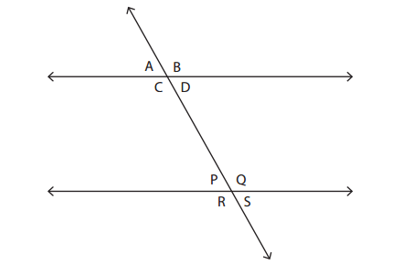
If angle P measures 60 degrees, what is the measure of angle C?
a)
60 degrees
b)
30 degrees
c)
120 degrees
23.

If angle B measures 120 degrees, find the measure of angle Q.
a)
120 degrees
b)
-30 degrees
c)
60 degrees
24.

Name the angle relationship.
a)
Alternate Interior
b)
Alternate Exterior
c)
Corresponding
d)
Vertical Angles
25.

Name the angle relationship.
a)
Alternate Interior
b)
Alternate Exterior
c)
Correpsonding
d)
Vertical Angles
26.

Name the angle relationship.
a)
Consecutive Interior
b)
Alternate Interior
c)
Corresponding
d)
Vertical Angles
27.

Name the angle relationship.
a)
Alternate Interior
b)
Alternate Exterior
c)
Corresponding
d)
Vertical Angles
28.

Name the angle relationship.
a)
Alternate Interior
b)
Alternate Exterior
c)
Corresponding
d)
Vertical Angles
29.

Name the angle relationship.
a)
Alternate Interior
b)
Alternate Exterior
c)
Corresponding
d)
Vertical Angles
30.

Name the angle relationship.
a)
Alternate Interior
b)
Alternate Exterior
c)
Correpsonding
d)
Vertical Angles
31.

What is the measure of ∠2?
a)
38
b)
58
c)
71
d)
142
32.

What type of angle pair is ∠1 and ∠3?
a)
alternate interior angles
b)
supplementary angles
c)
corresponding angles
d)
vertical angles
33.

Name the alternate interior angle to angle 3.
a)
4
b)
5
c)
6
d)
8
34.

Name the corresponding angle to angle 4.
a)
angle 8
b)
angle 6
c)
angle 2
d)
angle 5
35.

Name the angle relationship.
a)
Alternate Interior
b)
Alternate Exterior
c)
Corresponding
d)
Vertical Angles
36.
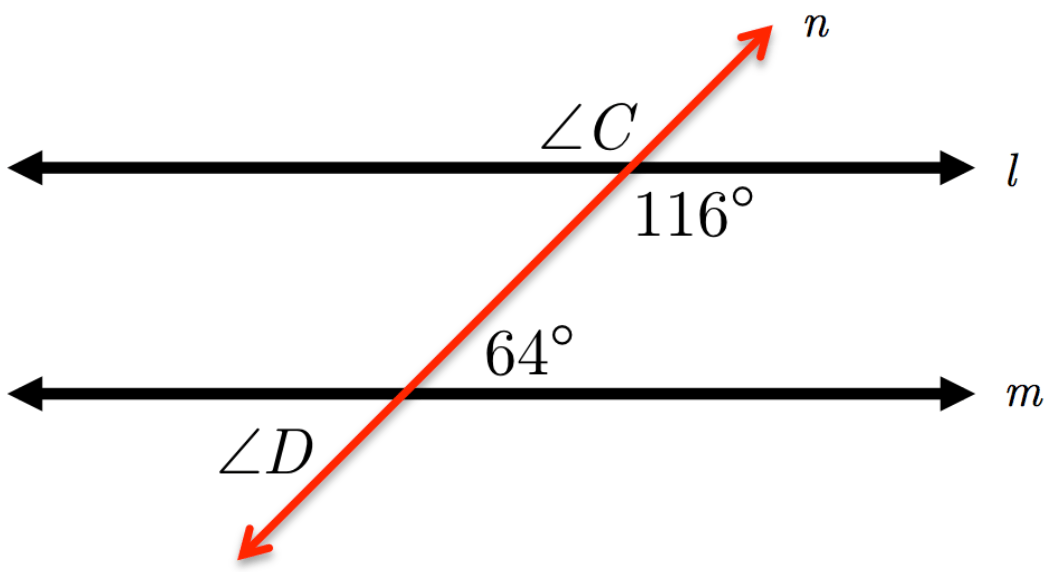
Find D
a)
∠D=116°
b)
∠D=64°
c)
∠D=180°
d)
∠D=26°
37.

Find C
a)
∠C=116°
b)
∠C=64°
c)
∠C=180°
d)
∠C=26°
38.
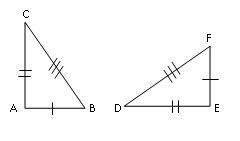
Name the postulate, if possible, that makes the triangles congruent.
a)
SSS
b)
SAS
c)
ASA
d)
Not Possible
39.
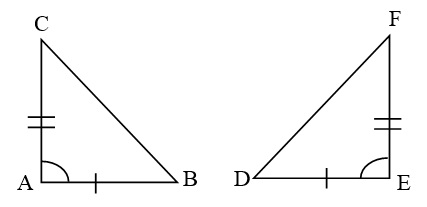
Name the postulate, if possible, that makes the triangles congruent.
a)
SSS
b)
SAS
c)
ASA
d)
AAS
40.
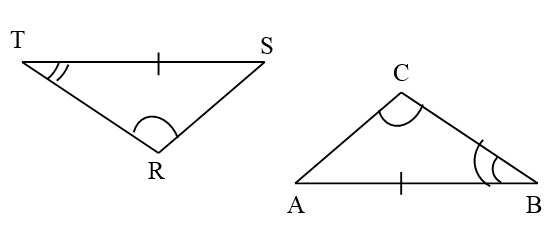
Name the postulate, if possible, that makes the triangles congruent.
a)
SAS
b)
ASA
c)
AAS
d)
Not Possible
41.

Name the postulate, if possible, that makes the triangles congruent.
a)
SAS
b)
ASA
c)
AAS
d)
Not Possible
42.
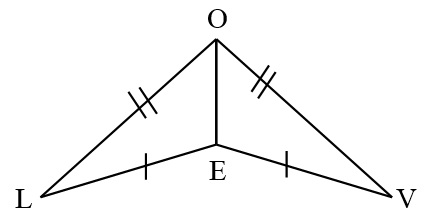
Name the postulate, if possible, that makes the triangles congruent.
a)
SSS
b)
SAS
c)
ASA
d)
Not Possible
43.
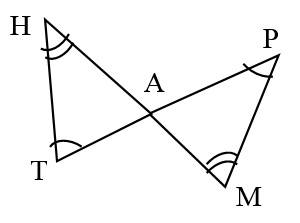
Name the postulate, if possible, that makes the triangles congruent.
a)
SSS
b)
ASA
c)
AAS
d)
Not Possible
44.
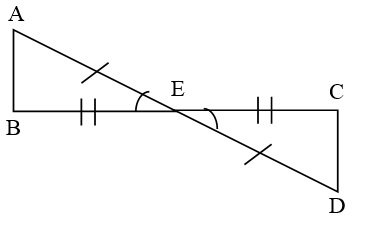
Name the postulate, if possible, that makes the triangles congruent.
a)
SSS
b)
SAS
c)
AAS
d)
Not Possible
45.

Name the postulate, if possible, that makes the triangles congruent.
a)
SSS
b)
SAS
c)
SSA
d)
Not Possible
46.

Name the postulate, if possible, that makes the triangles congruent.
a)
SAS
b)
ASA
c)
AAS
d)
Not Possible
47.

Name the postulate, if possible, that makes the triangles congruent.
a)
SSS
b)
SAS
c)
ASA
d)
AAS
48.

Name the postulate, if possible, that makes the triangles congruent.
a)
SAS
b)
ASA
c)
AAS
d)
Not Possible
49.

Name the postulate, if possible, that makes the triangles congruent.
a)
SSS
b)
SAS
c)
AAS
d)
Not Possible
50.

Name the postulate, if possible, that makes the triangles congruent.
a)
SSS
b)
SAS
c)
ASA
d)
Not Possible
51.
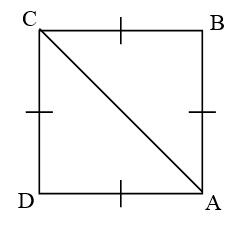
Name the postulate, if possible, that makes the triangles congruent.
a)
SSS
b)
SAS
c)
ASA
d)
AAS
52.

Name the postulate, if possible, that makes the triangles congruent.
a)
SSS
b)
SAS
c)
ASA
d)
AAS
53.
What is the ratio for cosine?
a)
H/A
b)
O/A
c)
A/H
d)
A/O
54.
What is the ratio for tangent?
a)
O/A
b)
A/O
c)
A/H
d)
O/H
55.
We can use SOH-CAH-TOA for...
a)
Any triangle ever
b)
Non-right triangles only
c)
Right Triangles only
d)
Never
56.

Which Trig function do you use?
a)
Sine
b)
Cosine
c)
Tangent
57.

Set up the problem.
a)
sin(47) = x/28
b)
cos(47) = x/28
c)
tan(47) = x/28
d)
cos(47) = 28/x
58.

What is the length of side x?
a)
6.57 cm
b)
7 cm
c)
7.44 cm
d)
26.33 cm
59.

Solve for x.
a)
24.20
b)
4.92
c)
290.4
d)
29.75
60.

Set up the problem...
a)
sin X = 41/28
b)
tan X = 41/28
c)
cos X = 28/41
d)
sin X = 28/41
61.

What is the measure of X?
a)
38.66
b)
36.87
c)
53.13
d)
45.71
62.

a)
32.58
b)
57.42
c)
31.44
d)
59.02
63.
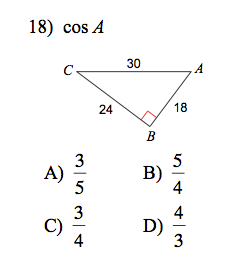
Choose the correct ratio.
a)
A
b)
B
c)
C
d)
D
64.
The distance halfway across the circle is called the...
a)
radius
b)
diameter
c)
circumference
d)
area
65.
The distance from the center of the circle to any point on the circle is called the...
a)
radius
b)
diameter
c)
circumference
d)
area
66.
The distance across the circle through the center is called the...
a)
radius
b)
diameter
c)
circumference
d)
area
67.
The distance all the way around the circle is called the...
a)
radius
b)
diameter
c)
circumference
d)
area
68.
The perimeter of a circle is usually called the...
a)
radius
b)
diameter
c)
circumference
d)
area
69.
If you multiply π × d then you will get the...
a)
radius
b)
diameter
c)
circumference
d)
area
70.
If you multiply π × r × r then you will get the...
a)
radius
b)
diameter
c)
circumference
d)
area
71.
If you multiply 2 × r then you will get the...
a)
radius
b)
diameter
c)
circumference
d)
area
72.
If you multiply ½ × d then you will get the...
a)
radius
b)
diameter
c)
circumference
d)
area
73.
If a circle has a radius of 10 ft. then which statement is true?
a)
The radius is 5 ft.
b)
The diameter is 5 ft
c)
The radius is 20 ft.
d)
The diameter is 20 ft.
74.
If a circle has a diameter of 10 ft. then which statement is true?
a)
The radius is 5 ft.
b)
The diameter is 5 ft
c)
The radius is 20 ft.
d)
The diameter is 20 ft.
75.
If a circle has a diameter of 16 ft. then which statement is true?
a)
The radius is 8 ft.
b)
The diameter is 8 ft
c)
The radius is 32 ft.
d)
The diameter is 32 ft.
76.
If a circle has a radius of 5 ft. then which formula below is correct for the circumference?
a)
π(5)
b)
π(10)
c)
π(5)(5)
d)
π(10)(10)
77.
If a circle has a radius of 5 ft. then which formula below is correct for the circumference?
a)
π(5)
b)
π(10)
c)
π(5)(5)
d)
π(10)(10)
78.
If a circle has a radius of 5 ft. then which formula below is correct for the area?
a)
π(5)
b)
π(10)
c)
π(5)(5)
d)
π(10)(10)
79.
If a circle has a diameter of 12 ft. then which formula below is correct for the area?
a)
π(24)
b)
π(6)(6)
c)
π(12)(12)
d)
π(24)(24)
80.
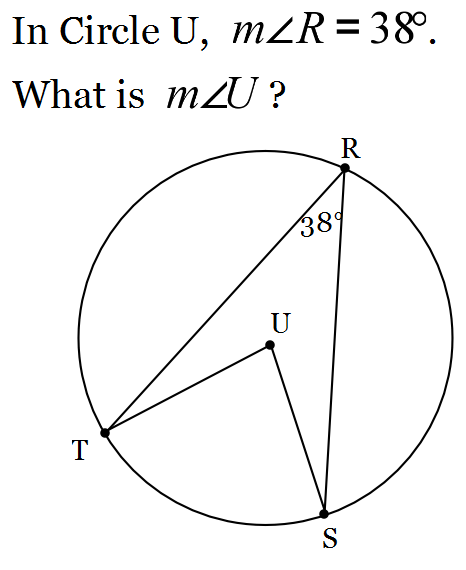
What is the m∠U?
a)
38⁰
b)
19⁰
c)
76⁰
d)
90⁰
81.

Find a and b.
a)
a=74⁰
b=93⁰
b=93⁰
b)
a=93⁰
b=74⁰
b=74⁰
c)
a=87⁰
b=106⁰
b=106⁰
d)
a=106⁰
b=87⁰
b=87⁰
82.

What is m∠RST?
a)
86°
b)
43°
c)
172°
d)
90°
83.

Find m∠RPQ.
a)
55°
b)
70°
c)
110°
d)
145°
84.
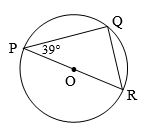
Find m∠PRQ.
a)
39°
b)
90°
c)
51°
d)
15°
85.
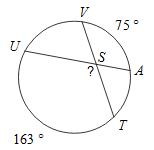
Find m∠UST.
a)
119°
b)
163°
c)
44°
d)
61°
86.
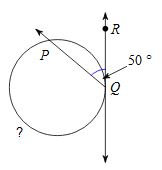
Find the measure of major arc PQ (the question mark).
a)
260°
b)
100°
c)
25°
d)
130°
87.

What similarity theorem would prove that these triangles are similar?
a)
SAS∼
b)
SSS∼
c)
AA∼
d)
Side Splitter
88.

Are the triangles similar?
a)
Yes
b)
No
89.
In similar Polygons, corresponding sides are ___ and corresponding angles are ___. (Fill in the blanks)
a)
congruent, proportional
b)
proportional, congruent
c)
congruent, congruent
d)
proportional, proportional
90.

Find missing side
a)
5
b)
7
c)
9
d)
11
91.
If two figures are similar their angles are______.
a)
proportional
b)
congruent
c)
supplementary
d)
complementary
92.
If two figures are similar, the corresponding sides are ______________.
a)
equal
b)
congruent
c)
proportional
d)
none of these
93.

Complete each proportion.
CB / DM = AC / ?
CB / DM = AC / ?
a)
BM
b)
MA
c)
BC
d)
AD
94.

Complete each proportion.
AB / BM = ? / CD
AB / BM = ? / CD
a)
BC
b)
AC
c)
MD
d)
MC
95.

Determine if the triangles are similar. Justify.
a)
Yes, by SSS.
b)
Yes, by SAS. Scale Factor is 1:2.
c)
Yes, by SAS. Scale Factor is 3:1.
d)
No, not similar.
96.

Choose the similarity statement for the triangles.
a)
ΔMNL ∼ ΔOPQ
b)
ΔNOM ∼ ΔPQL
c)
ΔLMN ∼ ΔPQO
d)
ΔMLN ∼ ΔPQO
97.
What is the volume of a rectangular prism?
a)
lwh
b)
(lwh)/3
98.
Which label would NOT be appropriate for volume.
a)
square miles
b)
inches3
c)
cm3
d)
cubic feet
99.
What is the formula for the volume of a prism?
a)
V = P*h
b)
V = B*h
c)
V = (1/3)P*h
d)
V = (1/3)B*h
100.
What is the formula for volume of a CONE?
a)
V = π r²
b)
V = π r² h
c)
V = ⅓ π r² h
d)
V = ⅓ L W H
101.
What is the formula for the volume of a pyramid?
a)
V = P*h
b)
V = B*h
c)
V = (1/3)P*h
d)
V = (1/3)B*h
102.
What is the volume formula for a sphere?
a)
V = (4 ∕ 3)πr3
b)
V = (1 ∕ 3)πr2h
c)
V = πr2h
d)
V = (1 ∕ 3)Bh
103.
What is the formula for volume of a CYLINDER?
a)
V = π r²
b)
V = π r² h
c)
V = ⅓ π r² h
d)
V = ⅓ L W H
104.
V = 4/3⋅π⋅r3
a)
Sphere
b)
Cube
c)
Triangular Pyramid
d)
Rectangular Prism
105.
V = π⋅r2⋅H
a)
Cylinder
b)
Cone
c)
Sphere
d)
Cube
106.
V = ½⋅b⋅h⋅H
a)
Triangular Prism
b)
Trapezoid
c)
Sphere
d)
Square Pyramid
107.
What is the formula for volume of a CYLINDER?
a)
V = π r²
b)
V = π r² h
c)
V = ⅓ π r² h
d)
V = ⅓ L W H
108.

a)
Spheres
b)
Cones
c)
Cylinders
d)
Prisms
109.
A cube has sides that are all the same length.
a)
True
b)
False
110.
V= πr2h is the formula for that shape?
a)
Cone
b)
Sphere
c)
Triangle
d)
Cylinder
111.
What is the formula to calculate the volume of a rectangular object?
a)
Length X Width X Weight
b)
Length x Mass x Width
c)
Length x Width x Height
112.

Area of a Circle
a)
A = ½h(b1 + b2)
b)
A = 4πr2
c)
A = ½bh
d)
A = πr2
113.

Area of a Triangle
a)
A = ½h(b1 + b2)
b)
A = bh
c)
A = ½bh
d)
A = πr2
114.

Area of a Rectangle
a)
A = ½h(b1 + b2)
b)
A = lw
c)
a = ½bh
d)
A = πr2
115.

Area of a Square
a)
A = ½h(b1 + b2)
b)
A = s2
c)
A = ½bh
d)
A = πr2
116.

Volume of a Square Pyramid
a)
V = lwh
b)
V = ⅓ lwh
c)
V = πr2h
d)
V = 4/3 πr3
117.

What shape will the horizontal cross-section of a sphere be?
a)
Dome
b)
Circle
c)
Ellipse
d)
Rectangle
118.

What shape will the horizontal cross-section of a cone be?
a)
Dome
b)
Circle
c)
Pyramid
d)
Triangle
119.

What shape will the vertical cross -section of a cylinder be?
a)
Circle
b)
Triangle
c)
Rectangle
d)
Ellipse
120.

What shape will the vertical cross-section of a cube be?
a)
Square
b)
Triangle
c)
Trapezoid
d)
Circle
121.

Describe the cross section.
a)
rectangle
b)
square
c)
parallelogram
d)
circle
122.
When you translate, you ______ a number to x and y.
a)
Add or subtract
b)
Multiply or divide
c)
Add or multiply
d)
Subtract or divide
123.
Translation are always _______
a)
Congruent
b)
Bigger
c)
Smaller
d)
Rotated
124.
When you translate, (x-4,y) will move _____.
a)
4 units right
b)
4 units left
c)
4 units up
d)
4 units down
125.
When you translate, (x,y+6) will move _____.
a)
6 units right
b)
6 units left
c)
6 units up
d)
6 units down
126.

Identify the transformation from ABC to A'B'C'.
a)
90o clockwise rotation
b)
90o counter clockwise rotation
c)
Reflection across the y-axis
d)
Reflection across the x-axis
127.

Write a rule for the translation.
a)
(x -1, y + 2)
b)
(x -2, y + 1)
c)
(x +2, y - 1)
d)
(x +1, y - 2)
128.

Identify the transformation from ABCD to A'B'C'D'.
a)
Translation
b)
Reflection across the y-axis
c)
Reflection across the x-axis
d)
90o counter clockwise Rotation
129.

The image shows what type of transformation
a)
Rotation
b)
Translation
c)
Reflection
130.
The result of a transformation.
a)
Pre-image
b)
Image
131.

Is the picture being reflected in the y-axis or x-axis?
a)
y-axis
b)
x-axis
132.

Does the image show a Dilation?
a)
Yes
b)
No
133.

Does the image show a dilation?
a)
Yes
b)
No
134.
A triangle has vertices with coordinates (2,0), (3, -1) and (-2,-5). If the triangle is dilated by a scale factor of 3 with the origin as the center of dilation, what are the coordinates of the vertices of the image?
a)
(5,3), (6,2), (1,-2)
b)
(6,0), (9,-3), (-6,-15)
c)
(2/3,0), (1,-1/3), (-2/3,-5/3)
d)
(-1,-3), (0,-4), (-5,-8)
135.

Choose the correct scale factor:
a)
2
b)
3
c)
1/3
d)
1/2
136.

What are the series of rigid motions that would map ∆ABC onto ∆A''B''C''?
a)
a reflection followed by a rotation
b)
a reflection followed by a translation
c)
a translation followed by a rotation
d)
a translation followed by a reflection
137.
A rigid motion creates figures that are ____________.
a)
congruent
b)
different sizes
c)
similar
d)
larger
138.

What is the sequence of transformations for the image given?
a)
Reflect over the x-axis, translate (x+8,y)
b)
Reflect over the x-axis then translate (x+6, y)
c)
Reflect over the y-axis then (x+1, y+1)
d)
Translate down 4 (y-4) and to the right 5 (x+5)
100 %

