
 Worksheets
Part 2 3rd 9 weeks
Total questions: 42
Worksheet time: 34mins
Name
Class
Date
1.
Cells that do not have a true nucleus are called....
a)
eukaryote
b)
prokaryote
c)
unicellular
d)
multicellular
2.

Plant cells are ...
a)
eukaryotic
b)
prokaryotic
c)
somatic cells
d)
organelles
3.
Prokaryotes are unlike all other organisms in that their cells
a)
do not have a nucleus
b)
have organelles
c)
have cell walls
4.
Active transport moves molecules from a low concentration to a high concentration, requiring energy for the movement.
a)
passive
b)
active
c)
diffusion
5.
The basic unit of life is _______
a)
atom
b)
bacteria
c)
cell
d)
chromosomes
6.
Why is the mitochondria called the power house?
a)
provides protection
b)
provides energy
c)
provides water storage
d)
provides color
7.
Layer that is semi-permeable
a)
cell wall
b)
cell membrane
c)
nuclear membrane
d)
cytoplasm
8.
__________ is found in plants and is the site for photosynthesis
a)
central vacuole
b)
cell wall
c)
cytoplasm
d)
chloroplast
9.
The function of ribosomes are to__________________
a)
produce energy
b)
produce proteins
c)
produce cells
d)
allow some materials in and out of the cell
10.

The stages of mitosis in order
a)
Metaphase, Anaphase, Prophase, Telophase
b)
Prophase, Anaphase, Metaphase, Telophase
c)
Prophase, Metaphase, Anaphase, Telophase
d)
Anaphase, Prophase, Telophase, Metaphase
11.

Name the phase:
a)
Anaphase
b)
Telophase
c)
Metaphase
d)
Prophase
12.
During mitosis, spindle fibers are used to_______________________
a)
cut the cell in half
b)
divide the genetic material in cell
c)
unzip the chromosomes
13.

Name the phase:
a)
Anaphase
b)
Telophase
c)
Metaphase
d)
Prophase
14.

Name the phase:
a)
Prophase
b)
Metaphase
c)
Anaphase
d)
Telophase
15.

Name the phase:
a)
Prophase
b)
Metaphase
c)
Anaphase
d)
Telophase
16.
The phase in mitosis where chromosomes move away and are pulled apart by spindles to opposite sides of the cell.
a)
prophase
b)
anaphase
c)
metaphase
d)
telephase
17.
Chromosomes condense from long stands into rod like structures.
a)
Prophase
b)
Interphase
c)
Metaphase
d)
Telophase
18.
Nuclear membrane forms around chromosomes and begins to separate.
a)
Anaphase
b)
Telophase
c)
Metaphase
d)
Prophase
19.
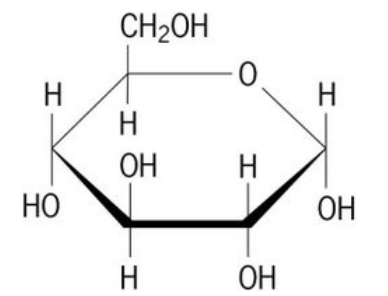
Which biomolecule is this a picture of?
a)
Protein
b)
Nucleic Acid
c)
Lipid
d)
Carbohydrate
20.
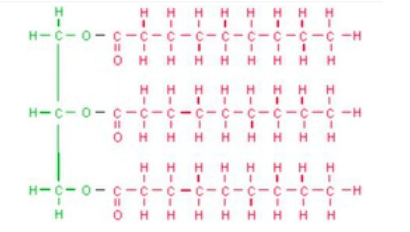
Which biomolecule is this a picture of?
a)
Protein
b)
Nucleic Acid
c)
Lipid
d)
Carbohydrate
21.
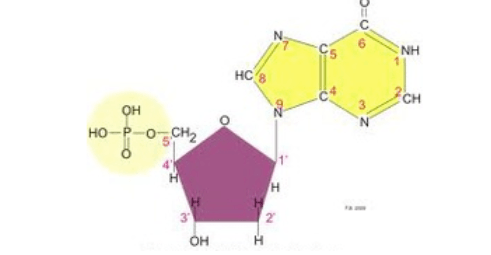
Which biomolecule is this a picture of?
a)
Protein
b)
Nucleic Acid
c)
Lipid
d)
Carbohydrate
22.
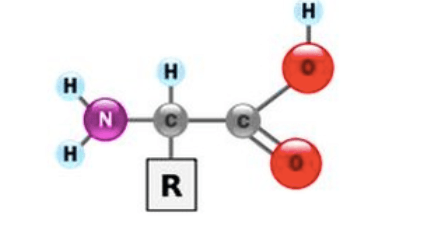
Which biomolecule is this a picture of?
a)
Protein
b)
Nucleic Acid
c)
Lipid
d)
Carbohydrate
23.

Letter D...
a)
active site
b)
enzyme
c)
substrate
d)
products
24.
A form of RNA that copies the coded DNA in the nucleus.
a)
tRNA
b)
yRNA
c)
mRNA
d)
idkRNA
25.

Sends message to ribosome
a)
tRNA
b)
mRNA
c)
gRNA
d)
bRNA
26.
Which of the following is the correct equation for PHOTOSYNTHESIS?
a)
6CO2 + 6H2O --> 6O2 + C6H12O6
b)
6CO2 + C6H12O6 + 6H2O --> O2
c)
6O2 + 6H2O --> 6CO2 + C6H12O6
d)
C6H12O6 + 6O2 ---> 6H2O + 6CO2
27.
C6H12O6 + 6O2 --> 6CO2 + 6H2O + 25 ATP
The reactants of this equation are...
The reactants of this equation are...
a)
C6H12O6 + 6O2 (Glucose & Oxygen)
b)
6CO2 + 6H2O + 25 ATP (Carbondioxide & Water)
28.
6CO2 + 6H2O + sunlight --> C6H12O6 + 6O2
The reactants of this equation are...
The reactants of this equation are...
a)
C6H12O6 + 6O2 (Glucose & Oxygen)
b)
6CO2 + 6H2O + sunlight (Carbondioxide & Water)
29.

This type of inheritance pattern is a MIXTURE of both traits.
a)
incomplete dominance
b)
co-dominance
c)
complete dominance
d)
recessive pattern
30.

This type of inheritance pattern shows BOTH traits in possible offspring
a)
complete dominance
b)
incomplete dominance
c)
co-dominance
d)
dominant pattern
31.
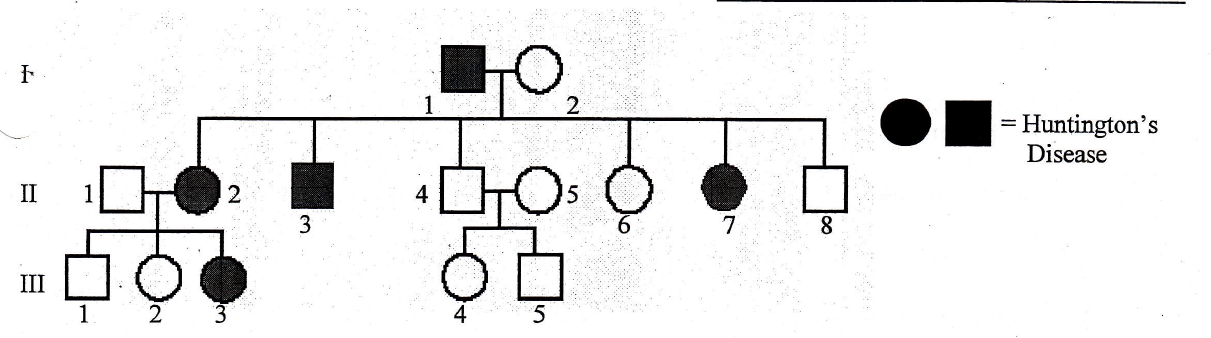
There are no carriers for Huntington's Disease- you either have it or you don't. Is Huntington's disease caused by a dominant or recessive trait?
a)
Dominant
b)
Recessive
c)
X-linked
d)
Y-linked
32.

Is hitchhiker's thumb dominant or recessive? The carriers are not marked.
a)
Dominant
b)
Recessive
c)
Y-linked
d)
X-linked
33.
A sex-linked trait is when a trait is found __________
a)
on the X or Y chromosome
b)
on the W or M chromosome
c)
on the other chromosomes
34.

Without knowing what the letters stand for, calculate the phenotypic ratio of this dihybrid cross....
a)
6:2:6:2
b)
9:3:3:1
c)
9:1:3:3
d)
2:6:2:6
35.
Which of the following is a phenotype?
a)
Aa
b)
red hair
c)
heterozygous genes
d)
mutated DNA
36.
Evolutionary evidence such as similarities in DNA & amino acid, embyro development, and similarity in homologous structures suggest _____
a)
common ancestors
b)
common families
c)
nothing at all
37.
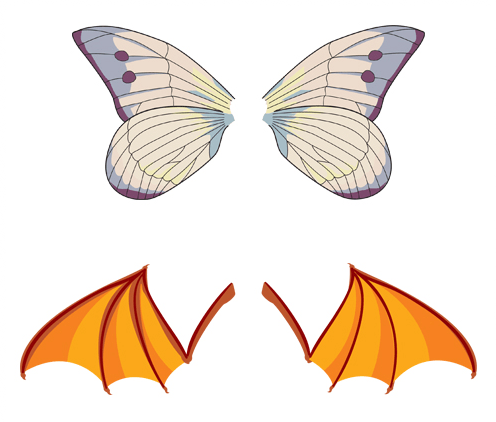
How would you describe this evolution?
a)
Homologous structure
b)
Analogous structure
c)
Structural adaption
d)
Functional adaption
38.
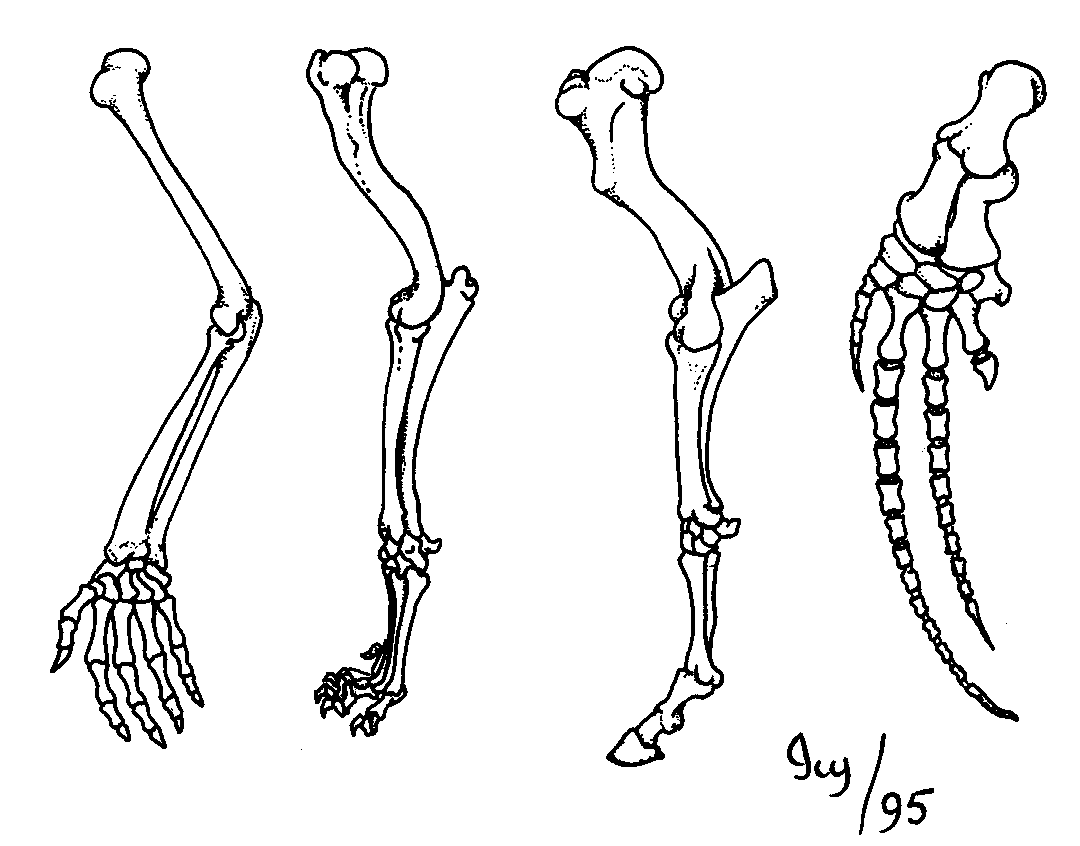
Structures with the same parts have different functions; suggests that organisms share a common ancestry
a)
vestigial structures
b)
homologous structures
c)
adaptive radiation
d)
fossil
39.
What are the main points of natural selection?
a)
Overproduction & Genetic Variation
b)
Struggle to Survive & Differential Reproduction
c)
All of the above
d)
None of the above
40.
What is an adaptation?
a)
A feature or behavior that helps an animal survive.
b)
The food that an animal eats.
c)
How energy moves in a food web.
d)
How animals evolve throughout time.
41.
Genetic drift _______ genetic diversity within small populations
a)
increases
b)
decreases
c)
stays the same
42.

According to the data, the unknown bacterial species is most closely related to
a)
Species I
b)
Species II
c)
Species III
d)
Species IV
100 %

