
NEW
Font size
S
M
L
XL
 Worksheets
3rd 9 Weeks Review (Hydrology & Meteorology)
Total questions: 50
Worksheet time: 3hrs 44mins
Name
Class
Date
1.
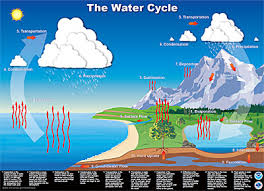
During which stage do clouds form?
a)
condensation
b)
evaporation
c)
precipitation
d)
runoff
2.
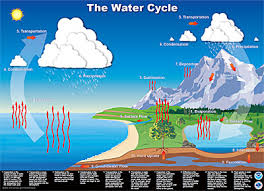
Which stages does liquid water from the ocean turn into water vapor?
a)
condesantion
b)
evaporation
c)
precipitation
d)
run off
3.
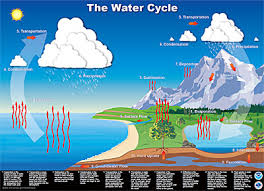
Which stage does ground water try to return to the ocean or soak into the ground?
a)
condensation
b)
evaporation
c)
precipitation
d)
run off
4.
Where is most of the freshwater found on Earth?
a)
lakes
b)
glaciers
c)
oceans
d)
rivers
5.
The release of moisture by living plants.
a)
evaporation
b)
precipitation
c)
condensation
d)
transpiration
6.

What is A?
a)
Evaporation
b)
Condensation
c)
Precipitation
d)
Runoff
7.

What is B?
a)
Evaporation
b)
Condensation
c)
Precipitation
d)
Runoff
8.

What is C?
a)
Evaporation
b)
Condensation
c)
Precipitation
d)
Runoff
9.

What is D?
a)
Evaporation
b)
Condensation
c)
Precipitation
d)
Runoff
10.
Which represents the distribution of water on Earth?
a)
3% freshwater, 97% salt water
b)
97% freshwater, 3% salt water
c)
71% freshwater, 29% salt water
d)
29% freshwater, 71% salt water
11.
What is the energy source for the water cycle?
a)
Geothermal
b)
Nuclear
c)
Solar
d)
Wind
12.
Rain, sleet , hail, and snow are all types of
a)
Evaporation
b)
Transpiration
c)
Condensation
d)
Precipitation
13.
The measure of the amount of salt in water
a)
Salinity
b)
Alkalinity
c)
Acidity
d)
Affinity
14.
The gently sloping section from the shoreline
a)
Continental Divide
b)
Continental Shelf
c)
Continental Slope
d)
Continental Margin
15.
The large flat, almost level area of the ocean floor
a)
Guyot
b)
Ocean Floor
c)
Abyssal Plain
d)
Seamount
16.
Mountain Chains on the ocean floor
a)
Ocean Trench
b)
Seamount
c)
Mid-ocean Ridge
d)
Guyot
17.
Huge cracks in the ocean floor
a)
Mid-ocean Ridge
b)
Ocean Trench
c)
Guyot
d)
Seamount
18.
The cause of waves at the surface of the ocean
a)
Boats
b)
Wind
c)
Marine life
d)
Geothermal energy
19.
The cause of tides
a)
Waves
b)
Currents
c)
Interaction of the Sun, Moon, and Earth
d)
Inertia
20.
Cause of deep ocean currents
a)
Differences in Density
b)
Heat from the Sun
c)
Volcanic Activity
d)
Gravity
21.
Timing of high tides
a)
Once a day
b)
Twice a day
c)
Three times a day
d)
Four time a day
22.
A large stream of water moving through an ocean
a)
Wave
b)
Tide
c)
Current
d)
Wake
23.
The major warm surface current on the Eastern United States
a)
Gulf Stream
b)
Atlantic Drift
c)
Atlantic Ocean
d)
Caribbean Sea
24.
What percent of the Earth is covered in water?
a)
45
b)
71
c)
97
d)
3
25.
A higher rate of evaporation will cause a higher level of salinity.
a)
True
b)
False
26.
A higher rate of freezing will cause a lower level of salinity in saltwater.
a)
True
b)
False
27.
What is the source of most of the salt in the oceans?
a)
precipitation
b)
freezing or evaporation
c)
rocks on land
d)
global winds
28.
Which movements in the ocean are the most affected by differences in water density?
a)
waves
b)
deep currents
c)
surface currents
d)
tides
29.
In which way do most cold currents move?
a)
away from the poles
b)
away from the equator
c)
to the surface of the ocean
d)
towards the poles
30.
Compared with surface currents, deep ocean currents are
a)
colder and less dense
b)
warmer and less dense
c)
warmer and more dense
d)
colder and more dense
31.
The Coriolis Effect causes wind and surface currents to move in
a)
random paths
b)
straight paths
c)
S shaped paths
d)
curved paths
32.

What kind of breeze is this & what time of day/night would it form?
a)
Land breeze - daytime
b)
Land breeze - nighttime
c)
Sea breeze - daytime
d)
Sea breeze - nighttime
33.
Which statement correctly defines wind?
a)
Wind is the movement of air from areas of low pressure to areas of high pressure
b)
Wind is the movement of air to a colder area in the atmosphere.
c)
Wind is the movement of air from areas of high pressure to areas of low pressure.
d)
Wind is the movement of air pushed around and bouncing off Earth's surface.
34.
What causes global winds and convection in the atmosphere?
a)
continental deflection
b)
the rotation of the Earth
c)
Moon's gravity
d)
unequal heating of the Earth by the sun
35.
Why do land breezes occur at night?
a)
Land cools off slower than water, so the air above water is cooler.
b)
Water cools off faster than land, so the air above land is warmer.
c)
Land heats up slower than water, so the air stays cooler during the day.
d)
Water cools off slower than land, so the air above water is warmer.
36.

What kind of breeze is this and when would it form?
a)
Land breeze - daytime
b)
Land breeze - nighttime
c)
Sea breeze - daytime
d)
Sea breeze - nighttime
37.
When a cold front is approaching, what happens?
a)
warm air is pushing under cold air causing humid weather and lower temperatures
b)
warm air is pushing under cold air causing humid weather and higher temperatures
c)
warm air rises, cools, and causes rain and thunderstorms
d)
cold air is pushed over warm air causing rain and thunderstorms
38.
When a warm front is approaching, what happens?
a)
advancing cold air pushes up and over retreating warm air causing warm temperatures and mild rain
b)
advancing warm air pushes up and over retreating cold air causing warm temperatures and mild rain
39.
A front is
a)
where warm air is cooling at earth's surface
b)
a line where hot and cold air are separating
c)
a line where two different air masses meet
d)
where cold air is rising and forming rain clouds
40.
If a cold front is currently passing through the city of Denver, what type of weather conditions is Denver most likely experiencing?
a)
warm, foggy weather
b)
cooler, dry weather
c)
hot, dry weather
d)
thunderstorms
41.
What is the meaning of conduction?
a)
when heat transfers from objects that are not touching
b)
heat rise
c)
cold fall
d)
when heat transfers from objects that are touching
42.
What kind of heat is happening when the sun heats your body?
a)
conduction
b)
convection
c)
density
d)
radiation
43.
Water boiling is an example of _______.
a)
conduction
b)
radiation
c)
density
d)
convection
44.
Heat always travels from _____ to ______ objects.
a)
hot to cold
b)
cold to hot
c)
cold to cold
d)
hot to hot
45.

The baby chickens are kept warm from the heat lamps demonstrates this type of heat transfer.
a)
conduction
b)
convection
c)
radiation
d)
density
46.

The amount of water vapor in the air
a)
warm front
b)
precipitation
c)
humidity
d)
air pressure
47.
____________ air sinks/falls because it is ____________dense.
a)
Cold, More
b)
Warm, Less
c)
Cold, Less
d)
Warm, More
48.
Damage measured by the Fujita Scale
a)
Tornado
b)
Hurricane
49.
Damage measured with the Saffir/Simpson scale
a)
Tornado
b)
Hurricane
50.
These are also called typhoons and cyclones
a)
Tornado
b)
Hurricane
Reset

