
 Worksheets
Earth-Sun-Moon System Modeling ESS1-1
Total questions: 45
Worksheet time: 57mins
Name
Class
Date
1.
When the Northern Hemisphere is pointing towards the sun, what season is it in the Southern Hemisphere?
a)
Winter
b)
Spring
c)
Fall
d)
Summer
2.
Waxing means...
a)
Growing
b)
Dying
c)
Losing light
d)
Moving
3.
When the moon is in between the earth and the sun it is a
a)
New Moon
b)
Full Moon
c)
First Quarter
d)
Third Quarter
4.
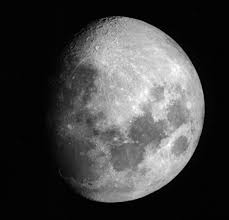
Name the moon phase
a)
waning crescent
b)
waxing crescent
c)
waning gibbous
d)
waxing gibbous
5.
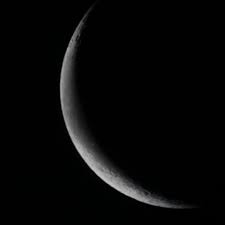
Name the moon phase
a)
waning crescent
b)
waxing crescent
c)
waning gibbous
d)
waxing gibbous
6.
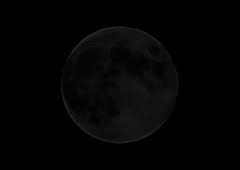
Name the moon phase
a)
First Quarter
b)
Last Quarter
c)
New Moon
d)
Full Moon
7.
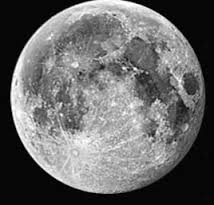
Name the moon phase
a)
First Quarter
b)
Last Quarter
c)
New Moon
d)
Full Moon
8.
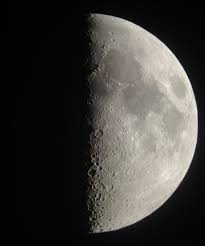
Name the moon phase
a)
First Quarter
b)
Last Quarter
c)
New Moon
d)
Full Moon
9.
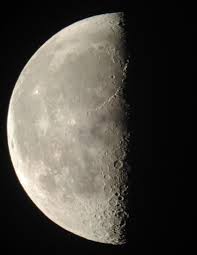
Name the moon phase
a)
First Quarter
b)
Third Quarter
c)
New Moon
d)
Full Moon
10.

Name the moon phase that would come AFTER this moon.
a)
waning crescent
b)
waxing crescent
c)
waning gibbous
d)
waxing gibbous
11.
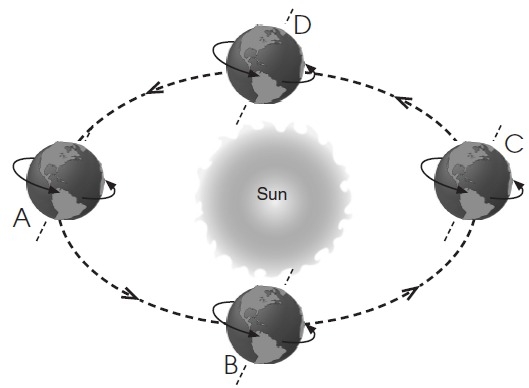
What season is it in the Northern Hemisphere for letter A?
a)
Winter
b)
Summer
c)
Spring
d)
Fall
12.
Which of the following statements is most accurate about the Movement of Earth and the Sun?
a)
The Sun revolves around the Earth
b)
The Earth rotates around the Sun
c)
The Earth revolves around the Sun
d)
The Earth rotates and revolves around the Sun
13.

What would be the result if the Earth's axis was not tilted but straight up and down?
a)
Nothing would change
b)
There would be no seasons
c)
Days would get longer
d)
The Equator would burn up and the poles would freeze
14.
What is illuminating the Moon?
a)
Nuclear Fusion
b)
Sunlight
c)
Mirrors
d)
Flood Lights
15.

When the visible (lit) portion of the moon is increasing, the moon is:
a)
waning
b)
full
c)
waxing
d)
new
16.

The Moon orbits Earth in a ________________ direction
a)
clockwise
b)
counterclockwise
c)
upwards
d)
downwards
17.
Define Gibbous
a)
Less than half of moon visible
b)
More than half of moon visible
c)
All of moon visible
d)
None of moon visible
18.
The 1st Quarter moon is lit on the:
a)
Left Side
b)
Right Side
19.
Define Waning
a)
Moon appears to be gradually increasing in size
b)
Moon is completely illuminated
c)
Moon appears to be gradually decreasing in size
d)
More than half illuminated
20.

How long does it take for the Moon to make one full revolution around the Earth?
a)
one day
b)
one month
c)
one year
d)
never
21.

If the last full moon was on April 4th, when can you expect to see the next full moon?
a)
April 29th
b)
July 4th
c)
May 4th
d)
September 12th
22.

What happens when the area in which you live tilts away from the sun?
a)
It is summer.
b)
It is spring.
c)
It is winter.
d)
It is fall.
23.
How much of the moon is always lit?
a)
can't tell
b)
always changes
c)
half
d)
3/4
24.

Why does the area around the equator stay the same temperature all year?
a)
The equator rotates slower than the poles.
b)
The equator remains the same distance from the sun.
c)
The equator always receives direct sunlight.
d)
The equator has 18 hour days.
25.
What are the reasons for the seasons?
a)
Earth's tilt and rotation.
b)
Earth's rotation and revolution.
c)
Earth's tilt and revolution.
d)
Earth's tilt and resolution
26.
The moon cycle (lunar cycle) takes approximately _______________ to complete.
a)
14 days
b)
28 days/approximately one month
c)
58 days
d)
1 week
27.
Why do we always see the same side of the moon from Earth?
a)
because the phases change
b)
because it rotates and revolves at the same rate
c)
because half of the moon always receives sunlight
d)
The moon changes positions�
28.
As the moon's shape appears to get smaller, we say that the moon is _.
a)
swelling
b)
waxing
c)
waning
d)
disappearing
29.

What season is it in the Southern Hemisphere when it is fall in the Northern Hemisphere?
a)
winter
b)
spring
c)
summer
d)
fall
30.

What event is shown in the figure?
a)
lunar eclipse
b)
solar eclipse
c)
tide formation
d)
sun spots
31.

What moon phase is at position 1?
a)
new moon
b)
waxing gibbous
c)
waning gibbous
d)
waning crescent
32.

What moon phase is at position 6?
a)
waxing crescent
b)
waxing gibbous
c)
waning gibbous
d)
waning crescent
33.

What moon phase is at position 3?
a)
waxing crescent
b)
1st quarter
c)
3rd quarter
d)
waning crescent
34.

What moon phase is at position 4?
a)
waxing crescent
b)
waxing gibbous
c)
waning gibbous
d)
waning crescent
35.
What is the order during a solar eclipse
a)
sun, moon, earth
b)
sun, earth, moon
36.

This picture represents which moon phase?
a)
Waxing Gibbous
b)
Waning Crescent
c)
Waning Gibbous
d)
Waxing Crescent
37.
During a lunar eclipse, what color does the moon appear?
a)
Black
b)
Red-orange
c)
Yellow-green
d)
White
38.
A solar eclipse only happens during a ________ moon.
a)
New
b)
Cresent
c)
Gibbous
d)
Full
39.
A lunar eclipse only happens during a ________ moon.
a)
New
b)
Cresent
c)
Gibbous
d)
Full
40.
Why is a lunar eclipse very rare?
a)
It happens every new moon
b)
The moon's orbit is tilted, so the sun, moon and earth rarely line up
c)
The moon isn't close enough to the earth
d)
The earth isn't close enough to the sun
41.
In order to have an eclipse, the Moon, Sun and Earth have to be?
a)
Below each other
b)
Above each other
c)
In alignment/same plane
42.
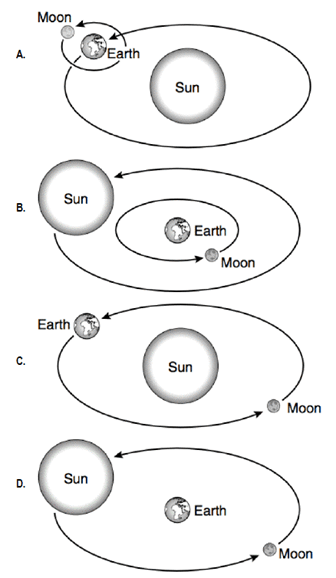
Which of these best shows that the Earth revolves around the sun as the moon revolves around the Earth?
a)
Picture A
b)
Picture B
c)
Picture C
d)
Picture D
43.
Which of the following lists the Earth, Sun, and Moon in order of size, from largest to smallest?
a)
Earth, Sun, and Moon
b)
Earth, Moon, and Sun
c)
Sun, Earth, and Moon
d)
Sun, Moon, and Earth
44.

What is the imaginary line that passes through Earth’s center and the North and South poles?
a)
Axis
b)
Orbit
c)
North Pole
d)
South Pole
45.
According to Kepler, the paths of planets about the Sun are
a)
parabolas.
b)
circles.
c)
straight lines.
d)
ellipses
100 %

