wayground logo

Free Printable Worksheets

NEW

Font size

S
M
L
XL
Worksheets

Meteorology Test Review

Total questions: 50

Worksheet time: 26mins

Name
Class
Date
1.
The condition of Earth's atmosphere at a particular time and place is called _______.
a)
climate
b)
weather
2.
_______ is the year to year conditions of temperature, precipitation, winds, and clouds in an area.
a)
climate
b)
weather
3.
What are the layers of the atmosphere in order from the Earth's surface?
a)
Troposphere, Thermosphere, Mesosphere, Stratosphere
b)
Thermosphere, Stratosphere, Mesosphere, Troposphere
c)
Troposphere, Stratosphere, Mesosphere, Thermosphere
d)
Thermosphere, Mesosphere, Stratosphere, Troposphere
4.
What are the layers of the atmosphere in order from the space to the Earth's surface?
a)
Troposphere, Thermosphere, Mesosphere, Stratosphere
b)
Thermosphere, Stratosphere, Mesosphere, Troposphere
c)
Troposphere, Stratosphere, Mesosphere, Thermosphere
d)
Thermosphere, Mesosphere, Stratosphere, Troposphere
5.
What type of front does this symbol indicate?
a)
cold front
b)
occluded front
c)
stationary front
d)
warm front
6.
What type of front does this symbol indicate?
a)
cold front
b)
occluded front
c)
stationary front
d)
warm front
7.
What type of front does this symbol indicate?
a)
cold front
b)
occluded front
c)
stationary front
d)
warm front
8.
What type of front does this symbol indicate?
a)
cold front
b)
occluded front
c)
stationary front
d)
warm front
9.
What type of front is this?
a)
cold front
b)
occluded front
c)
stationary front
d)
warm front
10.
What type of front is this?
a)
cold front
b)
occluded front
c)
stationary front
d)
warm front
11.
What type of front is this?
a)
cold front
b)
occluded front
c)
stationary front
d)
warm front
12.
What does the H stand for?
a)
Hot temperatures
b)
High pressure
c)
Low temperatures
d)
Low pressure
13.
What does the L stand for?
a)
Hot temperatures
b)
High pressure
c)
Low temperatures
d)
Low pressure
14.
What is another word for a low pressure system?
a)
Anti-Cyclone
b)
Cyclone
15.
What is another word for a high pressure system?
a)
Anti-Cyclone
b)
Cyclone
16.
What term describes an air mass that is warm?
a)
continental
b)
maritime
c)
polar
d)
tropical
17.
What term describes an air mass that is dry?
a)
continental
b)
maritime
c)
polar
d)
tropical
18.
What term describes an air mass that is cold?
a)
continental
b)
maritime
c)
polar
d)
tropical
19.
What term describes an air mass that is humid?
a)
continental
b)
maritime
c)
polar
d)
tropical
20.
What two types of air masses primarily affect Georgia?
a)
Continental Polar & Continental Tropical
b)
Continental Polar & Maritime Polar
c)
Continental Polar & Maritime Tropical
d)
Continental Tropical & Maritime Tropical
21.
What type of wind is forming here?
a)
Land Breeze
b)
Day Breeze
c)
Sea Breeze
d)
Left Breeze
22.
What type of wind is forming here?
a)
Land Breeze
b)
Night Breeze
c)
Sea Breeze
d)
Right Breeze
23.
During the day the land warms up faster than the water causing the warm air over the land to rise and the cooler air over the water to rush in to take its place.  What kind of wind is this?
a)
Land Breeze
b)
Day Breeze
c)
Sea Breeze
d)
Right Breeze
24.
During the evening the water stays warmer longer than the land causing the warm air over the water to rise and the cooler air over the land to rush in and take its places.  What kind of wind is this?
a)
Land Breeze
b)
Day Breeze
c)
Sea Breeze
d)
Right Breeze
25.
What is the main reason there are different kinds of weather?
a)
unequal heating of Earth's surface
b)
different climates
26.
What causes wind?
a)
unequal heating of Earth's surface
b)
different climates
27.
In which layer of the atmosphere doe Earth's weather occur?
a)
Mesosphere
b)
Stratosphere
c)
Thermosphere
d)
Troposphere
28.
A front is where two air masses meet and mix.
a)
True
b)
False
c)
There is not enough information.
29.
Wind flows from 
a)
low pressure to high pressure
b)
high pressure to low pressure
c)
where ever it wants
30.
What are the major factors scientists use to classify climate?
a)
temperature & wind
b)
temperature & precipitation
c)
precipitation & clouds
d)
wind & clouds
31.
What causes the currents to curve?
a)
coriolis effect
b)
butterfly effect
c)
curvy effect
32.
What causes the currents to curve?
a)
revolution of Earth
b)
rotation of Earth
c)
seasons
d)
sun's rays
33.
The Coriolis Effect is the way Earth's rotation causes winds (and currents) to curve as they move from the equator to poles.
a)
True
b)
False
34.
An air mass gets its characteristics from ______.
a)
the sun
b)
the moon
c)
the area where it forms
d)
the front it creates
35.
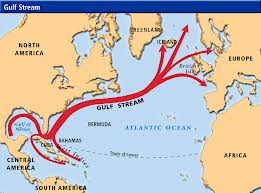
How does the Gulf Stream affect the climate of Europe?
a)
It makes the climate cooler.
b)
It makes the climate warmer.
c)
It does not change the climate.
36.
How does the California Current affect the climate of California?
a)
It makes the climate cooler.
b)
It makes the climate warmer.
c)
It does not change the climate.
37.
Which substance heats up faster?
a)
land
b)
water
38.
Which substance cools off faster?
a)
land
b)
water
39.
Unequal heating of the Earth's surface causes all weather.
a)
True
b)
False
40.
Unequal heating of the Earth's surface causes all wind.
a)
True
b)
False
41.
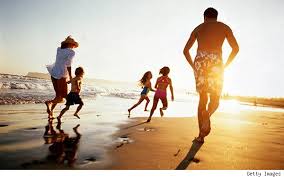
The sun shines down on this family as the play on the beach.
a)
conduction
b)
convection
c)
radiation
42.
The Gulf Stream is a current that brings warm ocean water from the south to the north.
a)
conduction
b)
convection
c)
radiation
43.
Walking on the warm sand sand with your bare feet.
a)
conduction
b)
convection
c)
radiation
44.
Blow drying your wet hair.
a)
conduction
b)
convection
c)
radiation
45.
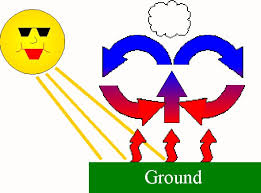
Warm air rises and the cool air sinks.
a)
conduction
b)
convection
c)
radiation
46.

__________ is the transfer of heat by the movement of a fluid.

a)

Conduction

b)

Convection

c)

Radiation

47.

When you heat up an object, the particles in the object move _________.

a)

faster

b)

the same speed

c)

slower

48.

What is the definition of CONDUCTION?

a)

When heat is transferred from objects like rays of light or electromagnetically.

b)

a hot liquid or air that expands, becomes less dense, and rises or becomes more dense, and sinks.

c)

When heat transfers from objects that are touching.

49.

What is the definition of CONVECTION?

a)

When heat is transferred from objects like rays of light or electromagnetically.

b)

a hot liquid or air that expands, becomes less dense, and rises or becomes more dense, and sinks.

c)

When heat transfers from objects that are touching.

50.

What is the definition of RADIATION?

a)

When heat is transferred from objects like rays of light or electromagnetically.

b)

a hot liquid or air that expands, becomes less dense, and rises or becomes more dense, and sinks.

c)

When heat transfers from objects that are touching.