
 Worksheets
WWI
Total questions: 51
Worksheet time: 44mins
Name
Class
Date
1.

What did Germany send to Mexico that offered to help them win land back from the United States if Mexico would start a war with the US?
a)
The Zimmerman Telegram
b)
The Outlandish Letter
c)
The Surprising Phone Call
2.
This word means strengthening a country's military; it's a cause of World War I.
a)
Nationalism
b)
Militarism
c)
Alliances
d)
Imperialism
3.
This word means seeking other colonies; it was a cause of World War I.
a)
Militarism
b)
Imperialism
c)
Alliances
d)
Nationalism
4.
This word means support for different sides during war; there were the Allied and Central powers during WWI.
a)
Nationalism
b)
Imperialism
c)
Alliances
d)
Militarism
5.
Germany used their U-boats to sink ships of the Allied powers; this British passenger liner was destroyed in 1917.
a)
Lusitania
b)
USS Maine
6.
Who won WWI?
a)
Allied powers
b)
Central Powers
7.
neutral
a)
not taking sides
b)
engaged in battle
8.
This started World War I
a)
an assassination
b)
a revolution
c)
the invasion of a neutral country
d)
a formal treaty
9.
How did many Americans react to the Zimmermann Telegram?
a)
They became concerned about Russian expansion
b)
They wanted to avoid membership in the League of Nations.
c)
They wanted to fire Zimmermann
d)
They were outraged over a possible German-Mexican alliance.
10.
This word means pride in one's country; it was a cause of WWI.
a)
Militarism
b)
Alliances
c)
Nationalism
d)
Imperialism
11.
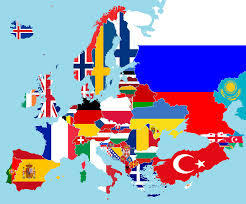
What is the belief that a people who share a common language, history, and culture should constitute an independent nation, free of foreign domination?
a)
imperialism
b)
nationalism
c)
militarism
12.
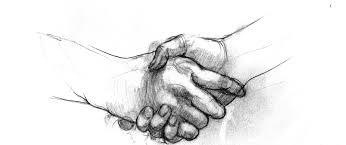
What is a union or association formed for mutual benefit, especially between countries?
a)
imperialism
b)
nationalism
c)
militarism
d)
alliances
13.
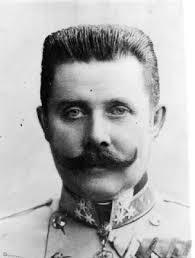
Who was assassinated by a Serbian National and began WWI?
a)
Archduke Franz Ferdinand
b)
Prince Charles
c)
Queen Elizabeth
14.
What nation was the first nation to declare war in the conflict that became WWI?
a)
England
b)
France
c)
Austria-Hungry
d)
Serbia
15.
Britain, France, and Russia made up which Alliance?
a)
The Axis Powers
b)
The Red Powers
c)
The Triple Entente
d)
The Triple Play
16.
“By the 1890s, the great land armies of France, Germany, Austria-Hungary, and Russia had no equals on earth except one another. Nicholas warned that ‘the accelerating arms race,’ which was producing larger armies, more powerful artillery, and bigger warships.
What MAIN cause does the above quote discuss?
What MAIN cause does the above quote discuss?
a)
Militarism
b)
Alliance
c)
Imperialism
d)
Nationalism
17.
Which of these conditions did soldiers contract from fighting in trenches in World War I?
a)
scurvy
b)
tetanus
c)
the flu
d)
trench foot
18.
WWI took place mainly in
a)
South America
b)
Europe
c)
Asia
d)
The United States
19.
What style of fighting came to dominate the Western Front?
a)
Blitzkrieg
b)
Trench warfare
c)
Fast attacks with tanks
d)
Guerrilla warfare
20.
Which weapon was used to fire a large amount of bullets very quickly?
a)
machine gun
b)
tank
c)
long range artillery
d)
airplane
21.
Which of the following was not a new weapon/technology during WWI?
a)
airplanes
b)
machine guns
c)
atomic bomb
d)
poison gas
22.
What were German u-boats?
a)
military ships used to block ports
b)
submarines used against non-military ships from neutral countries
23.
What is a stalemate?
a)
one side gets the other to surrender
b)
no side can win
24.
Why did the United States enter into the war late?
a)
It had many disagreements with all countries involved
b)
It traded with all of the countries involved
c)
It was maintaining a policy of isolationism
d)
It did not have the military strength at the beginning
25.
The Unites States entered WWI on the side of the Allies. It joined in the fighting because of ____ .
a)
assassination of Archduke Franz Ferdinand
b)
British requests for troops
c)
a long-standing alliance with France
d)
attacks on American ships by German U-boats
26.
World War I left millions dead, and even millions more wounded. Which of the following best describes the reason for so many casualties never seen in prior wars?
a)
better military leaders served in World War
b)
it was the first war to feature gunpowder
c)
it was the first war to feature modern machinery
d)
less sanitary conditions existed for the troops
27.
What did U.S. civilians do to help win WWI?
a)
They grew "Victory Gardens"
b)
They bought "Liberty Bonds"
c)
They joined the military to fight alongside the Allied Powers
d)
All of the above
28.
What are the name of the acts that made it illegal to criticize the U.S. involvement in the war or encourage draft resisters
a)
Espionage and Sedition Acts
b)
Treaty of Versailles and the Fourteen Points
c)
the Yalta Agreement and the Treaty of Versailles
d)
The Espionage Act and the Fourteen Points
29.
What was the Selective Service Act?
a)
an act to ban alcohol
b)
an act where Germans promised not to fire on civilian ships
c)
a draft for young men into the military
d)
American soldiers coming home
30.
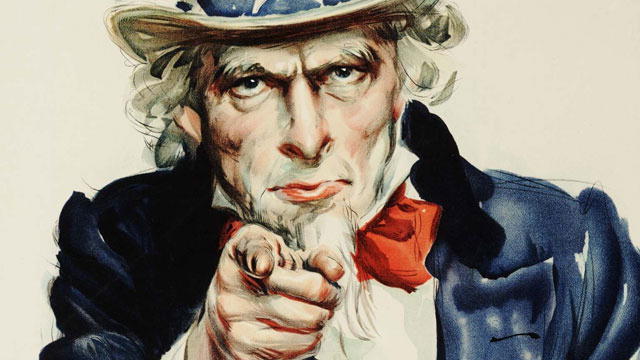
In what year did the U.S. enter the war?
a)
1915
b)
1916
c)
1917
d)
1918
31.
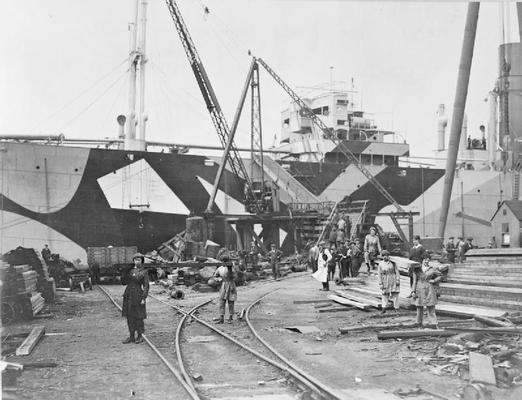
Which of the following is NOT true about work on the homefront?
a)
Shipyard work was emphasized
b)
People were encouraged to conserve sugar
c)
Men could avoid the draft by working in shipyards
d)
Women didn't do much to help
32.

Which is NOT true about women during World War I?
a)
Many women moved into “men’s” jobs
b)
Despite women's effort towards the war, it did not lead to the right for women to vote
c)
Many women volunteered selling war bonds
d)
President Wilson acknowledged women's contributions to the war effort
33.
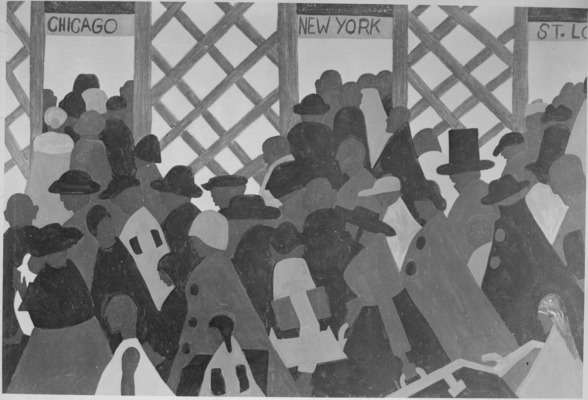
The Great Migration was the mass movement of _______________ from the South to Northern cities.
a)
African Americans
b)
Germans
c)
Women
d)
Mexicans
34.
Which was NOT a cause of WWI
a)
fighting over colonies
b)
increased nationalism
c)
acceptance of different cultures
d)
new weapons and technology
35.
The assassination of the Archduke led to this conflict:
a)
Holocaust
b)
WWI
c)
WWII
d)
D-Day
36.
What did the USA, UK, and Russia all have in common during WWI?
a)
They all fought to remove Hitler from power
b)
They all fought for the Allied Powers against the French
c)
They all fought against the Central Powers
d)
They all fought from the beginning of the war to the end
37.
What was a big cause of NATIONALISM in the early 1900's?
a)
Countries welcomed differences
b)
Monarchies forced this way of thinking
c)
Protests by the peasants/serfs
d)
Citizens thought their country and ethnicity was better than others
38.
What year did WWI end?
a)
1914
b)
1916
c)
1917
d)
1918
39.
What year did WWI begin?
a)
1914
b)
1916
c)
1917
d)
1918
40.
Which of these was not a new technology that changed warfare during World War I?
a)
Machine Guns
b)
Poison Gas
c)
Pistols
d)
Tanks
41.
A weary, exhausted, nerve-racked group of men it was indeed that, about noon November 1, assembled in a gully north of [France] to rest and dig in for the night. The artillery was still firing furiously, but the enemy’s barrage [bombardment] had ceased very suddenly about 10:00 a.m. and now only occasional shells from long-range rifles would explode in the vicinity ... we prepared our foxholes, carrying boards and iron sheeting from abandoned machine-gunners’ dugouts in order to make our “houses” as comfortable as possible. . . .Source: William L. Langer,
Which type of warfare is described in this passage?
Which type of warfare is described in this passage?
a)
Large scale
b)
biological
c)
Blitzkrieg
d)
trench
42.
Which country was NOT part of the Allied force?
a)
France
b)
Russia
c)
Britain
d)
Germany
43.
Name 4 causes of World War I.
a)
Militarism
b)
Alliances
c)
Imperialism, and Nationalism
d)
All of the Answer Choices are Correct
44.
The tool by which business, labor, government, and American opinion were molded to fight was:
a)
Propaganda
b)
Conscription
c)
Neutrality
d)
Dollar Diplomacy
45.
Which group of countries allied themselves to form the Triple Entente (Allies) in the years before World War I?
a)
Britain, France, and Austria-Hungary
b)
Germany, Austria-Hungary, and the Ottoman Empire
c)
Russia, Germany, and Italy
d)
Britain, France, and Russia
46.
Why were American soldiers seen as unprepared for war?
a)
They were drafted.
b)
They did not care.
c)
They were opposed to the war.
d)
They didn't have enough supplies in the front lines.
47.
What were the first two countries involved in WWI?
a)
Russia and Austria-Hungary
b)
Germany and Russia
c)
Serbia and the Ottoman Empire
d)
Austria-Hungary and Serbia
48.
Who rejected Wilson's 14 Points?
a)
U.S. Senate
b)
Germany
c)
U.S. Supreme Court
d)
Allied leaders
49.
What killed about 40 million people from 1918 to 1919?
a)
WWI
b)
Spanish flu
c)
Bolshevik Revolution
d)
Labor strikes
50.
Because militarism had been a major cause of the war, the framers of the Treaty of Versailles
a)
made Germany pay reparations.
b)
stripped Germany of its colonies.
c)
forced Germany to sign a war-guilt clause
d)
limited Germany's military
51.
What caused the U.S. and German relations to deteriorate in 1915?
a)
German invasion of Belgium
b)
German blockade
c)
Sinking of the Lusitania
d)
German embargo on U.S. goods
100 %

