
 Worksheets
EARLY CHINA 1
Total questions: 50
Worksheet time: 25mins
Name
Class
Date
1.
What was the occupation (jobs) of most Chinese?
a)
Artisans
b)
Merchants
c)
Aristocrats
d)
Farmers
2.
Kings believed that they received power and wisdom from...
a)
The spirits
b)
Ancestors
c)
The gods
d)
All of the above
3.
Early Chinese writing consisted of...
a)
Hieroglyphics
b)
Pictographs & ideographs
c)
Cuneiform
d)
Phonetics
4.
The Mandate of Heaven gave people...
a)
The right to overthrow a dishonest or evil ruler.
b)
The right to trade with other countries.
c)
The right to believe in Heaven.
d)
The right to get free land from aristocrats.
5.
The four main social classes in Early China were:
a)
Farmers, kings, government officials, artisans
b)
Priests, artisans, farmers, kings
c)
Aristocrats, farmers, artisans, merchants
d)
Emperors, warlords, priests, merchants
6.
Who was the founder of Confucianism?
a)
Buddha
b)
Confucius
c)
Siddhartha Gautama
d)
Laozi
7.
Confucianism is a...
a)
Philosophy that thinks a state of confusion is good.
b)
Philosophy to achieve balance and harmony in nature, in one's life, and in society.
c)
Philosophy that held everyone should have a sense of duty.
d)
Philosophy that believes having war is necessary for a peaceful society.
8.
Confucianism spread because...
a)
Confucius traveled throughout China teaching his ideas.
b)
His followers spread his ideas even after his death.
c)
Common people liked his idea that all people should have a part of government.
d)
All of the above
9.
What was the Mandate of Heaven?
a)
A law that said you had to marry someone in your own social class
b)
A law that said you had to believe in Heaven
c)
A belief that kings' right to rule came from the gods because of talent and virtue
d)
The right to get free land from aristocrats
10.
During the Zhou Dynasty, farmers could grow more crops than ever before because...
a)
The Chinese developed irrigation.
b)
The Chinese developed flood control systems.
c)
The Chinese developed the iron plow.
d)
All of the above.
11.
What were the Chinese military inventions that improved their performance in battle?
a)
Saddles and stirrups
b)
Crossbows
c)
Gunpowder
d)
All of the above
12.
Daoism is a...
a)
Philosophy that believes in a strong central government.
b)
Philosophy that believes having war is necessary for a peaceful society.
c)
Philosophy to achieve balance and harmony in nature, in one's life, and in society.
d)
Philosophy that held everyone should have a sense of duty.
13.
Laozi (Low-Dzuh) the founder of Daoism said Dao is...
a)
The force that guides all things, or "The Way"
b)
The chief god of Daoism
c)
The name given to the leader of the chinese overnment
d)
The goddess of wisdom
14.
What were the major contributions of Ancient China?
a)
Paper & printing
b)
Magnetic compass & rudder
c)
Seismograph
d)
All of the above
15.
The Chinese worshipped many gods that mean they were...
a)
Monotheistic
b)
Atheistic
c)
Polytheistic
d)
Agnostic
16.
The ancient Chinese writing that was considered an art form was called
a)
Cuneiform
b)
Hieroglyphics
c)
Calligraphy
d)
Sanskrit
17.
What famous architecture was built to keep out invaders?
a)
Stupas
b)
The Great Wall
c)
Terracotta Army
d)
The Grand Canal
18.
What were Emperor Qin's clay soldiers called that were buried with him in his tomb?
a)
The Chinese Army
b)
The Chinese Soldiers
c)
The Terracotta Warriors/Army
d)
The Chinese Sailors
19.
The Mongols under whose leadership created the most skilled fighting force and largest empire in the history of the world?
a)
Genghis Kan
b)
Kublai Kan
c)
Marco Polo
d)
Emperor Qin
20.
What important events happened during the Ming Dynasty (began A.D. 1368)?
a)
The Forbidden City was built.
b)
The Grand Canal was expanded.
c)
A large fleet of ships sailed on open seas to other countries.
d)
All of the above
21.
How did mountains and deserts help the Chinese civilization that began along the Huang He (Yellow River) develop?
a)
Many enemies threatened them.
b)
It provided safe borders around them.
c)
People were good at riding horses.
d)
They used camels a lot.
22.
What regions of the world did the Silk Road connect?
a)
China, Mongolia, and Russia
b)
China, Japan, and Australia
c)
China, North America, and South America
d)
China, Central Asia, and the Mediterranean
23.
What became a main religion because of the Silk Road and a long period of unrest or wars?
a)
Buddhism
b)
Hinduism
c)
Christianity
d)
Islam
24.
Confucius believed that people should
a)
give up all desires
b)
live a simple life
c)
put their own needs first
d)
put their family and community needs before their own
25.
What was the Silk Road
a)
a vast network of trade routes
b)
a single road that went from China to Mediterranean
c)
a road that was made out of silky soil
d)
a trail near the yellow river
26.
What did the Shang dynasty do for China?
a)
created the Great Wall
b)
improved civil service hiring
c)
built the first cities
d)
created currency
27.
Aristocrats made farmers do this during a war...
a)
become slaves
b)
become peasants
c)
build dams for the Yellow River
d)
become soldiers
28.
The Zhou Dynasty developed what new technology?
a)
irrigation
b)
silk worms for clothing
c)
channels to block floods
d)
iron and bronze
29.
Why is the Yellow River called China's Sorrow?
a)
it is dirty and stinks
b)
it dry's up every year
c)
it looks yellow
d)
it has flooded and killed many people
30.
Who is Laozi?
a)
founder of Confuciousnism
b)
founder of Daoism
c)
founder of Laozism
d)
founder of Hinduism
31.
What is a system of appointed officials who run different types of gov't?
a)
aristocrats
b)
bureaucracy
c)
nobles
d)
kings
32.
What is a noble whose wealth comes from the land they own?
a)
aristocrat
b)
bureaucracy
c)
acupuncture
d)
censor
33.
This emperor wanted to unify China
a)
Shang
b)
Qin
c)
Chin
d)
Han
34.
Using needles to stick people's body in order to relieve pain is called what?
a)
ideograph
b)
aristocrat
c)
acupuncture
d)
Wu tang
35.
Confucius believed that the right way to live was similar to which other rule?
a)
Golden Rule
b)
Ten Commandments
c)
Legalism
d)
Obeying the law
36.
What geographic barriers both protected and isolated early China?(
a)
rivers
b)
floods
c)
desserts and mountains
d)
farm fields
37.
A person who someone is descended from
a)
ancestor
b)
aristocrat
c)
ideograph
d)
pictograph
38.
Who built the first cities in China?
a)
the Xia
b)
the Zhou
c)
the Shang
d)
Yu the Great
39.
What are some main ideas of Confucianism?
a)
People should live morally
b)
People should respect others
c)
Education is important
d)
All of the above
40.
In which country did Buddhism begin?
a)
India
b)
China
c)
Tibet
d)
Korea
41.
Daoism is the idea that people should live in harmony with ___________?
a)
Themselves
b)
Nature
c)
Animals
42.
Genghis Khan was a powerful ___________ leader.
a)
Japanese
b)
Chinese
c)
Mongol
d)
Tibetan
43.
_____________ was Genghis Khan’s grandson who conquered the Song Dynasty and went on to be a very strong ruler.
a)
Kublai Khan
b)
Yongli
c)
Wendi
44.
After the Mongols were finally overthrown, who became the first Emperor of the Ming Dynasty?
a)
Wendi
b)
Hongwu (Zhu Yuanzhang)
c)
Genghis Khan
d)
Kublai Khan
45.

On which continent is China located?
a)
Africa
b)
Asia
c)
Europe
d)
Australia
46.
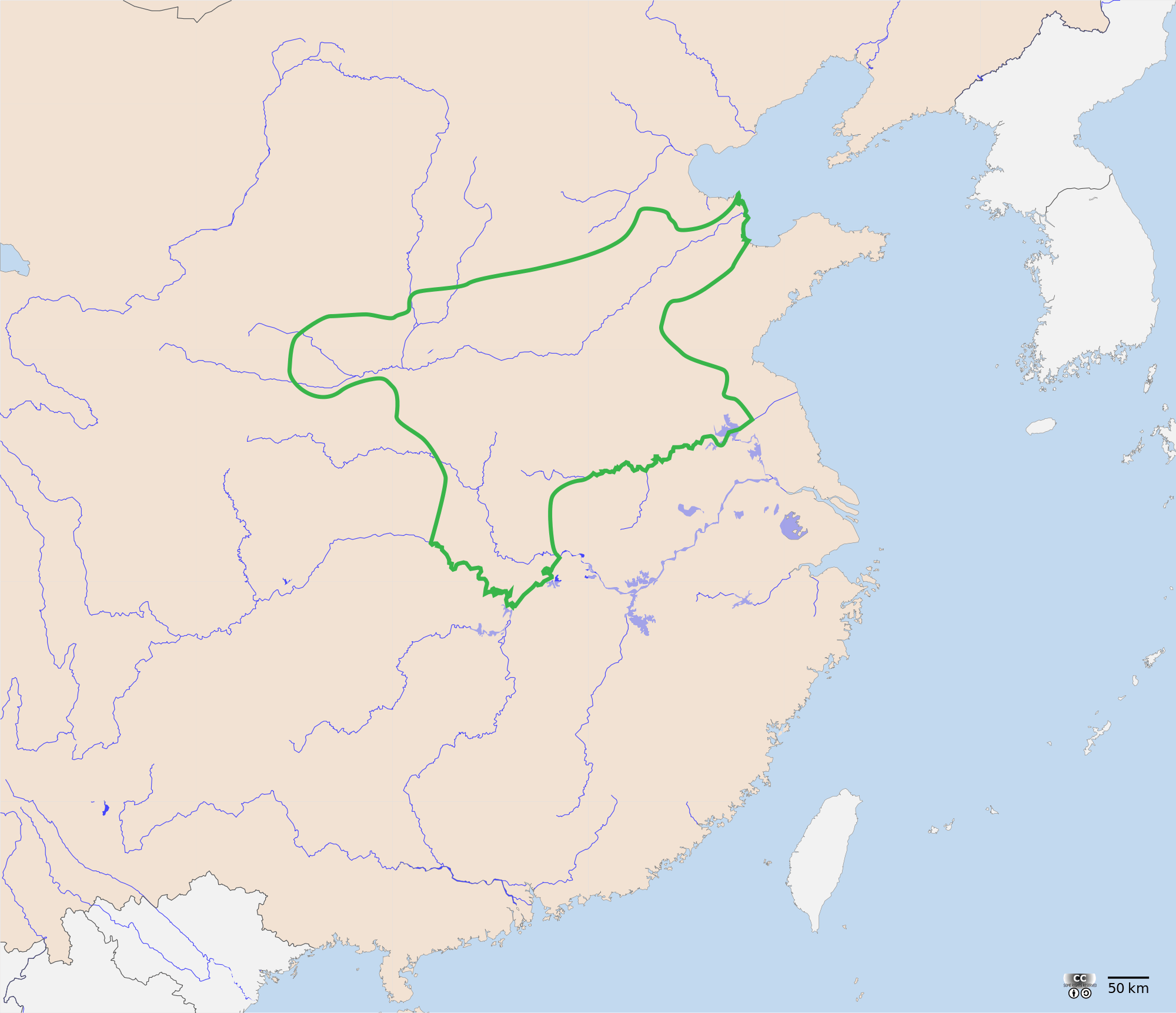
What was the name of China's FIRST dynasty?
a)
Shang
b)
Zhou
c)
Hanfeizi
d)
Huang He
47.
Line of rulers from the same family
a)
Legalism
b)
long Chinese line
c)
filial piety
d)
dynasty
48.
In early Chinese life this was most important
a)
dogs
b)
cats
c)
family
d)
church
49.
How did the mountains and deserts affect China's civilization?
a)
providing rich soil for Chinese farmers
b)
made it difficult for invaders to enter
c)
made it easier to trade with other countries
50.
What was one of the main crops was grown in the Yellow River/Yangtze River region?
a)
Papyrus
b)
Silt
c)
Rice
d)
Flax
100 %

