
 Worksheets
ELECTROSTATICA
Total questions: 33
Worksheet time: 27mins
Name
Class
Date
1.
¿Que parte del átomo posee carga eléctrica negativa?
a)
protón
b)
electrón
c)
neutrón
2.
¿Un átomo con más protones que electrones tendrá carga?
a)
positiva
b)
negativa
3.

¿La fuerza electrostática F es directamente proporcional a? (marque la más correcta)
a)
r2 el cuadrado de la distancia
b)
q1
c)
q2
d)
ambas q1 y q2
4.
Material que deja pasar la corriente eléctrica a través de el
a)
tractor
b)
chofer
c)
conductor
d)
traductor
5.
Material que no deja pasar la corriente
a)
asilo
b)
aislante
c)
isla
d)
si o no
6.
Inventó la primera pila voltaica:
a)
Albert Einstein.
b)
Thomas Alva Edison
c)
Alessandro Volta.
d)
Nikola Tesla
7.
¿que es el voltaje?
a)
la diferencia de potencial
b)
la bateria del auto
c)
electrones en un conductor
d)
la electricidad
8.
What direction are the electric field lines around a proton?
a)
towards the charge
b)
away from the charge
9.
Which of the following is not a good conductor of electricity?
a)
copper
b)
silver
c)
Glass
d)
aluminum
10.
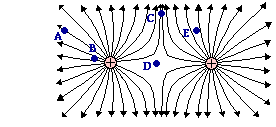
Which of the following labeled points is in the region with the strongest force of electric charge
a)
A
b)
B
c)
C
d)
D
11.

How close must two electrons be to generate a force of 1000 N. Charge of an electron = 1.6x10⁻¹⁹ C
a)
4.8E-16
b)
2.35E-31
c)
1.4E-10
d)
1.2E-5
12.
The electrostatic force between two charges located 8 meters apart is 0.10 N. What will the force be between these charges when they are located 2 meters apart?
a)
0.01 N
b)
0.03 N
c)
0.1 N
d)
1.6 N
13.
If a conductor is in electrostatic equilibrium, the electric field inside the conductor is
a)
positive
b)
negative
c)
zero
d)
perpendicular
14.
An electric field has
a)
direction.
b)
magnitude.
c)
Both A and B
15.
Suppose a hollow metal sphere has a large negative charge on it. The electric field strength inside the sphere is
a)
a. large and positive.
b)
b. zero.
c)
c. weak and negative.
d)
d. weak and positive.
16.
Electrical potential energy is the energy a charged object has because of its
a)
momentum.
b)
location.
c)
mass.
d)
motion.
17.
A small, positively charged object near a positively charged sphere is moved closer to the sphere. The electrical potential energy of the small object
a)
stays the same.
b)
decreases. .
c)
increases
18.
If two negative charges are held close together and then released, the charges will
a)
accelerate toward each other.
b)
accelerate away from each other.
c)
not move.
d)
move at a constant speed away from each other
19.
A volt is a unit of
a)
charge. .
b)
electric potential.
c)
energy.
d)
work.
20.

The following graph is a correct representation of electric force with respect to distance.
a)
True
b)
False
21.

The following graph is a correct representation of electric force with respect to distance.
a)
True
b)
False
22.
A 2 C charge experiences a force of 40 N when put at a certain location in space. The electric field at that location is..
a)
2 N/C
b)
20 N/C
c)
80 N/C
d)
42 N/C
23.

The accumulation of excess electric charge on an object is called:
a)
Static electricity
b)
Electric discharge
c)
Resistance
d)
Circuit
24.
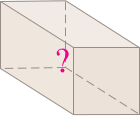
¿Cómo puedes medir la carga eléctrica que se halla dentro de un contenedor sin abrirlo?
a)
Midiendo el campo externo con una carga de prueba
b)
Midiendo la permitividad eléctrica en varios puntos
c)
Usando un dipolo a una distancia muy grade
d)
No es posible sin abrirla
25.

¿En cual de estas superficies el flujo es cero?
a)
A
b)
B
c)
C
d)
D
26.

¿Qué unidades tiene el flujo eléctrico?
a)
N m2/C
b)
N/C
c)
N m2/C2
d)
Nm2
27.

En la figura las cargas tienen igual magnitud ¿Cuál de las dos cargas tiene un flujo mayor?
a)
La positiva
b)
La negativa
c)
Ambas tienen el mismo flujo
d)
No es posible saberlo, si no se sabe el radio
28.
En la figura las cargas tienen igual magnitud ¿Cuál de las dos cargas tiene el flujo de mayor magnitud?
a)
La positiva
b)
La negativa
c)
Ambas tienen el mismo flujo
d)
No es posible saberlo, si no se sabe el radio
29.
Si se suman los flujos de ambas cargas ¿que se obtiene?
a)
Cero
b)
Los flujos no se pueden sumar para cargas distintas.
c)
No hay manera de saberlo, si no se saben los valores respectivos.
d)
Un flujo doble en la dirección contraria al momento dipolar.
30.

¿Cuánto vale el flujo sobre la superficie C?
a)
Cero
b)
Algún valor negativo
c)
Algún valor positivo
d)
+q/εo
31.
¿Cuánto vale el flujo sobre la superficie D?
a)
Cero
b)
Algún valor negativo
c)
Algún valor positivo
d)
+q/εo
32.
¿Cuánto vale el flujo sobre la superficie A?
a)
Cero
b)
Algún valor negativo
c)
Algún valor positivo
d)
+q/εo
33.
¿Cuánto vale el flujo sobre la superficie B?
a)
Cero
b)
No se puede saber a menos que se sepa el radio
c)
+q/εo
d)
-q/εo
100 %

