
 Worksheets
Ecosystems Review
Total questions: 59
Worksheet time: 3hrs 39mins
Name
Class
Date
1.

An organism that needs to eat other organisms to obtain energy is known as a:
a)
Autotroph
b)
Producer
c)
Consumer
d)
Mutualist
2.
What does every food chain start with?
a)
producers
b)
sun
c)
consumer
d)
decomposers
3.
What is another name for producer?
a)
consumer
b)
herbivore
c)
autotroph
d)
lichen
4.

The rabbit in this food web would be considered a:
a)
Decomposer
b)
Producer
c)
Secondary Consumer
d)
Primary Consumer
5.

In this Food Web Pyramid Which type of consumer gets only 10% of the energy stored in plants?
a)
Herbivore
b)
Carnivore
c)
Omnivore
d)
Secondary Consumer
6.
What does a Secondary Consumer eat?
a)
Tertiary Consumers
b)
Primary Consumers
c)
Producers
d)
Secondary Consumers
7.
Energy increases as you move up the food pyramid (from bottom to top).
a)
True
b)
False
8.
An animal that hunts other animals for food is a ___________
a)
herbivore
b)
predator
c)
prey
d)
omnivore
9.

An organism that lives by breaking apart dead organic matter into simpler parts is...
a)
scavenger
b)
consumer
c)
decomposer
d)
carnivore
10.
What does a Primary Consumer eat?
a)
Tertiary Consumers
b)
Secondary Consumers
c)
Producers
11.
Where do all life forms get their energy?
a)
Earth's Core
b)
Water
c)
Plants
d)
The Sun
12.
Which biome, because of its climate and amount of rainfall, has the largest number of species of plants and animals?
a)
Tundra
b)
Rainforest
c)
Desert
d)
Pineforest
13.
Life on earth is dependent on photosynthesis for _________ and ____________
a)
Water & Sugar
b)
Water & Food
c)
Food & Sugar
d)
Food & Oxygen
14.
Which type of organism is the start of all food chains and food webs?
a)
Decomposer
b)
Consumer
c)
Producer
d)
Omnivore
15.

The rabbit in this food web would be considered a:
a)
Decomposer
b)
Producer
c)
Secondary Consumer
d)
Primary Consumer
16.

What may happen if the snowshoe hare was removed from the food web pictured?
a)
The insects in the habitat would increase.
b)
The shrew population would decrease due to being only hawk food source.
c)
The willow tree population would decrease.
d)
Foxes would dies due to no food source.
17.
What would most likely happen if an ecosystem no longer received sunlight?
a)
The number of herbivores would increase
b)
The number of plants would increase
c)
all organisms would adapt
d)
All living organisms would eventually die
18.

How many primary consumers are in this food web?
a)
1
b)
2
c)
3
d)
4
19.

A mouse eats the acorn, the snake eats the mouse and the hawk eats the snake. Who has the least amount of energy in this food chain?
a)
The rabbit
b)
The snake
c)
The hawk
d)
The acorn
20.

What level consumer is the owl in the food chain?
a)
Tertiary
b)
Primary
c)
Secondary
d)
Producer
21.

Who are the primary consumers in this food web?
a)
The lizard and the hawk
b)
The grasshopper, mouse & rabbit
c)
The rabbit and the hawk
d)
The lizard and the snake
22.

What level consumer could you consider the deer?
a)
Primary
b)
Secondary
c)
Tertiary
d)
Producer
23.

In the energy pyramid here, how much of the energy in each level gets lost as heat or used by the organism for survival?
a)
80%
b)
90%
c)
10%
d)
20%
24.

In the energy pyramid below, which organism has the least amount of energy available?
a)
Producers
b)
Herbivores
c)
Carnivores
d)
Top Predator
25.

In the energy pyramid here, which organisms have the most energy available?
a)
Producers
b)
Carnivores
c)
Herbivores
d)
Top Predator
26.

If the grasshopper were to be removed completely from the food web, what organism would be most effected?
a)
The squirrel
b)
The shrew
c)
The deer
d)
The rabbit
27.

Which organism do the owl and the weasel compete for in the food web?
a)
Hawk
b)
Spider
c)
Grasshopper
d)
Shrew
28.
A living factor in an ecosystem, such as a plant or animal is ___________.
a)
biotic
b)
abiotic
c)
adaptation
d)
producer
29.

The picture shows what type of succession?
a)
primary
b)
secondary
c)
tertiary
d)
quadanary
30.
The first organisms that appear in an ecological community
a)
ecological succession
b)
primary succession
c)
secondary succession
d)
pioneer speciles
31.
Starts with BARE ROCK followed by lichen
a)
primary succession
b)
secondary succession
c)
both types of succession
32.
How do lichens contribute to primary succession?
a)
Lichens decompose organic matter from animals and plants
b)
Lichens begin to break down rock to form soil
c)
Lichens are nitrogen fixing bacteria
33.

The picture shows what type of succession?
a)
primary
b)
secondary
c)
tertiary
d)
quadanary
34.
The final stable community of plants and animals is called:
a)
pioneer community
b)
farmland
c)
climax community
d)
old field
35.

What is the order of succession shown in this figure?
a)
A, B, C, D
b)
B, A, D, C
c)
C, D, A, B
d)
D, A, B, C
36.

What is the difference between biotic and abiotic?
a)
Biotic are non-living things
b)
Abiotic are living organisms
c)
Biotic is life,
Abiotic is non-living
Abiotic is non-living
d)
Biotic is non-living, Abiotic is living
37.

How would the biodiversity of this ecosystem be affected if the lantern fish disappeared?
a)
The ocean sunfish population would increase.
b)
The large shark population would die out.
c)
The squid would die out.
d)
There would be no change.
38.
Succession that occurs in an area with NO SOIL
a)
ecological succession
b)
primary succession
c)
secondary succession
d)
pioneer speciles
39.
Which process occurs after a forest fire?
a)
eutrophication
b)
photosynthesis
c)
primary succession
d)
secondary succession
40.
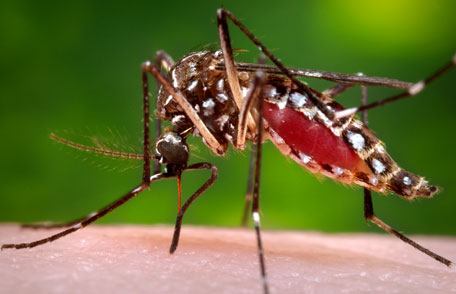
When a mosquito bites you, you are the __________ and the mosquito is the ____________.
a)
host, hostess
b)
parasite, host
c)
host, parasite
d)
prey, predator
41.
Barn owls hunt shrews. In this example what is a barn owl?
a)
Herbivore/Predator
b)
Carnivore/Prey
c)
Carnivore/Predator
42.
Sharks consume smaller fish they catch in the ocean. This is an example of what type of relationship?
a)
predator/prey
b)
parasite/host
c)
producer/consumer
43.
When an organism's energy source comes from both animals and plants, that organism is considered to be a what?
a)
predator
b)
omnivore
c)
herbivore
d)
carnivore
44.
How do producers obtain energy?
a)
They conduct photosynthesis.
b)
They consume plants.
c)
They consume primary consumers.
d)
They consume secondary consumers.
45.
A tick living on a dog and taking its blood is an example of
a)
commensalism
b)
predation
c)
mutualism
d)
parasitism
46.
A tapeworm lives in human intestines absorbing the nutrients that would normally be absorbed by the person. This eventually causes the person to experience health problems. This relationship is -
a)
predator/prey
b)
parasite/host
c)
herbivore/omnivore
d)
consumer/producer
47.

If a disease were to infect frogs and kill them off what would be the likely impact of this system?
a)
Decrease the amount of flies
b)
Increase the amount of frogs
c)
Decrease the amount of algae
d)
Increase the amount of algae
48.
A species that is introduced to another environment that causes problems with the native food web is called a(n)...
a)
invasive species
b)
destructive species
c)
herbivores
d)
omnivores
49.
An organism that cannot adapt to changes in the environment will most likely -
a)
produce more offspring
b)
die
c)
change its traits to survive
d)
store more food
50.
What might happen if you remove a primary consumer from the ecosystem?
a)
There would be more food for secondary consumers.
b)
The number of primary consumers would increase.
c)
The number of plants would increase.
d)
The number of secondary consumers would increase.
51.
The hyenas and lions in The Lion King both want to eat all the antelope. This is...
a)
Cooperation
b)
Competition
52.
Where do all life forms get their energy?
a)
Earth's Core
b)
Water
c)
Plants
d)
The Sun
53.
Which is a decomposer?
a)
deer
b)
tall grass
c)
lion
d)
worm
54.
What is an example of a decomposer?
a)
Tree
b)
Dog
c)
Grasshopper
d)
Bacteria
55.

The shrew provides energy for the _______?
a)
cricket
b)
grasshopper
c)
frog
d)
snake
56.
A community of living and nonliving things in their natural environment makes up a
a)
food web
b)
ecosystem
c)
food chain
57.

If the lizards population increases, then the grasshopper population will...
a)
increase
b)
decrease
c)
stay the same
58.

The graph shows the change in the deer population on an island for one year. According to the graph, what is the carrying capacity of the deer?
a)
Zero
b)
10
c)
80
d)
100
59.
A fox habitat has enough food for 15 foxes, enough water for 30 foxes, and enough space for 10 foxes. How many foxes can this habitat support?
a)
10
b)
15
c)
30
d)
55
100 %

