wayground logo

Free Printable Worksheets

NEW

Font size

S
M
L
XL
Worksheets

Science week Mega quiz!

Total questions: 61

Worksheet time: 38mins

Name
Class
Date
1.

What is an observation?

a)

A scientific statement based on ideas

b)

Using your senses to notice what is going on around you

c)

To be unaware of your surroundings

d)

The question that you want an answer to.

2.
The scientific method is made up of several:
a)
stones
b)
experiments
c)
problems
d)
steps
3.
What is a hypothesis?
a)
A hypothesis is the right answer to an experiment.
b)
A hypothesis is the wrong answer to an experiment.
c)
A hypothesis is an educated guess.
d)
I don't know.
4.
The information you record in an experiment is called your ____________.
a)
data
b)
conclusions
c)
notebook
d)
inquiry
5.

Approved eye protection devices (such as goggles) are worn in the laboratory

a)

to avoid eye strain

b)

to improve your vision

c)

only if you don't have corrective glasses

d)

any time chemicals, heat, or glassware is used

6.

If you do not understand a direction or part of a lab procedure, you should

a)

figure it out as you do the lab

b)

try several methods until something works

c)

ask the instructor before proceeding

d)

skip it and go on to the next part

7.

In the laboratory, the following should not be worn

a)

loose clothing

b)

dangling jewelery

c)

sandals

d)

all of the above

8.
How do gases behave in a container?
a)
Cluster together
b)
form a solid
c)
They take the shape of their container
d)
leak out 
9.
Which states allow easy flow of particles
a)
Gas and Solid
b)
Gas and Liquid
c)
Solid and Liquid
d)
Gas only
10.
Which of the following is a property of a liquid
a)
Can't be compressed
b)
Can be compressed
c)
Particles are far appart
d)
Particles hold the object's shape 
11.
Can Solids be compressed?
a)
No
b)
Yes
c)
Sometimes (it depends what it's made of)
d)
Generally no
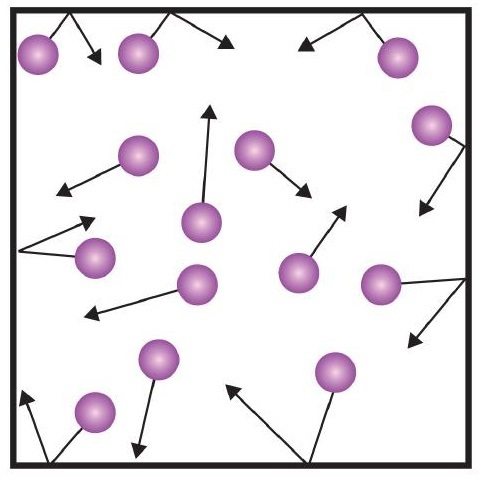
12.
Which description best matches this particle model?
a)
Closely packed and can't move a lot. 
b)
Particles are close together but can move a little. 
c)
Particles have lots of energy and can move around. 
13.

Which is the farthest planet to the Sun?

a)

Uranus

b)

Neptune

c)

Saturn

d)

Jupiter

14.

Which is the smallest planet?

a)

Mars

b)

Venus

c)

Neptune

d)

Mercury

15.

Which planet has a big red spot on its surface?

a)

Mars

b)

Neptune

c)

Uranus

d)

Jupiter

16.
Australia is in the ____ hemisphere. 
a)
northern
b)
southern
17.
Object spinning on its axis. 
a)
revolution
b)
rotation
18.
Object orbiting another object. 
a)
revolution 
b)
rotation
19.
One year is...
a)
355 days
b)
355 1/4 days
c)
365 days
d)
365 1/4 days
20.

If its ____ in the Northern hemisphere, then its Autumn in the Southern hemisphere.

a)

spring

b)

summer

c)

fall

d)

winter

21.

The day of the year with the most daylight hours is the

a)

spring equinox

b)

fall equinox

c)

summer solstice

d)

winter solstice

22.
This rock was another type of rock that was heated and compressed over time. What type of rock is this?
a)
Sedimentary
b)
Igneous
c)
Metamorphic
23.
This rock started as molten magma. What type of rock is this?
a)
Sedimentary
b)
Igneous
c)
Metamorphic
24.
This rock was formed by smaller pieces of rock that settled at the bottom of a lake millions of years ago. What type of rock is this?
a)
Sedimentary
b)
Igneous
c)
Metamorphic
25.
The process when rocks break into smaller pieces due to exposure to natural elements is called
a)
erosion
b)
weathering
c)
sediments
26.

According to the diagram, what process is shown by letter A?

a)

extrusion

b)

erosion

c)

crystallization

d)

intrusion

27.

According to the diagram, what process is shown by letter B?

a)

compaction & cementation

b)

weather & erosion

c)

heat & pressure

d)

melting

28.

Geologists have classified rocks into three major groups of rocks which are:

a)

inorganic, organic and chemical rocks

b)

igneous, sedimentary and metamorphic rocks

c)

metamorphic, chemical and non chemical rocks

d)

sedimentary, inorganic and igneous rocks

29.

Streak is the color of a mineral’s

a)

fracture

b)

luster

c)

powder

d)

cleavage

30.

The process by which metamorphic rock changes to igneous rock begins with

a)

melting

b)

erosion

c)

deposition

d)

crystallization

31.

All minerals are substances that where formed by

a)

volcano activity

b)

human intervention

c)

natural processes

d)

rock deposition

32.

Which type of rock was MOST LIKELY formed by the Tennessee River over the last 100 million years?

a)

Igneous

b)

Sedimentary

c)

Mountainous

d)

Metamorphic

33.
The earth turning on its axis (24 hours) is?
a)
Exinoxes
b)
Rotation
c)
Silly
d)
Season
34.
This image shows the:
a)
Geocentric Solar System
b)
Heliocentric Solar System
35.
What happens when the area in which you live tilts away from the sun?
a)
It is summer.
b)
It is spring.
c)
It is winter.
d)
It is fall.
36.
Which season is taking place in the Northern Hemisphere in Position 3?
a)
Winter
b)
Spring
c)
Summer
d)
Fall
37.
What is an invertebrate?
a)
an animal with a backbone
b)
an animal with out a backbone 
c)
an insect
d)
all living things
38.
What is a vertebrate?
a)
an animal with a backbone
b)
an animal with out a backbone 
c)
an insect
d)
all living things
39.
All vertebrates have a ____________ .
a)
skeleton
b)
mouth
c)
exoskeleton 
d)
legs
40.

Bacteria can be both helpful and harmful in food.

a)

True

b)

False

41.

Beneficial or Harmful?


bacteria used in cheese and yogurt

a)

beneficial

b)

harmful

42.

Beneficial or Harmful?


bacteria weakens teeth enamel

a)

beneficial

b)

harmful

43.

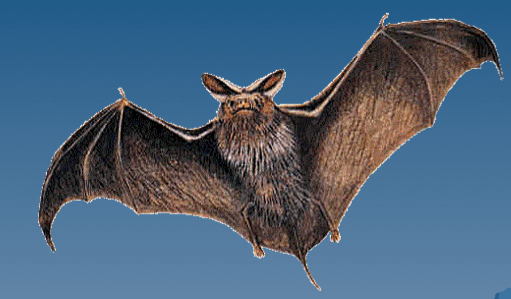
I have fur and I can fly. I feed my young on milk, and have live births. What am I?

a)

Reptile

b)

Bird

c)

Mammal

d)

Fish

44.

Why do cacti have spikes?

a)

to absorb nutrients

b)

to capture sunlight

c)

for protection

d)

to store more water

45.

The _______ are responsible for photosynthesis (making food).

a)

Roots

b)

Stems

c)

Leaves

d)

Flowers

46.

What has to be transported from the male part of a flower to the female part of a flower for a seed to be formed?

a)

Water

b)

Glucose

c)

Pollen

d)

Fertilizer

47.
What is this?
a)
roots
b)
stem
c)
leaves
d)
flower
48.
What is this?
a)
flower
b)
fruit
c)
leaves
d)
stem
49.
What part of the plant is #2?
a)
leaf
b)
flower
c)
stem
d)
root
50.
Polar bears have an adaptation that allows them to swim. What is most likely this adaptation?
a)
White coat
b)
Fat belly
c)
Small eyes
d)
Webbed Feet
51.

I have parachute like structures. What is likely my dispersal method?

a)

wind

b)

water

c)

animals

d)

explosive action

52.

Why are bur seeds able to be dispersed by animals?

a)

It is light and has wing-like structure

b)

It has hooks to hook onto the fur of animals

c)

It has a fibrous husk that makes it float

d)

It has dry pods that split open

53.

What habitat is a desert?

a)
b)
c)
54.
Which is NOT a feature of an eagle?
a)
strong claws
b)
good eyesight
c)
sharp beak
d)
webbed feet
55.
The ears of this fox are an example of...
a)
A behavioral adaptation
b)
Poor breeding
c)
A physical adaptation
d)
Plastic surgery gone horribly wrong
56.

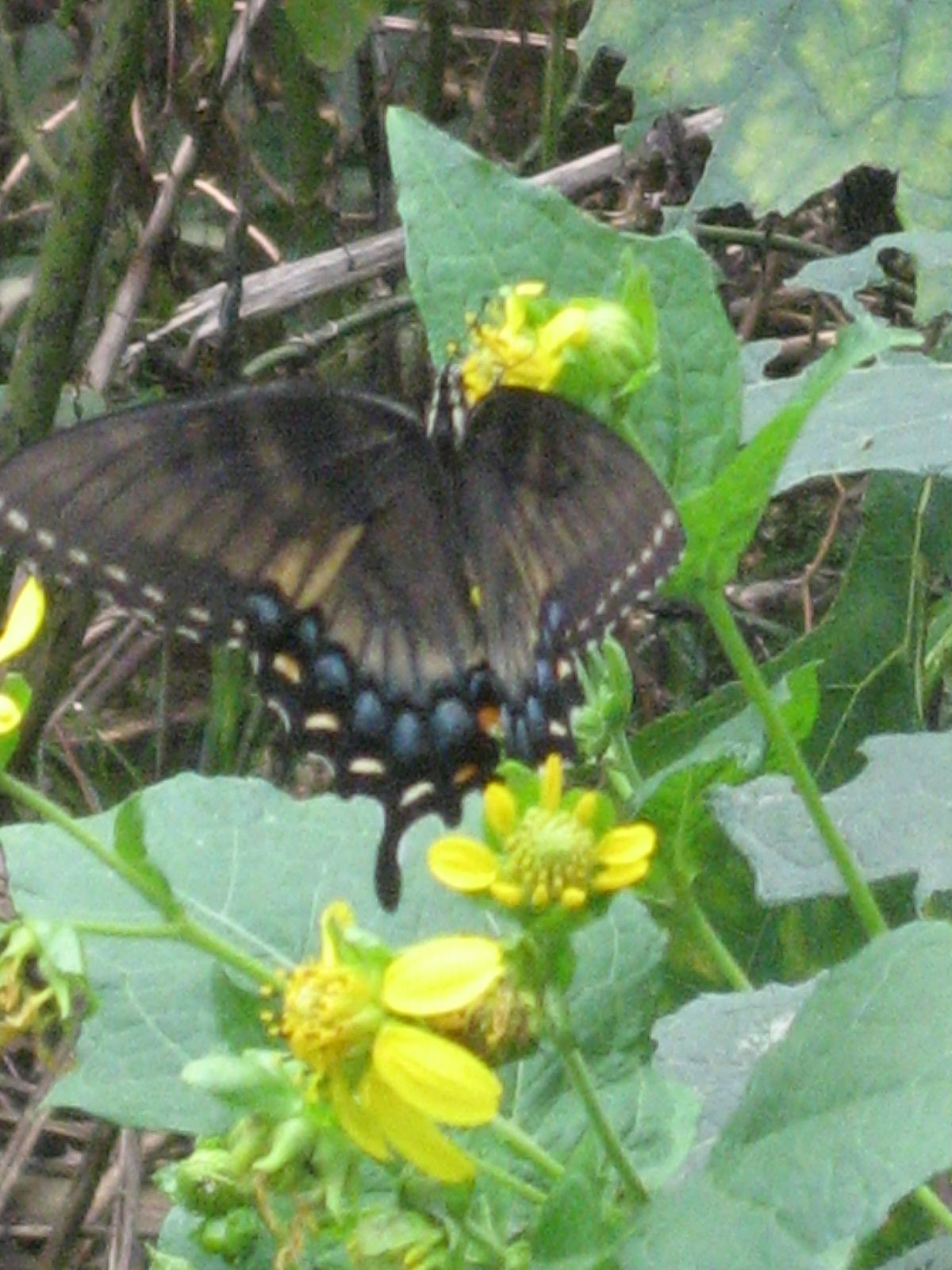
This animal is vertebrate or invertebrate?

a)

Invertebrate

b)

Vertebrate

57.

Making your hair, bones, and fingernails is an example of which life function?

a)

Growth

b)

Respiration

c)

Excretion

d)

Nutrition

58.

The pupil in the picture can change size. Which life function is this showing?

a)

Respiration

b)

Synthesis

c)

Growth

d)

Sensitivity

59.

The plant in the picture is using sunlight to do photosynthesis. Which life function is this?

a)

Nutrition

b)

Respiration

c)

Growth

d)

Regulation

60.

The 8 levels of classification, broadest to most specific.

a)

Genus, Family, Order, Class, Phylum, Kingdom, Species

b)

Species, Kingdom, Genus, Phylum, Family, Class, Order

c)

Kingdom, Phylum, Class, Order, Family, Genus, Species

d)

Order, Kingdom, Species, Phylum, Family, Class, Genus

61.

What is matter?

a)

Everything around us are matter.

b)

I don´t Know