wayground logo

Free Printable Worksheets

Font size

S
M
L
XL
Worksheets

Chemistry - Atoms to Properties

Total questions: 62

Worksheet time: 45mins

Name
Class
Date
1.
all matter is made of what 
a)
energy 
b)
atoms 
c)
electrons 
d)
compounds 
2.
The positive particles of an atom are 
a)
electrons 
b)
positrons 
c)
neutrons 
d)
protons 
3.
the central region of an atom where its neutrons and protons are is its 
a)
nucleus 
b)
electron cloud
c)
core 
d)
center 
4.
an atom with atomic number 6 would have how many protons 
a)
6
b)
12
c)
3
d)
cannot be determined 
5.
Particles in an atom that are neutral and have no charge are 
a)
negatrons 
b)
electrons 
c)
neutrons 
d)
protons 
6.
How many protons does this atom have?
a)
2.5
b)
6
c)
5
d)
10.811
7.
What part of the atom is the arrow pointing to?
a)
nucleus
b)
proton
c)
electron shell
d)
electron
8.
If the number of protons equal the number of _____, the atom will have no charge
a)
protons
b)
neutrons
c)
electrons
d)
nucleus
9.
An element is made up of only one kind of _____.
a)
isotope
b)
plastic
c)
atom
d)
metal
10.
What subatomic particles would you find in the nucleus of an atom?
a)
Protons only
b)
Protons and Neutrons
c)
Neutrons and Electrons
d)
Protons and Electrons 
11.
What subatomic particle(s) would be found orbiting the nucleus?
a)
Neutrons only
b)
Electrons only
c)
Protons and Neutrons
d)
Protons and Electrons
12.
What are the 3 subatomic particles that make-up the atom?
a)
protons, neutrons, and isotopes
b)
neutrons, isotopes, and electrons
c)
positives, negatives, and electrons
d)
protons, neutrons, and electrons
13.
True or False? Neutrons have a negative charge
a)
True
b)
False
14.
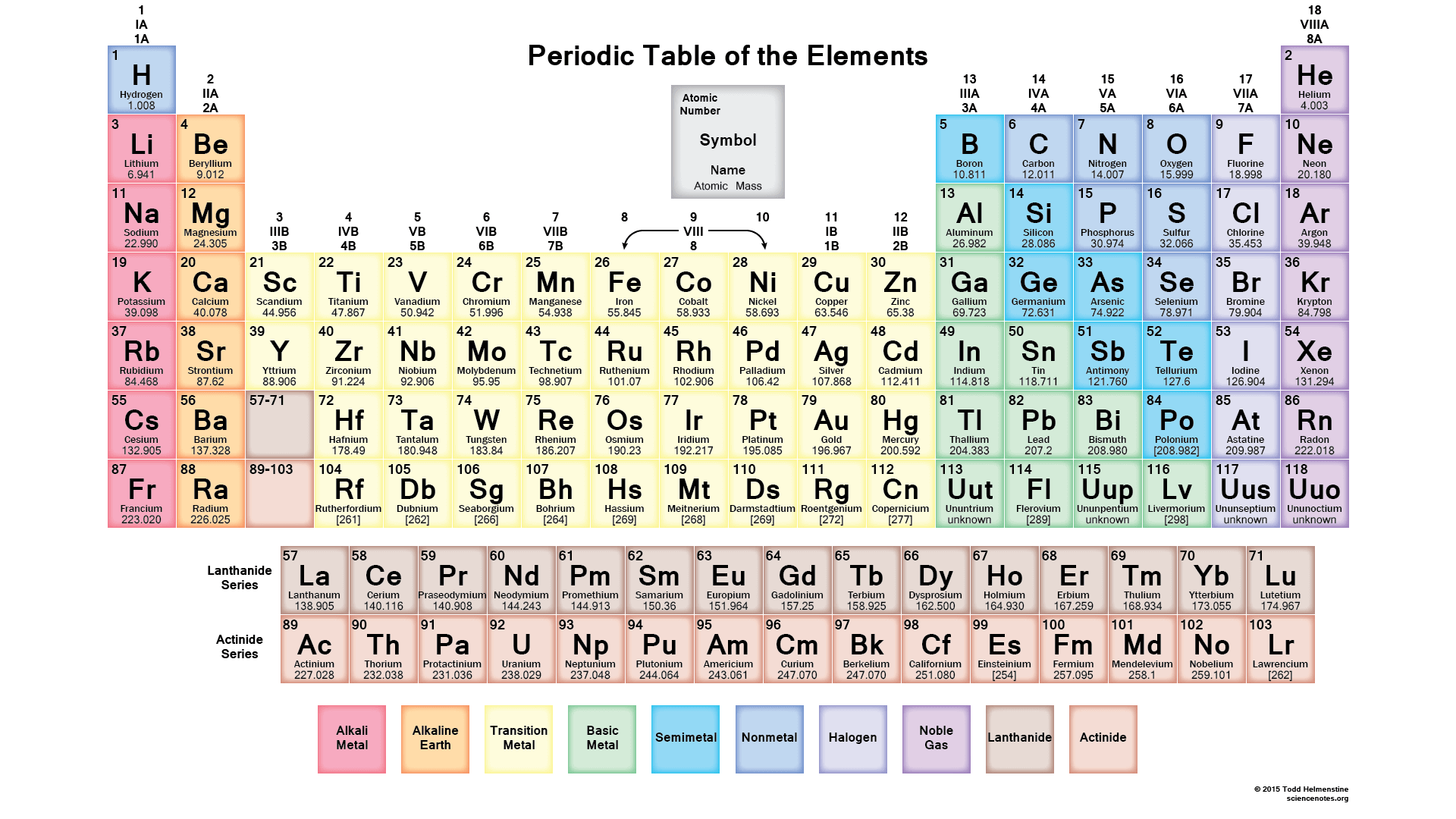
What is the atomic mass of "F"
a)
9
b)
18
c)
10
d)
19
15.
Which of the following is a positively charged subatomic particle found in the nucleus of an atom?
a)
Electron
b)
Proton
c)
Neutron
d)
Quark
16.
What is the atomic number for an element with three protons?
a)
2
b)
1
c)
3
d)
6
17.
A negatively charged particle that moves around the nucleus is a(n)...
a)
Proton
b)
Neutron
c)
Electron
d)
Quark
18.
Most of the mass in an atom is concentrated in the...
a)
electrons
b)
nucleus
c)
protons
d)
empty space
19.
How many neutrons does Nitrogen have?
a)
14
b)
7
c)
15
d)
18
20.

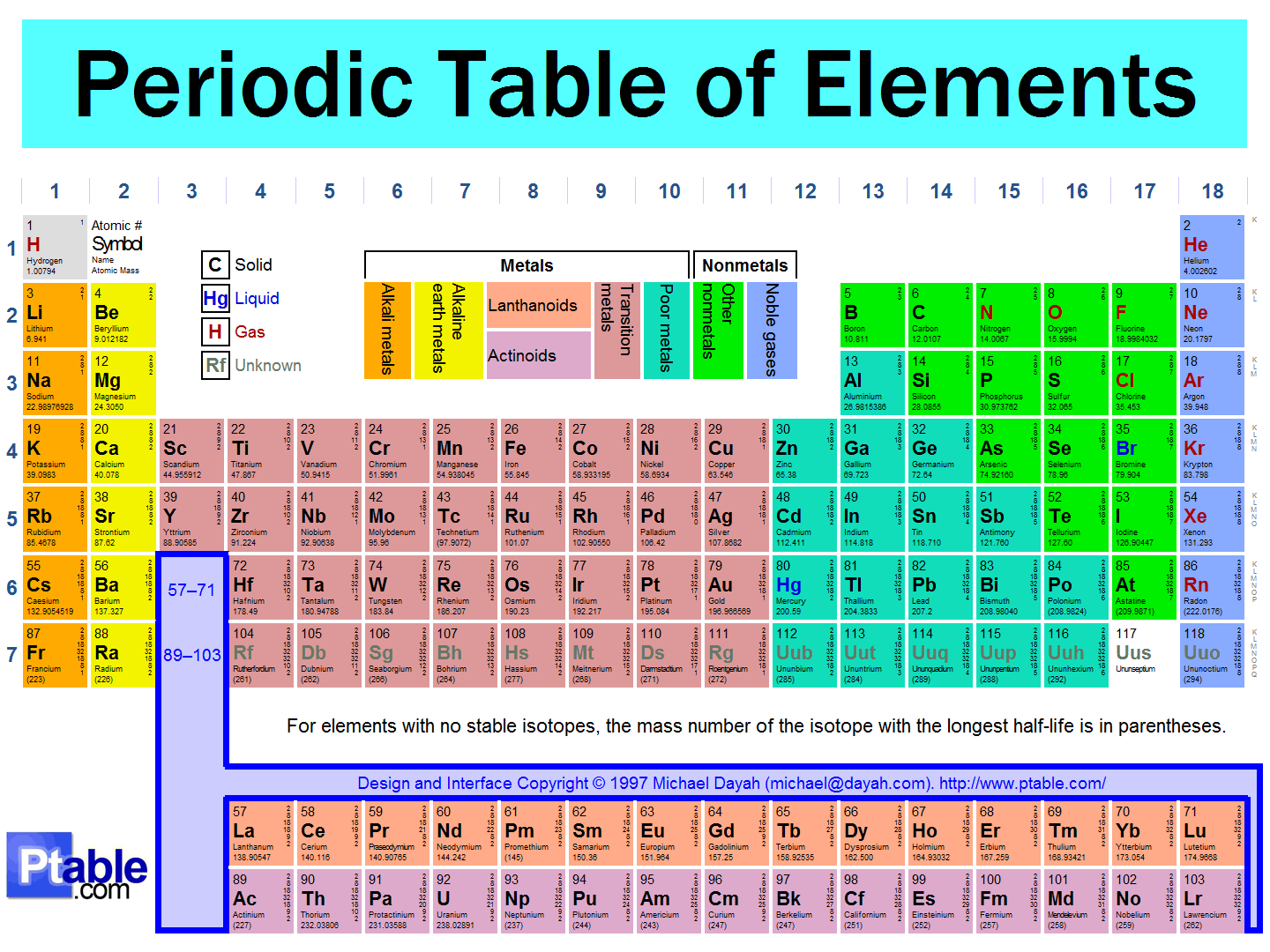
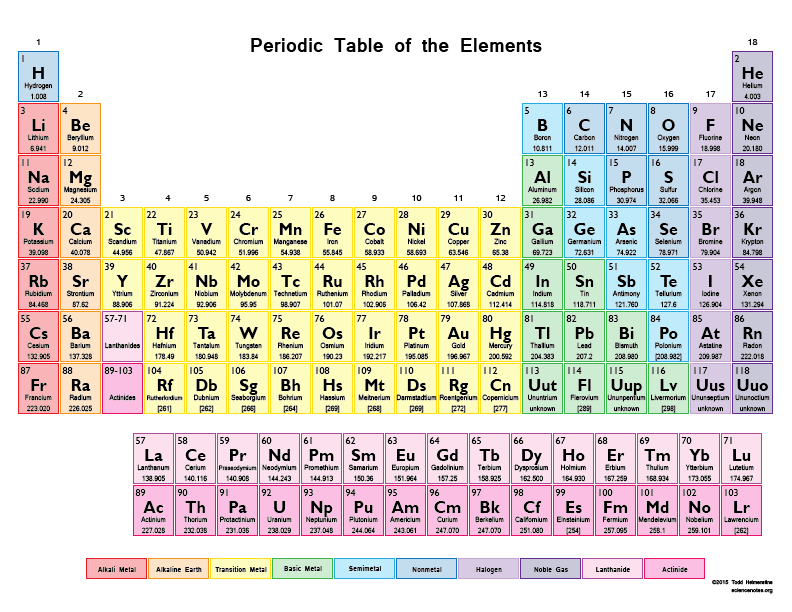
The vertical (up and down) columns in the Periodic Table are called

a)

groups

b)

towers

c)

periods

d)

atomic numbers

21.
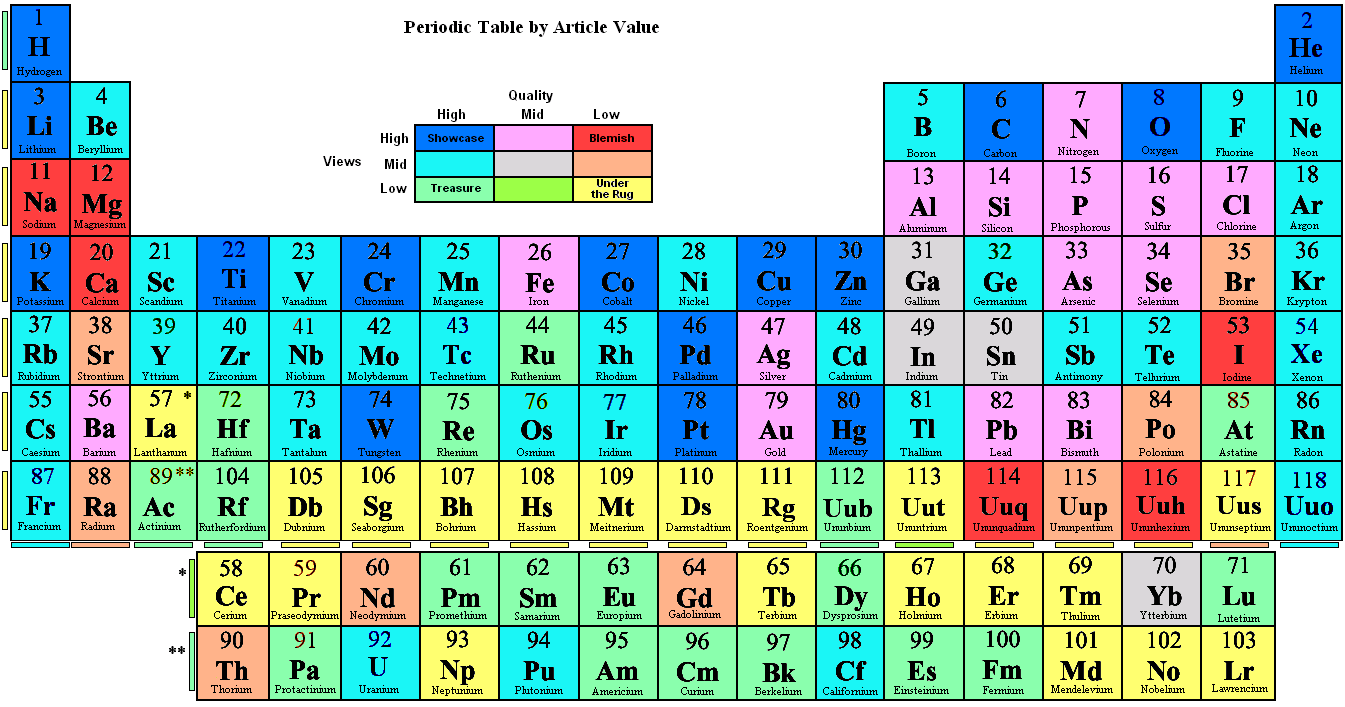
The Modern Periodic Table of Elements is arranged by
a)
atomic mass
b)
atomic number
c)
valence electrons
d)
number of isotopes
22.
Sodium (Na) is found in period 
a)
3
b)
2
c)
4
d)
1
23.
Sodium (Na) is found in group 
a)
1
b)
2
c)
3
d)
4
24.
The atomic number tells you what?  READ THE ANSWERS CAREFULLY
a)
only the number of electrons
b)
 only the number of protons
c)
only the number of neutrons
d)
the number of both electrons and protons in an atom.
25.
What does the atomic mass tell you? 
a)
Basically,the number of electrons and protons
b)
The number of neutrons
c)
Basically, the number of protons and neutrons
d)
The number of protons.
26.
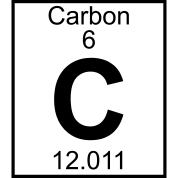
What does the 6 represent?
a)
atomic mass
b)
atomic number
c)
element name
d)
chemical symbol 
27.
What does 12.011 represent?
a)
atomic mass
b)
atomic number
c)
element name
d)
chemical symbol 
28.
These are found on the Periodic Table.
a)
Compounds
b)
Elements
c)
Mixtures
29.

The horizontal (side to side) rows in the Periodic Table are called

a)

groups

b)

families

c)

periods

d)

atomic numbers

30.
Most of the elements on the periodic table are classified as _____.
a)
Metals
b)
Nonmetals
c)
Metalloids
d)
Periods
31.
Most of the elements on the periodic table are classified as _____.
a)
Metals
b)
Nonmetals
c)
Metalloids
d)
Periods
32.

What are the three main groups of the periodic table?

a)

groups

b)

metal

c)

nonmetals

d)

metalloids

e)

periods

33.
The atoms along the staircase are called 
a)
metals
b)
nonmetals
c)
metalloids
d)
noble gases
34.

a collection of atoms of one type that cannot be broken down into simpler substances by ordinary chemical or physical means

a)

element

b)

subatomic particle

c)

electron

d)

matter

35.

an arrangement of the elements according to their atomic numbers so that elements with similar properties are in the same column and properties repeat from row to row

a)

Periodic Table of Elements

b)

Atomic Theory

c)

Isotopes

d)

Subatomic Particles

36.

one or two letters that represent the name of an element

a)

element name

b)

element symbol

c)

atomic number

d)

atomic mass

37.

What is the atomic number of Barium, Ba? (enlarge the periodic table)

a)

20

b)

38

c)

56

d)

88

38.

If an atom has 10 electrons, how many protons does it have?

a)

0

b)

1

c)

10

d)

5

39.
Blue Color: Chemical or Physical Property
a)
Chemical Property
b)
Physical Property
40.
Density: Chemical or Physical Property
a)
Chemical Property
b)
Physical Property
41.
Flammability (burns): Chemical or Physical Property
a)
Chemical Property
b)
Physical Property
42.
Solubility (dissolves): Chemical or Physical Property
a)
Chemical Property
b)
Physical Property
43.
Reacts with Acid: Chemical or Physical Property
a)
Chemical Property
b)
Physical Property
44.
Brittleness: Chemical or Physical Property
a)
Chemical Property
b)
Physical Property
45.
Melting Point: Chemical or Physical Property
a)
Chemical Property
b)
Physical Property
46.
Reacts with Water: Chemical or Physical Property
a)
Chemical Property
b)
Physical Property
47.
Hardness: Chemical or Physical Property
a)
Chemical Property
b)
Physical Property
48.
Luster: Chemical or Physical Property
a)
Chemical Property
b)
Physical Property
49.
Reacts with Air: Chemical or Physical Property
a)
Chemical Property
b)
Physical Property
50.

Mass divided by volume is the formula for calculating----

a)

Mass

b)

Volume

c)

Density

d)

Matter

51.

The ability to burn is known as---

a)

Flammability

b)

Combustion

c)

Density

d)

Exploding

52.

The ability to shine is known as----

a)

Luster

b)

Brightness

c)

Flammability

d)

Combustion

53.

Ductility, the ability to be stretched into thin wires, is a --- property.

a)

Chemical

b)

Physical

54.

Combustion or exploding, is a --- property.

a)

Chemical

b)

Physical

55.

When metal comes in contact with oxygen and water, it creates ---- through a chemical reaction.

a)

Rust (tarnish)

b)

Mold

c)

Decomposition

d)

Copper

56.

Decay or rotting of a substance is a ---- property.

a)

Chemical

b)

Physical

57.

Physical properties....

a)

change the matter when studied

b)

can be observed and measured without changing the matter being studied

c)

include the ability to burn and rust

d)

are useless unless studied in a lab

58.

______________________ can only be recognized when substances react or do not react chemically with one another.

a)

Physical properties

b)

Chemical properties

c)

Flammable properties

d)

Colorful properties

59.
Which of the following is not a chemical property? 
a)
rusting 
b)
boiling 
c)
rotting 
d)
burning 
60.
Which one of these is a chemical property?
a)
melting point
b)
boiling point
c)
color
d)
flammability
61.

Which of the following is a chemical property of water?

a)

Reacts with pure sodium

b)

Boils at 100 oC

c)

Is liquid at room temperature

d)

Has a density of 1 gm/mL

62.

Choose the one that is a chemical property

a)

Magnetism

b)

Size

c)

Color

d)

Reactivity with water