wayground logo

Free Printable Worksheets

NEW

Font size

S
M
L
XL
Worksheets

Q1 C/S

Total questions: 62

Worksheet time: 1hrs 6mins

Name
Class
Date
1.
What is another word for hypothesis?
a)
evidence
b)
graph
c)
investigation
d)
prediction
2.
Which question can best be investigated by a scientist?
a)
Should I buy a red shirt or a green shirt?
b)
Does chocolate milk or plain milk taste better?
c)
Does a plant need sunlight to grow?
d)
Which feels softer, cat fur or dog fur?
3.
Why should an experiment be repeated?
a)
to form a hypothesis
b)
to reduce the chance of error
c)
to change controls
d)
to identify the problem
4.
This is the outcome of the experiment. We get data and results from this.
a)
Independent Variable
b)
Dependent Variable
c)
Control
d)
Constant
5.
How many independent variables should be tested at a time in a scientific investigation?
a)
none
b)
one
c)
two
d)
three
6.
Which is the dependent variable in Amelia's experiment?
a)
the number of bean plants in each group 
b)
the amount of water given daily to each plant 
c)
the height of each bean plant 
d)
the amount of fertilizer given to each group of bean plants
7.
The variable that is changed on purpose is: 
a)
Control
b)
Dependent
c)
Independent
d)
Outcome
8.
The variable in the experiment that is the outcome that you measure is called:
a)
Control
b)
Dependent
c)
Independent
d)
Hypothesis
9.
What is an inference? 
a)
Just a guess.
b)
A statement based off of your observations. 
c)
The same as an observation. 
d)
Examples of something. 
10.
Which statement is an observation?
a)
That house is empty because there are no lights on. 
b)
Her hair is brown. 
c)
Her hair is brown because she dyed it. 
d)
Her hair has not been cut in two years. 
11.
Theory or Law???  Predicts what will happen in the natural world.
a)
Law
b)
Theory
12.
Theory or Law???  Changes with new observations.
a)
Theory
b)
Law
13.
Scientific theories are based on
a)
general assumptions of how systems work.
b)
mathematical principles that can be proven true.
c)
large amounts of data collected over time.
d)
observations from within only one scientific discipline.
14.
Scientific theories do not change once they have been written down.
a)
True
b)
False
15.
A series of steps used by scientists to solve a problem or answer a question. 
a)
scientific method
b)
recipe
c)
data collection
d)
metric system
16.
These kind of observation use your senses to observe results.
a)
Qualitative
b)
Quantitative
c)
Scientific
17.
These kind of observations are made using instruments such as rulers, balances and thermometers.
a)
Qualitative
b)
Quantitative
c)
Scientific
18.
It feels smooth.
a)
Qualitative 
b)
Quantitative
19.
It tastes sweet.
a)
Qualitative
b)
Quantitative
20.
The leaf is 5mm wide.
a)
Qualitative
b)
Quantitative
21.
The mass of the chocolate cake is 250 g.
a)
Qualitative
b)
Quantitative
22.

Based on the graph, four different lab groups come to the following conclusions. Which group’s conclusion best describes the results shown on the graph?

a)

Group 1: The amount of stretch stays the same as weights are added.

b)

Group 2: The amount of stretch increases as more weights are added.

c)

Group 3: The amount of stretch is unaffected as more weights are added.

d)

Group 4: The amount of stretch gradually decreases as more weights are added.

23.
Ms. S set up an experiment to see how the mass of a ball affects the distance it rolls off a ramp. What is the dependent variable?
a)
Distance traveled by the ball
b)
Height of the ramp
c)
Mass of the ball
d)
Where the experiment took place.
24.
Ms. S set up an experiment to see how the mass of a ball affects the distance it rolls off a ramp. Identify the independent variable.
a)
Distance traveled by the ball
b)
Height of the ramp
c)
Mass of the ball
d)
Who set up the experiment (Ms. S, etc)
25.
Dr. Smith has been reading about another scientist’s research in a physics journal. He plans to do these experiments himself and see if he gets the same result.
a)
repetition
b)
replication
26.
Ryan is testing golf balls. He drops three different brands of balls from 40 cm and measures how high they bounce. He drops each ball 10 times.
a)
repetition
b)
replication
27.
Energy __________________ be created or destroyed.
a)
can
b)
cannot
28.

A ball rolling down a hill is __________ kinetic energy.

a)

gaining

b)

losing

29.
Which of the following energy transformations occur when a lamp that is plugged into a wall socket is functioning correctly?
a)
Chemical to light
b)
Electrical to chemical
c)
Electrical to light
d)
Chemical to electrical
30.

Which of the following shows a transformation from chemical energy to mechanical energy?

a)

A bolt of lightning lights the night sky.

b)

A candle glows brightly in the dark.

c)

A fire in a fireplace lights up a room.

d)

A bunny eating grass and running around.

31.

Which of the following devices transforms electrical energy into mechanical energy?

a)

a light bulb

b)

a fan

c)

a manual pencil sharpener

d)

a radio

32.
The Law of Conservation of Energy states:
a)
Energy can created or destroyed but not transformed 
b)
Energy cannot be created or destroyed, it can only transformed
c)
Energy can't be created, destroyed or transformed
33.
On a roller coaster, where is maximum potential energy?
a)
At the bottom of a big hill
b)
When going around a corner
c)
When going upside down
d)
At the top of a big hill
34.
On a roller coaster, where is maximum kinetic energy?
a)
At the bottom of a big hill
b)
When going around a corner
c)
When going upside down
d)
At the top of a big hill
35.

When something is dropped, what type of energy transformation takes place?

a)

Kinetic -> Potential

b)

Gravitational Potential -> Kinetic

c)

Electrical -> Chemical

d)

Heat -> Nuclear

36.

Matter can not be created nor destroyed: it can only be

a)

Destroyed a little bit

b)

Invisible

c)

Transformed

d)

None of the above

37.

A ball rolling down a hill is __________ potential energy.

a)

losing

b)

gaining

38.

When a ball has rolled halfway down a hill __________.

a)

half of its potential energy has transformed into kinetic energy

b)

half of its kinetic energy has transformed into potential energy

c)

half of its potential energy has been destroyed

d)

half of its kinetic energy has been destroyed
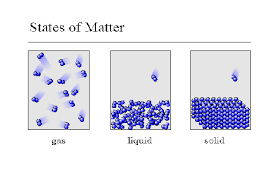
39.
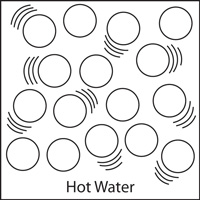
At higher temperatures
a)
particles in an object have less energy
b)
particles in an object move faster
c)
a gas contracts
40.
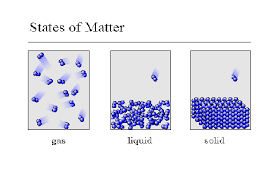
A gas
a)
has a definite shape but no definite volume
b)
has a definite volume but no definite shape
c)
has fast-moving particles
41.
Particles (molecules) in a ______________________ have more energy than the other states of matter.
a)
gas
b)
solid
c)
liquid
42.
Particles of a liquid
a)
are tightly packed together and stay in a fixed position.
b)
have no viscosity.
c)
decrease in volume with increasing temperature.
d)
are free to move around one another but still touch.
43.
The speed of the molecules determines the _____.
a)
volume
b)
density
c)
pressure
d)
temperature
44.
The slower the particles in a substance move,
a)
the colder it is.
b)
the warmer it is.
c)
the more energy it has.
d)
the less energy it has.
45.
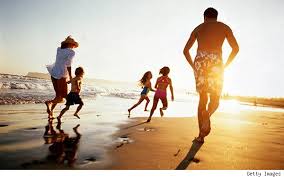
The sun shines down on this family as the play on the beach.
a)
conduction
b)
convection
c)
radiation
46.
Walking on the warm sand sand with your bare feet.
a)
conduction
b)
convection
c)
radiation
47.
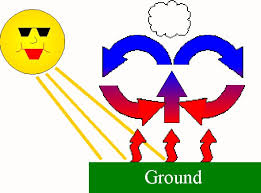
Warm air rises and the cool air sinks.
a)
conduction
b)
convection
c)
radiation
48.
The warm air from this heater creates a current when the warm air rises and the cold air sinks.
a)
conduction
b)
convection
c)
radiation
49.
___________________ is the type of heat transfer that occurs in fluids, such as warm air rising and cold air sinking; creating wind.
a)
Convection
b)
Conduction
c)
Radiation
d)
insulation.
50.
Which points on the wave are the crest? 
a)
1
b)
2
c)
3
d)
4
51.
Which points on the wave are the trough? 
a)
1
b)
2
c)
3
d)
4
52.
Which points on the wave are the wavelength?
a)
1
b)
2
c)
3
d)
4
53.
Which of the points on the wave are amplitude? 
a)
1
b)
2
c)
3
d)
4
54.
What do waves carry through objects?
a)
light
b)
sound
c)
water
d)
energy
55.
How do these waves differ?
a)
they travel at different speeds
b)
they have different wavelengths
c)
they carry different amounts of energy
d)
they are a different distance from the source
56.
Sound is a type of ____ energy
a)
chemical
b)
radiant
c)
electrical
d)
mechanical
57.
the number of complete waves that pass a point in a certain amount of time is a wave's
a)
amplitude
b)
frequency
c)
wavelength
d)
speed
58.
The distance between one crest and the next crest is the wave's
a)
amplitude
b)
wavelength
c)
frequency
d)
speed
59.
Which wave has the greatest amplitude?
a)
The blue wave
b)
The red wave
60.

What color is an object that absorbs all the colors in the light spectrum?

a)

A rainbow

b)

White

c)

Black

d)

Invisible

61.

A leaf is green. What does this tell you about the light that is being absorbed?

a)

The light is a UV ray.

b)

The light is not a part of the light spectrum.

c)

All colors are reflected except green.

d)

All colors are absorbed except green

62.

The change in ________ of light causes it to bend

a)

speed

b)

distance

c)

length

d)

color