
 Worksheets
7.5.1 Lt Quiz Review: Charles Darwin, Natural Selection
Total questions: 62
Worksheet time: 1hrs 11mins
A trait that helps an organism survive and reproduce
Adaptation
Variation
Allele
Species
The theory of natural selection was introduced by
Gregor Mendel
Sir Isaac Newton
Charles Darwin
Copernicus
The hollow bones of birds, which keep birds lightweight for flying, is an example of ________
Inheritance
Adaptation
Cool Bird stuff
Variation
What is the theory of natural selection?
The practice by which humans select plants or animals for breeding based on desired traits.
An inherited trait that helps an organism to survive.
Differences in traits
individuals that are better adapted to their environment are more likely to survive and reproduce
What organism did Darwin study at the Galapagos Island?
Dogs
Dragons
Finches
Tigers
The white feathers of a snowy owl allow it to blend in with its environment during the winter months (snow). This is an example of ________________
Species
Adaptation
Environmental Change
Variation

The differences among a species, like different bird beaks, are called _______
Variation
Inheritance
competition
Genes
What is another name for natural selection?
survival of the biggest
survival of the fastest
survival of the smartest
survival of the fittest
When all of the organisms of a species have died it is called
Extinction
evolution
adaptation
Natural Selection
The two most important things when it comes to being "more successful" in science are _______
Survive & Make Money
Make money & Fortnite
Survive & Reproduce
Reproduce & Get food
Genetic Changes in a population over a long period of time is called:
half-life
evolution
homologous structure
All of the above
Why are advantageous traits more likely to be passed onto offspring?
Because they come from recessive alleles.
Because the trait is an acquired phenotype.
Because they come from dominant alleles.
Because they are more likely to survive and reproduce

Even though a hawk and falcon are two different species of birds, they have similar beaks. What does that tell you about both birds?
They have the same type of nests
They live in the same trees
They eat the same type of food.
They are hybrid

This pictures shows how Eohippus has changed over time to become a modern day horse. What is this chart an example of?
Evolution
Extinction
Mitosis
Cellular respiration

When a DNA sequence is copied, sometimes mistakes occur in the new strand of DNA. What do we call those mistakes?
Adaptations
Evolution
Mutations
Natural Selection
Who said evolution happens as a result of natural selection?
Watson
Crick
Franklin
Darwin
What is the process called where individuals that are better adapted to their environment survive and reproduce more successfully than others do?
Natural Selection
Genetic Resistance
Genetic Drift
Species Separation
The process where populations change over time is called?
evolution
adaptation
selective breeding
speciation
Slight differences (like the color of fur or height) observed in members of the same species are called...
cloning
fossils
genetic variation
replication
A group of organisms that can mate with one another and produce fertile offspring are called...
genetic variation
a species
natural selection
the fossil record
Darwin saw differences in the beaks of finches from island to island.
True
False
IDK
Maybe
Darwin said that humans and monkeys have a common ancestor.
True
False
IDK
Maybe
Genetic mutations can be...
Helpful
Harmful
helpful or harmful
A mutation in an organism's genetic code...
could be passed down to their offspring.
will only affect the parent, not the offspring.
will always kill the organism.
have the ability to interbreed.
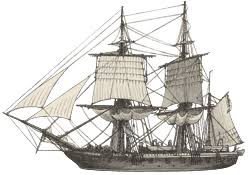
What was the name of Darwin's boat?
Indefatiguable
Bugle
Sloop John B
Beagle

The Galapagos Islands are off the coast of ________________.
North America
South America
Central America
Antarctica

1. The process of choosing parent organisms for desired characteristics is called
natural selection
Artificial selection
random selection
genetic manipulation
What is an example of artificial selection?
Letting dogs choose their own mate
Letting plants pollinate on their own
Crossing a labrador and a poodle to create a labradoodle
1. Artificial selection has been a big factor in the evolution of:
Dogs
Panda bears
Snakes
Jellyfish
Which statement is true comparing natural selection and artificial selection?
In natural selection, traits benefit humans and in artificial selection, the traits benefit the species
In natural selection, traits benefit the species and in artificial selection, the traits benefit humans
In natural and artificial selection, the process takes hundreds of years to occur
In natural and artificial selection, nature determines what traits will be passed down to offspring.


What was Charles Darwin's main contribution to science?
He was the first person to think of the idea of evolution
He developed the modern theory of evolution
He refuted the modern theory of evolution
He was the first person to actually witness animals evolving
What was the mission that led Darwin's boat to sea?
Discovering proof of evolution
Claiming South American land for Great Britain
Looking for South American gold deposits
Mapping the South American coastline
What is an inherited trait?
A characteristic determined by an organism's genes
A skill that's developed through practice
An organism's place in the food web
An organism's relationship to its parents
Which of the following statements is true according to Darwin's Theory of Evolution?
Human beings evolved from chimpanzees
Chimpanzees evolved from human beings
Humans and chimpanzees both evolved from a common ancestor
Chimpanzees and humans are not closely related, biologically
When is a trait most likely to be passed on to the next generation? Choose the best answer.
When it serves no purpose to the organism
When it prevents the organism from finding a mate
When it gives the organism an abundant supply of water
When it becomes an advantage to the organism's survival
In what major way did Darwin's ideas diverge from Lamarck's?
Lamarck thought changes to an individual animal during its lifetime would be passed on to offspring
Lamarck believed that environmental pressures drove evolution
Lamarck thought that animals would not have had time to evolve in Earth's short history
Lamarck did not believe that species could change over time
Which is the most likely evolutionary response of birds to a food supply of insects living in deep, narrow tunnels?
Birds get smaller with each generation, until they can fit inside the tunnels.
Birds learn to plug up the tunnels, forcing the insects to the surface for air.
Birds begin eating bark and leaves instead.
Birds' beaks get progressively longer and thinner with each generation.

The Galapagos Islands are where Charles Darwin:
Wrote and published "On the Origin of Species" DURING his travels on the HMS Beagle
Carefully studied the differences between similar animals
Was exiled after his theories proved unpopular
Was born and raised
The beaks of finches found on various Galapagos Islands differed based on:
The size of their island
The length of their wings
The available food supply
The predators that hunted them
What is a common ancestor?
An animal that has a lot of offspring.
An animal from which two or more different species evolved.
An animal that is related to many other species
An animal that's good at escaping from predators.
In the phrase "survival of the fittest," the term "fittest" refers to:
The best-adapted organisms
The biggest organisms
The smartest organisms
The fastest organisms
Which variation would be most likely to benefit any organism, regardless of environment?
The ability to produce energy more efficiently.
The ability to swim deeper.
Markings that help it blend into its background.
Bigger claws and teeth
When nature "selects" a variation, that means that the trait:
Gets passed along from generation to generation
Causes the population to shrink
Has brought about a new species
Helps prey escape predators


