
 Worksheets
REVUEW CUA 4
Total questions: 60
Worksheet time: 3600secs
Which of the following is not a characteristic of a mineral?
Solid
Inorganic
Hardness
Formed in Nature

Which of the following would be the best description of the mineral property called luster?
A minerals resistance to being scratched.
The color a mineral gives off.
How a mineral reflects light.
Observing the color of the powder left behind when scraping across a surface.

In the lab, a student wants to identify two different minerals. So, she takes them and scrapes them across a plate to see the color of the powder they leave behind. What property of minerals is she testing?
Color
Hardness
Luster
Streak

A measure of a mineral's resistance to scratching. This is measured by scratching it against another substance of known hardness on the Mohs Hardness Scale.
Color
Hardness
Luster
Streak

Which statement is the best example of the mineral property of cleavage?
The mineral broke and had jagged edges.
The mineral broke and had flat edges.
Minerals never break
All are correct


Scientists use mineral ________________ to identify and classify minerals.
pieces
names
properties
structures
Mass divided by volume
streak
density
hardness
crystal structure
When we tested minerals in class, we used a nail, a penny, and our fingernail to test the ___________________ of the mineral
streak
hardness
crystal structure
density
Ricardo has an igneous rock in his rock collection. Where did this rock most likely form?
In a volcano
On a forest floor
On a coral reef
At the bottom of a river
What type of rock is sandstone?
Igneous
Metamorphic
Ferromagnetic
Sedimentary
Igneous rocks form from
Sediment
Mud
Gravel
Magma
What type of rock results from the cooling of lava from a volcano?
Sedimentary
Bituminous
Igneous
Metamorphic
When rocks undergo weathering, they become
Magma
Igneous rocks
Sediment
Volcanic cones
Rocks formed by heat and pressure beneath the Earth's surface are...
igneous
metamorphic
sedimentary
magma
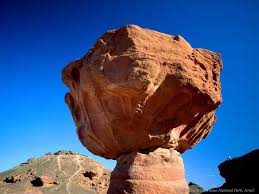
The process that breaks down rocks and other materials on Earth's surface is called
Weathering
Erosion
Deposition
Decomposition
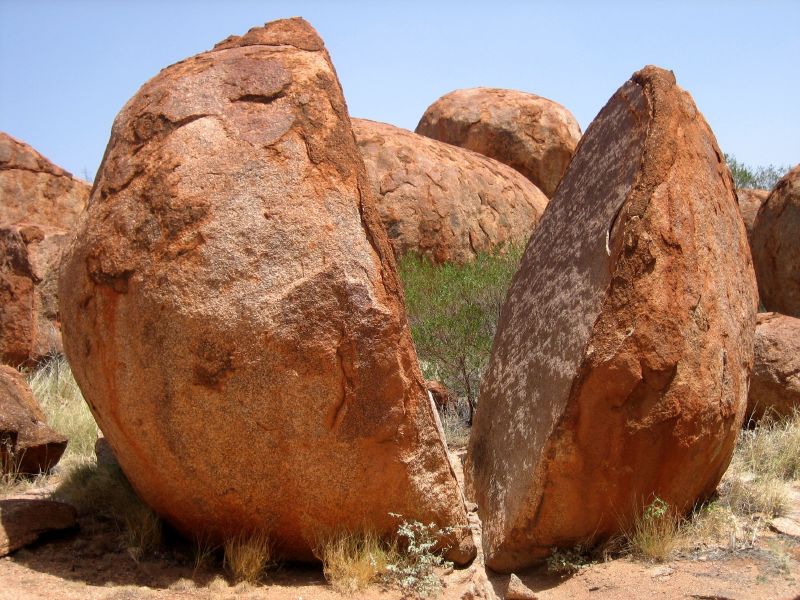
What is the wearing away or breaking down of rocks called?
Deposition
Erosion
Glaciers
Weathering


According to the diagram, how does a sedimentary rock become a metamorphic rock?
Weathering and Erosion
Heat and Pressure
Compaction and Cementation
Melting
Identify the rock type: Shells of different animals fall to the bottom of the ocean. Over time, these shells are broken down into smaller pieces and combine with sand and bone to become a rock. This is an example of a(n) _____.
Igneous
Sedimentary
Metamorphic
Mineral

When pieces of older rocks, plants, and other loose material gets pressed or cemented together, a _____ rock forms.
Igneous
Sedimentary
Metamorphic
Mineral
Fossils are more likely to form in which type of rock?
Sedimentary rocks form in layers which help keep fossils from being destroyed.
Metamorphic rocks form by being exposed to a lot of heat and pressure and this keeps the fossils from being destroyed.
Igneous rocks form when lava or magma cools and this keeps the fossils from being destroyed
Fossils only form in igneous rocks.
This type of igneous rock remains inside the Earth.
Intrusive
Extrusive
Topside
Lower
This type of igneous rock can be found on the crust.
Intrusive
Extrusive
Topside
Lower

When heat or pressure causes one rock to change into a new type of rock, we call these rocks _____.
Igneous
Sedimentary
Metamorphic
Mineral
Which section of Earth is composed primarily of liquid metal?
crust
mantle
outer core
inner core
Earth is made of different layers that have varying characteristics. Which is the thickest layer?
the mantle
the inner core
the outer core
the crust
A student uses clay to construct a model of Earth. Which layer of the model should be the thinnest layer?
the layer representing the mantle
the layer representing the outer core
the layer representing the inner core
the layer representing the crust
What layer of the Earth do we live on?
mantle
inner core
crust
outer core
What layer has super-heated liquid molten lava?
crust
mantle
outer core
inner core

What layer of the Earth is labeled A?
inner core
outer core
mantle
crust

Which layer is made (mostly) of LIQUID iron and nickel?
crust
mantle
outer core
inner core

Which layer of the Earth is the THINNEST?
crust
mantle
outer core
inner core

Which layer of the earth is the hottest?
crust
mantle
outer core
inner core
What is the correct order (starting from the surface) of Earth's layers?
crust, outer core, inner core, mantle
mantle, outer core, inner core, crust
crust, mantle, outer core, inner core
outer core, inner core, crust, mantle

Which is the correct order of the Earth's layers?
Outer most layer first.
Crust, Outer Core, Mantle, Inner Core
Crust, Mantle, Outer Core, Inner Core
Inner core, Outer core, Mantle, Crust
As you move deeper into the Earth's core, the temperature is:
cooler
hotter

True or false.
Lithosphere is just another term for the rock that makes up the crust and some of the mantle, forming tectonic plates.
True
False

True or false.
The asthenosphere is located below the mantle. Due to extreme heat and pressure. The solid rocks can flow like liquid.
True
False
The inner core is a...
solid
liquid
gas
The lithosphere combines what two layers?
Athenosphere & Crust
Crust & Upper Mantle
Mantel & Asthenosphere

Which crust is thicker
oceanic
continental
bread
pizza
Earth’s crust can only be____________ or _______________.
Volcanic & Seismic
Oceanic & Continental
Which of the following is true regarding the composition of the lithosphere?
The lithosphere is mostly liquid, with some medium-density materials, such as silicon.
The lithosphere is more plastic and flows slowly compared to the solid crust of Earth.
The lithosphere includes the core and the lower portion of the mantle.
The lithosphere includes the crust and the uppermost portion of the mantle, which is sold and rigid.

