
 Worksheets
Unit 3 Review
Total questions: 61
Worksheet time: 5hrs 52mins
If the substance is neutral, what would the pH be?
3
5
7
9
11
Which is the stronger acid?
pH 1
pH 4
pH 8
pH 13
The strongest bases have pH values close to
0
14
7
5
If an acid is combined with a base of equal strength, the result will most likely be
a neutral solution.
a stronger acid.
impossible to tell without testing the pH.
a stronger base
Acid turns to red litmus paper to blue.
FACT
BLUFF
Bases are usually identified by their sweet taste and
are known to turn blue litmus into red.
TRUE
FALSE
MAYBE
Acidic substances are usually identified by their sour taste and are known to turn blue litmus into red.
TRUE
FALSE
MAYBE
The pH is an abbreviation for the "power of helium" that measures
the acidity of a solution.
TRUE
FALSE
MAYBE
Neutralization occurs when an acid reacts with an equivalent amount of base and forms a neutral solution containing salt and water.
TRUE
FALSE
MAYBE
pH number 3
Acid
Base
Neutral
pH number 7
Acid
Base
Neutral
pH number 14
Acid
Base
Neutral
Turns red litmus paper blue
Acid
Base
Neutral
Turns blue litmus paper red
Acid
Base
Neutral
Red litmus paper stays red AND blue litmus paper stays blue
Acid
Base
Neutral
Has more OH- ions than H+ ions
Acid
Base
Neutral
Has more H+ ions than OH- ions
Acid
Neutral
Base
Has equal amounts of OH- and H+ ions
Acid
Neutral
Base
Pure Air
HOMOGENEOUS
HETEROGENEOUS

Chocolate Chip Ice Cream
HOMOGENEOUS
HETEROGENEOUS

Sugar and Water
HOMOGENEOUS
HETEROGENEOUS

Black Coffee
HOMOGENEOUS
HETEROGENEOUS

Salad Dressing
HOMOGENEOUS
HETEROGENEOUS

Paint
HOMOGENEOUS
HETEROGENEOUS

What kind of mixture is shown in the picture?
Homogeneous
Heterogeneous

What kind of mixture is shown in the picture?
Homogeneous
Heterogeneous

What kind of mixture is shown in the picture?
Homogeneous
Heterogeneous

What kind of mixture is shown in the picture?
Homogeneous
Heterogeneous

Which of the models of a chemical reaction best represents the Law of Conservation of Mass?
A
B
C
D

Which of the models of a chemical reaction best represents the Law of Conservation of Mass?
A
B
C
D

A student pours 5.49 g hydrochloric acid (HCl) into an open beaker that contains a piece of magnesium (Mg). The Total mass of the product is 5.73 g. What was the mass of the magnesium?
5.71 g
11.22 g
0.24 g
A student heated a 10 gram sample of a chemical in an open container. A chemical reaction occurred, and the mass of the sample was measured again. The mass of the sample was found to be less than before the reaction. Which of the following best explains the decrease in mass of the sample?
The heat caused the chemical to become less dense.
The reaction gave off more heat than was added.
Some of the lighter particles were destroyed.
Some of the particles escaped as a gas formed.
A student dissolved 25 grams of salt into 1,000 grams of water. What should the mass of the saltwater mixture be?
975 grams
1,000 grams
1,025 grams
2,500 grams
True or False
The mass of the reactants in a chemical equation must equal the mass of the products.
True
False
A chemical change occurs when:
a new substance is created
a substance looks different from before
a substance's physical properties change
two substances are mixed together
Which of the following characteristics is shared by all chemical reactions?
Produce a precipitate
Show a color change
Release heat energy
Form new substances
No new substance created
Chemical
Physical
New substance created
Chemical
Physical
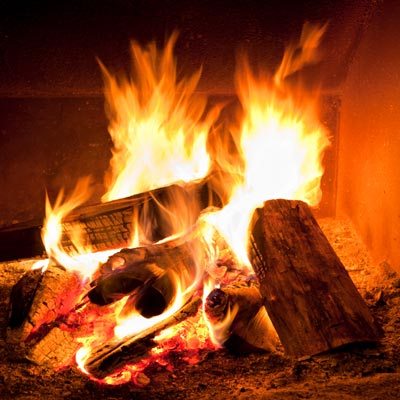
Logs of pine wood are burning in a fireplace. What is a sign that a chemical change is happening to the wood?
Heat and light are released
The wood smells like pine
Logs of pine wood are burning in a fireplace. What is a sign that a chemical change is happening to the wood?
The wood turns black
The wood is brown
Which of the following is not a sign of chemical change?
Change is shape
Change in colour
Change in temperature
Production of light or sound
Which of the following is a chemical change?
Water combines with sodium to form sodium hydroxide and hydrogen gas
Salt is mixed with pepper in a bowl
Which of the following is a chemical change?
Water breaks down to form hydrogen gas and oxygen gas
Water freezes to make ice
True/False: When a substance undergoes a physical change the particles moves to new positions, speed up or slow down.
True
False
Which term matches the following definition?
Definition: a usually reversible change in the physical properties of a substance, as size or shape. This change does not result in a change chemical properties or composition (make up), as it is the same substance before and after the change.
Chemical change
Physical Change
Chemical property
Physical property
Which term matches the following definition?
Definition: a characteristics of chemicals that are not associated with a change in it's chemical composition. Example include size, shape, colour, density, mass, volume, length and lustre. An example of this for iron is it is silver, shiny and dense.
Chemical change
Physical Change
Chemical property
Physical property
Which term matches the following definition?
Definition: a characteristics of chemicals that are associated with a change in it's chemical composition (make up). Example include flammability and reactivity. An example of this for Iron is it combines with oxygen in the presence of water to form rust (iron oxide).
Chemical change
Physical Change
Chemical property
Physical property
A student mixes yellow powder with water. Which observation would prove a CHEMICAL change occurred?
The powder DISSOLVED in the water
The water turned the COLOR yellow
The water's TEMPERATURE changed
The STATE OF MATTER changed
Which of the following examples provides evidence of a PHYSICAL change?
Wood is burned and releases ash and smoke
Iron rusts over time
When mixed, baking soda and vinegar form gas bubbles
Boiling water bubbles when heated
Which of the following options provides evidence of a CHEMICAL change?
Wood is burned releasing ash and smoke
Rocks separate when soil is sifted
Boiling water bubbles when heated
Salt dissolves in water
Which observations prove a chemical change occurred ?
Dissolving and expected color change
Mixing and dissolving
State of matter change and boiling water bubbles
Unexpected color change and temperature change
When mixing milk and vinegar, a white, chunky, solid substance is formed. What has occurred?
Physical change: state of matter
Chemical change: precipitate
Physical change: freezing
Chemical change: new gas

