
 Worksheets
First 9-week Assessment
Total questions: 57
Worksheet time: 1hrs 10mins


(8.11B) The Couch's spadefoot lives in Texas and is adapted to a certain type of environment. Which of these resources is most likely scarce in this environment?
Soil
Sunlight
Water
Oxygen


What is an example of how organisms respond to short term changes in the environment?
Animals tend to eat a lot more.
Animals will hibernate.
Animals must be able to adapt to a new environment.
Animals will go extinct or die due to the short term change.

How do humans impact the environment?
Select all that apply.
By changing the way an animal looks by altering the what food the animal eats.
By polluting the ocean water and the earth's atmosphere through urbanization.
By destroying biomes in which animals live through deforestation.
By not watering plants that causes them to go into drought and ultimately die off.


If the grasshopper were to be removed completely from the food web, what organism would be most affected?
The squirrel
The shrew
The deer
The rabbit

Which of these best describe a short-term environmental change?
Radioactive waste that changes the physical traits of the organisms.
A flood that occurs quickly and causes organisms to find new shelter.
Pollution in the Hudson river that affects subsequent generations.
Global warming that occurs slowly over time and changes the climate of the Earth.

Which of the following is NOT a source of pollution in the ocean?
Fertilizers used on land.
Sand drifting along the bottom of the ocean floor.
Oils found on city streets.
Emissions from gas-burning vehicles.

Review the graph showing marine fishing rates.If the fishing rate in Asia continues to grow, what will most likely happen as a result?
The fish population will continue to rise.
A wide range in ocean temperatures will be seen worldwide.
The U.S. human population will decline.
The overfishing will cause an imbalance in marine ecosystems.

This graph shows the sources of Nitrogen entering the Gulf of Mexico as pollution.
What is one conclusion you can make based on the information in the graph?
Nitrogen that comes from the atmosphere is more harmful than nitrogen that comes from crops.
Most Nitrogen pollution found in the Gulf of Mexico comes from farming crops.
Corn and soybeans are the only crops associated with Nitrogen pollution.
Nitrogen is not a problem in the Gulf of Mexico.

If an invasive species is introduced to an ecosystem that eats that same plants as the rabbits in the ecosystem, what will happen to the rabbit population?
the rabbit population will likely increase
the rabbit population will likely decrease
the rabbit population will stay the same
Breathing rate increases during exercise to help meet the increased oxygen demand by skeletal muscles. (which two systems work together)
respiratory, circulatory
muscular, skeletal
respiratory, skeletal
respiratory, muscular

Which best compares the respiratory system to the circulatory system?
The respiratory system transports oxygen to cells, while the circulatory system provides oxygen for cells.
The respiratory system provides oxygen for cells, while the circulatory system transports oxygen to cells.
The respiratory system breaks down food for cell energy, while the circulatory system rids the body of waste.
The respiratory system rids the body of waste, while the circulatory system breaks down food for cell energy.

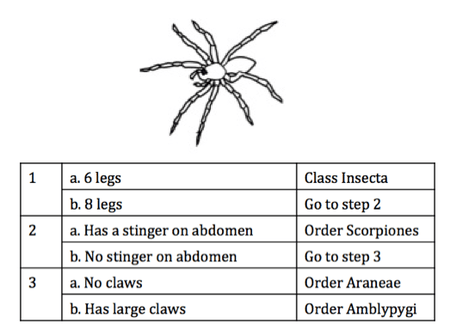
A student discovers an arachnid with a segmented abdomen, long legs, and a tail with no stinger.
The student uses the dichotomous key below to identify it.
1. a) Abdomen segmented.............go to 2
b) Abdomen not segmented ......go to 4
2. a) Abdomen with tail....................go to 3
b) Abdomen without tail...............go to 5
3. a) Tail with stinger..........................Scorpion
b) Tail without stinger.....................Whip scorpion
4. a) Legs longer than body.............Daddy Long Legs
b) Legs not longer than body……….Wind scorpion
5. a) Covered with spines .......................Mite
b) Few spines.....................................Tick
Whip Scorpion
Daddy Long Legs
Mite
Tick

Which of the paired statements could be used to tell the difference between the two insects using a dichotomous key?
Has 6 legs
Has 8 legs
Large hind legs
Small hind legs
2 pairs of spots on wing cover
3 pairs of spots on wing cover
Antennae absent
Antennae present
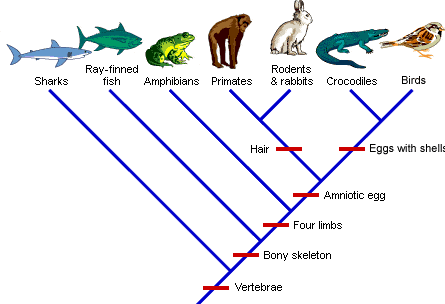


Which of the following is NOT a requirement for all living things?
have at least one cell
use energy
adapt to environment
breathe oxygen with lungs


Which statement best describes an electron?
Smaller mass than a proton and a negative charge
Smaller mass than a proton and a positive charge
Greater mass than a proton and a negative charge
Greater mass than a proton and a positive charge

An atom with atomic number 6 would have how many protons?
6
12
3
cannot be determined

An atom has 3 protons, 4 neutrons, and 3 electrons. What is the charge of the atom’s nucleus?
+4
+3
−4
−3

What type of particles are found in the cloud surrounding the atom's nucleus?
Neutral particles and positively charge particles
Positive charge particles only
Negatively charge particles and positively charge particles
Negatively charge particles only
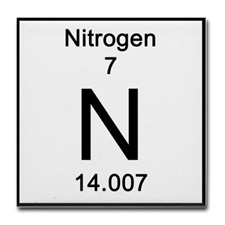
If an atom has 4 protons, 5 neutrons, and 4 electrons, the atom is...
a neutral atom
a positive ion
a negative ion


What part of the atom determines the chemical properties or reactivity?
Protons
Electrons
Valence Electrons
Energy levels

The atoms of a certain element each contain 9 protons and 7 valence electrons. Which statement correctly identifies this element and describes the chemical reactivity?
The element is oxygen, and is highly reactive.
The element is fluorine, and is highly reactive.
The element is oxygen, and is not very reactive.
The element is fluorine, and is not very reactive.
A chemist is identifying the elements present in a sample of seawater. What characteristic of an element's atoms always determines the element's identity?
The number of electrons
The number of neutrons
The number of protons
The number of valence electrons

A student is studying calcium, a highly reactive element that humans need for strong bones. Which characteristics of calcium is most closely related to its chemical reactivity?
The 20 protons in each atom of calcium
The density of calcium
The atomic number
The two valence electrons in each atom of calcium

Changing the number of protons in an atom will change the atom's _____
color
atomic weight/mass
net charge
identity (name of element)

Calculate the atomic number of an atom with :
2 protons
3 neutrons
4 electrons
2
3
4
5

Which of the following elements have atoms that are more massive than chlorine?
lithium
helium
carbon
argon

Choose ALL of the alkali metals (group 1) from the list below:
lithium
copper
mercury
potassium
sodium

How are elements organized in the periodic table ?
Alphabetically
Based on physical and chemical properties
Increasing number of electrons
Most reactive to least reactive

Groups on the periodic table are arranged...
Vertically
Horizontally
Diagonally from bottom right corner
Diagonally from top right corner

Which accurately describes nonmetals?
Poor conductors of electricity
Often used in computer parts
Both malleable and ductile
Both dull and brittle

Metals are located on the
________ side of the
Periodic Table.
ZIG-ZAG
LEFT
RIGHT
BOTTOM

Find the element on Period 3 and Group 17. What is
this element’s chemical symbol?
F
Br
Cl
I
Which of the following is not a benefit of asexual reproduction?
Offspring will be successful in an unchanged environment.
Good at adapting to changing environments.
Only requires one parent to produce offspring.
Can reproduce rapidly.
An organism that has been reproduced by asexual means receives ______________ of its chromosomes from its one parent.
3
25%
50%
100%
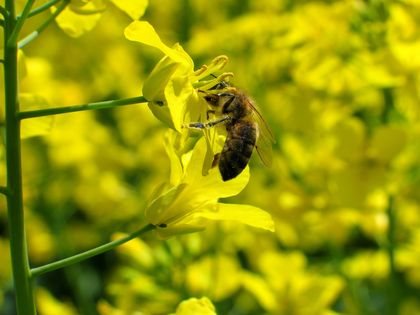
What is the big advantage of sexual reproduction?
Can quickly grow the population
Offspring are guaranteed to be successful in an unchanged environment.
Only one parent is required to reproduce.
Can adapt to changing environments
What are some advantages of asexual reproduction are: (select all that apply - there are 3)
it only requires one organism
it takes less energy than sexual reproduction
offspring are already well-adapted for the environment
there is a lot of genetic variety

If two organisms reproduce sexually, then their offspring will exhibit a genetic makeup that is
identical to only one parent
identical to all of its siblings
a unique combination of traits
the recessive traits of each parent
Where is the genetic material that determines the inherited traits of an organism located inside of a eukaryotic cell?
Cytoplasm
Vacuole
Nucleus
Ribosome
Chloroplast
Which choice is NOT true about genes?
They are found in the nucleus.
They are located on chromosomes.
They provide energy to the cell.
They provide genetic information for traits.

Bianca has blue eyes like her father. Where is the trait found?
genes within chromosomes in nucleus
chromosomes within genes in cytoplasm
nucleus within a gene in the chromosome
cytoplasm within a chromosome

Researchers who study these sheep have most likely observed a decrease in the wild Soay's-

