wayground logo

Free Printable Worksheets

Font size

S
M
L
XL
Worksheets

Weather and the Water Cycle

Total questions: 61

Worksheet time: 1hrs 3mins

Name
Class
Date
1.
 A fast moving cold air mass overtakes a warm air mass is called a _________________
a)
warm front
b)
cold front
c)
stationary front
d)
occluded front
2.
A warm air mass overtakes a slow-moving cold air mass is called a _____________________.
a)
warm front
b)
cold front
c)
stationary front
d)
occluded front
3.
Cold and warm masses meet, but neither can move the other is called a ______________________
a)
warm front
b)
cold front
c)
stationary front
d)
occluded front
4.
A warm air mass is caught between two cooler air masses is called a ________________________.
a)
warm front
b)
cold front
c)
stationary front
d)
occluded front
5.
A huge body of air that has similar temperature and humidity at any given height is called an __________________________.
a)
front
b)
jet stream
c)
air mass
d)
cyclone
6.
What is a front?
a)
The boundary where two like air masses meet.
b)
The boundary where two unlike air masses meet
7.
What is the only front that has three air masses?
a)
warm front
b)
cold front
c)
stationary front
d)
occluded front
8.
Which front would you possibly see heavy rain or snow fall?
a)
warm front
b)
cold front
c)
stationary front
d)
occluded front
9.
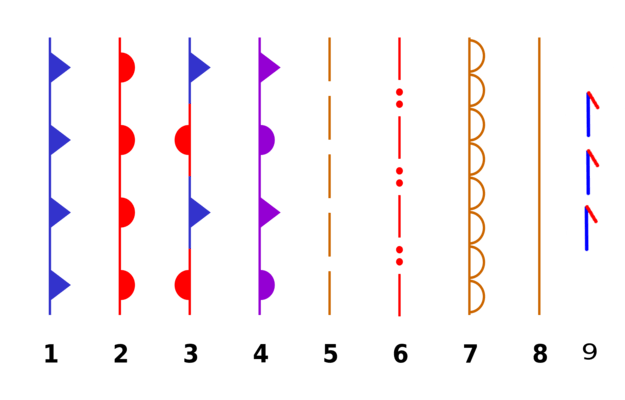
Which front has the symbol of blue triangles?
a)
warm front
b)
cold front
c)
stationary front
d)
occluded front
10.
Which front has the symbol of a red line with half circles?
a)
warm front
b)
cold front
c)
stationary front
d)
occluded front
11.

What is this tool used to measure temperature called?

a)

thermometer

b)

rain gauge

c)

precipitation

12.

What is weather?

a)

The amount of moisture in the air

b)

The number of clouds in the sky

c)

The speed of the wind

d)

The state of the atmosphere at any particular time.

13.

What are the characteristics of a high-pressure system?

a)

Wind and rain

b)

Humidity and thunder

c)

Extremely hot temperatures

d)

Clear skies and sun

14.

This tool measures the wind speed.

a)

barometer

b)

anemometer

c)

thermometer

d)

psychrometer

15.
Someone who studies the weather.
a)
rain gauge
b)
taxonomists
c)
meterologist
d)
satellites
16.

What kind of weather would you expect in a low pressure system?

a)

Warm temperatures

b)

Cool temperatures

c)

Clear conditions

d)

Cloudy/rainy conditions

17.
The amount of water vapor present in the air is called ________________.
a)
weather
b)
humidity
c)
air mass
d)
dew point
18.
Rain, snow, sleet, and hail are all forms of _____.
a)
precipitation
b)
condensation
c)
evaporation
d)
climate
19.
Warm air rises because it is __________ dense then cold air.
a)
More
b)
Less
20.
Which weather tool measures air pressure?
a)
thermometer
b)
barometer
c)
anemometer
d)
psychrometer
21.
What does symbol # 3 mean?
a)
stationary front
b)
occluded front
c)
warm front
d)
cold front
22.
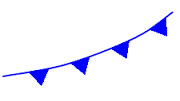
What symbol is this?
a)
warm front
b)
cold front
c)
stationary front
d)
occluded front
23.

What causes the ground to warm up?

a)

The air above it is hot and makes it warm.

b)

Light from the sun is reflected off it and warms it up.

c)

Light from the sun is absorbed by it and it warms up.

d)

Magma under the crust warms the ground.

24.

Hot air is more dense than cold air.

a)

True

b)

False

25.

Heated air molecules move more quickly than cooled air molecules.

a)

True

b)

False

26.

How does water get into the air?

a)

Water evaporates when it is cooled, causing it to rise.

b)

Water evaporates when it is heated, causing it to rise.

c)

Water isn't in the air.

d)

Magic, of course.

27.

Historically, where are there more severe hailstorms?

a)

Florida

b)

Nebraska

c)

Montana

d)

New York

28.

What is precipitation?

a)

The conversion of a vapor or gas to a liquid.

b)

The conversion of a liquid to a vapor or gas.

c)

Any water falling to the ground: including rain, ice, hail.

29.

In the hail site data, what was the one season where there were no severe hail events?

a)

Summer

b)

Winter

c)

Fall

d)

Spring

30.

Hail comes in different sizes.

a)

True

b)

False

31.

Around the time of a hailstorm, the winds slows down.

a)

True

b)

False

32.

Around the time of a hailstorm, the temperature decreases.

a)

True

b)

False

33.

The higher the altitude (or height off of the ground), the air temperature increased.

a)

True

b)

False

34.

Which type of surface should reflect the most light?

a)

A dark surface

b)

A light surface

35.

Which type of surface should absorb the most light?

a)

A dark surface

b)

A light surface

36.

What is humidity?

a)

the amount of oxygen in the air

b)

the amount of nitrogen in the air

c)

the amount of water vapor in the air

37.

Which example is a form of precipitation?

a)

Dew

b)

Fog

c)

Frost

d)

Hail

38.

In which area would the rate of evaporation be the lowest?

a)

Over the ocean

b)

Over the mountains

c)

Over the rainforest

d)

Over the desert

39.

As a part of the water cycle, water from Earth's surface enters the clouds and finally falls back to the ground in the form of rain. What is the correct sequence of processes water undergoes?

a)

Evaporation, Condensation, Precipitation

b)

Precipitation, Condensation, Evaporation

c)

Condensation, Evaporation, Precipitation

d)

Evaporation, Precipitation, Condensation

40.

What would happen if the Sun is removed from the water cycle?

a)

The water cycle would not include precipitation but would continue with groundwater flow.

b)

The water cycle would no longer occur because the Sun provides the energy for evaporation and transpiration.

c)

The water cycle would no longer occur because the Sun provides energy for the formation of clouds.

d)

The water cycle would not include evaporation and transpiration but would continue with condensation.

41.
What is the water cycle?
a)
the 3 forms of water
b)
the movement of water on, above, or below the surface of the Earth
c)
when water melts
d)
when clouds form
42.
What is it called when plants give off water vapor as a waste product?
a)
condensation
b)
evaporation
c)
sublimation
d)
transpiration
43.
Precipitation happens when clouds of water droplets are too ______________.
a)
cold
b)
light
c)
heavy
d)
hot
44.
Evaporation happens when the sun ___________ water and turns it into vapor.
a)
cools
b)
heats up
c)
freezes
d)
lights up
45.
During which stage do clouds form?
a)
condensation
b)
evaporation
c)
precipitation
46.

How does the water cycle begin?

a)

Condensation

b)

Runoff

c)

Sublimation

d)

Evaporation

47.

Where does precipitation happen?

a)

Rivers

b)

Clouds

c)

Ocean

d)

Plants

48.

What is needed for the water cycle?

a)

Moon

b)

Venus

c)

Mars

d)

Sun

49.

Another name for the Water Cycle is the

a)

Moisture Cycle

b)

H2O Cycle

c)

Hydrologic Cycle

d)

Drenched Cycle

50.

What is a run-off?

a)

Where two or more main or independent clauses are joined without a word to connect them or a punctuation mark to separate them

b)

A further competition after an inconclusive result

c)

I forget

d)

The movement of land water to the oceans

51.

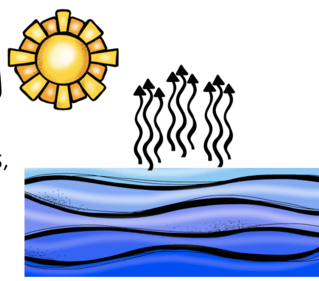
What is this?

a)

A picture

b)

Water Cycle

c)

Correct Answer

d)

Wrong Answer

52.
The water cycle has
a)
a beginning and an end. 
b)
no beginning an no end. 
c)
only a beginning. 
d)
only an end. 
53.
What source of energy evaporates the most water from Earth’s surface?
a)
volcanoes
b)
the sun
c)
lightning
d)
wind
54.

When water changes from a liquid to a solid it is known as...

a)

melting.

b)

condensation.

c)

freezing.

d)

evaporation.

55.

Is precipitation any form of water that falls back to earth?

a)

Yes

b)

No

56.

When water changes from a solid to a liquid it is known as...

a)

melting.

b)

condensation.

c)

freezing.

d)

evaporation.

57.
How many main steps does the water cycle have?
a)
Unlimited
b)
None
c)
4
d)
100
58.
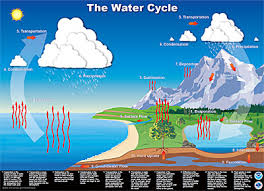
Which stage does the #2 show in the diagram?
a)
condensation
b)
evaporation
c)
precipitation
d)
run off
59.
Which stage does the #3 show in the diagram?
a)
condensation
b)
evaporation
c)
precipitation
d)
run off
60.
what does the #4 show in the diagram?
a)
condensation
b)
evaporation
c)
precipitation
d)
run off
61.
During which stage do clouds form?
a)
condensation
b)
evaporation
c)
precipitation